

Quick Answer
Warm lighting between 2700K and 3000K is generally better for bedrooms because it creates a comfortable, relaxing atmosphere. Cool lighting between 4000K and 6500K is more suitable for daytime activities, dressing, and focused tasks. Combining warm ambient lighting with adjustable task lights provides greater flexibility, especially when you choose suitable bedside lamps.
Best Bedroom Lighting Choices:
- 2200K–2700K: Ideal for evening relaxation and soft bedside lighting.
- 2700K–3000K: Best general-purpose bedroom lighting range.
- 3500K–4000K: Useful for dressing areas and daytime tasks.
- 5000K–6500K: Better reserved for specialized daytime activities.
- Dimmable LED bulbs: Allow comfortable brightness adjustments throughout the day.
- Tunable white lighting: Offers both warm and cool settings in one fixture.
Practical Tip:
- Start with 2700K bulbs for bedside lamps and 3000K lighting for the main ceiling fixture.
Choosing between warm vs cool lighting for bedrooms can completely change how your room looks and feels. The wrong color temperature can make even a beautifully decorated bedroom feel uncomfortable.
I recommend choosing lighting around your daily routine rather than appearance alone. This guide explains color temperatures, sleep considerations, brightness, fixture placement, and practical lighting combinations.
What Is the Difference Between Warm and Cool Bedroom Lighting?
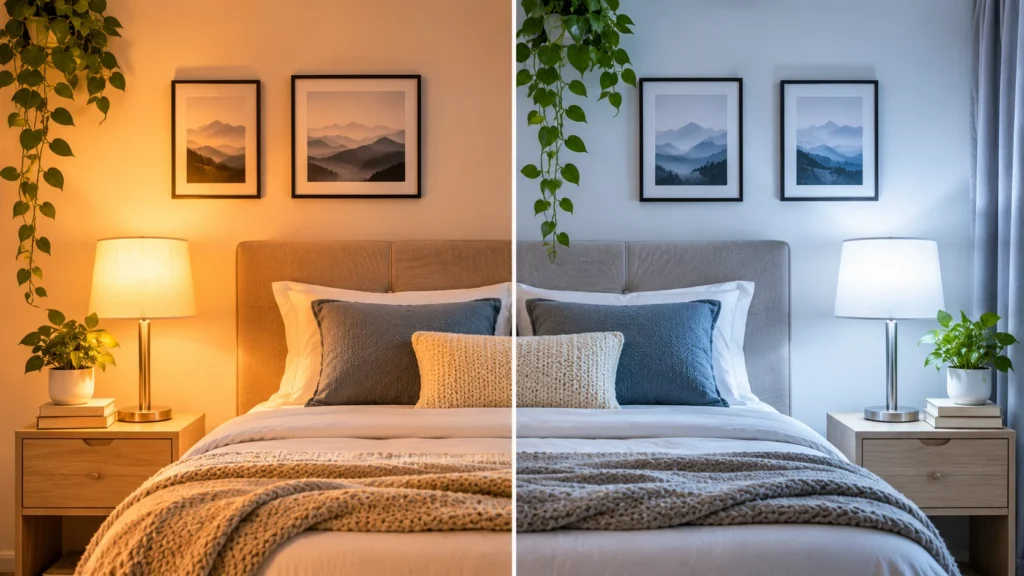
Warm and cool bedroom lighting differ primarily in their color appearance, measured in Kelvin (K). Lower Kelvin values produce warmer tones, while higher values create cooler white or bluish tones.
According to the U.S. Department of Energy, correlated color temperature describes the color appearance of light emitted by a source. It does not measure brightness or physical heat.
What Is Warm Lighting?
Warm lighting typically ranges from 2200K to 3000K. It creates a soft yellowish or amber appearance similar to traditional incandescent lighting.
It complements natural wood, upholstered furniture, neutral bedding, and comfortable bedroom accessories.
- Creates a welcoming atmosphere.
- Works well with bedside lamps.
- Complements warm interior colors.
- Supports a relaxing evening routine.
- Provides comfortable ambient illumination when appropriately dimmed.
What Is Cool Lighting?
Cool lighting generally ranges from 4000K to 6500K. Its appearance is whiter or more bluish than traditional warm lighting.
Cool white lighting can be useful when you need a crisp visual environment during daytime activities.
- Suitable for daytime workspaces.
- Useful around wardrobes and dressing areas.
- Complements contemporary interior designs.
- Creates a clean, bright-looking atmosphere.
- Can feel uncomfortable when excessively bright at bedtime.
Warm vs Cool Lighting for Bedrooms: Comparison Table
The following comparison explains how common bedroom lighting temperatures suit different activities.
| Feature | Warm Lighting | Cool Lighting |
|---|---|---|
| Color temperature | 2200K–3000K | 4000K–6500K |
| Light appearance | Yellowish to warm white | Crisp white to bluish white |
| Atmosphere | Cozy and relaxing | Clean and stimulating |
| Best time | Evening and nighttime | Morning and daytime |
| Bedside use | Generally preferable | Less suitable before sleep |
| Task lighting | Reading and casual activities | Dressing and focused daytime work |
| Interior styles | Traditional, rustic, Scandinavian | Modern, minimalist, contemporary |
| Overall bedroom suitability | Best for most bedrooms | Best for dedicated task areas |
Which Color Temperature Is Best for a Bedroom?
A color temperature between 2700K and 3000K is a practical starting point for most bedrooms. This range balances comfortable illumination with a welcoming appearance.
However, different bedroom activities may benefit from slightly different temperatures.
| Color Temperature | Appearance | Recommended Use |
|---|---|---|
| 2200K | Amber white | Evening accent lighting |
| 2700K | Soft white | Bedside lamps |
| 3000K | Warm white | General bedroom lighting |
| 3500K | Neutral white | Reading and dressing |
| 4000K | Cool white | Wardrobes and workspaces |
| 5000K–6500K | Daylight white | Specialized daytime tasks |
Is Warm Lighting Better for Sleep?
Dim warm lighting is generally more appropriate before bedtime than bright, cool-white lighting. However, brightness, exposure duration, timing, and the light’s spectrum all influence its effects.
The CDC’s guidance on light and circadian rhythms explains that evening exposure to bright light can shift sleep timing later.
Your circadian rhythm is the internal biological clock that helps regulate sleep and wakefulness. Light exposure provides important signals to this system.
How to Improve Bedroom Lighting Before Sleep
- Reduce overall brightness during the evening.
- Choose warm white or amber-toned lamps.
- Turn off unnecessary overhead fixtures.
- Avoid directing bright lights toward your eyes.
- Use low-level pathway lighting when necessary.
- Keep the bedroom dark during sleep whenever practical and safe.
Warm lighting alone does not guarantee better sleep. A bright 2700K ceiling light may still provide more evening light exposure than a carefully dimmed lamp.
11 Tips for Choosing Warm or Cool Bedroom Lighting
1. Consider Your Main Bedroom Activities
Start by identifying what you do most often in your bedroom. A room used primarily for sleeping needs different lighting from a bedroom that doubles as a home office.
- Relaxation: 2200K–2700K.
- General activities: 2700K–3000K.
- Dressing: 3000K–4000K.
- Daytime office work: 3500K–5000K, depending on preference.
Choose separate fixtures when one lighting setting cannot comfortably support every activity.
2. Use 2700K Lighting Around the Bed
Soft white 2700K bulbs are a practical choice for bedside lighting. Their warm appearance works well with fabric lampshades and upholstered headboards.
I would prioritize adjustable brightness and glare control when selecting bedside fixtures. Even a warm bulb can feel harsh if its light source remains directly visible.
3. Choose 3000K for General Ceiling Lighting
A 3000K ceiling fixture offers a slightly cleaner white appearance than 2700K. It remains warm enough for most bedrooms while supporting everyday activities.
This temperature is especially useful when you want a balanced interior without an overly yellow appearance.
4. Reserve Cool Lighting for Dedicated Task Areas
Cooler white lighting can work well near a wardrobe, vanity, or bedroom workstation. It does not need to illuminate the entire room.
- Install directional lighting inside wardrobes.
- Use an adjustable desk lamp for daytime work.
- Position vanity lights to minimize facial shadows.
- Turn dedicated task lights off when they are no longer needed.
5. Match Lighting With Bedroom Wall Colors
Color temperature can change how your paint, furniture, curtains, and bedding appear. Warm lighting often enhances beige, cream, brown, and natural wood finishes.
Cooler white light may complement gray, blue, and crisp white interiors. Neutral lighting can provide a useful compromise when your room contains mixed color palettes.
| Bedroom Color Palette | Suggested Lighting |
|---|---|
| Beige and cream | 2700K–3000K |
| Natural wood and brown | 2700K |
| White and light gray | 3000K–3500K |
| Blue and charcoal | 3000K–4000K |
These ranges are decorating suggestions rather than fixed requirements. Test bulbs against your actual wall colors before purchasing several matching fixtures.
6. Understand the Difference Between Lumens and Kelvin
Lumens measure the amount of visible light a bulb produces. Kelvin describes the appearance of that light.
For example, a 2700K bulb producing 800 lumens can have the same rated light output as a 5000K bulb producing 800 lumens.
- Lumens: Light output.
- Kelvin: Color temperature.
- Watts: Electrical power consumption.
- CRI: How accurately a light source renders colors.
Choose brightness and color temperature separately. A cooler bulb does not automatically produce more light.
7. Install Dimmable LED Lighting
Dimmable lighting allows you to adjust the bedroom atmosphere without replacing bulbs. It is particularly useful when the same fixture serves morning and evening routines.
Standard dimmable LEDs usually reduce brightness without intentionally changing color temperature. Warm-dim LEDs become warmer as their brightness decreases.
- Check that the bulb supports dimming.
- Confirm compatibility with your dimmer switch.
- Choose fixtures with comfortable low-light performance.
- Avoid bulbs that flicker or buzz noticeably.
8. Consider Tunable White Smart Bulbs
Tunable white bulbs allow you to change color temperature electronically. They can provide warm evening lighting and cooler daytime lighting from the same fixture.
The Department of Energy’s guide to color-tunable LEDs explains the different technologies available for adjusting white light.
As of 2026, adjustable white LED bulbs remain a practical option for multipurpose bedrooms. Check the product’s actual temperature range, controls, and dimming capabilities.
9. Pay Attention to Lampshades and Diffusers
Lampshades influence the final appearance and distribution of bedroom lighting. A cream fabric shade can make illumination appear warmer, while a white shade may preserve a more neutral appearance.
- Fabric shades help soften direct light.
- Frosted diffusers reduce visible bulb glare.
- Opaque shades direct light toward specific surfaces.
- Open shades may provide greater illumination but expose the bulb.
Look at the complete fixture rather than judging the bulb alone.
10. Combine Ambient, Task, and Accent Lighting
Layered lighting uses multiple fixtures to support different purposes. It reduces the need to rely on a single bright overhead light.
- Ambient lighting: Provides general room illumination.
- Task lighting: Supports activities such as reading or dressing.
- Accent lighting: Highlights decorative features and creates atmosphere.
For most bedrooms, I would use 3000K ambient lighting, 2700K bedside lamps, and optional neutral-white task lighting.
11. Test Your Lighting During Different Times of Day
A bulb that looks comfortable during daylight may appear too intense after sunset. Evaluate your lighting when natural light is present and when the room is dark.
Begin with one adjustable lamp or a small set of replacement bulbs. This approach helps you avoid purchasing an entire collection that does not suit your space.
How Bright Should Warm and Cool Bedroom Lighting Be?
Bedroom brightness depends on room size, ceiling height, fixture placement, wall reflectance, and personal needs. Different lighting zones require different amounts of light.
The following lumen ranges provide approximate starting points for residential bedroom planning.
| Lighting Area | Suggested Light Output | Color Temperature |
|---|---|---|
| Accent lamp | 100–300 lumens | 2200K–2700K |
| Bedside lamp | 300–500 lumens | 2700K |
| Reading lamp | 400–800 lumens | 2700K–3500K |
| Small bedroom ambient lighting | 1000–2000 lumens total | 2700K–3000K |
| Medium bedroom ambient lighting | 2000–3000 lumens total | 2700K–3000K |
These figures are design estimates, not mandatory lighting standards. Adjust the output based on visual comfort and the amount of light reaching your working surfaces.
Can You Mix Warm and Cool Lighting in a Bedroom?
Yes, you can combine warm and cool lighting successfully by assigning different color temperatures to separate functional zones. Independent controls make this arrangement more practical.
A bedroom workstation can use neutral-white lighting while the bedside area maintains a softer appearance.
Example Lighting Layout for a 12-by-14-Foot Bedroom
- Main ceiling fixture: 3000K with approximately 1600 lumens.
- Two bedside lamps: 2700K with approximately 400 lumens each.
- Wardrobe fixture: 4000K with approximately 500 lumens.
- Accent lamp: 2200K with approximately 150 lumens.
This illustrative setup provides approximately 3050 rated lumens when every fixture operates at full output. Separate switches allow you to use considerably less light during the evening.
Keep fixtures serving the same visual area at similar color temperatures to maintain a coordinated appearance.
Does Color Rendering Matter in Bedroom Lighting?
Color rendering describes how faithfully a light source reveals the colors of objects. Manufacturers commonly express this characteristic using the Color Rendering Index, or CRI.
For general bedroom illumination, a CRI of 80 or higher is a reasonable starting point. A CRI of 90 or higher is worth considering near dressing tables and wardrobes.
- Helps distinguish clothing colors.
- Improves the appearance of interior finishes.
- Supports more accurate makeup application.
- Preserves natural-looking skin tones.
A high-CRI warm bulb can render colors well without needing a cool color temperature. Check both specifications when comparing lighting products.
Common Bedroom Lighting Mistakes to Avoid
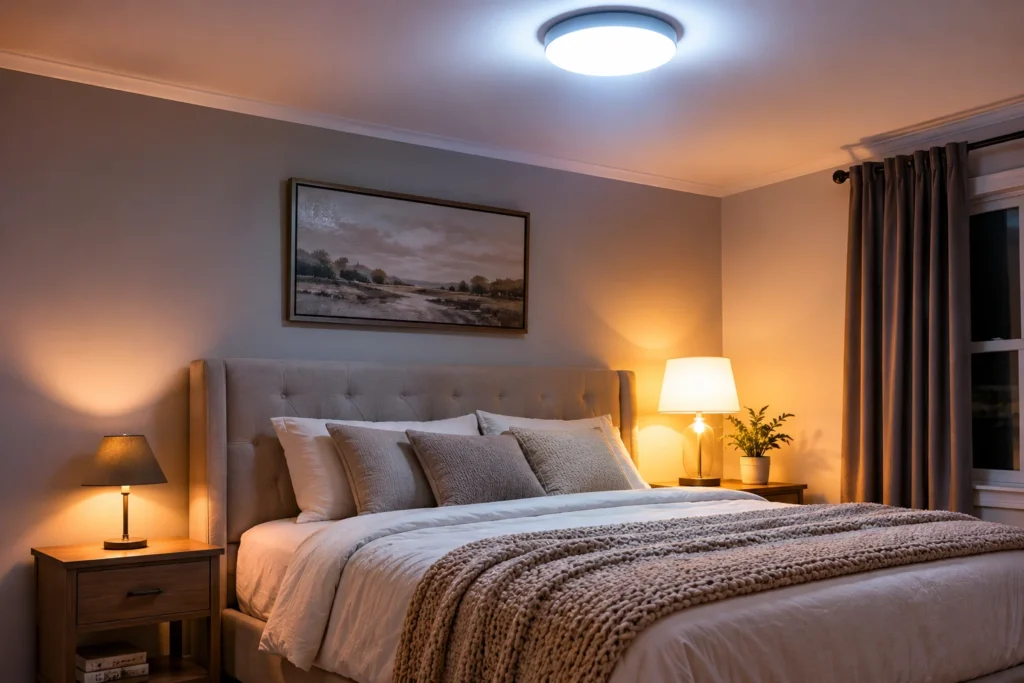
Many bedroom lighting problems come from selecting fixtures without considering brightness, placement, and daily routines.
- Using excessively cool lighting: High color temperatures may create an overly clinical atmosphere.
- Choosing bulbs by watts alone: Compare lumens and Kelvin values instead.
- Ignoring dimmer compatibility: Incompatible products may flicker or perform poorly.
- Mixing random color temperatures: Coordinate fixtures within each lighting zone.
- Using one overhead fixture: Add task and accent lights for greater flexibility.
- Buying excessively dim bulbs: Reading and dressing still require adequate visibility.
- Ignoring natural daylight: Evaluate artificial lighting alongside windows and curtains.
- Exposing bright bulbs: Choose appropriate shades and diffusers to reduce glare.
Recommended LED Bulbs for Warm and Cool Bedroom Lighting
If you’re ready to upgrade your bedroom lighting, these three LED options cover different needs. My selections prioritize color-temperature flexibility, everyday usability, and fixture compatibility.
Affiliate disclosure: As an Amazon Associate, I earn from qualifying purchases. The selections below are based on published product specifications rather than hands-on testing or verified customer ratings.
🏆 Best for Smart Lighting
Philips Hue White Ambiance A19 LED
Key specification: 2200K–6500K adjustable white light.
This smart bulb supports a wide range of white color temperatures. I would choose it for a bedroom that needs adjustable morning and evening lighting.
💡 Best for Warm Lighting
GE Relax HD Soft White A19 LED
Key specification: 2700K, 800 lumens for the 60W-equivalent version.
This fixed-temperature bulb provides a traditional soft white appearance. I would consider it for general bedroom fixtures or compatible dimmable lamps.
🔄 Best for Selectable Color
Feit Electric Selectable White A19 LED
Key specification: Five selectable settings from 2700K to 5000K.
The OM60DM-5CCT-4 model offers several white-light appearances without requiring smart-home controls. I would consider it when comparing temperatures before settling on a permanent setting.
Before purchasing, confirm the bulb base, voltage, fixture rating, dimmer compatibility, and regional electrical requirements. Specifications can differ between product versions.
Frequently Asked Questions
Is 2700K or 3000K better for a bedroom?
Both temperatures work well in bedrooms, but 2700K provides a softer appearance suitable for relaxation and bedside lamps. Choose 3000K if you prefer slightly cleaner white light for general ceiling illumination while maintaining a warm and comfortable atmosphere.
Is 4000K too bright for a bedroom?
4000K is a color temperature rather than a brightness measurement, so it is not automatically too bright. However, its cooler appearance may feel less relaxing than warm white light, making it more suitable for dressing areas and daytime bedroom workspaces.
Can I use 5000K daylight bulbs in my bedroom?
Yes, 5000K daylight bulbs can support dedicated daytime activities that benefit from a crisp white appearance. They are generally less suitable for evening ambient lighting, especially when used at high brightness or for extended periods before bedtime.
What color light is best for reading in bed?
Warm white to neutral-white lighting between 2700K and 3500K works well for most bedtime reading. Choose an adjustable lamp that directs adequate light onto the page without exposing your eyes to uncomfortable glare or illuminating the entire bedroom unnecessarily.
Does warm lighting use less electricity than cool lighting?
Warm lighting does not automatically consume less electricity than cool lighting because energy use depends on the bulb’s wattage, efficiency, and operating time. Compare the rated wattage and lumen output of individual LED products rather than relying on color temperature alone.
Final Verdict: Warm vs Cool Lighting for Bedrooms
Warm lighting is the better starting point for most bedrooms because it supports a comfortable and inviting atmosphere. Color temperatures between 2700K and 3000K offer a practical balance for everyday use.
Cool lighting still has value in dedicated daytime areas where you need a cleaner visual environment. Combining independent fixtures gives you more control without compromising the bedroom’s relaxing character.
- Best overall: 2700K–3000K.
- Best for evening relaxation: Dim 2200K–2700K lighting.
- Best for daytime tasks: 3500K–4000K.
- Best for flexibility: Dimmable or tunable white LED bulbs.
Start by replacing harsh bedside bulbs with comfortable warm-white LEDs. Then build a layered lighting arrangement that matches your bedroom layout, decorating style, and daily routine.