

Quick Answer
To choose a floor lamp for a bedroom, consider its purpose, height, brightness, color temperature, lampshade, and available floor space. A 55–65-inch floor lamp with a warm 2700K LED bulb and adjustable brightness is a practical starting point for many bedrooms. Combine it with other bedroom lighting options to create a comfortable, functional atmosphere.
How to choose the right bedroom floor lamp:
- Identify its purpose: Decide whether you need reading, ambient, or decorative lighting.
- Choose suitable height: Select a lamp that works with your bed, chair, and ceiling height.
- Use warm lighting: Choose approximately 2700K–3000K for a comfortable bedroom atmosphere.
- Check brightness: Start with 450–800 lumens for supplemental lighting and adjust according to your needs.
- Consider available space: Measure the lamp base, shade width, and surrounding clearance.
- Prioritize adjustability: Look for dimmers, adjustable heads, and convenient controls.
Practical tip:
- Choose a stable lamp with a shaded bulb that doesn’t shine directly into your eyes when lying in bed.
A good floor lamp can transform an empty bedroom corner into a comfortable reading space. The wrong one can create glare, waste floor space, and make your bedroom feel less inviting.
When choosing bedroom lighting, I recommend starting with functionality before appearance. This 2026 guide explains how to select a floor lamp that fits your room, decorating style, and everyday routine.
What Is a Floor Lamp for a Bedroom?

A bedroom floor lamp is a freestanding lighting fixture designed to provide illumination without requiring a table or permanent wall installation. It typically consists of a supporting base, an upright stand, a light source, and a shade.
Floor lamps work especially well in bedrooms with limited nightstand space or dark corners. They can also help reduce dependence on bright overhead lighting.
What are the benefits of bedroom floor lamps?
- Provide additional light without occupying tabletop space.
- Create comfortable reading areas beside chairs or beds.
- Add height and visual interest to bedroom decor.
- Offer flexible placement compared with permanent fixtures.
- Support layered lighting for different activities.
- Improve the appearance of dark or unused corners.
Unlike ceiling lights, floor lamps can usually be repositioned as your bedroom layout changes. That flexibility makes them useful for renters and homeowners alike.
How to Choose a Floor Lamp for a Bedroom: 11 Practical Tips
The best bedroom floor lamp balances lighting performance, comfort, appearance, and safety. Use the following eleven tips to narrow your options before purchasing.
1. Decide What You Need the Floor Lamp For
Start by identifying the main activity your floor lamp will support. A lamp designed for reading serves a different purpose from one intended to create soft background lighting.
- Ambient lighting: Provides gentle illumination across part of the bedroom.
- Task lighting: Directs light toward books, work surfaces, or specific activities.
- Accent lighting: Highlights artwork, furniture, or architectural features.
- Decorative lighting: Adds visual character while providing supplemental illumination.
If your bedroom already has a ceiling fixture, a shaded floor lamp can provide a softer evening alternative. An adjustable reading lamp makes more sense when you regularly read before bed.
2. Choose the Right Type of Floor Lamp
Floor lamps come in several designs, each producing a different lighting effect. Selecting the right type helps you avoid buying a lamp that looks attractive but performs poorly.
| Lamp Type | Typical Height | Best Use | Light Direction |
|---|---|---|---|
| Traditional shaded lamp | 55–65 inches | General bedroom lighting | Diffused |
| Reading floor lamp | 45–65 inches | Reading and hobbies | Focused downward |
| Arc floor lamp | 65–85 inches | Bedroom seating area | Overhead downward |
| Torchiere floor lamp | 60–75 inches | Indirect ambient lighting | Upward |
| Tripod floor lamp | 55–65 inches | Decorative lighting | Diffused |
| Slim LED floor lamp | 45–70 inches | Small bedrooms | Varies by design |
These height ranges are approximate shopping guidelines. Individual lamp dimensions vary by manufacturer and model.
For most bedrooms, a traditional shaded floor lamp offers a useful balance between appearance and everyday lighting. Choose an adjustable reading model when focused illumination matters more.
3. Select the Correct Floor Lamp Height
A bedroom floor lamp around 55–65 inches tall works well for many standard layouts. However, the ideal height depends on your furniture, seating position, and shade design.
- Beside a bed: Start by considering lamps around 50–65 inches tall.
- Beside a reading chair: Consider adjustable models around 45–65 inches tall.
- In an empty corner: A 60–75-inch lamp can add vertical interest.
- For a low ceiling: Choose a shorter lamp that leaves sufficient clearance.
- For a high ceiling: A taller lamp may create better visual balance.
I recommend measuring your seated eye level before choosing a reading lamp. Position the shade so it directs light toward your book without exposing the bright bulb.
A lamp that looks proportional while standing may still create uncomfortable glare when you sit down. Check both positions.
4. Choose a Comfortable Brightness Level
Floor lamp brightness is measured in lumens, which describe the amount of light a source produces. Watts measure electricity consumption rather than brightness.
The U.S. Department of Energy provides consumer guidance on selecting energy-efficient lighting and comparing light output.
| Lighting Purpose | Suggested Starting Output |
|---|---|
| Soft evening accent lighting | 200–450 lumens |
| Supplemental ambient lighting | 450–800 lumens |
| Focused reading lighting | 450–800 lumens |
| Brighter corner illumination | 800–1,500 lumens |
These figures describe approximate light-source output rather than guaranteed illumination at your reading surface. Shade opacity, distance, wall color, and light direction all affect perceived brightness.
5. Select the Best Color Temperature
Color temperature describes how warm or cool a light appears. It is measured in kelvin, commonly written as K on bulb packaging.
For bedroom floor lamps, approximately 2700K–3000K is a comfortable starting range. Lower color temperatures generally produce a warmer appearance.
- 2200K–2700K: Extra-warm to warm illumination for relaxing evenings.
- 2700K–3000K: Warm white lighting for everyday bedroom use.
- 3500K–4000K: Neutral white lighting for detailed activities.
- 5000K and above: Cooler daylight-style lighting for specialized tasks.
For a bedroom that feels welcoming at night, I would prioritize warm-white bulbs over cool daylight models. Adjustable brightness is equally important during evening use.
6. Pick the Right Lampshade Material
The lampshade influences both the appearance and distribution of light. A translucent shade spreads light differently from an opaque metal shade.
- Linen: Creates a soft, textured appearance suitable for relaxed bedrooms.
- Cotton: Provides a simple, diffused lighting effect.
- Metal: Directs light toward specific areas, making it useful for reading.
- Frosted glass: Softens the appearance of the light source.
- Paper: Produces a lightweight, softly illuminated appearance.
- Rattan: Adds natural texture and may create patterned shadows.
Check whether you can see the bare bulb through the shade while sitting or lying down. Direct exposure can make otherwise comfortable bedroom lighting feel harsh.
7. Measure Your Available Floor Space
Bedroom floor lamps need enough clearance for their bases, shades, cords, and adjustable arms. A narrow stand doesn’t necessarily mean a compact lamp.
Before ordering, measure these areas:
- Available width between furniture and walls.
- Floor lamp base diameter or leg spread.
- Maximum lampshade width.
- Distance to the nearest electrical outlet.
- Clearance around doors, drawers, and walking paths.
- Overhead space for curved or adjustable lamp arms.
For example, an 18-inch-wide gap may accommodate a lamp with a 10-inch base. A 22-inch shade could still interfere with nearby furniture.
Measure the entire fixture, not just its stand.
8. Look for Dimmable and Adjustable Features
A dimmable bedroom floor lamp lets you change brightness throughout the day. Adjustable lamp heads also help direct light exactly where you need it.
- Built-in dimmer: Adjusts brightness without replacing the bulb.
- Flexible gooseneck: Helps position light over a reading surface.
- Adjustable arm: Changes the direction and reach of the lamp.
- Remote control: Allows convenient operation from bed.
- Foot switch: Makes switching the lamp on and off easier while standing.
- Smart controls: May provide scheduling and adjustable lighting scenes.
Make sure the bulb and dimmer are compatible. Not every LED bulb works with every dimming system.
9. Match the Floor Lamp With Your Bedroom Decor
A floor lamp should complement your bedroom furniture instead of competing with it. Consider the materials, colors, and proportions already present in your room.
- Modern bedroom: Slim metal lamps with clean lines.
- Minimalist bedroom: Simple black, white, or neutral designs.
- Traditional bedroom: Fabric shades and classic metal finishes.
- Scandinavian bedroom: Light wood and understated shades.
- Bohemian bedroom: Natural materials and woven textures.
- Luxury bedroom: Brass finishes, frosted glass, and refined silhouettes.
You don’t need every lighting fixture to match exactly. Repeating one material or accent color can create a coordinated appearance.
Use this bedroom decor checklist to coordinate your lighting with other essential room elements.
10. Prioritize Energy Efficiency
LED floor lamps are a practical choice because they generally consume less electricity than traditional incandescent lighting for comparable light output. They also tend to last longer.
When comparing LED floor lamps, check:
- Light output in lumens.
- Actual energy consumption in watts.
- Bulb replacement options.
- Rated operating life.
- Dimming compatibility.
- Manufacturer warranty.
Consult Energy Star lighting guidance when comparing energy-efficient bulbs and compatible lighting products.
A floor lamp with a replaceable LED bulb may be easier to maintain over time. Integrated LED models can offer compact designs but may require more extensive repairs if the light source fails.
11. Check Stability, Build Quality, and Safety
A bedroom floor lamp should remain stable during normal use. This matters especially in homes with children, pets, or narrow walking areas.
- Choose a sturdy, appropriately weighted base.
- Inspect the joints and adjustment mechanisms.
- Check for recognized electrical safety certification.
- Keep electrical cords away from walking paths.
- Avoid running cords underneath rugs or carpets.
- Follow the manufacturer’s maximum bulb wattage.
- Keep curtains and bedding away from hot components.
The Consumer Product Safety Commission provides guidance on household electrical safety and consumer product hazards.
Never use a lamp with damaged wiring, unstable connections, or a cracked electrical plug. Repair or replace damaged equipment before use.
Where Should You Place a Floor Lamp in a Bedroom?
Place a bedroom floor lamp where it supports a specific activity without obstructing movement. Beside the bed, near a reading chair, and in an unused corner are common options.
Beside the bed
A floor lamp beside the bed can replace a traditional table lamp when nightstand space is limited. Choose an accessible switch and position the shade to prevent glare.
Compare this arrangement with other options in our guide on how to choose bedside lamps.
Next to a reading chair
Position an adjustable lamp slightly behind or beside your shoulder. Aim the light toward your reading material rather than your face.
In a dark bedroom corner
A shaded or upward-facing lamp can brighten a dark corner and improve visual balance. Light-colored walls may help distribute reflected light more effectively.
Near a dressing area
A floor lamp can provide supplemental illumination near a dresser or wardrobe. Avoid relying on a single side light for tasks that require even facial illumination.
What Is the Best Floor Lamp for a Small Bedroom?
A slim LED floor lamp or compact shaded lamp with a narrow base is often the most practical option for a small bedroom. Adjustable models provide additional flexibility without requiring another lighting fixture.
For a compact bedroom, prioritize:
- A narrow, stable base.
- A compact lampshade.
- Vertical rather than outward-extending construction.
- Dimmable warm-white lighting.
- Conveniently positioned controls.
Avoid oversized arc lamps or wide tripod bases unless your layout has sufficient clearance. Keeping the floor area open makes the room easier to navigate.
Floor Lamp vs. Bedside Table Lamp: Which Is Better?
A floor lamp is usually better when tabletop space is limited or you need additional corner lighting. A bedside table lamp is often more convenient for reading and switching lights off from bed.
| Feature | Floor Lamp | Table Lamp |
|---|---|---|
| Typical height | 45–75 inches | 20–30 inches |
| Required space | Floor area | Tabletop area |
| Placement flexibility | High | Requires supporting furniture |
| Bedside accessibility | Depends on controls | Generally convenient |
| Ideal location | Corners and seating areas | Nightstands and dressers |
Neither lamp type is automatically better for every bedroom. Combining both can provide greater control over your lighting throughout the day.
Common Mistakes When Choosing Bedroom Floor Lamps
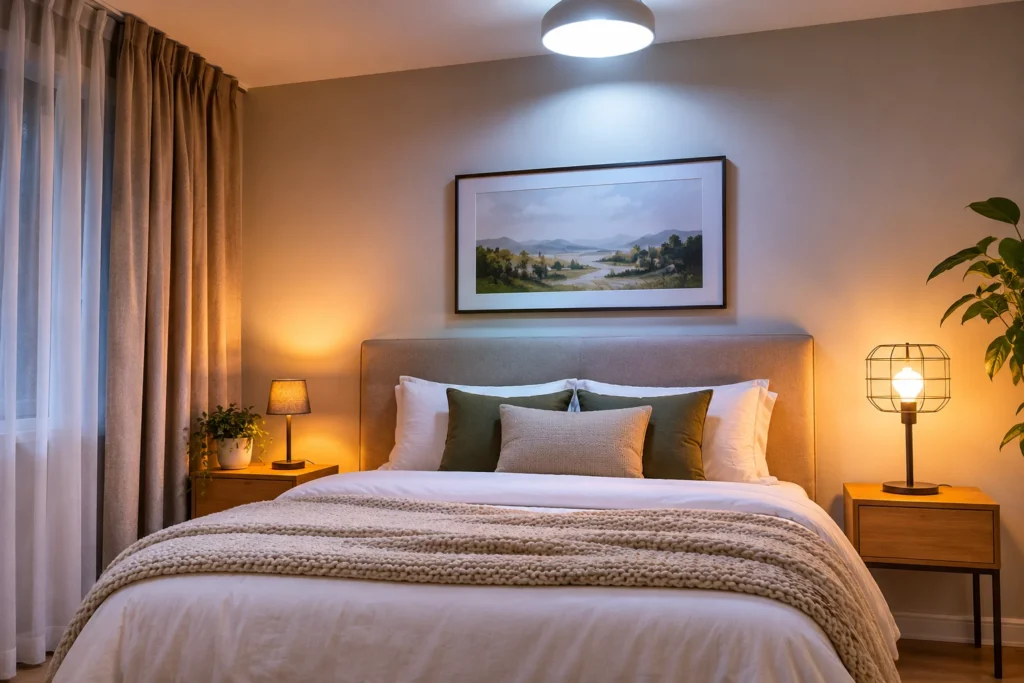
Most floor lamp problems come from overlooking placement, brightness, or everyday usability. Avoid these mistakes before purchasing a new fixture.
- Buying a lamp without measuring its complete dimensions.
- Choosing brightness based only on wattage.
- Using unnecessarily cool, bright lighting for evening relaxation.
- Ignoring direct glare from exposed bulbs.
- Selecting an unstable or poorly constructed base.
- Forgetting to check switch accessibility.
- Blocking doors or drawers with an oversized lamp.
- Buying a dimmer that is incompatible with the bulb.
A practical bedroom lighting arrangement should feel comfortable during normal use, not just look attractive in photographs.
Best Floor Lamps for Bedrooms: 3 Products to Consider
If you’re ready to purchase a bedroom floor lamp, these three models offer different approaches to ambient lighting, reading, and adjustable illumination.
Affiliate disclosure: As an Amazon Associate, we earn from qualifying purchases. Product recommendations are based on published specifications and design suitability rather than hands-on testing.
🏆 Best for Ambient Lighting
Brightech Luna LED Floor Lamp
Features a frosted glass globe and a replaceable LED bulb, with listed configurations offering 800 lumens and 2700K warm-white lighting. I’d consider this model for bedrooms that need decorative, softly diffused illumination.
📖 Best for Reading
IKEA RANARP Floor/Reading Lamp
An adjustable arm and lamp head help direct illumination toward books and seating areas. I would choose this design for a dedicated bedroom reading corner.
💡 Best for Adjustable Lighting
Brightech Litespan Slim LED Floor Lamp
Selected versions feature a flexible neck, dimming controls, and adjustable color temperature. I’d consider this model for smaller bedrooms that need focused lighting for reading and hobbies.
Check the current product listing for exact dimensions, brightness, available settings, warranty, and bulb compatibility before ordering.
Frequently Asked Questions
How tall should a floor lamp be in a bedroom?
A bedroom floor lamp around 55–65 inches tall is a suitable starting point for many rooms. The ideal height depends on furniture proportions, ceiling height, and lighting purpose. Position the shade to prevent direct glare while sitting or lying down.
What is the best light color for a bedroom floor lamp?
Warm-white lighting between 2700K and 3000K is a practical choice for most bedrooms. It creates a softer appearance than cooler daylight-style lighting. Choose a dimmable bulb or adjustable fixture if you need different brightness levels for reading and relaxation.
Can a floor lamp replace a ceiling light in a bedroom?
A floor lamp can provide sufficient illumination for certain activities, particularly in small bedrooms. However, one lamp may not distribute light evenly throughout the room. Combining multiple independently controlled light sources generally provides greater flexibility and better overall coverage.
Are LED floor lamps good for bedrooms?
Yes. LED floor lamps offer energy-efficient illumination and come in various brightness levels, color temperatures, and designs. Choose a warm-white model with comfortable light diffusion, suitable electrical safety certification, and compatible dimming controls if adjustable brightness is important.
Should a bedroom floor lamp be dimmable?
A dimmable floor lamp is useful because bedroom lighting requirements change throughout the day. Higher brightness can support reading, while lower settings create a gentler evening atmosphere. Always confirm that the LED bulb, fixture, and dimming system are compatible.
Final Thoughts
Learning how to choose a floor lamp for a bedroom starts with understanding your lighting needs. Consider brightness, color temperature, height, shade design, floor space, and build quality before choosing a model.
For general bedroom use, a stable shaded floor lamp with warm-white LED lighting and dimming controls is a practical starting point. Choose a directional model if reading is your main priority.
Take a few minutes to measure your room and identify where additional light would make the biggest difference. A thoughtfully selected floor lamp can improve both bedroom functionality and everyday comfort.
For more ideas on creating a coordinated space, explore our complete guide on how to decorate a bedroom.