

⚡ Quick Answer
A well-decorated living room starts with function, measurements, and a clear layout. Choose your color plan next. Then add correctly sized furniture, a large enough rug, layered lighting, curtains, art, and texture. Finish with personal decor only after the room works well.
The best order for decorating your living room
- 1Measure the room and define how you use it.
- 2Choose one focal point and plan furniture around it.
- 3Build a simple color palette around fixed finishes.
- 4Add furniture, rugs, lighting, curtains, and artwork.
- ✓Edit accessories until every item has a purpose.
Living room mistakes to avoid
- ✓Don’t buy furniture before measuring the space.
- ✓Don’t use a tiny rug between large seats.
- ✓Don’t rely on one harsh ceiling light.
Soft light falls across the sofa, but the room still feels unfinished. Furniture sits everywhere, yet nothing seems connected.
James Fox follows one simple rule: solve function before adding decoration. Start with the room’s purpose, scale, paths, and focal point.
Then build the look in layers. The result feels calm, useful, personal, and easier to update later.
📌 Key Takeaways
- →Layout comes first. Furniture placement shapes comfort before color or accessories matter.
- →Scale creates balance. Furniture and rugs should suit the room’s true size.
- →Light needs layers. Ambient, task, and accent sources create more useful rooms.
- →Accessories finish rooms. They should support the design instead of hiding problems.
Where Should You Start When Decorating a Living Room?
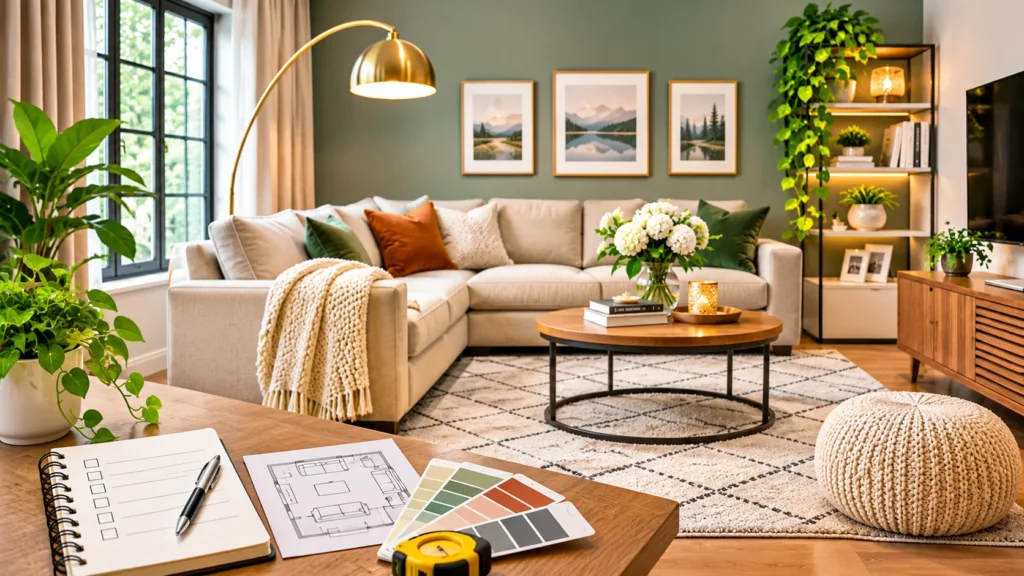
Start by measuring the room and deciding what happens there each day. Note doors, windows, outlets, walkways, and fixed features before buying anything.
Then choose the room’s main purpose. A family movie room needs different seating from a formal conversation space.
Next, identify the feature that deserves the most attention. It can be a fireplace, window, television, artwork, or architectural wall.
Your style comes after those choices. Pick a direction that supports your life instead of copying one photo.
Modern, traditional, coastal, rustic, and mixed rooms can all work. Consistency matters more than the style name.
For a broader foundation, review these living room design basics. They help connect function, scale, color, and light.
✅ Tip
Use painter’s tape to mark large furniture footprints before ordering anything.
Once the room has a job, the layout becomes much easier to solve.
How Do You Plan a Living Room Layout That Feels Comfortable?
A comfortable layout gives people a clear place to sit and move. Start with the focal point, then arrange the largest seating piece first.
Face or angle seating toward that focal point when possible. Next, add chairs that support conversation without blocking major paths.
Keep the center of the room connected. A rug and coffee table can visually join separate seats.
Don’t push every piece against a wall by default. Floating selected pieces can create a stronger seating zone.
Traffic should move around conversations instead of cutting through them. Doorways should also remain easy to reach.
If your room lacks direction, learn how to create a living room focal point. One clear anchor can fix a scattered layout.
How should you arrange seating for conversation?
Place seats close enough for relaxed conversation without creating a tight cluster. Angle chairs toward the sofa instead of lining every wall.
A coffee table can help center the group. Side tables also give each seat a useful landing place.
What should you do with an awkward living room?
Divide awkward rooms into simple zones. One zone can hold seating while another handles reading or work.
Use rugs, lamps, or open furniture to define each zone. Avoid tall dividers that block useful light.
Once movement feels natural, you can safely choose the room’s colors.
How Do You Choose a Living Room Color Scheme?
Start with colors already fixed inside the room. Flooring, stone, woodwork, and large furniture give you useful starting clues.
Choose one main color, one supporting color, and one smaller accent. This keeps the room connected without making everything match.
The 60-30-10 rule offers a simple starting point. Use 60% for the dominant color and 30% for support.
Save the final 10% for smaller accents. Pillows, artwork, lamps, and decorative objects work well there.
Light changes paint throughout the day. Test samples before covering every wall.
For a deeper process, use this guide to choose a living room color scheme. It covers fixed finishes, undertones, and testing.
This simple split shows how three color roles can work together.
Treat the ratio as a guide. Your room’s light and fixed finishes still come first.
With the palette set, you can choose larger pieces without guessing.
How Do You Choose Furniture and Rug Sizes That Fit?
Furniture should fit the room before it fits a trend. Measure the floor, walls, doorways, and delivery route before shopping.
Start with the sofa because it carries strong visual weight. Then add chairs, tables, storage, and a rug.
A rug should connect the seating instead of floating alone. In many layouts, front furniture legs should reach it.
Choose a coffee table that feels useful from the main seats. Leave enough room to walk around its edges.
Match visual weight across the room. A huge sectional can overwhelm tiny tables and thin chairs.
For detailed buying steps, see how to choose living room furniture. Measure before comparing fabric, color, or finish.
Should all living room furniture match?
No. Repeating a few colors, finishes, or shapes creates stronger unity. Matching sets can sometimes feel flat.
You can mix periods and styles carefully. Keep scale and visual weight consistent across nearby pieces.
⚠️ Safety Note
Anchor tall furniture and suitable television units when tip-over risk exists. Review the CPSC Anchor It guidance for official safety steps.
Correct scale gives the room structure. Lighting gives that structure depth.
How Do You Layer Lighting in a Living Room?
Use more than one light source because living rooms serve different tasks. Combine general light, focused task light, and softer accent light.
Ambient light brightens the whole room. Ceiling fixtures, pendants, or broad floor lamps can provide this layer.
Task light supports reading, hobbies, or focused work. Place table or floor lamps near the activity.
Accent light adds depth around art, shelves, plants, or architectural features. It should support the room’s focal point.
Choose bulbs by brightness and light appearance, not wattage alone. Warm light often feels comfortable in living areas.
The U.S. Department of Energy lighting guide explains lumens, color temperature, and bulb selection.
Where should living room lamps go?
Put task lamps beside places where people read or work. Use another lamp to soften a dark corner.
A lamp near the focal area can balance the room. Avoid placing every source at one height.
Should all living room bulbs match?
Keep nearby light sources reasonably consistent in warmth. Mixed light colors can make finishes look disconnected.
Once lighting feels balanced, textiles and art can add the room’s personality.
How Do You Add Curtains, Art, Texture, and Accessories?
Finishing layers should add warmth without hiding the room’s structure. Start with curtains, artwork, and textiles before adding small objects.
Curtains can soften hard edges and frame natural light. Full-length panels often create a more complete visual line.
Artwork should relate to the furniture beneath it. One large piece often looks calmer than many unrelated small pieces.
Texture stops a neutral room from feeling flat. Mix smooth, woven, soft, rough, matte, and reflective surfaces.
Pillows and throws can repeat existing colors. Decorative objects should add meaning instead of filling every empty surface.
Plants can add shape and natural texture. Choose species that suit the room’s actual light.
How many accessories should you use?
There is no fixed number for every room. Stop adding pieces when surfaces begin competing for attention.
Group a few objects instead of spreading many everywhere. Empty space helps decorative pieces look more important.
If you want a richer finish, see how to make a living room look expensive. Many upgrades involve editing, light, and scale.
The final challenge is making these same ideas work inside smaller rooms.
How Do You Decorate a Small Living Room Without Making It Feel Crowded?
Small living rooms need fewer, better-scaled pieces and clearer walking paths. Start with the essential seats before adding extra furniture.
Choose furniture that earns its floor space. Storage ottomans, nesting tables, and slim shelves can serve two jobs.
Keep the layout visually connected with one useful rug. Too many tiny zones can make the room feel broken.
Use wall space when floor space becomes tight. Art, shelves, and lighting can draw attention upward.
Let natural light move through the room. Avoid bulky pieces that block windows or major sightlines.
Large rooms need editing too. Small rooms simply reveal clutter faster.
🎯 Choose the Right Small-Room Move
If seating feels cramped
→ Remove one unnecessary chair or table.
If the room feels dark
→ Add light near the darkest usable corner.
If storage is limited
→ Choose one piece with hidden storage.
Small-space success comes from restraint. That same lesson fixes many common decorating mistakes.
What Most People Get Wrong About Living Room Decorating
Most decorating mistakes begin with shopping too early. People buy attractive pieces before understanding scale, function, color, or traffic flow.
Another mistake is treating every empty area as a problem. A room needs breathing room between furniture, walls, art, and objects.
People also confuse matching with harmony. A room can mix styles while sharing color, shape, scale, or material.
- Wrong belief: Every wall needs decoration. Empty wall space can create visual balance.
- Wrong belief: Small rooms need tiny furniture. Correct scale matters more than choosing miniature pieces.
- Wrong belief: Expensive decor fixes weak design. Layout and lighting usually matter first.
Another common error is copying a showroom exactly. Your living room must support your own routines.
The best rooms feel collected because each decision supports another. That principle also makes future updates easier.
What Should You Do Next With Your Living Room?
Start with function, then solve layout, scale, color, light, and finishing layers. That order prevents most costly decorating mistakes.
Your room does not need every trend. It needs pieces that work together.
Small improvements become powerful when the foundation already works. Right now, measure your living room’s length and width.
Frequently Asked Questions
What should I decorate first in a living room?
Start with the layout before decorating walls or buying accessories. Measure the room and identify its main function. Choose a focal point next. Then place major furniture before choosing rugs, lamps, curtains, art, and smaller decor.
What is the 60-30-10 decorating rule?
The 60-30-10 rule divides a room into three color roles. Use about 60% dominant color and 30% supporting color. Reserve 10% for accents. Treat these numbers as a starting guide rather than a strict measuring formula.
Should a sofa face the TV or the focal point?
Arrange the sofa around your room’s main activity and visual anchor. A television can serve as that anchor. A fireplace or window can lead instead. Angled seating can support two focal features when the room requires both.
What size rug makes a living room look bigger?
Choose a rug large enough to connect the main seating group. Tiny rugs can separate furniture visually. A larger rug usually creates one broader zone. Measure the room and furniture first because no single rug size fits every layout.
How many lamps should a living room have?
Use enough light sources to support the room’s different tasks. Combine ambient, task, and accent lighting instead of counting lamps alone. A reading corner needs focused light. Dark areas also benefit from their own softer source.
Can you mix different wood tones in a living room?
Yes, different wood tones can share one room successfully. Choose a dominant tone first. Repeat supporting tones in more than one place. Similar undertones also help separate pieces feel related without making every furniture finish identical.
How can I make a small living room look expensive?
Edit clutter before buying new decor. Use a calm color plan and correctly scaled furniture. Add layered lighting, full curtains, and one strong artwork piece. Repeating finishes and leaving empty space can also create a more intentional look.