

Quick Answer
A practical living room cleaning checklist has four levels: reset clutter and wipe spills daily; dust, clean frequently touched surfaces, vacuum upholstery, and clean floors weekly; tackle fans, baseboards, and hidden dust monthly; and deep-clean washable textiles, rugs, and hard-to-reach areas seasonally or when needed. Always match cleaning methods to the surface and its care label.
A clean living room is easier to maintain when you know which jobs need attention now and which can wait. The checklists below separate quick resets from deeper cleaning, so you do not have to scrub every surface every day.
Use the suggested frequencies as a starting point, not a rigid rule. Pets, children, heavy foot traffic, dust, and spills may call for more frequent care. A lightly used room may need less.
What Should You Check Before Cleaning Your Living Room?
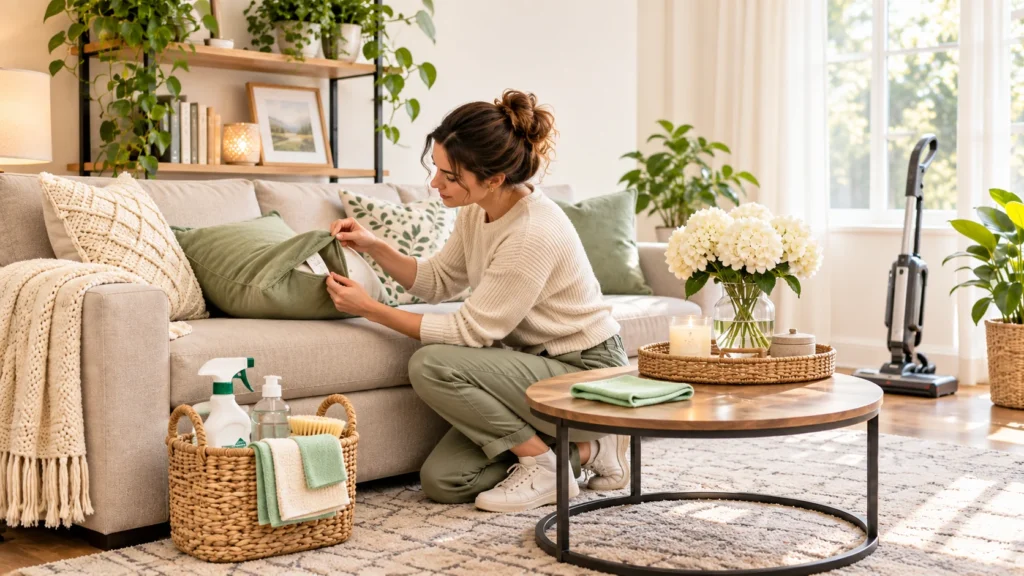
Start by identifying delicate materials, problem areas, and the tools you already have. A few checks can prevent unnecessary work or accidental damage.
- Furniture labels: Check upholstery, rug, wood, and leather care instructions before applying moisture or cleaning products.
- Visible problems: Note spills, stains, dust buildup, pet hair, and anything that smells damp.
- Electronics and cords: Turn off or unplug devices as directed by their manufacturers before wiping nearby surfaces.
- Clear routes: Move toys and small items out of walkways. Avoid lifting heavy furniture alone.
- Ventilation: If using a cleaning product, follow its label and provide appropriate ventilation.
Gather a microfiber cloth or duster, a vacuum with suitable attachments, a soft brush, a trash bag, a basket for misplaced objects, and a cleaner approved for the surfaces in your room. Add a mop only if you have a floor that can safely be mopped.
Daily Living Room Cleaning Checklist
A daily reset should handle visible mess, food spills, and items left out after normal use. Most homes do not need a full dust-and-vacuum session every day.
- ☐ Collect cups, dishes, wrappers, and other rubbish.
- ☐ Return books, toys, chargers, and remote controls to their usual places.
- ☐ Clear the coffee table and wipe spills with a surface-appropriate method.
- ☐ Straighten cushions and fold throw blankets.
- ☐ Spot-clean fresh messes promptly according to fabric or floor care instructions.
- ☐ Sweep or vacuum the main traffic area if visible dirt, crumbs, or pet hair has accumulated.
- ☐ Check the floor and walking routes for trip hazards.
If clutter keeps returning, the problem may be storage rather than cleaning. Give regularly used items an accessible home; our guide to keeping a minimalist living room organized explains how simple storage habits can help.
Weekly Living Room Cleaning Checklist
Once a week is a useful starting point for the main dusting and floor-cleaning routine. Work from higher surfaces down to the floor so loosened dust is collected at the end.
- ☐ Put away clutter. Remove objects from the areas you plan to clean instead of dusting around them.
- ☐ Dust shelves, frames, tables, and lamps. Use a suitable microfiber cloth or duster; protect fragile ornaments and finishes.
- ☐ Clean frequently touched surfaces. Wipe door handles, switches, and other hard surfaces with compatible cleaning products. Follow manufacturer instructions for remotes.
- ☐ Clean glass and mirrors as needed. Use an appropriate cloth and cleaner, keeping liquid away from frames and electronics.
- ☐ Vacuum upholstered seating. Use the upholstery attachment on seats, backs, and accessible crevices, checking care instructions first.
- ☐ Vacuum rugs and carpets. Adjust suction and brush settings for the rug’s construction and manufacturer guidance.
- ☐ Sweep or vacuum hard floors. Collect grit before mopping, if the floor finish permits mopping.
- ☐ Mop compatible floors when needed. Use a manufacturer-approved method and avoid leaving standing water.
- ☐ Empty the wastebasket and return items. Replace cushions, blankets, and decorations only after surfaces have dried.
The American Cleaning Institute’s home cleaning routine similarly distinguishes everyday tidying from weekly floor cleaning and dusting.
Monthly Living Room Cleaning Checklist
Monthly cleaning targets dust that routine tidying misses. Split these tasks across several weeks if doing them all at once feels overwhelming.
- ☐ Dust ceiling fan blades and reachable light fixtures safely, with the power off.
- ☐ Vacuum or dust accessible baseboards, corners, and window tracks.
- ☐ Clean window glass and frames where reachable and safe.
- ☐ Dust blinds and washable window coverings according to their instructions.
- ☐ Clean behind lightweight furniture and under sofas where safely accessible.
- ☐ Remove cushions and vacuum deeper into sofa seams and crevices.
- ☐ Launder washable throw blankets and cushion covers as their labels allow.
- ☐ Wipe accessible shelves and sort accumulated papers or miscellaneous items.
- ☐ Inspect the TV area for dust buildup and make sure cables remain tidy and undamaged.
Monthly does not mean mandatory. For example, a ceiling fan in frequent use may gather visible dust sooner, while a rarely used guest sitting room may require less attention.
Seasonal or Deep Living Room Cleaning Checklist
Deep cleaning focuses on textiles, hidden spaces, and neglected details. Schedule these jobs when the room needs them and when the relevant materials can be cleaned safely.
- ☐ Wash or professionally clean curtains and other window treatments if their care labels permit.
- ☐ Arrange a suitable deeper clean for carpets and rugs when vacuuming no longer addresses soil or stains.
- ☐ Assess upholstery for stains, odors, or embedded dirt; follow the furniture’s care code before trying wet methods.
- ☐ Clean reachable areas behind furniture, avoiding unsafe lifting or unstable items.
- ☐ Gently dust reachable wall corners, vents, and trim with suitable tools.
- ☐ Remove belongings from storage baskets or cabinets, clean the interior, and return only what belongs.
- ☐ Inspect wood, leather, and other specialty surfaces for care needs; use only recommended products.
- ☐ Check the fireplace or heating area, if present, and follow equipment guidance rather than attempting unfamiliar maintenance.
Deep cleaning is also a chance to make the room easier to maintain. Keep clear access around furniture and storage; a functional living room layout makes everyday cleaning and movement simpler.
What Is the Best Order for Cleaning a Living Room?
The most efficient general sequence is declutter, dust high areas, clean surfaces, refresh upholstery, and finish with floors. That way, dust and crumbs dislodged during earlier steps are collected at the end.
- Remove rubbish, dishes, and misplaced items.
- Start with accessible higher fixtures, shelves, and wall edges.
- Dust tables, cabinets, decorations, and other lower hard surfaces.
- Clean touched surfaces and appropriate glass or mirrors.
- Vacuum the sofa, chairs, and accessible furniture crevices.
- Vacuum rugs and the remaining floor area.
- Mop compatible hard flooring, allow it to dry, and put the room back together.
If you are handling a fresh spill, clean it immediately instead of waiting for its place in the sequence. The order is a useful workflow, not a reason to let stains set.
How Should You Clean Different Living Room Surfaces Safely?
Fabric Sofas and Upholstered Chairs
Start with loose debris and gentle vacuuming where permitted. Before using liquid or a stain remover, read the furniture label and test an appropriate product in an inconspicuous location. Do not assume every fabric can be steam-cleaned or washed with water; if its care instructions are unclear, seek manufacturer guidance.
Rugs and Carpets
Vacuum using the appropriate attachment and setting for your rug. Delicate, handmade, or specialty-fiber rugs may need different handling. For a spill, blot rather than rubbing aggressively, and follow the manufacturer’s stain-treatment instructions. Avoid soaking rugs or carpet backing.
Wood Tables and Other Finished Furniture
Use a soft cloth and a finish-compatible cleaner. Do not leave water pooled on wooden surfaces. Products intended for raw wood, sealed wood, stone, and glass are not always interchangeable.
Televisions, Remotes, and Other Electronics
Follow the device maker’s cleaning directions. Avoid spraying liquid directly onto screens, ports, switches, or openings. A cloth approved for the device is usually safer than applying an all-purpose cleaner indiscriminately.
Cleaning Safety
Never mix bleach with ammonia, acids, or other cleaning products. Use suitable products as directed, provide ventilation when required, and keep cleaners away from children and pets. More disinfectant is not necessarily better cleaning.
When Does Cleaning Need to Become Disinfecting?
For routine household cleaning, cleaning is generally enough. Disinfecting may be appropriate when someone is sick or when a household member is at increased risk of illness. Clean dirt from the surface first, then follow the disinfectant’s label, including suitability and required wet contact time.
The CDC’s home cleaning and disinfecting guidance explains this distinction and advises using manufacturer-appropriate methods on soft surfaces and electronics.
How Should the Checklist Change for Pets, Children, or Allergies?
The basic cleaning order stays the same, but the frequency should respond to what accumulates in your own room.
- Pets: Pick up visible fur more often, vacuum fabric seating when appropriate, and wash pet blankets according to their labels.
- Young children: Prioritize food spills, toys, reachable surfaces, and clear floors; keep all cleaning products securely stored.
- Allergies or dust sensitivity: Attend to dust-trapping fabrics and surfaces regularly, and consider a vacuum with suitable filtration and maintenance for your household’s needs.
- High foot traffic: Clean entry routes and floors sooner when grit becomes visible instead of waiting for a scheduled weekly pass.
If you cannot keep up with every task, tackle what affects hygiene, safety, and daily comfort first. Decorative polishing can wait.
What Can You Clean in Just 15 Minutes?
For an example of a quick reset, work through the room without opening drawers or starting a deep-cleaning project. Times are flexible, not promises.
- First 3 minutes: Collect rubbish and dishes.
- Next 4 minutes: Return visible clutter and clear the coffee table.
- Next 3 minutes: Wipe spills and commonly used hard surfaces.
- Next 3 minutes: Vacuum or sweep visible debris in the main walkway.
- Final 2 minutes: Straighten cushions, fold blankets, and remove the trash.
If a task takes longer, prioritize the mess that most affects how the room is used. A short reset does not replace regular cleaning, but it can prevent daily disorder from building up.
What Common Living Room Cleaning Mistakes Should You Avoid?
- Dusting after vacuuming: Loose dust can fall onto your newly cleaned floor. Usually, dust first and vacuum last.
- Using one cleaner on every material: Screens, wood finishes, upholstery, and rugs can have different care requirements.
- Wetting fabric without checking the label: Unsupported wet cleaning can leave marks or damage certain materials.
- Disinfecting everything daily: Ordinary cleaning is usually sufficient; disinfect for appropriate situations rather than automatically.
- Moving heavy furniture without help: Clean only where it is safe to reach, or arrange assistance.
- Keeping too many objects in cleaning zones: Overloaded surfaces make wiping and dusting slower. Reconsider storage before buying more cleaning supplies.
A cloth, duster, and appropriate vacuum attachments cover many routine jobs. You do not need a separate product for every task, but two reusable options may be helpful if your current tools are worn out.
Optional Cleaning Tools
Some shopping links below may earn a commission from qualifying purchases at no additional cost to you. No product is necessary to use this checklist.
For Shelves and Corners
OXO Good Grips Microfiber Hand Duster
A flexible, double-sided microfiber head reaches around furniture details and narrow spaces. Its removable head is washable according to OXO’s care directions. Useful for routine dry dusting, rather than wet-cleaning sensitive finishes.
For Everyday Wiping
E-Cloth General Purpose Cloth
A reusable microfiber cloth for compatible hard surfaces and general wiping. It can be rinsed between uses and washed according to the maker’s instructions. Check the furniture finish before using any damp cloth.
Frequently Asked Questions
How often should you deep-clean a living room?
There is no universal interval. Review hidden dust, rugs, upholstery, and washable textiles seasonally, then clean them when their condition and care instructions justify it. Busy homes may need more frequent attention.
Should you dust or vacuum the living room first?
Usually dust accessible higher surfaces first and vacuum floors afterward. This reduces the chance of dust settling onto flooring you have already cleaned.
Do you need to disinfect the living room every week?
Not usually. Regular cleaning is generally sufficient for most homes. Disinfection may be helpful when someone is ill or at increased risk, using a suitable product as directed.
What should you clean first when the room is very messy?
Remove trash and dishes, put away clutter, and clear walking routes. Once surfaces and floors are accessible, dust and clean in a top-to-bottom order.
The Simple Way to Keep Your Living Room Clean
Use the daily checklist to control visible mess, the weekly checklist to handle routine dust and floors, and the monthly and seasonal lists for less frequent tasks. Adjust the schedule to your room’s actual use and prioritize the correct method for each material. A consistent, manageable routine works better than trying to deep-clean everything every day.