

Quick Answer
Blackout curtains are designed to block nearly all light passing through their fabric, while room darkening curtains reduce incoming light without necessarily eliminating it. Blackout curtains are better for sleeping, nurseries, and home theaters, whereas room darkening curtains offer a balance between privacy and natural daylight. Your choice should complement your overall window decor and lighting needs.
Key Differences at a Glance
- Light control: Blackout curtains provide greater darkness, while room darkening curtains allow some light through.
- Sleep comfort: Blackout curtains are generally better for light-sensitive sleepers and daytime sleeping.
- Room appearance: Room darkening curtains can maintain a softer daytime atmosphere.
- Temperature control: Both types may improve thermal comfort, depending on their construction.
- Privacy: Both can provide excellent privacy when properly fitted.
- Best value: Room darkening curtains are often sufficient when complete darkness isn’t necessary.
Buying Tip
- Check the manufacturer’s light-blocking claim and measure your window carefully to minimize light leakage around the edges.
Choosing between blackout curtains and room darkening curtains can be surprisingly confusing. Both look similar online, but they can create very different experiences inside your home.
In this 2026 guide, I’ll explain their practical differences and help you choose the right curtains for your bedroom, living room, or other spaces.
What Are Blackout Curtains?
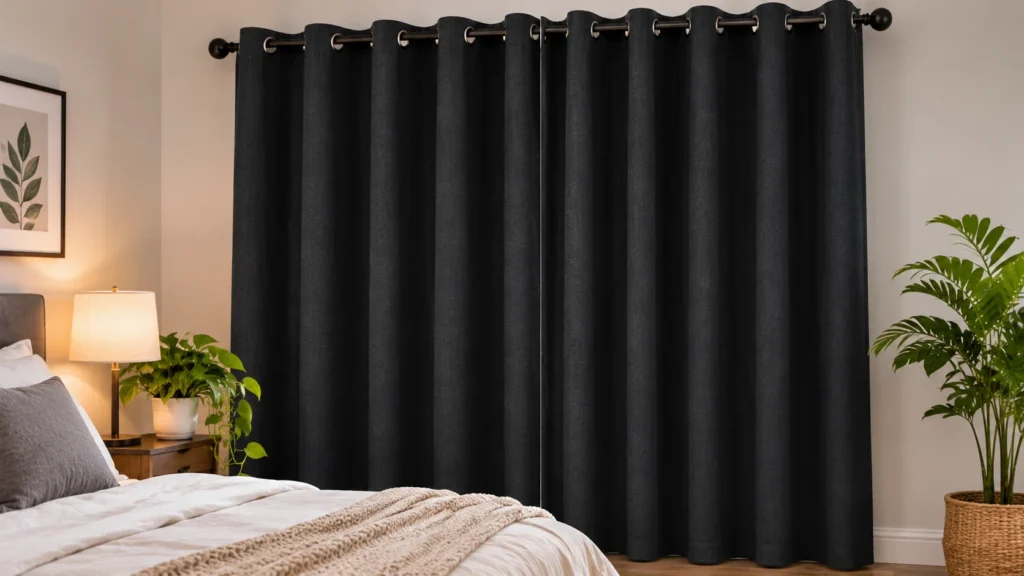
Blackout curtains are window coverings designed to prevent nearly all visible light from passing through their fabric. They typically use dense woven materials, opaque backing, or specialized blackout linings.
Unlike ordinary decorative curtains, their primary purpose is controlling unwanted light. However, blackout fabric alone cannot prevent light from entering around the window edges.
Key Features of Blackout Curtains
- High light blockage: Some products claim 100% light-blocking fabric performance.
- Opaque construction: Specialized linings or coatings prevent light transmission.
- Strong privacy: Properly closed panels prevent most outside visibility.
- Thermal potential: Heavy or insulated designs may reduce unwanted heat transfer.
- Versatile colors: Blackout curtains are available in white, beige, gray, and many other shades.
Blackout curtains are particularly useful in bedrooms facing streetlights or early morning sunshine. They also suit rooms where screen glare creates problems.
What Are Room Darkening Curtains?
Room darkening curtains are window treatments that reduce incoming sunlight while allowing some natural light to pass through their material. They create a noticeably dimmer room without necessarily producing complete darkness.
These curtains often feature tightly woven polyester, multiple fabric layers, or a partial light-blocking lining. Their effectiveness varies considerably between manufacturers and colors.
Key Features of Room Darkening Curtains
- Reduce harsh sunlight and daytime glare.
- Maintain some natural ambient light.
- Provide privacy when properly closed.
- Come in various textures, patterns, and styles.
- Often offer affordable alternatives to fully lined blackout curtains.
The IKEA room darkening curtain collection demonstrates how these window coverings can balance light reduction with everyday comfort.
Blackout Curtains vs Room Darkening Curtains: Comparison Table
The main difference between blackout and room darkening curtains is how much light passes through the fabric. Construction, installation, and product quality also influence their overall performance.
| Feature | Blackout Curtains | Room Darkening Curtains |
|---|---|---|
| Light blockage | Nearly total through verified blackout fabric | Partial to substantial |
| Fabric construction | Opaque backing or dense layers | Dense weave or partial lining |
| Daytime sleeping | Excellent choice | Depends on light sensitivity |
| Natural daylight | Minimal when closed | Some light remains |
| Privacy | Generally excellent | Generally good to excellent |
| Insulation | Depends on lining and fit | Depends on fabric and fit |
| Fabric weight | Often heavier | Light to heavy |
| Typical cost | Budget to premium | Often more affordable |
| Best rooms | Bedrooms, nurseries, theaters | Living rooms, offices, guest rooms |
Important: Curtain marketing terms do not guarantee a universal light-blocking percentage. Always check the specifications for the exact product and color you intend to buy.
How Much Light Do Blackout and Room Darkening Curtains Block?
True blackout fabric aims to prevent virtually all visible light transmission. Room darkening fabric allows a greater amount of light to pass through.
Some manufacturers advertise specific percentages, but their testing methods may differ. Use these claims as product-specific information rather than universal industry ratings.
Understanding Light-Blocking Claims
- 70% light blockage: Approximately 30% of incident light passes through under the stated test conditions.
- 90% light blockage: Approximately 10% passes through the material.
- 99% light blockage: Approximately 1% passes through.
- 100% light blockage: The manufacturer claims complete fabric-level blockage under its testing conditions.
Even a small amount of transmitted light can become noticeable once your eyes adjust to darkness. Installation gaps may create an even bigger difference than the fabric itself.
How to Test Curtain Light Blockage at Home
- Close the curtains during a bright afternoon.
- Turn off indoor lights.
- Allow your eyes a few minutes to adjust.
- Inspect the fabric for visible glowing areas.
- Check the sides, top, bottom, and center seam.
I recommend separating fabric leakage from installation leakage before replacing curtains. A better curtain rod or wider panels may solve the problem without buying new fabric.
Are Blackout Curtains Better for Sleeping?
Blackout curtains are generally better for people who need a dark sleeping environment. They are especially useful for daytime sleepers and bedrooms exposed to artificial outdoor lighting.
The CDC’s guidance on sleep environments recommends keeping sleeping spaces dark, including when sleeping during daylight hours.
Choose Blackout Curtains If You:
- Work night shifts and sleep during the day.
- Wake easily when sunlight enters the bedroom.
- Live near bright streetlights or illuminated buildings.
- Prefer a darker bedroom for daytime naps.
- Want better control over early morning light.
Choose Room Darkening Curtains If You:
- Enjoy waking naturally with morning daylight.
- Prefer a softly illuminated bedroom.
- Only need to reduce excessive sunlight.
- Already have blinds that provide additional darkness.
Curtains are only one part of a comfortable sleep environment. Your bedding, room temperature, noise levels, and bedroom lighting arrangement also deserve attention.
Which Curtains Provide Better Privacy?
Both blackout and room darkening curtains can provide excellent privacy when fully closed. Blackout curtains generally offer more reliable opacity because their fabric is designed to prevent light transmission.
However, privacy depends on the complete window treatment rather than the curtain label alone. Gaps between panels may expose the interior even when the fabric is completely opaque.
How to Improve Curtain Privacy
- Choose panels wider than the window opening.
- Overlap the curtains at the center.
- Use wraparound rods to reduce side gaps.
- Keep curtain edges close to the wall.
- Test privacy after dark with indoor lights switched on.
Nighttime testing matters because illuminated interiors can reveal silhouettes through some fabrics. Never assume a curtain provides complete privacy based only on its daytime appearance.
Do Blackout Curtains Keep Rooms Cooler?
Blackout curtains can help reduce solar heat entering a room when closed during sunny conditions. Their actual thermal performance depends on material, backing color, window construction, and installation.
Room darkening curtains may offer similar benefits when they feature suitable thermal linings. Greater light blockage does not automatically mean better insulation.
Features That Improve Thermal Performance
- Reflective backing: A suitable light-colored exterior-facing surface can reflect some solar radiation.
- Thermal lining: Additional fabric layers may reduce heat transfer.
- Close-fitting installation: Smaller gaps can limit air movement around windows.
- Full window coverage: Proper sizing helps shade more of the window.
The U.S. Department of Energy’s Energy Saver resources provide guidance on improving household energy efficiency, including window treatments.
I would prioritize thermal construction separately from blackout performance when overheating is the main problem. An expensive blackout curtain is not necessarily the best insulating option.
Do Blackout Curtains Reduce Outside Noise?
Heavy blackout curtains may absorb some indoor sound and slightly reduce certain outside noises. However, ordinary blackout curtains are not soundproof window treatments.
Room darkening curtains made from thick fabric may provide similar acoustic benefits. Noise reduction depends more on fabric mass, coverage, and window construction than the light-blocking label.
- Choose substantial fabric for better sound absorption.
- Use wider panels with generous folds.
- Address air leaks around windows and frames.
- Consider specialist acoustic solutions for serious noise problems.
Which Curtains Are Best for Each Room?
The best curtain type depends on how you use each room throughout the day. Spaces designed for sleep need different light control than social or working areas.
| Room | Recommended Type | Main Benefit |
|---|---|---|
| Primary bedroom | Blackout | Sleep-friendly darkness |
| Living room | Room darkening | Balanced daylight |
| Nursery | Blackout | Daytime nap light control |
| Home office | Room darkening | Reduced screen glare |
| Home theater | Blackout | Improved viewing conditions |
| Guest bedroom | Either type | Flexible comfort |
Blackout vs Room Darkening Curtain Materials
Curtain performance depends on fabric density, lining, and construction. Understanding these differences helps you avoid buying curtains based on appearance alone.
Common Blackout Curtain Materials
- Triple-weave polyester: Multiple woven layers help reduce light transmission, although performance varies.
- Coated polyester: An opaque coating helps prevent light from passing through the fabric.
- Lined linen blends: Decorative face fabric combined with a separate blackout backing.
- Lined velvet: A substantial fabric with additional lining for stronger light control.
Common Room Darkening Curtain Materials
- Dense woven polyester.
- Cotton and polyester blends.
- Partially lined linen-style fabric.
- Heavy jacquard or microfiber fabric.
White or beige blackout curtains can perform better than unlined black curtains. The internal construction matters more than the visible color.
How Do You Choose Between Blackout and Room Darkening Curtains?
Start by deciding how dark you want the room to become during the brightest part of the day. Then evaluate privacy, installation requirements, fabric appearance, and budget.
1. Evaluate Your Room’s Sunlight
East-facing bedrooms often receive strong morning sunlight. West-facing rooms may experience intense afternoon sunshine and unwanted heat.
Choose stronger light blockage when direct sunlight interferes with sleeping or screen visibility.
2. Consider Your Sleep Schedule
Daytime sleepers usually benefit from blackout curtains. People who enjoy gradually waking with daylight may prefer room darkening panels.
3. Choose the Right Fabric Weight
Heavy curtains create a substantial, layered appearance. Lighter materials may suit rooms where you want softer textures and easier daily operation.
If your room is compact, explore these tips on making a bedroom look bigger before selecting bulky curtains.
4. Check the Manufacturer’s Specifications
- Stated light-blocking performance.
- Fabric and lining composition.
- Individual panel width and length.
- Number of panels included.
- Available hanging methods.
- Washing and maintenance instructions.
5. Match Curtains to Your Bedroom Decor
Consider the relationship between your curtains, wall colors, bedding, and furniture. Neutral curtain colors often make future decorating changes easier.
Use a complete bedroom decor checklist to ensure your window treatments complement the rest of the space.
How to Install Curtains for Maximum Light Blockage
Proper installation is essential for achieving strong light control. Even high-quality blackout curtains can perform poorly when sunlight enters around their edges.
- Measure the window: Record its complete width and height.
- Extend the rod: Allow approximately 4 to 8 inches beyond each side when space permits.
- Mount the rod higher: Position it above the window frame to reduce top gaps.
- Choose sufficient fullness: Aim for a combined curtain width around 1.5 to 2 times the rod width.
- Overlap the center: Prevent a narrow vertical opening between panels.
- Reduce side leakage: Consider a wraparound curtain rod.
- Test the result: Inspect the window during bright daylight.
Practical Curtain Sizing Example
Consider a window measuring 60 inches wide. Extending the rod 6 inches on both sides creates a total rod width of 72 inches.
For approximately double fullness, choose a combined curtain width of 144 inches. Two 72-inch-wide panels would meet that target.
Pro Tip: Measure the width of each individual curtain panel rather than assuming the package dimensions refer to both panels combined.
Can You Layer Blackout and Room Darkening Curtains?
Yes, layering blackout curtains with another window treatment can improve flexibility and reduce light leakage. A double curtain rod or curtain-and-blind combination makes this approach practical.
Useful Curtain Layering Combinations
- Sheer and blackout curtains: Soft daylight during the day and stronger darkness at night.
- Room darkening curtains and blackout blinds: Flexible light control with decorative outer panels.
- Blackout curtains and roller shades: Better coverage for light-sensitive bedrooms.
- Decorative curtains and blackout liners: An upgrade for existing window treatments.
For bedrooms, I prefer the flexibility of separate sheer and blackout layers when space allows. You can adjust privacy and daylight independently without changing the room’s main decor.
Common Mistakes When Buying Blackout or Room Darkening Curtains
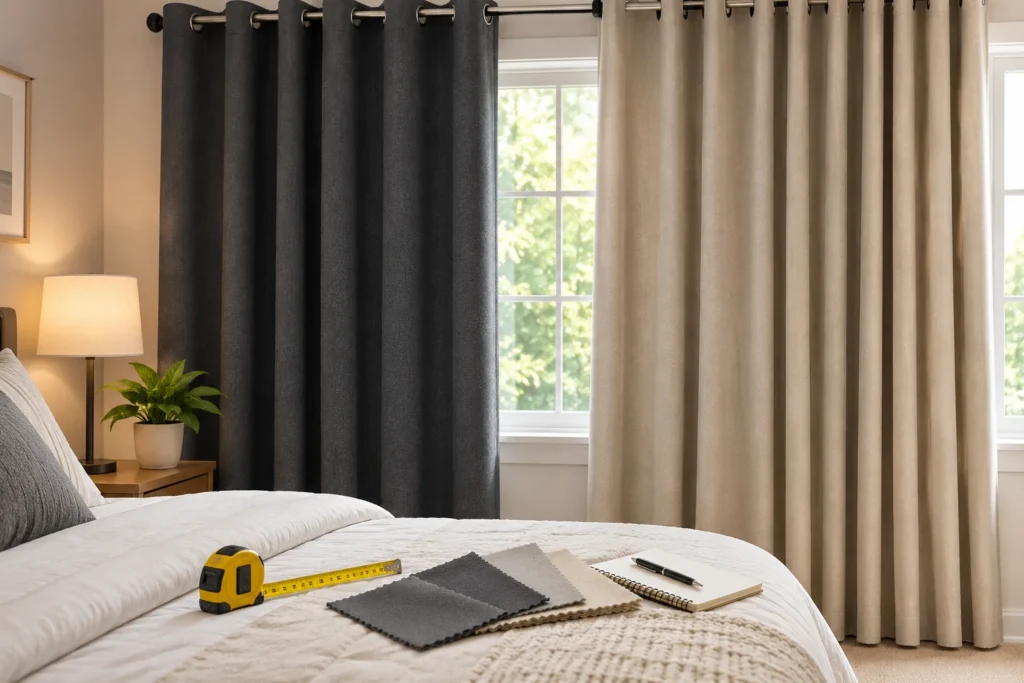
A curtain’s label does not tell you everything about its performance. Avoid these common purchasing and installation mistakes.
- Buying undersized panels: Narrow curtains leave gaps and reduce privacy.
- Assuming all blackout curtains perform identically: Light-blocking claims differ across products.
- Choosing by color alone: Dark fabric does not guarantee blackout performance.
- Ignoring the curtain rod: Straight rods may allow significant side leakage.
- Overlooking fabric care: Some coated curtains require special cleaning methods.
- Expecting complete soundproofing: Standard curtains cannot eliminate all outside noise.
- Ignoring daytime needs: Complete darkness may be unnecessary in active living spaces.
Independent product testing, such as the resources available through Consumer Reports, can help you evaluate light-blocking claims before purchasing.
How to Clean and Maintain Blackout and Room Darkening Curtains
Both curtain types require regular maintenance to prevent dust buildup and preserve their appearance. Always follow the care instructions for the exact fabric and lining.
- Vacuum gently using a soft brush attachment.
- Remove surface dust regularly.
- Spot-clean stains with an approved mild cleaner.
- Machine-wash only when the care label permits.
- Avoid ironing directly against blackout coatings.
- Allow curtains to dry completely before rehanging.
- Inspect curtain hooks, rods, and seams periodically.
Specialized blackout backings can deteriorate when exposed to excessive heat or unsuitable cleaning methods. Proper care helps preserve their light-blocking function.
Recommended Blackout and Room Darkening Curtains
If you’re ready to upgrade your windows, these three product lines offer different approaches to light control, appearance, and everyday comfort.
Disclosure: As an Amazon Associate, I earn from qualifying purchases. These recommendations are based on available product information rather than personal hands-on testing.
🏆 Best for Maximum Darkness
NICETOWN 100% Blackout Curtains
Best suited to light-sensitive sleepers
Choose the lined version specifically advertised as 100% blackout. I’d consider this option for bedrooms exposed to strong sunlight, provided the panels offer sufficient window coverage.
💰 Best Budget Option
Amazon Basics Blackout Curtains
Best suited to practical bedroom upgrades
These curtains offer a straightforward approach to bedroom light control. I’d compare the available sizes, lining details, and hanging styles before choosing a specific version.
🏡 Best for Balanced Daylight
IKEA ROSENMANDEL Room Darkening Curtains
Best suited to everyday living spaces
The room darkening version offers an alternative to fully opaque curtains. I’d choose it for a space where reducing glare matters more than achieving complete darkness.
Frequently Asked Questions
Are blackout curtains the same as room darkening curtains?
No, blackout curtains are designed to prevent almost all light transmission through their fabric, whereas room darkening curtains allow some light to pass through. Both offer privacy and sunlight control, but blackout curtains are generally more suitable for achieving a dark sleeping environment.
Do blackout curtains block 100% of sunlight?
Some blackout fabrics claim 100% light blockage under specific testing conditions. However, sunlight can still enter through gaps around the curtain edges, rod, and center seam, so achieving complete room darkness requires careful installation.
Are room darkening curtains dark enough for bedrooms?
Room darkening curtains can provide sufficient darkness for people who are comfortable sleeping with some ambient light. Light-sensitive sleepers, night-shift workers, and people exposed to bright outdoor lighting may benefit more from fully lined blackout curtains.
Can you turn room darkening curtains into blackout curtains?
Yes, adding a blackout curtain liner or installing a blackout roller blind behind existing room darkening curtains can significantly improve light control. Make sure the additional layer covers the entire window and minimizes gaps around its edges.
Are blackout curtains more expensive than room darkening curtains?
Blackout curtains are often more expensive when they use specialized coatings or additional linings. However, budget blackout curtains can cost less than premium room darkening designs, so compare construction, dimensions, and package contents rather than relying on curtain type alone.
Final Verdict: Blackout Curtains or Room Darkening Curtains?
When comparing blackout curtains vs room darkening curtains, the better option depends on how much darkness you need. Blackout curtains offer stronger light control, while room darkening curtains provide greater balance between daylight and privacy.
For bedrooms, nurseries, and home theaters, I recommend considering verified blackout fabrics. For living rooms, home offices, and spaces where natural daylight remains important, room darkening curtains are often the more practical choice.
Before purchasing, measure your window, review the fabric specifications, and consider how you use the room throughout the day.
The right curtains should make your home more comfortable, functional, and inviting without sacrificing your preferred decorating style.