

Quick Answer
The best rug size under a bed is usually 5×8 feet for a twin, 6×9 feet for a full, 8×10 feet for a queen, and 9×12 feet for a king. Aim for at least 18–24 inches of exposed rug on each accessible side of the bed. According to the bedroom rug sizing guide, larger rugs help create a balanced furniture arrangement.
Recommended rug sizes by bed type:
- Twin bed: Choose a 5×8-foot rug for comfortable everyday coverage.
- Full bed: A 6×9-foot rug provides balanced coverage around the mattress.
- Queen bed: An 8×10-foot rug suits most standard bedrooms.
- King bed: A 9×12-foot rug creates generous coverage on both sides.
- California king bed: Start with a 9×12-foot rug or consider 10×14 feet for larger rooms.
Quick measuring tip:
- Check the footprint: Measure your bed frame and mark the proposed rug outline with painter’s tape before buying.
Choosing what size rug goes under a bed can feel surprisingly complicated, especially when several rug sizes seem suitable. The wrong dimensions can make an otherwise beautiful bedroom feel cramped or unfinished.
I prefer choosing rug dimensions around the actual furniture layout rather than relying on mattress size alone. This 2026 guide explains the measurements, placement options, and practical details that help you get the size right.
What Is an Under-Bed Rug?
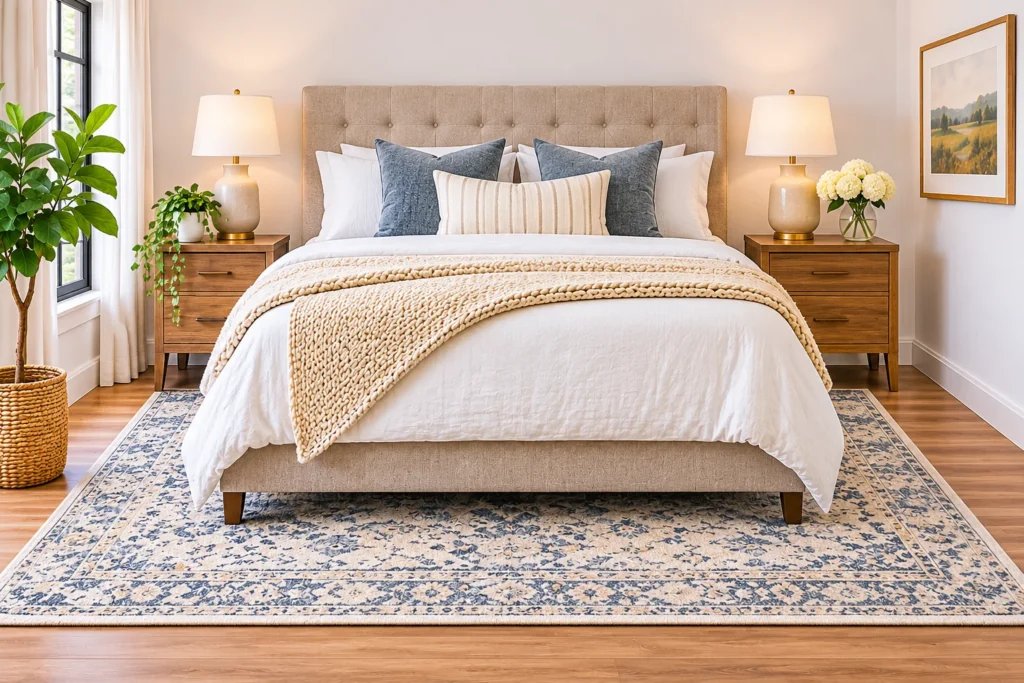
An under-bed rug is an area rug positioned completely or partially beneath a bed to provide comfort, visual balance, and floor protection. It creates a defined sleeping area while connecting the bed with surrounding furniture.
Unlike a small bedside mat, an under-bed rug typically extends beyond the bed frame. This gives you a comfortable surface to step onto each morning.
A properly sized bedroom rug serves several purposes:
- Comfort: Creates a warmer surface beneath your feet.
- Visual balance: Anchors the bed and makes furniture feel connected.
- Floor protection: Helps protect covered flooring from everyday wear.
- Sound absorption: Can reduce footsteps and room echoes.
- Room definition: Separates the sleeping area from other bedroom zones.
The ideal rug doesn’t need to cover every inch of the bedroom floor. It needs to complement the bed while leaving enough exposed flooring around the room.
Bedroom Rug Size Chart by Bed Size
The following bedroom rug size chart compares standard US mattress dimensions with practical area rug sizes. Actual bed frames may be several inches wider or longer than their mattresses.
| Bed Size | Mattress Dimensions | Recommended Rug | Alternative Size |
|---|---|---|---|
| Twin | 38 x 75 in. | 5 x 8 ft. | 4 x 6 ft. |
| Twin XL | 38 x 80 in. | 5 x 8 ft. | 6 x 9 ft. |
| Full | 54 x 75 in. | 6 x 9 ft. | 5 x 8 ft. |
| Queen | 60 x 80 in. | 8 x 10 ft. | 6 x 9 or 9 x 12 ft. |
| King | 76 x 80 in. | 9 x 12 ft. | 8 x 10 ft. |
| California king | 72 x 84 in. | 9 x 12 ft. | 10 x 14 ft. |
These recommendations assume that the rug’s longer dimension generally runs across the bed when using partial under-bed placement. Larger rugs can also run lengthwise when covering the bed and nightstands together.
What Size Rug Goes Under a Queen Bed?
An 8×10-foot rug is the best starting point for most queen beds. It offers generous coverage without requiring an exceptionally large bedroom.
A standard queen mattress measures 60 inches wide and 80 inches long. Positioning the 10-foot side across the mattress leaves approximately 30 inches of rug on either side before accounting for the frame.
6×9 vs. 8×10 vs. 9×12 Rugs for Queen Beds
- 6×9-foot rug: Works in smaller bedrooms when placed beneath the lower portion of the bed.
- 8×10-foot rug: Provides a comfortable balance of coverage, appearance, and floor space.
- 9×12-foot rug: Creates a more luxurious arrangement and may accommodate both nightstands.
For a queen bed in an average-sized bedroom, I’d start with an 8×10 rug. It offers enough flexibility to adjust the placement without exposing awkwardly narrow strips of material.
A larger rug makes more sense when the bedroom has substantial open floor space. Check the distance between the proposed rug edges and surrounding furniture before ordering.
What Size Rug Goes Under a King Bed?
A 9×12-foot rug is generally the best size for a king bed. An 8×10-foot rug can also work in a smaller bedroom with partial under-bed placement.
A standard king mattress measures 76 inches wide and 80 inches long. A rug needs sufficient width to extend beyond this substantial footprint.
Here are the most practical options:
- 8×10 feet: Suitable for compact rooms when the 10-foot edge runs across the bed.
- 9×12 feet: Offers generous bedside coverage and a balanced appearance.
- 10×14 feet: Works well in spacious primary bedrooms with additional furniture.
A small rug can disappear beneath a king-size bed. You may spend money on material that remains hidden instead of providing useful walking space.
The bedroom rug collections at Pottery Barn offer useful styling inspiration for larger furniture arrangements.
What Size Rug Goes Under a Full or Twin Bed?
A 6×9-foot rug suits most full-size beds, while a 5×8-foot rug works well beneath a twin bed. Both sizes provide useful coverage without overwhelming a smaller room.
Full-Size Bed Rug Placement
A full mattress measures approximately 54 by 75 inches. A 6×9 rug positioned across the bed provides ample space on both sides.
Consider a 5×8 rug if the bedroom has limited floor space. Keep the rug beneath the lower portion of the frame to maximize visible coverage.
Twin Bed Rug Placement
A twin bed offers more flexibility because its narrow frame occupies less floor space. A 5×8 rug can cover the lower bed area and provide a comfortable landing spot.
- Small children’s bedroom: Consider a 4×6 rug or a bedside rug.
- Standard twin bedroom: Choose a 5×8 rug for balanced coverage.
- Spacious guest bedroom: Consider a 6×9 rug for additional walking space.
- Two twin beds: Try an 8×10 or 9×12 rug beneath both beds if the room permits.
When a twin bed sits against a wall, you don’t need symmetrical coverage. Shift the rug toward the accessible side to make better use of its surface.
How Far Should a Rug Extend Beyond a Bed?
A bedroom rug should ideally extend at least 18–24 inches beyond each accessible side of the bed. Larger bedrooms may benefit from 24–36 inches of exposed rug.
This exposed area creates a comfortable place to stand when getting out of bed. It also prevents the rug from looking disproportionately small.
Calculate the Side Coverage
Subtract the bed frame’s width from the rug dimension that runs across the bed. Divide the remaining measurement by two for a centered arrangement.
Rug sizing formula: Side coverage = (rug width across the bed − actual bed frame width) ÷ 2.
For example, consider a queen bed frame measuring 66 inches wide. An 8×10 rug with its 120-inch dimension across the bed provides 27 inches of exposed rug on each side.
That measurement gives you a comfortable bedside landing area. It also accounts for the difference between mattress dimensions and the actual frame.
How Should You Position a Rug Under a Bed?
You can place a rug beneath the entire bed, beneath its lower two-thirds, or beside the bed. The best arrangement depends on available floor space and your furniture layout.
1. Place the Entire Bed on the Rug
This arrangement positions the bed and, when space permits, both nightstands on one large area rug. It creates a unified, hotel-inspired appearance.
- Best for large primary bedrooms.
- Works particularly well with 9×12 or 10×14 rugs.
- Requires enough depth to accommodate the entire furniture arrangement.
2. Place the Lower Two-Thirds of the Bed on the Rug
Slide the rug beneath the middle and lower sections of the bed while keeping the nightstands off it. This arrangement exposes more material around the sides and foot.
- Suitable for most standard bedrooms.
- Uses rug coverage efficiently.
- Works well with 8×10 rugs beneath queen beds.
3. Use Bedside Runner Rugs
Place a runner along each accessible side instead of buying one large rug. This creates comfortable walking areas without covering the floor beneath the bed.
- Ideal for narrow bedrooms.
- Generally easier to remove and clean.
- Useful when a large rug exceeds your budget.
Typical bedside runners measure approximately 2×6 or 2.5×8 feet. Choose dimensions that suit your walking area and avoid overlapping doorways.
How Do You Measure for a Rug Under a Bed?
Measure the bed frame, bedroom floor, and available walking space before choosing a rug. Include any nearby furniture that could interfere with rug placement.
- Measure the bedroom: Record the usable floor width and length.
- Measure the bed frame: Include its headboard, side rails, and footboard where relevant.
- Choose a placement style: Decide between full coverage, partial coverage, or runners.
- Calculate side coverage: Allow approximately 18–24 inches or more on accessible sides.
- Check surrounding furniture: Account for nightstands, dressers, benches, and door clearance.
- Mark the rug outline: Use painter’s tape to visualize the actual dimensions.
I favor the painter’s tape method because it makes the available walking space easier to judge. Product photos rarely communicate how a particular rug will fit your own bedroom.
Practical tip: Check the rug’s actual listed dimensions. Some products advertised as 8×10 feet measure slightly less than those nominal dimensions.