

Quick Answer
To choose a bed blanket, match its material, size, weight, and warmth to your sleeping preferences and bedroom temperature. Cotton works well for breathable everyday comfort, while fleece and wool offer extra warmth during colder months. Choose a blanket that covers your mattress comfortably and fits your preferred bedding layering arrangement.
6 Quick Steps to Choose the Right Blanket
- Choose your material: Select cotton for airflow, fleece for softness, or wool for insulation.
- Measure your mattress: Allow enough extra fabric for comfortable coverage on both sides.
- Match the season: Pick lightweight blankets for summer and thicker options for winter.
- Consider sleeping temperature: Hot sleepers need breathable fabrics, while cold sleepers benefit from insulating materials.
- Check care requirements: Choose a blanket you can wash and maintain conveniently.
- Coordinate your colors: Match the blanket with your sheets, furniture, and bedroom color scheme.
Best All-Around Choice
- A medium-weight cotton blanket offers a practical balance of comfort, breathability, versatility, and everyday maintenance for most bedrooms.
A comfortable bed starts with bedding that suits the way you sleep. Choosing the wrong blanket can leave you feeling too warm, too cold, or uncomfortable throughout the night.
I recommend treating a blanket as a functional bedding layer before considering its appearance. This guide explains how to choose a bed blanket that balances comfort, warmth, durability, and bedroom style.
What Is a Bed Blanket?
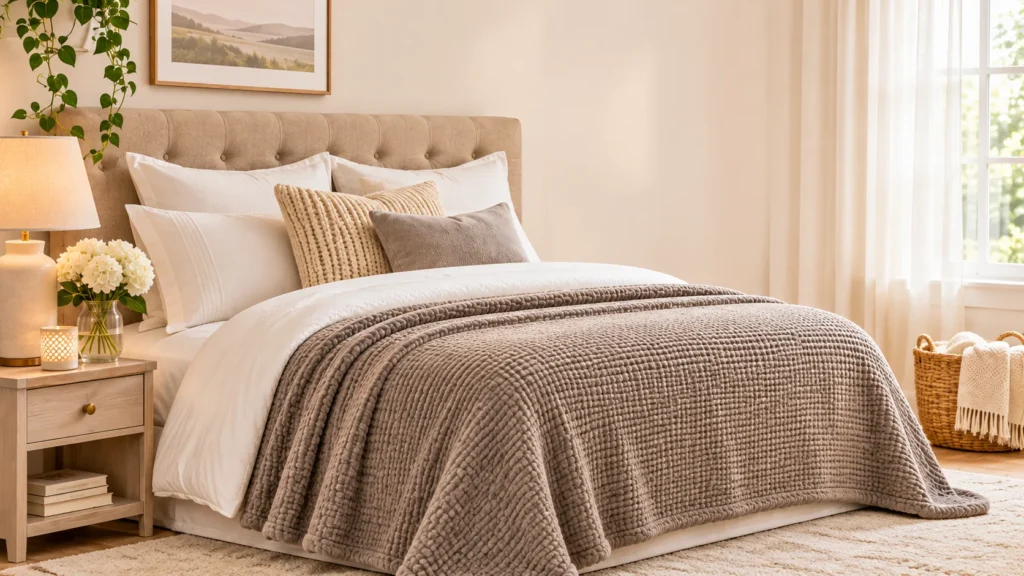
A bed blanket is a flexible fabric covering designed to provide warmth and comfort during sleep. It can serve as your primary covering or an additional layer beneath a quilt, duvet, or comforter.
Unlike most comforters, traditional blankets usually rely on their fabric construction rather than a separate insulating filling. This makes many blankets easier to fold, store, and combine with other bedding.
What Is the Difference Between a Blanket, Quilt, and Comforter?
These bedding items serve different purposes, even though people often use their names interchangeably. Understanding their construction helps you avoid purchasing unnecessary layers.
| Bedding Type | Construction | Best Use |
|---|---|---|
| Blanket | Woven, knitted, or fleece fabric | Adjustable everyday warmth |
| Quilt | Stitched fabric layers with batting | Light to moderate warmth |
| Comforter | Fabric shell containing insulating fill | Primary warm bedding layer |
| Bedspread | Large decorative fabric covering | Full-bed coverage and decoration |
| Throw | Small decorative blanket | Accent styling and personal warmth |
If you mainly want a decorative covering that extends farther down the sides, consider choosing a bedspread that fits your mattress instead.
1. Choose the Best Blanket Material for Your Needs
The best bed blanket material depends on your preferred warmth, fabric texture, and maintenance routine. No single material offers the ideal sleeping experience for everyone.
Cotton Blankets
Cotton blankets offer a breathable, familiar fabric feel that suits everyday use. Lightweight woven cotton works particularly well in warm bedrooms or beneath heavier bedding.
- Best for: Hot sleepers, summer bedding, and everyday layering.
- Advantages: Breathable construction, versatile textures, and generally straightforward cleaning.
- Considerations: Some cotton blankets shrink or become distorted when exposed to excessive heat.
Wool Blankets
Wool fibers help trap insulating air while managing moisture. A wool blanket can provide comfortable warmth without requiring a bulky filled covering.
- Best for: Cold bedrooms and people who prefer natural insulating fibers.
- Advantages: Warmth, moisture management, and potential long-term durability.
- Considerations: Certain wool varieties feel coarse, and washing requirements can be more demanding.
Fleece Blankets
Fleece blankets typically use polyester fibers with a soft, raised surface. Their plush texture provides comfortable insulation without the weight of many traditional wool blankets.
- Best for: Cold sleepers, guest bedrooms, and affordable winter bedding.
- Advantages: Softness, relatively quick drying, and convenient everyday care.
- Considerations: Some fleece fabrics develop static, pilling, or excessive heat buildup.
Microfiber Blankets
Microfiber blankets use fine synthetic fibers to create a smooth or plush surface. Many options offer an affordable way to add warmth and softness to a bed.
- Best for: Budget-conscious households and frequently used bedding.
- Advantages: Soft texture, accessible prices, and easy maintenance.
- Considerations: Breathability varies considerably with fabric density and construction.
Blankets Made From Bamboo-Derived Fibers
Many blankets marketed as bamboo bedding actually contain rayon or viscose derived from bamboo. These fabrics often have a smooth texture and flowing drape.
- Best for: People who prefer silky, flexible bedding.
- Advantages: Smooth surface and comfortable lightweight options.
- Considerations: Cooling performance varies, and some fabrics require gentle washing.
Check the actual fiber percentages rather than relying on marketing terms. The Federal Trade Commission’s textile labeling guidance explains the importance of accurate fiber identification.
Bed Blanket Material Comparison Table
| Material | Typical Warmth | Airflow | Best Season |
|---|---|---|---|
| Cotton | Light–medium | Generally high | All seasons |
| Wool | Medium–high | Variable | Fall and winter |
| Fleece | Medium–high | Variable | Fall and winter |
| Microfiber | Light–high | Variable | Depends on thickness |
| Viscose | Light–medium | Variable | Spring and summer |
These are general material characteristics, not standardized thermal ratings. Fabric thickness, weave, finishing, and construction affect actual performance.
2. What Size Bed Blanket Should You Choose?
Choose a blanket that covers your mattress and provides sufficient overhang for comfortable movement during sleep. Always compare the actual blanket dimensions rather than relying solely on twin, queen, or king labels.
Blanket sizing varies between manufacturers. A queen blanket from one brand may be noticeably shorter than another.
Standard Bed Blanket Size Guide
| Bed Size | U.S. Mattress Size | Example Blanket Size |
|---|---|---|
| Twin | 38 × 75 inches | 66 × 90 inches |
| Twin XL | 38 × 80 inches | 66 × 96 inches |
| Full | 54 × 75 inches | 80 × 90 inches |
| Queen | 60 × 80 inches | 90 × 90 inches |
| King | 76 × 80 inches | 108 × 90 inches |
| California King | 72 × 84 inches | 108 × 96 inches |
Blanket dimensions are practical shopping examples, not universal manufacturing standards. Deep mattresses and shared beds may require larger sizes.
How to Calculate Your Ideal Blanket Size
Measure your mattress width, length, and thickness before shopping. Then decide how much fabric you want hanging over each side.
- Blanket width: Mattress width plus twice your desired side overhang.
- Blanket length: Mattress length plus your desired foot overhang and any additional tucking allowance.
- Shared beds: Consider extra width if two sleepers frequently pull the covers in opposite directions.
Practical example: A 90-inch-wide blanket centered on a 60-inch-wide queen mattress provides 15 inches of overhang on each side before accounting for the sleepers underneath. Consider a wider blanket if you have a deep mattress or share the bed.
3. Match Blanket Warmth to Your Sleeping Temperature
The right blanket keeps you comfortable without causing excessive heat buildup. Your bedroom temperature, existing bedding, sleepwear, and personal preferences all influence how much insulation you need.
The Sleep Foundation’s bedroom temperature guidance explains how an excessively warm sleeping environment can interfere with comfortable sleep.
Which Blanket Is Best for Hot Sleepers?
Hot sleepers should generally start with a lightweight blanket that allows air to circulate. Loosely woven cotton is a practical first choice.
- Choose lightweight cotton or open-weave fabrics.
- Avoid unnecessary layers of thick fleece.
- Look for moisture-managing materials.
- Use lightweight, breathable sheets underneath.
Your blanket and sheets work together, so understanding how to choose comfortable bed sheets can help create a better overall sleeping environment.
Which Blanket Is Best for Cold Sleepers?
Cold sleepers often benefit from thicker fleece, wool, or double-layer sherpa blankets. These constructions can trap more insulating air around the body.
- Choose wool for natural fiber insulation.
- Consider sherpa fleece for a plush surface.
- Add removable layers during particularly cold nights.
- Check that the blanket covers your shoulders and feet.
4. Understand Blanket Weight and Thickness
Blanket weight affects how bedding feels against your body, while thickness and construction influence insulation. A heavier blanket isn’t automatically warmer than a lighter one.
Many manufacturers describe fabric weight using grams per square meter, commonly abbreviated as GSM. This measurement describes fabric mass relative to its surface area.
What GSM Is Good for a Bed Blanket?
| Illustrative GSM Range | Fabric Weight | Potential Use |
|---|---|---|
| 150–250 GSM | Lightweight | Summer and light layering |
| 250–350 GSM | Medium-weight | Everyday comfort |
| 350–500 GSM | Heavier fabric | Cooler bedrooms |
| 500+ GSM | Dense or layered fabric | Extra winter insulation |
These informal shopping ranges are not industry-standard warmth classifications. Compare GSM primarily between blankets with similar materials and construction.
Buying tip: A 300 GSM open-weave cotton blanket may feel considerably different from a 300 GSM plush polyester blanket. Never use fabric weight as your only measure of warmth.
5. Consider the Blanket Weave and Texture
Blanket construction influences airflow, flexibility, softness, and appearance. Two blankets made from identical fibers can feel completely different because of their weave or finishing.
Common Blanket Construction Types
- Waffle weave: A raised grid texture that adds visual depth and can support airflow.
- Thermal weave: An open or textured construction commonly used for lightweight cotton blankets.
- Knitted blanket: Flexible construction with a relaxed drape that varies according to the stitch pattern.
- Plush fleece: A raised, soft surface designed to provide cozy insulation.
- Sherpa: A fluffy, fleece-like surface resembling the texture of sheep’s wool.
- Herringbone weave: A repeating diagonal pattern that creates a classic decorative finish.
I would prioritize a smooth or tightly woven construction in a household with pets. Loosely knitted blankets can catch claws, jewelry, and other sharp objects more easily.
For a decorative bedroom layer, waffle weave or herringbone offers texture without requiring a bold printed pattern.
6. Choose a Blanket That Works for Different Seasons
An all-season blanket should provide comfortable everyday warmth while remaining easy to combine with other bedding. Medium-weight cotton is a flexible starting point for many households.
You don’t necessarily need four different blankets. A lightweight base layer and one warmer seasonal covering can handle many changing conditions.
Seasonal Blanket Recommendations
| Season | Suggested Blanket | Layering Approach |
|---|---|---|
| Spring | Medium cotton | Sheet and blanket |
| Summer | Lightweight woven cotton | Minimal breathable layers |
| Fall | Cotton or fleece | Adjustable extra layer |
| Winter | Wool or sherpa fleece | Blanket with comforter if needed |
Indoor heating and air conditioning may matter more than the outdoor season. Choose according to actual bedroom conditions rather than the calendar alone.
If one blanket doesn’t provide sufficient winter warmth, explore how to choose a comforter that complements your existing bedding.
7. Match the Blanket to Your Bedroom Decor
A bed blanket should complement your bedroom’s colors, textures, and overall atmosphere. Neutral blankets provide flexibility, while colored or patterned options can create a decorative focal point.
My preferred styling approach is to combine a simple bedding foundation with one noticeable texture. This keeps the bed visually interesting without making it look crowded.
Which Blanket Colors Work Best?
- White and ivory: Create a clean, bright, hotel-inspired appearance.
- Beige and taupe: Complement warm, neutral, and minimalist interiors.
- Sage green: Adds a relaxed, nature-inspired accent.
- Navy blue: Provides depth and contrast against lighter bedding.
- Terracotta: Works beautifully in earthy and bohemian bedrooms.
- Charcoal gray: Complements contemporary and monochromatic spaces.
How Should You Style a Blanket on a Bed?
A full-size blanket can sit beneath your top covering or remain visible as a decorative layer. Folded accent blankets work particularly well across the lower portion of the mattress.
- Spread a bed blanket evenly over the sheets for everyday use.
- Fold the upper edge back to reveal contrasting bedding.
- Drape a textured blanket across the foot of the bed.
- Keep decorative pillows coordinated with the blanket color.
For a more coordinated arrangement, follow this guide on how to style a bed using practical layers and complementary accessories.
8. Check Blanket Quality, Durability, and Safety
A quality bed blanket should have consistent fabric construction, secure edges, and clear material information. Softness alone doesn’t guarantee that a blanket will withstand regular washing.
In 2026, shoppers can compare detailed product specifications, customer photos, care instructions, and textile certifications before making a purchase.
What Should You Look for in a Quality Blanket?
- Secure stitching: Inspect edges for loose threads, uneven seams, or weak binding.
- Consistent texture: Avoid unexplained thin patches or irregular fabric density.
- Clear fiber labeling: Look for specific material names and percentages.
- Washability: Confirm that the recommended cleaning method suits your household.
- Pilling resistance: Read longer-term customer reviews for reports of surface deterioration.
- Textile certification: Check the scope and validity of any claimed certification.
Certifications such as OEKO-TEX Standard 100 identify textiles tested for substances covered by that certification’s requirements.
However, a textile certification doesn’t automatically establish superior warmth, durability, or suitability for every sensitive sleeper.
Safety reminder: Ordinary loose bed blankets are intended for appropriate older children and adults. Keep loose blankets out of an infant’s sleep space, and follow manufacturer safety instructions for electric or weighted blankets.
9. Balance Maintenance, Durability, and Budget
The best blanket isn’t necessarily the most expensive option. It should provide suitable comfort while fitting your cleaning routine and expected frequency of use.
A household with pets may benefit more from an easy-care blanket than a delicate premium fabric. Maintenance requirements influence long-term value.
How Much Should You Spend on a Bed Blanket?
| Planning Budget | Options to Compare | Best For |
|---|---|---|
| Under $30 | Basic fleece and microfiber | Guest rooms and budget bedding |
| $30–$70 | Woven cotton and plush blankets | Everyday bedroom use |
| $70–$150 | Premium cotton and selected wool blends | Comfort and upgraded materials |
| $150+ | Premium wool and specialty fibers | Luxury bedding preferences |
These are illustrative U.S. shopping budgets rather than verified live prices. Size, material, brand, and seasonal promotions affect actual costs.
How Should You Wash and Care for a Bed Blanket?
Always follow the manufacturer’s care instructions because cleaning requirements vary between materials and fabric finishes. Incorrect washing can cause shrinking, matting, stretching, or premature wear.
- Cotton: Use the recommended water temperature and avoid excessive dryer heat.
- Fleece: Wash gently and avoid high-temperature drying.
- Wool: Follow specific wool-care instructions and avoid unnecessary agitation.
- Viscose: Handle carefully when wet and follow the recommended drying method.
- Storage: Clean and completely dry blankets before placing them in storage.
The Woolmark blanket care guide offers useful instructions for maintaining wool bedding.
What Common Mistakes Should You Avoid When Buying a Bed Blanket?
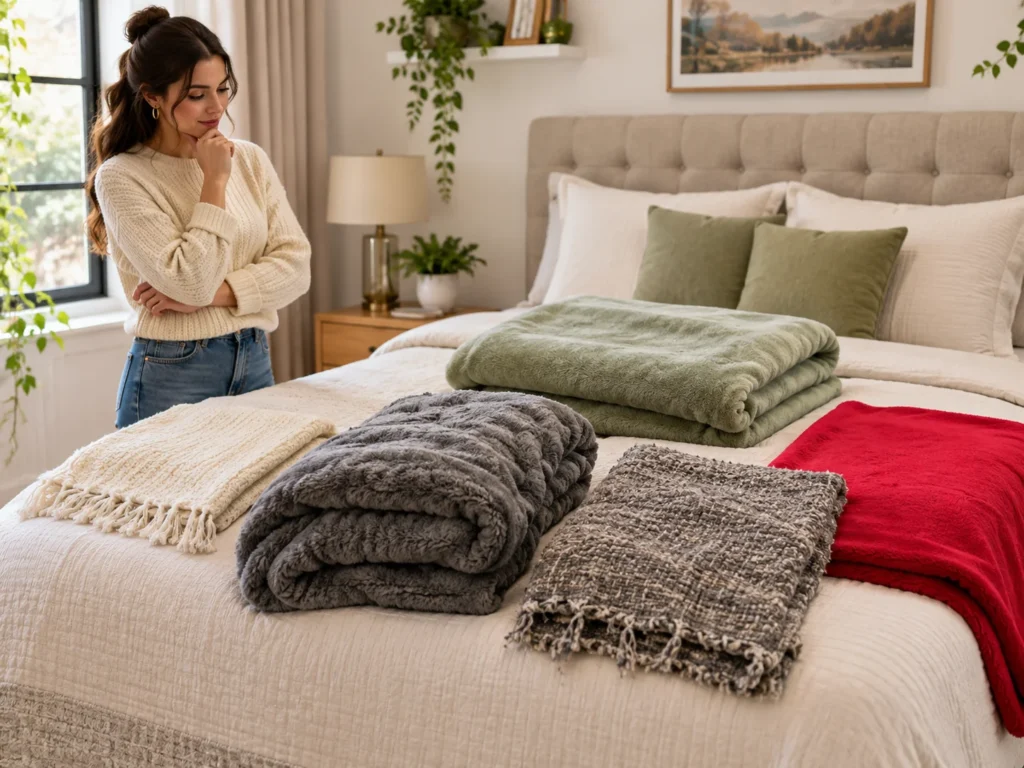
The most common blanket buying mistakes involve choosing the wrong dimensions, overlooking fabric construction, and ignoring care requirements. These problems can make an attractive blanket impractical for everyday use.
- Buying by size label alone: Always compare actual width and length measurements.
- Assuming thicker means better: Excess insulation may make sleeping uncomfortable in warm rooms.
- Ignoring existing bedding: Consider the combined warmth of your sheets, blanket, and comforter.
- Choosing appearance over comfort: A decorative blanket may not feel pleasant against your skin.
- Overlooking cleaning needs: Large or delicate blankets may require specialized washing.
- Ignoring return policies: Fabric texture and warmth can be difficult to judge online.
Before ordering, imagine how you will use the blanket during an ordinary night. This simple check often matters more than decorative details or promotional claims.
Best Bed Blankets to Consider
If you’re ready to buy, these three options illustrate different approaches to everyday bedding comfort. My recommendations prioritize published construction details, practical dimensions, and intended use.
Affiliate disclosure: As an Amazon Associate, I earn from qualifying purchases. Recommendations are based on published product specifications rather than hands-on testing.
🏆 Best for Everyday Layering
Utopia Bedding 100% Cotton Waffle Blanket
★★★★☆ 4.5/5 editorial suitability
This 300 GSM cotton waffle blanket comes in a 90 × 90-inch queen option. I’d choose it for breathable everyday layering and a textured bedroom appearance.
💰 Best Budget-Friendly Plush Option
Bedsure GentleSoft Fleece Bed Blanket
★★★★☆ 4.3/5 editorial suitability
The 280 GSM microfiber fleece queen version measures 90 × 90 inches and features a plush surface. I’d consider it for guest bedrooms or anyone who prefers uncomplicated, soft bedding.
❄️ Best for Winter Comfort
Bedsure GentleSoft Sherpa Fleece Blanket
★★★★☆ 4.6/5 editorial suitability
The queen version combines a 220 GSM flannel surface with a 260 GSM sherpa backing. I’d consider this double-sided blanket for colder bedrooms where extra insulation matters more than lightweight airflow.
Editorial suitability scores reflect how closely each published design matches its suggested use case. They are not verified Amazon customer ratings or laboratory performance scores. Confirm current specifications before ordering.
Frequently Asked Questions
What is the best material for a bed blanket?
Cotton is a practical all-around bed blanket material because it offers breathable comfort and versatile layering options. Wool suits colder conditions, while polyester fleece provides a soft, insulating surface for people who prefer plush bedding.
What type of blanket is best for all seasons?
A medium-weight cotton blanket is a flexible option for year-round use because you can combine it with other bedding as temperatures change. Consider woven cotton for warmer conditions and add a removable wool or fleece layer during colder months.
What size blanket should I buy for a queen bed?
A 90 × 90-inch blanket is a common choice for a standard 60 × 80-inch queen mattress. Consider a wider or longer blanket if your mattress is unusually deep, you share your bed, or you prefer generous side coverage.
Is a cotton blanket better than a fleece blanket?
Cotton generally suits sleepers who prefer breathable bedding and flexible seasonal layering, while fleece works well for those who enjoy plush warmth. Neither material is universally better because comfort depends on fabric construction, bedroom temperature, and personal sleeping preferences.
How often should you wash a bed blanket?
Wash a frequently used blanket every few weeks or sooner if it becomes dirty, develops odors, or collects pet hair. Blankets protected by sheets may require less frequent washing, and delicate wool blankets should follow their specific care instructions.
Final Thoughts: How to Choose the Right Bed Blanket
Learning how to choose a bed blanket starts with understanding your sleeping habits rather than following bedding trends. The ideal blanket provides comfortable warmth, suitable coverage, and manageable cleaning requirements.
Before making your final decision, use this simple buying checklist.
- ☑ Choose a material that matches your sleeping temperature.
- ☑ Measure your mattress and preferred overhang.
- ☑ Compare fabric weight, weave, and insulation.
- ☑ Consider seasonal layering requirements.
- ☑ Match the blanket with your bedroom colors.
- ☑ Review stitching, fiber labels, and cleaning instructions.
- ☑ Set a realistic budget before shopping.
For most bedrooms, I’d start with a breathable cotton blanket and add a warmer layer whenever necessary. This approach provides flexibility without cluttering your bed with unnecessary coverings.
Start by measuring your mattress and identifying your preferred sleeping temperature today. Those two decisions will make finding a comfortable, attractive, and practical bed blanket much easier.