

Quick Answer
To choose a bedroom rug, match its size to your bed, select a comfortable material, and coordinate its color with your bedroom decor. An 8 × 10-foot rug works well under most queen beds, while a 9 × 12-foot rug suits many king beds. Consider maintenance requirements and follow appropriate rug cleaning and maintenance guidelines before purchasing.
How to choose the right bedroom rug:
- 1. Measure your bedroom: Check your available floor space, bed dimensions, and furniture placement.
- 2. Select the size: Aim for at least 18–24 inches of exposed rug beside the bed where space allows.
- 3. Choose comfortable fibers: Consider wool, cotton, polyester, or other soft materials suitable for bare feet.
- 4. Match your decor: Coordinate the rug with your bedding, furniture, and existing bedroom colors.
- 5. Check pile height: Choose a thickness that balances softness, cleaning convenience, and furniture stability.
- 6. Add a pad: Use a compatible non-slip rug pad for cushioning and reduced movement.
Practical buying tip:
- Mark your preferred rug dimensions on the floor using painter’s tape before placing an order.
A bedroom rug can make an ordinary sleeping space feel warmer, softer, and more inviting. However, choosing the wrong size or material can make even an expensive rug disappointing.
In this guide, I’ll explain how to choose a bedroom rug that complements your furniture, fits your space, and feels comfortable every morning.
What Is a Bedroom Rug?
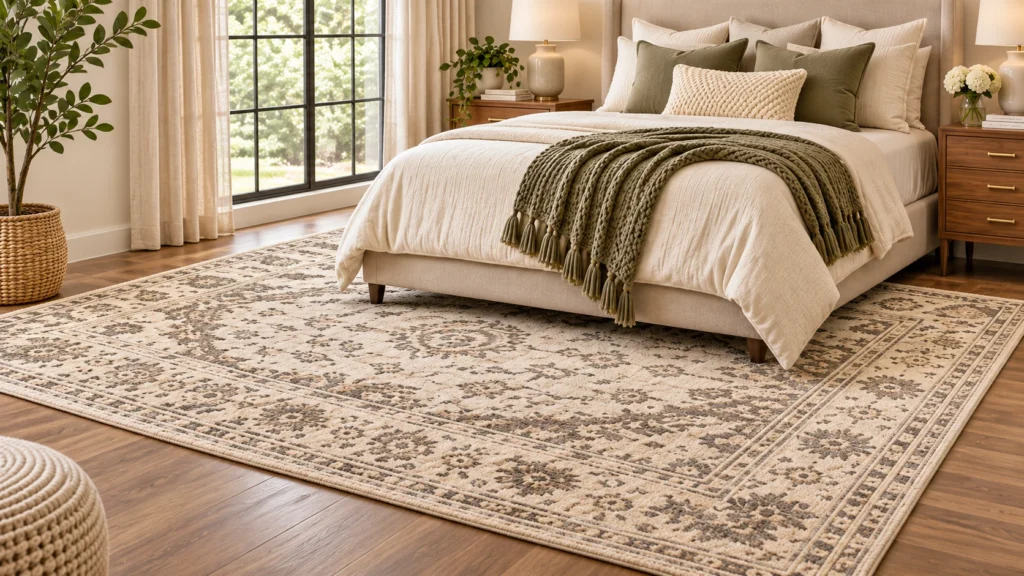
A bedroom rug is a removable floor covering designed to improve comfort, warmth, and visual appeal in a sleeping area. It can sit underneath the bed, alongside it, or across a separate seating area.
Unlike wall-to-wall carpeting, an area rug covers only a selected portion of the floor. This gives you more flexibility when decorating or rearranging furniture.
A well-chosen bedroom rug offers several practical benefits:
- Creates a soft landing surface when getting out of bed.
- Adds warmth to hardwood, laminate, and tile floors.
- Helps absorb some everyday household noise.
- Protects covered flooring from minor surface wear.
- Connects furniture and decorative elements visually.
- Introduces color, texture, and personality.
I consider a bedroom rug an important part of the room’s layout rather than simply another decorative accessory. Its dimensions can influence how balanced the entire bedroom feels.
How to Choose a Bedroom Rug: 11 Practical Tips
1. Measure Your Bedroom Before Shopping
Start by measuring your available floor space rather than choosing a rug based on appearance alone. Include furniture dimensions and the areas you regularly walk through.
Pay particular attention to your bed frame, which may extend several inches beyond the mattress.
- Measure the bedroom’s length and width.
- Record the complete bed frame dimensions.
- Measure the space beside each nightstand.
- Check dresser drawer and closet door clearance.
- Identify your main walking paths.
My preferred approach is to outline the proposed rug using floor-safe painter’s tape. This simple exercise makes it easier to judge whether the proportions work before spending money.
2. Choose the Correct Rug Size for Your Bed
Your bed size provides a useful starting point when selecting an area rug. Larger beds generally need larger rugs to maintain comfortable coverage and balanced proportions.
Use the following bedroom rug size chart as a starting guide for common United States mattress dimensions.
| Bed Size | Mattress Dimensions | Suggested Rug Size | Suitable Layout |
|---|---|---|---|
| Twin | 38 × 75 in. | 5 × 8 ft. | Compact bedroom |
| Full | 54 × 75 in. | 6 × 9 ft. | Small bedroom |
| Queen | 60 × 80 in. | 8 × 10 ft. | Standard bedroom |
| King | 76 × 80 in. | 9 × 12 ft. | Large bedroom |
| California king | 72 × 84 in. | 9 × 12 or 10 × 14 ft. | Spacious bedroom |
These dimensions are recommendations rather than strict requirements. Your bed frame, room shape, and preferred rug orientation may require adjustments.
Sizing tip: An 8 × 10-foot rug positioned with its 10-foot side across a 60-inch queen mattress provides 30 inches of coverage on each side, before accounting for the bed frame.
3. Select the Best Bedroom Rug Material
Wool is an excellent bedroom rug material when natural softness, insulation, and durability are priorities. Cotton and synthetic fibers offer practical alternatives for different budgets and cleaning preferences.
Compare the feel and maintenance requirements of each fiber before deciding.
| Material | Comfort | Maintenance | Best For |
|---|---|---|---|
| Wool | Soft and warm | Moderate; may shed | Long-term comfort |
| Cotton | Soft and lightweight | Varies by construction | Casual bedrooms |
| Polyester | Often soft | Generally manageable | Affordable comfort |
| Polypropylene | Moderately soft | Often easy to maintain | Budget decorating |
| Jute | Firm and textured | Sensitive to moisture | Natural bedroom decor |
| Viscose | Silky and smooth | Often delicate | Low-traffic decorative areas |
I’d prioritize wool or soft polyester for a bedroom where barefoot comfort matters most. Jute works better when natural texture takes priority over plushness.
For material-specific care requirements, consult the Nourison rug care guide alongside your chosen manufacturer’s instructions.
4. Decide on the Right Rug Pile Height
Rug pile height refers to the height of the surface fibers above the backing. It affects how soft the rug feels, how easily it cleans, and how furniture rests on it.
Although manufacturers use different classifications, these approximate ranges provide a useful comparison:
- Low pile: Around ¼ inch or less, offering easier cleaning and better door clearance.
- Medium pile: Around ¼ to ½ inch, balancing softness and everyday practicality.
- High pile: Above ½ inch, creating a deeper and more cushioned surface.
- Flatweave: A woven construction without a substantial raised pile.
A medium-pile rug is my general preference for comfortable bedrooms without demanding maintenance needs. Thick shag rugs can feel luxurious but often trap more debris.
Check the combined thickness of the rug and pad if either sits beneath a swinging door.
5. Match the Rug Color to Your Bedroom Decor
A bedroom rug should complement the existing color palette without overwhelming the room. Neutral colors offer flexibility, while stronger shades can create an intentional focal point.
Look at your largest furnishings before selecting a rug color.
- Beige and cream: Create a warm, understated appearance.
- Soft gray: Complements modern and cool-toned bedrooms.
- Sage green: Introduces a relaxed, nature-inspired accent.
- Navy blue: Adds depth and contrast to lighter furniture.
- Terracotta: Brings an earthy warmth to neutral spaces.
- Muted brown: Pairs naturally with wooden furniture.
When the bedding already contains several colors, I prefer a quieter rug. A patterned rug can instead become the focal point when the bedding remains simple.
Check fabric samples under daylight and evening lighting because artificial light can change how colors appear.
6. Choose a Pattern That Complements the Room
Bedroom rug patterns influence how busy, spacious, or relaxed a room appears. Subtle designs typically support a restful atmosphere without drawing attention away from the bed.
Choose a pattern according to your bedroom’s overall decorating style.
- Solid rugs: Minimalist, modern, and hotel-inspired bedrooms.
- Geometric rugs: Contemporary and Scandinavian interiors.
- Vintage patterns: Traditional, transitional, and eclectic spaces.
- Botanical designs: Cottage-style and nature-inspired bedrooms.
- Textured weaves: Farmhouse, coastal, and organic modern interiors.
A slightly patterned rug can make everyday lint and minor marks less noticeable. However, a pattern cannot replace regular cleaning.
7. Plan the Bedroom Rug Placement
The most versatile bedroom rug placement positions the rug underneath the lower portion of the bed. This arrangement creates comfortable stepping areas without requiring the rug to extend beneath every piece of furniture.
There are three common layouts worth considering.
- Fully underneath the bed: Place the bed and nightstands on a large rug for a unified appearance.
- Under the lower two-thirds: Start the rug near the front of the nightstands and extend it beyond the foot of the bed.
- Beside the bed: Use one or two runners when a large area rug will not fit comfortably.
In a narrow bedroom, bedside runners can provide practical comfort without covering unnecessary floor space. Larger rooms usually benefit from an area rug that visually anchors the furniture.
For additional layout inspiration, explore the home decorating resources from Martha Stewart.
8. Consider Cleaning and Maintenance Requirements
The best bedroom rug is one you can maintain without unnecessary effort. Regular cleaning helps preserve its appearance and prevents loose dirt from accumulating between the fibers.
Choose a rug with care requirements that suit your household.
- Check whether the manufacturer permits machine washing.
- Confirm that your washing machine can accommodate the rug.
- Use an appropriate vacuum setting for the fiber and construction.
- Blot accidental spills instead of scrubbing aggressively.
- Protect moisture-sensitive fibers from excessive water.
- Arrange professional cleaning when the care instructions require it.
Machine-washable rugs are especially appealing for homes with pets or frequent spills. However, some larger washable rugs require higher-capacity washing machines.
Always check the instructions for your specific size before relying on its washable label.
9. Use a Suitable Non-Slip Rug Pad
A rug pad is a protective layer placed between an area rug and the floor. It can reduce movement, improve cushioning, and limit friction against the underlying surface.
Match the pad to both your flooring and rug construction.
- Felt pads: Add cushioning beneath larger rugs.
- Non-slip rubber pads: Improve grip on compatible hard floors.
- Felt and rubber pads: Combine cushioning with increased grip.
- Rug-on-carpet pads: Help reduce movement over existing carpeting.
Choose a pad that sits approximately one inch inside each rug edge. Confirm that its backing will not damage or discolor your particular flooring finish.
Secure loose edges promptly, especially in bedrooms used by children or older adults.
10. Consider Your Bedroom Lifestyle
Your daily routine should influence your rug choice as much as its appearance. A quiet guest bedroom has different requirements from a busy family bedroom with pets.
Consider these practical scenarios before purchasing:
- Pet owners: Choose manageable pile heights and cleaning-friendly materials.
- Children’s bedrooms: Prioritize secure backing, comfort, and easy maintenance.
- Cold bedrooms: Consider dense wool or cushioned medium-pile rugs.
- Guest bedrooms: Choose versatile colors and practical materials.
- Dust-sensitive households: Select rugs that allow frequent, effective cleaning.
- Small apartments: Consider lightweight rugs or removable bedside runners.
If you have respiratory sensitivities, review the indoor air quality resources from the United States Environmental Protection Agency. No rug material guarantees an allergen-free bedroom.
11. Set a Realistic Bedroom Rug Budget
Bedroom rug prices depend on dimensions, fiber quality, construction, brand, and manufacturing methods. Larger natural-fiber rugs generally require a higher budget than smaller machine-made alternatives.
When planning a rug purchase in 2026, consider these illustrative budget ranges in United States dollars.
| Budget Range | What to Consider |
|---|---|
| Under $100 | Small rugs, runners, and basic synthetic options. |
| $100–$250 | Many machine-made area rugs and washable designs. |
| $250–$500 | Selected wool blends and larger quality rugs. |
| Above $500 | Premium wool, handmade, and specialty designs. |
These are planning estimates rather than verified live retail prices. Sales, construction quality, and rug size can significantly change the final cost.
I’d rather buy a correctly sized, reasonably priced rug than an expensive one that leaves the surrounding bedroom looking unbalanced.
What Is the Best Rug Size for a Small Bedroom?
A 5 × 8-foot or 6 × 9-foot rug can work well in a small bedroom with a twin or full bed. Narrow rooms may benefit more from bedside runners.
A compact queen bedroom may accommodate a 6 × 9-foot rug positioned across the lower portion of the bed.
- Keep a visible border of flooring around the rug where possible.
- Avoid blocking doors and dresser drawers.
- Choose subtle patterns for a less cluttered appearance.
- Consider lighter shades to create an airy feeling.
- Use runners when a large rug would restrict the layout.
Should a Bedroom Rug Go Under the Nightstands?
A bedroom rug does not need to extend underneath the nightstands. Placing it just in front of them often provides sufficient coverage while reducing the required rug size.
If you prefer a fully anchored arrangement, choose a rug large enough to support both nightstands evenly.
- Keep furniture legs stable and level.
- Avoid placing only one side of a nightstand on a thick rug.
- Maintain access to drawers and nearby electrical outlets.
What Bedroom Rug Mistakes Should You Avoid?
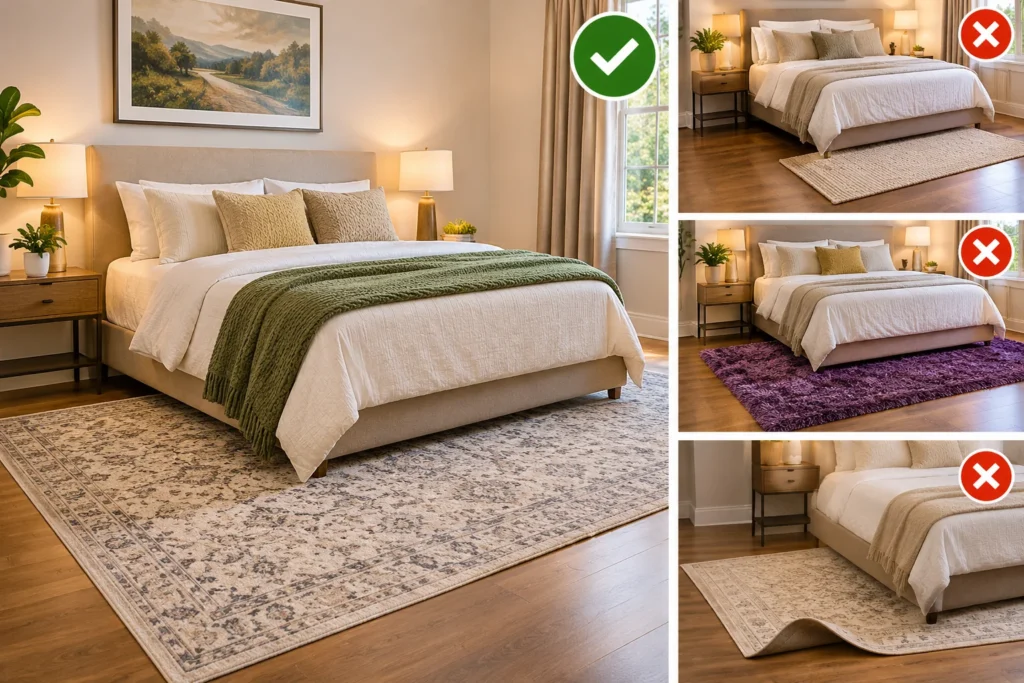
The most common bedroom rug mistakes involve incorrect sizing, unsuitable materials, and overlooked maintenance requirements. Fortunately, most are avoidable with a little planning.
- Buying a rug that’s too small: It may disappear underneath the bed without providing useful coverage.
- Ignoring furniture measurements: Bed frames are often wider than their mattresses.
- Choosing thickness alone: A plush rug may be difficult to clean or interfere with doors.
- Skipping the rug pad: Unsupported rugs may move or develop uneven edges.
- Overlooking care instructions: Delicate materials can require specialized cleaning.
- Ignoring lighting: Rug colors may look different at home than in product photographs.
- Forgetting return policies: Large rugs can be inconvenient and expensive to return.
Whenever possible, request a sample or review detailed customer photographs before purchasing a large bedroom rug.
Recommended Bedroom Rugs for Different Needs
If you’re ready to shop, these three rugs offer different combinations of style, material, and practicality. I’d compare them according to your bedroom layout and cleaning preferences.
As an Amazon Associate, I earn from qualifying purchases. The following stars represent editorial suitability assessments, not verified customer ratings or hands-on product test scores.
🏆 Best for everyday practicality
Safavieh Adirondack ADR251 Area Rug
★★★★☆ 4/5 editorial suitability
This machine-made rug combines synthetic fibers with a low-pile construction and decorative patterns. I’d consider it for a practical bedroom that needs an attractive, relatively easy-to-maintain floor covering.
🌿 Best for natural texture
nuLOOM Rigo Handwoven Jute Area Rug
★★★★☆ 4/5 editorial suitability
This handwoven jute rug offers earthy texture and a natural appearance. I’d choose it for farmhouse or organic modern bedrooms where visual warmth matters more than plush softness.
🧺 Best for washable convenience
Ruggable Kamran Washable Rug
★★★★½ 4.5/5 editorial suitability
Kamran combines vintage-inspired styling with machine-washable rug options. I’d shortlist it for households with pets after confirming the selected construction and washing machine capacity.
Frequently Asked Questions
What type of rug is best for a bedroom?
A soft wool or medium-pile synthetic rug is an excellent choice for many bedrooms because it balances comfort and practicality. Cotton and washable polyester rugs also suit households that prioritize easier maintenance, provided their construction supports the intended cleaning method.
What size rug should I put under a queen bed?
An 8 × 10-foot rug works well underneath most queen beds when the longer side runs across the bed. A 6 × 9-foot rug may suit a compact room, while a 9 × 12-foot rug offers more generous coverage in larger bedrooms.
Should a bedroom rug be lighter or darker than the floor?
Either option can work, depending on your furniture and decorating style. Light rugs often create a softer contrast against dark flooring, while darker rugs can add visual depth to pale floors and make some everyday marks less noticeable.
Can you put a bedroom rug over carpet?
Yes, you can place an area rug over existing bedroom carpet to introduce color, texture, and visual separation. Choose a relatively stable rug and a suitable rug-on-carpet pad to help minimize bunching, shifting, and raised edges.
How far should a rug extend beyond the bed?
A bedroom rug should ideally extend at least 18–24 inches beyond each accessible side of the bed where space permits. Larger extensions can provide extra comfort and visual balance, while smaller bedrooms may require a more compact arrangement.
Final Thoughts: Choosing the Perfect Bedroom Rug
Learning how to choose a bedroom rug starts with understanding your space and everyday comfort needs. The right combination of dimensions, material, color, and placement can transform your bedroom without replacing its furniture.
Before ordering your rug, complete this simple checklist:
- Measure your bedroom and bed frame.
- Choose an appropriate rug size and placement.
- Compare materials and pile heights.
- Coordinate the color with your existing decor.
- Confirm cleaning requirements and pad compatibility.
- Set a budget that includes accessories and delivery.
Start by measuring your available floor space today. A properly sized bedroom rug with a comfortable texture can make getting out of bed a little more enjoyable every morning.