

Quick Answer
To choose bedside lamps, consider your nightstand dimensions, mattress height, lighting needs, shade design, and bedroom style. Most bedrooms benefit from warm, dimmable LED lighting between 2700K and 3000K. Choose lamps that complement your relaxing bedroom design while providing comfortable illumination without direct glare.
Six quick steps to choosing bedside lamps:
- Measure your nightstand: Leave enough room for everyday essentials around the lamp.
- Choose suitable height: Position the shade near seated eye level to reduce glare.
- Check light output: Start with 250–500 lumens for general bedside use.
- Select warm light: Choose 2700K–3000K LEDs for a comfortable atmosphere.
- Consider dimming controls: Adjust brightness for reading and evening relaxation.
- Match bedroom decor: Coordinate lamp materials, colors, and proportions with surrounding furniture.
Before buying:
- Check switch accessibility, bulb compatibility, base stability, and electrical safety certification.
Choosing bedside lamps sounds simple until you discover how much their size, brightness, and placement affect bedroom comfort. I prefer approaching bedside lighting as a practical design decision rather than choosing a lamp based on appearance alone.
This 2026 guide explains how to choose bedside lamps that make reading easier, reduce uncomfortable glare, and complement your bedroom.
What Does Choosing Bedside Lamps Mean?
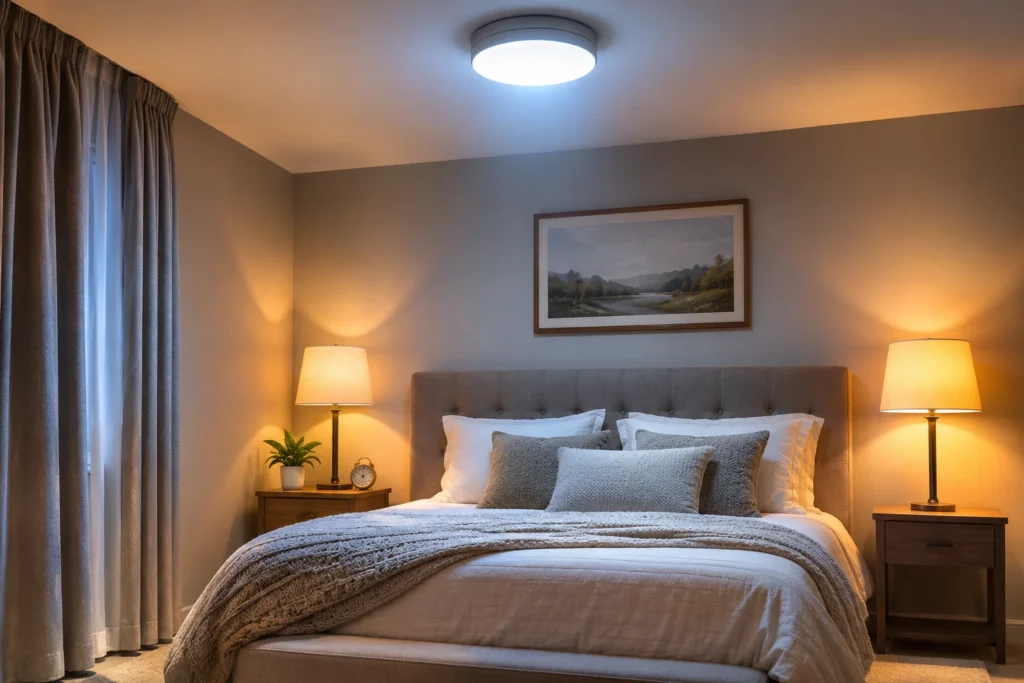
Choosing bedside lamps means selecting lighting fixtures that provide suitable illumination beside your bed while fitting your furniture, personal habits, and decorating style.
A bedside lamp serves a different purpose from your main ceiling light. It creates a smaller, more controlled lighting area around your bed.
- Task lighting: Provides focused illumination for reading and other close-up activities.
- Ambient lighting: Creates a gentle background glow throughout the bedroom.
- Accent lighting: Highlights decorative features and adds visual interest.
- Nighttime lighting: Provides low-level illumination when needed after dark.
The most useful bedside lamps combine at least two of these functions without occupying unnecessary space.
1. Measure Your Nightstand Before Choosing a Lamp
Start with your available nightstand space. A lamp that overwhelms the tabletop can make an otherwise attractive bedroom feel crowded.
Measure the width, depth, and height of your bedside table before comparing lamp dimensions.
What Size Bedside Lamp Fits Your Nightstand?
| Nightstand Width | Suggested Shade Width | Suitable Lamp Style |
|---|---|---|
| Under 16 inches | 6–9 inches | Slim or compact lamp |
| 16–22 inches | 8–13 inches | Standard table lamp |
| 22–28 inches | 11–16 inches | Medium decorative lamp |
| Over 28 inches | 14–18 inches | Large statement lamp |
These dimensions are decorating starting points rather than fixed requirements. Your nightstand depth and the lamp base matter just as much as shade width.
I would generally choose a shade that occupies around one-third to two-thirds of the nightstand width, depending on available space.
Practical tip: Cut a piece of cardboard to match the proposed lamp base and shade dimensions. Use it to visualize how much tabletop space the lamp will occupy before ordering.
2. Choose the Correct Bedside Lamp Height
The ideal bedside lamp height keeps the light source shielded from your eyes while you sit comfortably in bed.
Many standard bedside table lamps measure approximately 24–30 inches tall, although shorter or taller designs may suit your furniture better.
How Tall Should a Bedside Lamp Be?
- Low nightstands: Consider taller lamps to bring the light closer to reading height.
- Tall nightstands: Shorter lamps may provide better proportions and reduce glare.
- Low platform beds: Compact lamps can maintain a balanced appearance.
- Tall upholstered beds: Taller fixtures may work better visually and functionally.
For example, a 26-inch nightstand paired with a 25-inch lamp creates a total height of 51 inches from the floor.
Whether that works depends on your mattress height, seated position, and shade construction. Sit against your pillows and check where the lower shade edge falls relative to your eyes.
The goal is comfortable illumination rather than achieving a particular numerical height.
3. Select the Right Type of Bedside Lamp
Bedside lighting comes in several forms, and each solves a different space or lighting problem.
| Lamp Type | Best For | Main Limitation |
|---|---|---|
| Table lamp | Everyday bedroom lighting | Uses tabletop space |
| Wall-mounted sconce | Small bedrooms | Requires installation |
| Adjustable reading lamp | Reading in bed | Less diffused illumination |
| Pendant light | Decorative bedside lighting | Placement is less flexible |
| Smart bedside lamp | Custom lighting routines | May require an app |
| Rechargeable lamp | Areas without nearby outlets | Limited battery runtime |
A shaded table lamp remains a versatile choice for most bedrooms. Wall sconces are particularly useful when you need to preserve nightstand space.
4. Decide How Bright Your Bedside Lamps Should Be
For general bedside lighting, start with approximately 250–500 lumens. Reading may require 400–800 lumens, depending on the lamp’s design, distance, and your eyesight.
Lumens measure light output, while watts measure electricity consumption. The U.S. Department of Energy’s LED lighting guidance explains why modern LEDs can provide efficient illumination.
Recommended Bedside Lamp Brightness
| Lighting Purpose | Suggested Light Output |
|---|---|
| Gentle nighttime glow | 10–50 lumens |
| Evening relaxation | 100–250 lumens |
| Everyday bedside lighting | 250–500 lumens |
| Reading in bed | 400–800 lumens |
These are approximate shopping ranges, not mandatory lighting standards. An opaque shade or directional lamp can significantly change how much light reaches your book.
A dimmable lamp gives you more flexibility than a fixture with one fixed brightness setting.
5. Choose a Comfortable Color Temperature
Warm white light between 2700K and 3000K is a practical choice for most bedside lamps. It creates a softer atmosphere than cooler white lighting.
Color temperature, measured in kelvins (K), describes the visual warmth or coolness of a light source.
- 1800K–2200K: Amber-toned lighting for a gentle evening glow.
- 2700K: Warm white lighting suited to cozy bedrooms.
- 3000K: Slightly brighter-looking warm white for versatile everyday use.
- 3500K–4000K: More neutral lighting for tasks that benefit from a clearer appearance.
- 5000K and above: Cooler daylight-like illumination, often less desirable for evening bedside use.
Brightness and color temperature are separate measurements. A warm-colored bulb can still produce intense light.
The National Heart, Lung, and Blood Institute’s healthy sleep guidance recommends avoiding intense artificial light close to bedtime.
Use warm, low-level illumination during your evening routine and switch the lamp off when you are ready to sleep.
6. Choose the Right Lampshade Material
Your lampshade controls how light spreads throughout the bedroom. Its material, shape, and color influence glare, brightness, and visual comfort.
Which Lampshade Material Works Best?
- Linen: Creates soft, textured illumination suitable for relaxed interiors.
- Cotton: Provides diffused light and works with many decorating styles.
- Frosted glass: Distributes light evenly while offering a clean appearance.
- Metal: Directs light toward a specific area, making it useful for reading.
- Paper: Produces gentle illumination but requires careful handling and compatible bulbs.
- Rattan: Adds natural texture and may create decorative shadow patterns.
Light-colored fabric shades generally suit ambient lighting. Opaque shades work better when you want to concentrate light on a book.
For ideas on coordinating soft lighting with textiles and furniture, explore these tips on making a bedroom feel cozy.
7. Match Your Bedside Lamps With Your Bedroom Style
Choose lamp finishes that complement your existing furniture, bedding, and color palette. The lamp does not need to match every object in the room.
Repeating one or two existing design elements is often enough to create visual harmony.
- Modern bedroom: Black metal, simple shapes, and understated glass shades.
- Minimalist bedroom: Compact lamps with neutral colors and clean profiles.
- Farmhouse bedroom: Ceramic bases, distressed wood, and linen shades.
- Bohemian bedroom: Natural textures, woven shades, and earthy colors.
- Traditional bedroom: Brass finishes, curved bases, and classic fabric shades.
- Luxury bedroom: Refined glass, marble accents, and elegant metallic finishes.
I would prioritize a cohesive color palette over identical furniture finishes. A brass lamp can complement a wooden nightstand without sharing its material.
Review your overall bedroom decor checklist before adding a large statement lamp.
8. Look for Useful Lighting Controls
The best bedside lamp controls are easy to locate and operate from bed. You should not need to stand up or reach behind furniture to switch off the light.
Which Bedside Lamp Controls Are Worth Considering?
- Touch control: Convenient for switching on a lamp without locating a small button.
- Rotary dimmer: Allows gradual brightness adjustment when compatible.
- Pull chain: Offers simple operation with traditional lamp designs.
- Base switch: Provides predictable operation if positioned within reach.
- Smart control: Supports app-based adjustments, timers, and lighting routines.
- Remote control: Useful when the lamp sits farther from your sleeping position.
USB charging ports can also reduce the need for separate charging adapters. Check whether the lamp provides the charging standard and output your devices require.
For smart lighting, choose a model with usable physical controls. This prevents everyday operation from depending entirely on your phone.
9. Consider Whether Your Bedside Lamps Should Match
Matching bedside lamps create symmetry, while mismatched lamps introduce personality and accommodate different lighting needs. Both approaches can work well.
Identical lamps are especially useful when your nightstands have similar dimensions and your bed occupies the center of the wall.
How to Coordinate Mismatched Bedside Lamps
- Keep the overall lamp heights reasonably similar.
- Choose shades with related shapes or colors.
- Repeat a material or metallic finish.
- Use comparable color temperatures.
- Maintain similar visual weight on each side of the bed.
- Choose individual brightness controls for different nighttime routines.
One partner may prefer a directional reading lamp while the other wants a softer fabric-shaded fixture.
Choosing different lamps can help you balance bedroom style and comfort without sacrificing individual preferences.
10. Choose Energy-Efficient and Safe Bedside Lamps
LED bedside lamps provide efficient illumination and generally produce less heat than comparable incandescent bulbs. However, LEDs and their electrical components can still become warm.
Choose fixtures that comply with applicable electrical safety requirements in your region.
Bedside Lamp Safety Checklist
- Check for recognized safety certification, such as UL or ETL in the United States.
- Follow the fixture’s maximum bulb wattage rating.
- Use compatible bulbs, sockets, and dimmers.
- Keep lamps away from curtains and loose bedding.
- Choose a stable base that resists accidental tipping.
- Replace damaged cords or malfunctioning switches.
- Avoid trapping electrical cords underneath furniture.
- Use a qualified electrician for hardwired installations when required.
UL Solutions’ lighting safety certification information explains the role of testing in electrical lighting products.
For serviceability, I prefer a lamp with a replaceable bulb unless an integrated LED design offers meaningful advantages.
Integrated LED fixtures can be compact and flexible, but replacement options vary when their light source eventually fails.
11. Set a Realistic Bedside Lamp Budget
Choose your budget according to lighting performance, build quality, and features rather than appearance alone.
As a general planning guide, bedside lamps can fall into the following approximate price categories.
| Budget Per Lamp | Typical Features |
|---|---|
| $15–$30 | Basic compact lamps and simple switches |
| $30–$75 | Decorative shades, dimmers, and improved materials |
| $75–$150 | Premium finishes and advanced lighting controls |
| $150 and above | Designer fixtures and advanced smart lighting |
These illustrative US-dollar budgets are not live retail quotes. Actual prices depend on the brand, retailer, location, and included accessories.
Remember to budget for compatible bulbs, smart accessories, and installation if needed.
What Bedside Lamp Mistakes Should You Avoid?
The most common bedside lighting mistakes involve incorrect proportions, excessive brightness, uncomfortable glare, and inaccessible controls.
Check for these problems before completing your purchase.
- Buying an oversized lamp: Leaves insufficient space for bedside essentials.
- Ignoring mattress height: Can position the light source at an uncomfortable level.
- Choosing exposed bulbs: May create distracting glare while resting.
- Using excessively bright light: Makes evening relaxation less comfortable.
- Ignoring dimmer compatibility: Can cause flickering or unreliable operation.
- Forgetting outlet placement: Leads to inconvenient or untidy cable routing.
- Prioritizing appearance alone: May leave you without useful reading illumination.
- Overlooking base stability: Increases the risk of accidental tipping.
A simple lamp with comfortable illumination is usually more valuable than an elaborate fixture that does not suit your daily routine.
Bedside Lamp Shopping Checklist
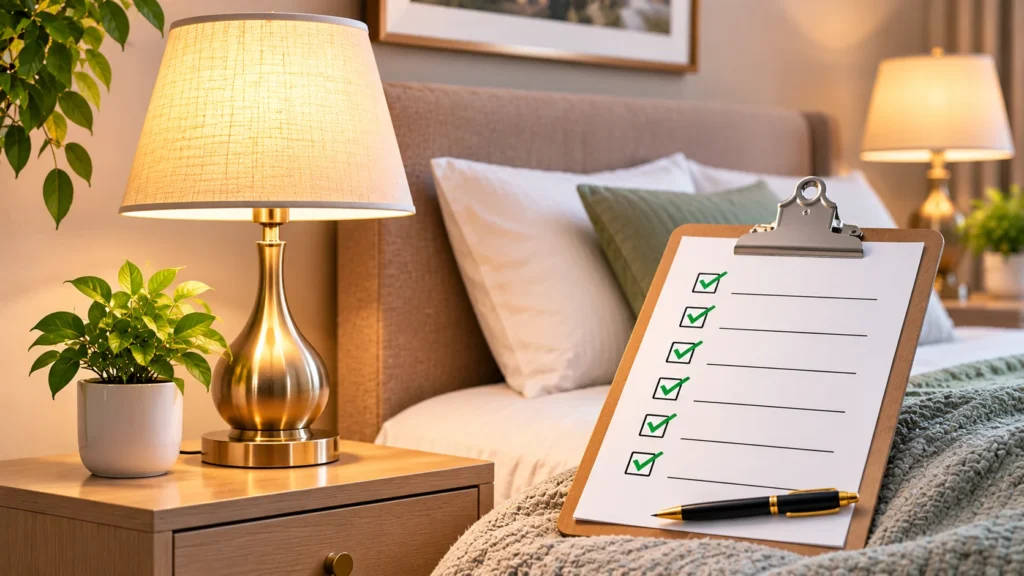
Use this checklist when comparing bedside lamps online or visiting a lighting store.
- ☐ Measure nightstand width and depth.
- ☐ Confirm mattress and nightstand heights.
- ☐ Choose an appropriate lamp base and shade size.
- ☐ Select suitable brightness in lumens.
- ☐ Choose a comfortable color temperature.
- ☐ Confirm dimming and bulb compatibility.
- ☐ Check switch position and accessibility.
- ☐ Review electrical safety certification.
- ☐ Check cord length or rechargeable battery runtime.
- ☐ Confirm whether the bulb is included.
- ☐ Review warranty and return policy.
- ☐ Match the lamp with existing bedroom decor.
Once you know your measurements and lighting preferences, compare only the fixtures that satisfy those requirements.
Which Bedside Lamps Are Worth Considering?
These three lamps represent different approaches to bedside lighting, from simple decorative illumination to adjustable reading and smart controls.
The recommendations are based on published product features rather than hands-on testing. Choose according to your available space and lighting priorities.
Affiliate disclosure: As an Amazon Associate, this website earns from qualifying purchases.
🏆 Best for soft lighting
IKEA FADO Table Lamp
★★★★☆ 4/5 editorial suitability
The FADO features a rounded glass shade approximately 10 inches across that provides diffused illumination. I would choose it for a minimalist bedroom where soft background light matters more than directional reading light.
📖 Best for reading
IKEA RANARP Work Lamp
★★★★☆ 4/5 editorial suitability
This adjustable lamp uses a directional metal shade for focused illumination. I recommend considering it when reading in bed is your main priority and your nightstand has sufficient space.
💡 Best smart option
Philips Hue Go Portable Table Lamp
★★★★☆ 4.5/5 editorial suitability
This rechargeable smart lamp offers adjustable white and colored illumination with portable operation. I would consider it for flexible bedside lighting where changing brightness and atmosphere is important.
Editorial suitability scores reflect how well each product fits its stated use case. They are not verified customer ratings or laboratory test results.
Frequently Asked Questions
What Is the Best Height for a Bedside Lamp?
Many bedside lamps measure between 24 and 30 inches tall, but the ideal height depends on your nightstand and mattress. When you sit comfortably in bed, the shade should help shield the bulb from direct view while allowing enough illumination for reading.
How Many Lumens Should a Bedside Lamp Have?
Approximately 250–500 lumens is a practical starting point for everyday bedside lighting. Reading may benefit from 400–800 lumens, while relaxation usually requires less. Shade design, light direction, distance, and personal eyesight determine how much illumination you actually need.
Are Warm or Cool Lights Better for Bedside Lamps?
Warm white light between 2700K and 3000K generally creates a comfortable bedroom atmosphere. Cooler lighting can be useful for particular daytime tasks, but softer, dimmer illumination is preferable when preparing for sleep. Brightness remains important regardless of the bulb’s color temperature.
Should Both Bedside Lamps Be the Same?
Matching bedside lamps create a symmetrical appearance, but they are not essential. Mismatched lamps can accommodate different reading habits and decorating preferences. Coordinate their heights, finishes, shade colors, or visual weight to maintain balance across both sides of the bed.
Are LED Bedside Lamps Worth Buying?
LED bedside lamps are worth considering because they provide energy-efficient illumination, varied brightness options, and multiple color temperatures. Choose a model with suitable electrical certification, comfortable light distribution, and compatible dimming controls. Replaceable LED bulbs can also simplify long-term maintenance.
Final Takeaway: How to Choose Bedside Lamps
The best bedside lamps provide comfortable illumination, fit your nightstand, and complement the bedroom without creating unnecessary clutter.
Start by measuring your furniture and deciding whether you need reading light, ambient illumination, or both.
- Choose proportions that suit your nightstand.
- Look for warm, adjustable LED lighting.
- Keep the light source shielded from direct view.
- Select accessible switches and compatible bulbs.
- Balance appearance with practical everyday use.
If you are unsure where to begin, a medium-sized shaded lamp with a warm, dimmable LED bulb is a versatile starting point.
Continue improving your space with this complete guide on how to decorate a bedroom for a comfortable and visually balanced result.