

⚡ Quick Answer
A bedroom decor checklist should cover layout, furniture, bedding, lighting, storage, curtains, rugs, wall decor, and personal touches. Start with large functional pieces first. Then add softer decorative layers. Finish by checking comfort, clear walkways, light control, safety, and clutter.
Bedroom decor essentials to check
- Foundation: Bed, main furniture, wall colors, and flooring.
- Comfort: Bedding, curtains, rugs, and useful lighting.
- Finish: Art, mirrors, plants, books, and personal objects.
Before you buy anything
- ✓Measure the room and existing furniture.
- ✓Choose one mood and simple color palette.
- ✓Solve storage before adding decorative objects.
You step into your bedroom and instantly notice what feels unfinished. Maybe surfaces look busy, lighting feels harsh, or the bed lacks focus.
James Fox built this bedroom decor checklist around function before decoration. That order prevents attractive purchases from becoming expensive clutter.
Bedroom decor includes both useful and decorative elements. You can explore what counts as bedroom decor before planning individual purchases.
📌 Key Takeaways
- →Measure first. Large furniture should fit before smaller decor enters your plan.
- →Build in layers. Furniture comes before lighting, textiles, art, and accessories.
- →Control clutter. Storage should support your daily habits and keep surfaces calm.
- →Decorate slowly. Empty space can make chosen pieces look more important.
What Should Be on a Bedroom Decor Checklist?
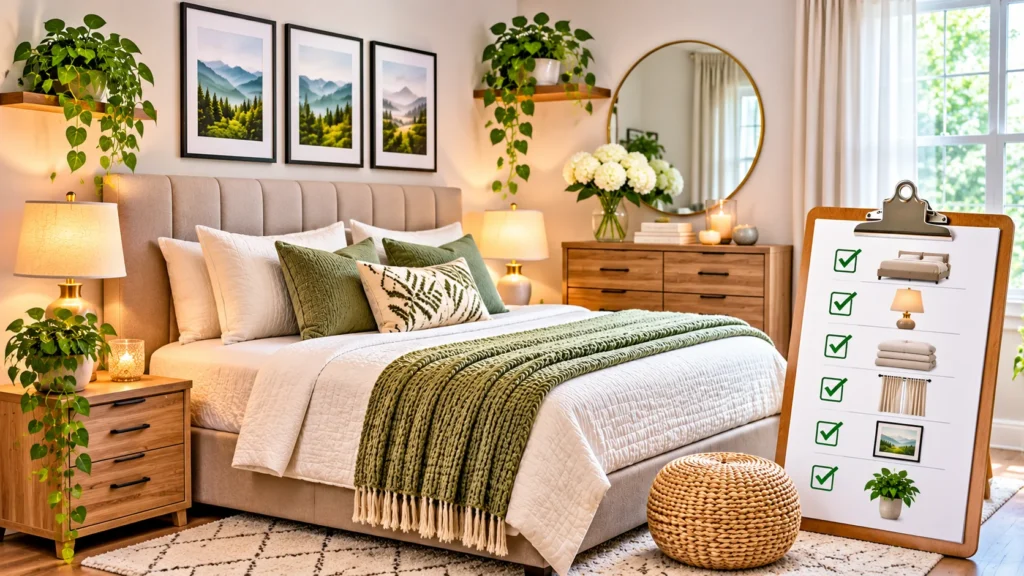
A complete bedroom decor checklist starts with the pieces controlling daily function. Check your bed, mattress, bedside surfaces, clothing storage, curtains, and main lighting first. Then review bedding, rugs, lamps, mirrors, artwork, and smaller accessories. These later pieces should support decisions already made.
Think about the room in three layers. The foundation includes furniture and large surfaces. Functional layers include light, storage, textiles, and window treatments. Personal decor comes last. This order keeps the room connected instead of crowded.
✓ Complete Bedroom Decor Checklist
- ✓Bed frame and comfortable mattress
- ✓Nightstand or practical bedside surface
- ✓Wardrobe, dresser, shelves, or other storage
- ✓Sheets, duvet, pillows, and optional throw
- ✓Ceiling light plus bedside or task lighting
- ✓Curtains, blinds, or shades for privacy
- ✓Rug when the floor needs softness
- ✓Mirror positioned for useful light
- ✓Artwork or one strong wall feature
- ✓Small personal pieces that have meaning
You don’t need every optional item. Your next task is putting needed pieces in the right order.
What Order Should You Decorate a Bedroom In?
Decorate your bedroom from the largest choices toward the smallest details. Start with measurements and layout. Place the bed and essential storage next. Choose your main palette after understanding which large pieces will remain. Then add lighting, bedding, curtains, rugs, artwork, and accessories.
This sequence reduces costly changes later. A rug cannot fix oversized furniture. New pillows cannot solve weak bedside lighting. You might want to start with decorative pieces. Yet those pieces work better after the room’s structure feels settled.
For a deeper process, follow this step-by-step bedroom decorating guide.
🔢 Step-by-Step: Bedroom Decorating Order
- 1
Measure and map
Mark doors, windows, outlets, and furniture locations before shopping.
- 2
Place essential furniture
Position the bed, storage, and bedside pieces while protecting walkways.
- 3
Build your color layer
Choose a main tone, support tone, and restrained accent.
- ✓
Finish with softer layers
Add textiles, art, and personal pieces after functional needs work.
Once that order is clear, furniture and color become much easier to coordinate.
How Should Furniture, Color, and Lighting Work Together?
Your bed usually carries the strongest visual weight. Let its size, finish, and bedding guide nearby choices. Nightstands and dressers don’t need exact matches. Instead, repeat a finish, color, shape, or material somewhere else. Repetition makes mixed pieces look intentional.
Keep the palette simple enough to repeat across several surfaces. Lighting should support both practical tasks and evening comfort. One bright ceiling fixture alone often creates a flat result. Add a lower bedside source when the room needs softer light.
Mixing furniture is easier when pieces share visual connections. See these rules for mixing furniture styles when existing pieces differ.
You might think matching sets guarantee a polished room. Shared details often create enough unity without exact matching.
Next, make those visual choices work with storage and daily movement.
How Do You Decorate a Bedroom Without Making It Cluttered?
Give every frequently used item a clear home before adding more decor. Closed storage works well for clothing, cables, toiletries, and other busy-looking items. Keep enough empty surface space for daily use. A nightstand should still hold things you need at bedtime.
Use vertical space when floor space feels limited. Wall-mounted lighting can also free a bedside surface. Under-bed storage can help when wardrobes lack room. But storage should solve a real need instead of hiding unused possessions.
Decor follows the same rule. One meaningful artwork piece can carry more impact than several unrelated objects. Leaving some walls and surfaces open also helps important pieces stand out.
The next check looks beyond appearance and focuses on comfort and safety.
What Should You Check Before Calling the Bedroom Finished?
A finished bedroom should work during both daytime routines and nighttime rest. Walk through your normal routine before adding the final accessories. Check whether doors and drawers open freely. Make sure walkways remain clear and bedside items stay easy to reach.
Then review light, noise, temperature, bedding, and window coverage. The Sleep Foundation bedroom guide explains how these conditions shape a sleep-friendly space.
Air quality deserves attention too. The EPA indoor air guidance covers ventilation, moisture control, and indoor pollution sources.
⚠️ Safety Check
Secure unstable or top-heavy furniture when tip-over hazards exist. Review the CPSC Anchor It! guidance for furniture safety.
Once function and safety pass this check, only thoughtful finishing touches remain.
What Most People Get Wrong About Bedroom Decor
Many people treat bedroom decorating as a shopping project. More purchases don’t automatically create a more finished room. A clear plan usually matters more than accessory count.
Another mistake is choosing decor before solving storage. Decorative baskets cannot fix a room with nowhere for daily essentials. Plan useful storage first, then decide what deserves display space.
Matching everything creates another common problem. Exact furniture sets can remove personality from the room. Repeated colors, materials, and shapes can create unity without identical pieces.
Finally, empty space isn’t unfinished space. Visual breathing room helps the bed, lighting, art, and textiles feel more deliberate.
That leaves one final job: decide where your own room needs attention first.
Conclusion
A useful bedroom decor checklist starts with function and ends with personality. Measure first, solve storage, then build your decorative layers.
Your room doesn’t need more objects to feel finished. It needs fewer pieces working well together.
One thing to do right now: remove three unnecessary items from your nightstand.
Frequently Asked Questions
What should every bedroom have?
Every bedroom needs a comfortable bed, useful lighting, window coverage, and practical storage. Most rooms also benefit from a bedside surface and comfortable bedding. Rugs, mirrors, artwork, chairs, and decorative pillows remain optional. Choose those pieces only when they improve comfort, function, or your preferred style.
What order should I decorate my bedroom in?
Measure and plan your layout before buying large pieces. Place the bed and essential storage next. Then choose your color palette and lighting. Add bedding, curtains, and rugs after those choices. Finish with artwork, mirrors, plants, books, and other personal details once the room already functions well.
How can I make my bedroom feel cozy?
Start with comfortable bedding and softer evening lighting. Then add texture through curtains, a rug, or one throw. Warm wood and personal objects can add character. Keep clutter controlled so those softer details remain visible. A cozy bedroom feels comfortable and personal rather than packed with decorative items.
How do I decorate a small bedroom without clutter?
Use fewer pieces and make each one serve a clear purpose. Choose storage that uses vertical or under-bed space. Keep pathways open and surfaces partly empty. Wall-mounted lighting can free bedside space. Limit small accessories, then use bedding or one artwork piece for stronger visual impact.
How can I decorate my bedroom on a budget?
Rearrange and declutter before buying anything new. Then focus on changes with strong visual impact. Bedding, lamp placement, pillow covers, curtains, and artwork can change the room quickly. Reuse existing furniture when its size still works. A coordinated palette often costs less than replacing functional pieces.
Does every bedroom need a rug?
No, a bedroom doesn’t always need a rug. Carpeted rooms already have softness underfoot. Attractive wood or other flooring can also remain visible. Add a rug when you want extra warmth, texture, color, or visual definition. Make sure its size works with the bed and surrounding furniture.
How do I know when my bedroom decor is finished?
Your bedroom is finished when it works comfortably without needing extra decorative filler. Check movement, storage, lighting, privacy, bedding, and daily routines. Then look for visual balance. If useful surfaces remain clear and important pieces stand out, stop adding decor and live with the room awhile.