

Quick Answer
To create cozy bedroom lighting, use warm white LED bulbs between 2700K and 3000K, combine multiple light sources, and install dimmable fixtures. Follow a layered approach when you choose bedroom lighting to create a comfortable atmosphere for reading, relaxing, and preparing for sleep.
Quick Steps for Cozy Bedroom Lighting:
- 1. Choose warm bulbs: Select 2700K LEDs for a gentle, inviting glow.
- 2. Layer your lighting: Combine ambient, task, and accent lights.
- 3. Add bedside lamps: Create comfortable pools of light beside your bed.
- 4. Install dimmers: Adjust brightness throughout the day and evening.
- 5. Use indirect lighting: Reflect light from walls and ceilings to reduce glare.
- 6. Reduce overhead brightness: Switch to softer secondary lights before bedtime.
Practical Tip:
- Start small: Replace cool white bulbs in your existing bedside lamps before purchasing new fixtures.
A bedroom can have beautiful furniture and expensive bedding but still feel uncomfortable under harsh lighting.
Learning how to create cozy bedroom lighting starts with understanding how brightness, color, and light placement work together. In this guide, I’ll explain practical ways to make your bedroom feel warmer without completely redesigning it.
What Is Cozy Bedroom Lighting?
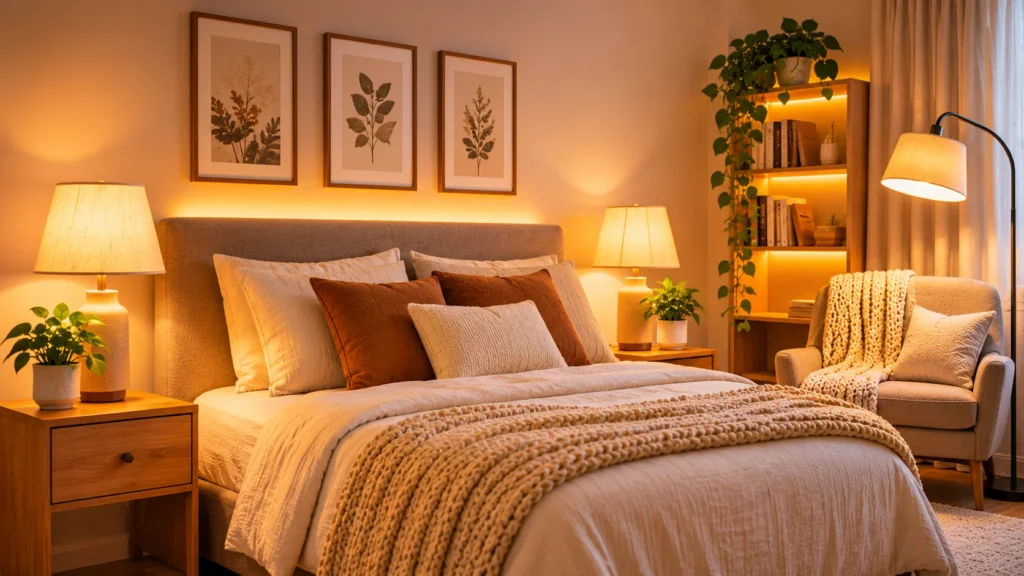
Cozy bedroom lighting is a combination of warm-colored, softly distributed, and adjustable light sources that creates a comfortable and inviting bedroom atmosphere.
Rather than illuminating every corner at maximum brightness, cozy lighting creates gentle highlights and comfortable shadows.
A well-designed cozy lighting setup usually includes:
- Warm white LED light bulbs.
- Soft ambient lighting for general visibility.
- Focused task lighting for reading.
- Decorative accent lighting.
- Independent brightness controls.
- Shaded or indirect light sources.
The goal isn’t to make your bedroom permanently dark. It’s to provide enough light for daily activities while allowing a softer atmosphere whenever you need it.
How to Create Cozy Bedroom Lighting: 11 Practical Tips
1. Choose Warm White Light Bulbs
Warm white bulbs are one of the simplest ways to make a bedroom feel more inviting. I recommend starting with 2700K LEDs for most bedside lamps.
Color temperature describes whether white light appears yellowish, neutral, or bluish. Manufacturers express this measurement in kelvin, abbreviated as K.
- 1800K–2200K: Extra-warm, candlelike illumination.
- 2700K: Soft white light suitable for relaxing.
- 3000K: Warm white light with a slightly cleaner appearance.
- 4000K: Neutral white light for practical tasks.
- 5000K–6500K: Cooler, daylight-like illumination.
The U.S. Department of Energy’s lighting information explains how light color and spectral characteristics affect its appearance.
For a consistently cozy bedroom, avoid mixing strongly cool bulbs with warm decorative lights in the same relaxation area.
2. Use Three Layers of Bedroom Lighting
Layered lighting combines different fixtures to meet different needs. It prevents a single ceiling fixture from controlling the entire bedroom atmosphere.
I would divide a bedroom lighting plan into three basic layers:
- Ambient lighting: Ceiling fixtures, shaded pendants, and other general light sources.
- Task lighting: Bedside reading lamps, adjustable sconces, and desk lamps.
- Accent lighting: Concealed LED strips, picture lights, and decorative lamps.
Each layer should ideally have independent controls. That way, you can switch off the ceiling fixture while keeping enough light for reading or walking around.
Even a small bedroom can benefit from this arrangement. A ceiling light, bedside lamp, and discreet accent light may be all you need.
3. Add Soft Bedside Lamps
Bedside lamps create localized pools of light that make a bedroom feel intimate. They also reduce your dependence on bright overhead fixtures.
A lamp with a fabric shade often works well because it spreads light more gently than an exposed bulb.
Consider these features when shopping:
- Warm white LED compatibility.
- Fabric or frosted lampshades.
- Easy-to-reach switches.
- Adjustable brightness settings.
- A stable base that fits your nightstand.
If you’re uncertain about lamp proportions or shade height, my guide on how to choose bedside lamps explains the important considerations.
Position the lamp so the shade shields your eyes from the bulb when you’re sitting or lying in bed.
4. Install Dimmable Bedroom Lights
Dimmable lighting allows you to use the same fixture for different activities. You can increase brightness when organizing your room and reduce it while relaxing.
Some warm-dimming LEDs also become warmer as their brightness decreases. This creates an effect similar to traditional incandescent lighting.
Try these illustrative lighting settings:
- Morning routine: 70–100% brightness.
- Evening relaxation: 30–50% brightness.
- Bedtime preparation: 10–25% brightness.
- Nighttime navigation: The lowest comfortable, safe setting.
These percentages are starting points rather than universal requirements. Adjust them according to your room size, fixture output, and personal comfort.
Learn more about color-tunable and warm-dimming LED products before choosing adjustable bulbs.
Always check that your bulbs and dimmer switch are compatible to avoid flickering or unreliable performance.
5. Add Indirect Lighting Behind Furniture
Indirect lighting illuminates a surface before the light reaches your eyes. It can produce a comfortable glow without exposing a bright bulb.
Concealed LED strips are particularly useful for this purpose.
- Behind the headboard.
- Along an architectural recess.
- Under a floating shelf.
- Behind a dresser.
- Inside a ceiling cove.
I prefer warm white accent lighting for a timeless bedroom design. Saturated colors can be enjoyable, but they often create a more energetic atmosphere.
Use suitable mounting channels and diffusers when individual LED points remain visible. Follow the manufacturer’s ventilation, installation, and power-supply instructions.
6. Choose Lampshades That Diffuse Light
A lampshade changes how light spreads across a bedroom. The right material can turn a concentrated light source into a softer glow.
Consider these common lampshade options:
- Linen: A natural texture with a relaxed appearance.
- Cotton: A versatile option for soft, diffused illumination.
- Frosted glass: Helps reduce direct bulb glare.
- Opaque metal: Directs light toward a specific surface.
- Woven rattan: Creates decorative patterns and textured shadows.
White and cream fabric shades generally preserve more light than dark, opaque materials. Darker shades can work well when you want focused rather than widespread illumination.
For a relaxing bedside setting, I would choose a neutral fabric shade that conceals the bulb from normal viewing angles.
7. Create a Cozy Reading Corner
A reading corner makes a bedroom useful beyond sleeping. It can also introduce another independently controlled light source.
You don’t need much floor space to create one. An unused corner near a window or beside a dresser may work perfectly.
- Place a comfortable chair in the corner.
- Add an adjustable floor lamp beside it.
- Direct the light toward your book.
- Choose a warm bulb with sufficient brightness.
- Finish with a small side table and blanket.
Position the reading light slightly behind or beside your shoulder. This helps illuminate the page without directing glare toward your face.
The reading area can remain brighter than the surrounding bedroom while still contributing to a comfortable atmosphere.
8. Use Wall Sconces for Balanced Lighting
Wall sconces provide soft illumination without occupying nightstand space. They are especially useful in narrow bedrooms with limited furniture space.
A pair of matching sconces can also frame the headboard and create visual balance.
Popular bedroom sconce designs include:
- Fabric-shaded wall sconces.
- Adjustable swing-arm reading lights.
- Upward-facing indirect wall lights.
- Plug-in wall sconces.
- Rechargeable wall lights.
Renters may prefer plug-in models because they can avoid permanent electrical modifications. Conceal cords safely using suitable cord-management accessories.
For hardwired fixtures, use a qualified electrician and follow applicable electrical requirements.
9. Replace Harsh Overhead Lighting
A bright, exposed ceiling bulb can flatten shadows and make a bedroom feel less comfortable. You don’t necessarily need to eliminate overhead lighting, though.
Instead, choose fixtures that distribute light more evenly.
- Fabric drum ceiling lights.
- Frosted glass flush-mount fixtures.
- Shaded pendant lights.
- Dimmable ceiling fixtures.
- Indirect ceiling lighting.
Consider ceiling height when choosing a pendant or chandelier. Maintain sufficient clearance in walking areas and around furniture.
Keep the overhead fixture available for cleaning, dressing, and other tasks that require greater visibility.
10. Use Smart Lighting Scenes
Smart bulbs allow you to change brightness and, depending on the model, color temperature through an app or compatible controller.
As of 2026, adjustable LED bulbs offer a practical way to create multiple bedroom lighting scenes without replacing every fixture.
Here are four useful scene ideas:
- Wake-up scene: Gradually increasing brightness.
- Reading scene: Focused bedside lighting at a comfortable level.
- Relaxation scene: Warm lamps with reduced overhead lighting.
- Night scene: Gentle, low-level pathway illumination.
Smart lighting works best when it simplifies your routine. You don’t need dozens of colors or complicated schedules to create a relaxing bedroom.
Check whether your chosen bulbs require a bridge, compatible app, or dedicated wireless controller.
11. Combine Lighting With Warm Bedroom Decor
Lighting interacts with the colors and materials around it. Warm illumination often complements natural wood, cream bedding, and earthy decorative accents.
Soft furnishings can also contribute to the overall feeling of comfort.
Consider pairing your lights with:
- Beige, taupe, or cream bedding.
- Natural wooden nightstands.
- Textured rugs and blankets.
- Matte wall finishes.
- Linen or cotton curtains.
- Warm-toned decorative accessories.
Dark walls absorb more light, while pale surfaces generally reflect more of it. Adjust your lamp output to suit the room rather than relying on bulb color alone.
What Is the Best Light Color for a Cozy Bedroom?
For most bedrooms, 2700K warm white lighting offers a good balance between softness and everyday visibility. Extra-warm lighting around 2200K works well for decorative evening accents.
The best color temperature depends on how you use each area of the bedroom.
Bedroom Lighting Color Temperature Comparison
| Temperature | Appearance | Best Use | Cozy Suitability |
|---|---|---|---|
| 1800K–2200K | Amber glow | Evening accents | Excellent |
| 2700K | Soft warm white | Bedside and ambient | Excellent |
| 3000K | Warm white | Reading and general use | Very good |
| 4000K | Neutral white | Dressing and workspace | Moderate |
| 5000K–6500K | Cool daylight | Detailed daytime tasks | Low |
Cozy suitability represents a subjective design assessment, not a standardized lighting measurement.
How Bright Should Cozy Bedroom Lighting Be?
Cozy bedroom lighting should provide enough visibility for each activity without causing uncomfortable glare. Brightness requirements depend on room dimensions, fixture design, wall colors, and individual needs.
Lumens measure the amount of visible light a bulb produces. Watts measure its electrical power consumption.
| Lighting Type | Suggested Starting Output |
|---|---|
| Bedside lamp | 200–500 lumens |
| Reading lamp | 400–800 lumens |
| Ambient ceiling fixture | 1,000–2,000 lumens |
| Decorative accent fixture | 100–300 lumens |
| Nightlight | 5–30 lumens |
These are illustrative fixture-output ranges, not mandatory lighting standards. Actual illumination depends on placement, shades, distance, and room conditions.
The Department of Energy’s energy-efficient light bulb guidance provides more information about lumens, wattage, and bulb performance.
How Can You Create Cozy Lighting in a Small Bedroom?
Small bedrooms benefit from compact fixtures, wall-mounted lighting, and multiple low-glare light sources. Avoid large lamps that occupy valuable furniture space.
A simple small-bedroom setup might include:
- One dimmable ceiling fixture.
- Two compact bedside sconces.
- A concealed headboard light.
- A small motion-activated nightlight.
For example, in a 10-by-12-foot bedroom, I would start with a dimmable 1,500-lumen ceiling fixture and two 300-lumen bedside lamps.
This arrangement offers up to approximately 2,100 rated source lumens before accounting for fixture losses. Independent controls allow you to reduce the output when relaxing.
How to Make Bedroom Lighting Cozy on a Budget
You can improve bedroom lighting without purchasing expensive furniture or remodeling the ceiling. Start by changing the light sources you already own.
- Replace cool white bulbs with 2700K LEDs.
- Move an existing table lamp beside the bed.
- Choose an affordable fabric lampshade.
- Add a suitable warm white LED accent strip.
- Turn off unnecessary overhead fixtures in the evening.
- Reposition lights to reduce direct glare.
My first priority would be replacing mismatched bulbs. Consistent light color often makes a bedroom look more coordinated without changing its furniture.
Common Cozy Bedroom Lighting Mistakes to Avoid
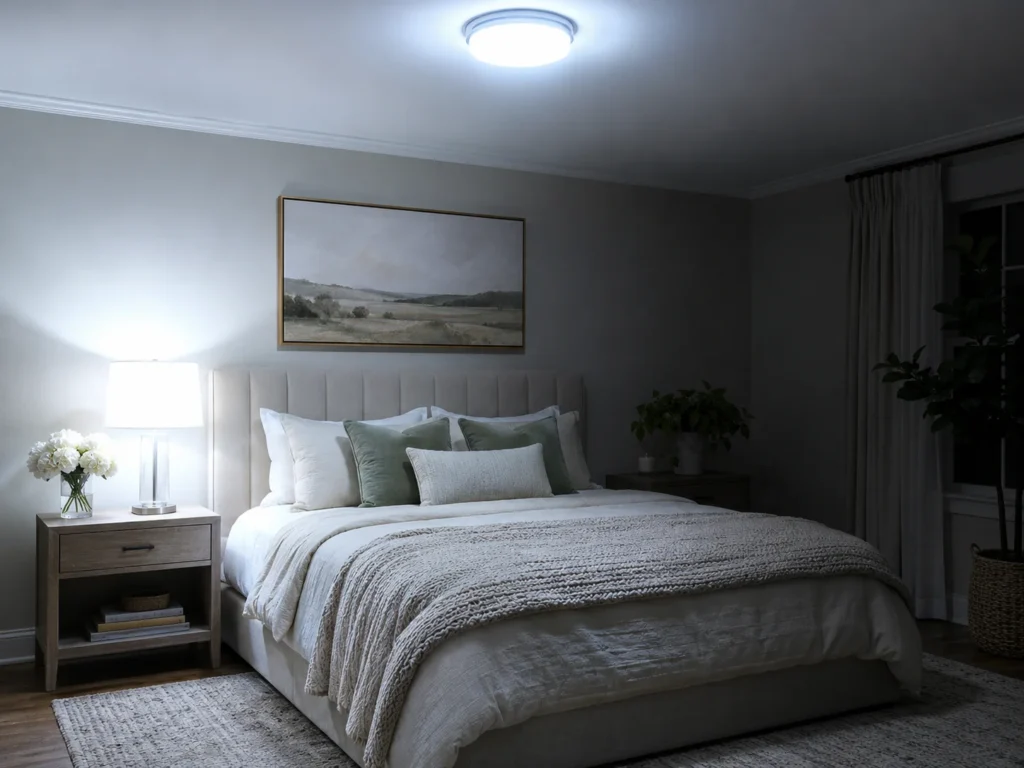
Small lighting mistakes can undermine an otherwise attractive bedroom. Pay attention to comfort as well as decorative appearance.
- Using one light source: Limits flexibility and can produce uneven illumination.
- Choosing overly bright bulbs: Creates discomfort when fixtures remain at maximum output.
- Mixing incompatible color temperatures: Makes the room appear visually inconsistent.
- Exposing bulbs directly: Can produce distracting glare.
- Ignoring reading needs: Leaves the bedroom uncomfortable for detailed tasks.
- Using incompatible dimmers: May cause flickering or poor dimming performance.
- Neglecting safety: Creates unnecessary electrical or trip hazards.
Never cover a lamp with an improvised fabric diffuser or place hot fixtures against bedding. Use appropriately rated bulbs, shades, cords, and power supplies.
Best Products for Creating Cozy Bedroom Lighting
If you’re ready to upgrade your bedroom, these three products address different lighting needs without requiring a complete redesign.
Affiliate disclosure: This section contains affiliate links. As an Amazon Associate, the site may earn from qualifying purchases. Ratings below are editorial suitability assessments, not verified customer ratings or hands-on test results.
🏆 Best for adjustable lighting
Philips Hue Essential A19 Smart LED Bulb
★★★★☆ 4.5/5 — Editorial rating
This 800-lumen, 8.8W smart bulb offers adjustable white light from 2200K to 6500K. I’d choose it for bedrooms that need flexible morning and evening lighting scenes.
💡 Best for existing lamps
Lutron Caséta PD-3PCL Plug-In Lamp Dimmer
★★★★☆ 4.3/5 — Editorial rating
This plug-in dimmer supports up to 100W of compatible dimmable LED or CFL lighting. I’d consider it when upgrading traditional bedside lamps without replacing their fixtures.
📖 Best for reading corners
IKEA Ranarp Floor/Reading Lamp
★★★★☆ 4.2/5 — Editorial rating
This adjustable floor lamp directs light toward reading areas and uses an E26 bulb in its U.S. version. I’d pair it with a warm white LED for a comfortable bedroom reading corner.
Frequently Asked Questions
What type of lighting makes a bedroom feel cozy?
Warm white lighting between 2700K and 3000K, combined with shaded lamps and indirect accent lighting, creates a comfortable bedroom atmosphere. Using multiple independently controlled fixtures helps reduce glare while maintaining enough brightness for everyday activities.
Is 2700K or 3000K better for bedroom lighting?
Both color temperatures work well, but 2700K generally produces a warmer, softer appearance suitable for evening relaxation. A 3000K bulb offers a slightly cleaner white appearance that can work well for reading, dressing, and general bedroom activities.
How do I make my bedroom cozy without a ceiling light?
Combine bedside lamps, floor lamps, plug-in wall sconces, and indirect accent lighting to distribute illumination throughout the bedroom. Ensure these fixtures provide enough general visibility for walking and daily activities, particularly around furniture, doorways, and other potential obstacles.
Are LED strip lights good for cozy bedroom lighting?
Yes, warm white LED strips can create attractive indirect lighting behind headboards, shelves, and architectural features. Choose dimmable products with appropriate power supplies and conceal individual LED points when possible to produce a smoother, softer glow.
How many lights should a cozy bedroom have?
Many bedrooms benefit from three or four light sources, including ambient lighting, one or two bedside lamps, and an optional accent fixture. The ideal number depends on room dimensions, furniture placement, natural daylight, and how you use the bedroom.
Final Thoughts: Make Your Bedroom Feel Warm and Relaxing
Learning how to create cozy bedroom lighting doesn’t require an expensive renovation. A few carefully selected light sources can make a noticeable difference in how your bedroom looks and feels.
Start with warm white bulbs, add comfortable bedside lighting, and introduce independent brightness controls.
Your cozy bedroom lighting checklist:
- Choose 2700K bulbs for evening relaxation.
- Combine ambient, task, and accent lights.
- Use soft shades and indirect illumination.
- Provide adjustable brightness where possible.
- Maintain enough light for reading and safe movement.
- Coordinate lighting with your bedroom decor.
Start with one small improvement tonight. Switch off the harsh overhead light, turn on a warm bedside lamp, and see how a softer lighting arrangement changes the atmosphere of your bedroom.