

Quick Answer
To choose bedroom lighting, combine ambient, task, and accent lights with warm-white bulbs between 2700K and 3000K. Select brightness according to room size, position bedside lamps for comfortable reading, and use dimmers for flexible control. These choices help you create a relaxing bedroom that supports everyday activities and evening relaxation.
Quick steps to choose bedroom lighting:
- Layer your lighting: Combine ceiling fixtures, bedside lamps, and decorative lights.
- Choose warm bulbs: Use 2700K–3000K for a welcoming atmosphere.
- Match room size: Adjust total light output according to bedroom dimensions.
- Add reading lights: Provide focused illumination beside the bed.
- Install flexible controls: Choose compatible dimmers or smart bulbs.
- Reduce harsh glare: Use shaded fixtures and indirect illumination.
Practical tip:
- Keep at least two independently controlled light sources so you don’t depend entirely on overhead lighting.
Learning how to choose bedroom lighting can transform an ordinary room into a comfortable, inviting retreat. The right lighting makes reading easier, improves visibility, and complements your bedroom decor.
I recommend planning lighting around your daily routine rather than choosing fixtures based on appearance alone. This guide explains brightness, bulb color, fixture placement, and practical lighting layouts for bedrooms of different sizes.
What Does Choosing Bedroom Lighting Mean?
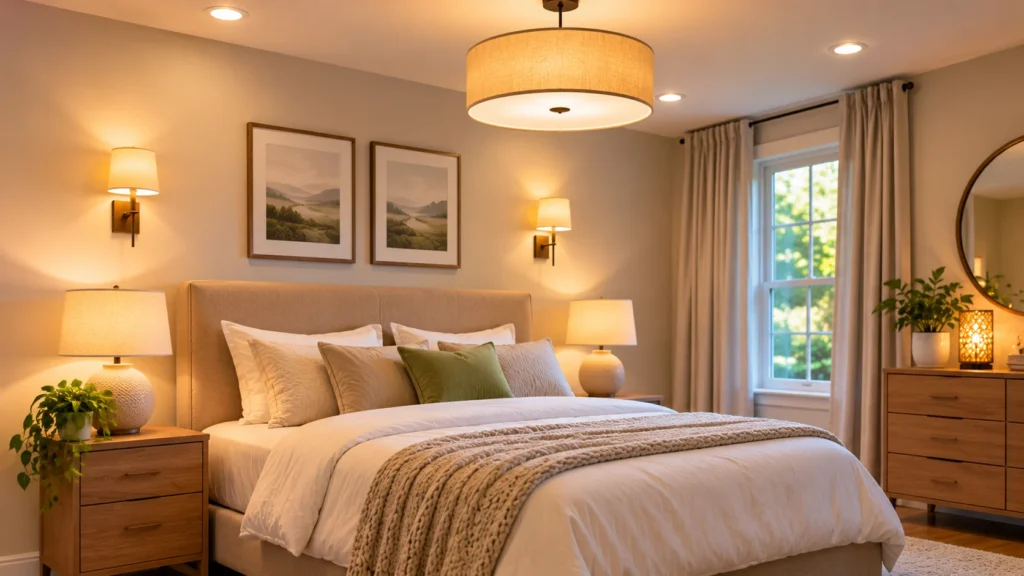
Choosing bedroom lighting is the process of selecting and arranging light fixtures, bulbs, brightness levels, and controls to support bedroom activities. It combines practical visibility with visual comfort and decorative style.
A well-designed bedroom needs more than one ceiling light. Different activities require different types of illumination throughout the day.
Consider these four lighting characteristics before buying fixtures:
- Brightness: The amount of visible light a bulb produces.
- Color temperature: Whether white light appears warm or cool.
- Light distribution: How illumination spreads across the room.
- Control: How easily you can adjust or switch individual lights.
Lighting should also complement furniture placement, wall colors, bedding, and window treatments.
Why Is Good Bedroom Lighting Important?
Good bedroom lighting improves everyday functionality while helping the room feel welcoming. It also creates visual depth and highlights decorative features without adding unnecessary furniture.
A flexible lighting arrangement offers several benefits:
- Makes reading and dressing more comfortable.
- Improves visibility around furniture and walking paths.
- Creates a softer evening atmosphere.
- Highlights artwork, bedding, and wall textures.
- Helps small bedrooms feel more open.
- Allows different activities without illuminating the entire room.
- Can reduce electricity consumption when efficient LEDs replace older bulbs.
Lighting is an important part of learning how to decorate a bedroom. Even expensive furniture can look uninviting under uncomfortable lighting.
How to Choose Bedroom Lighting: 11 Practical Tips
1. Understand the Three Main Types of Bedroom Lighting
The most effective bedroom lighting arrangements combine ambient, task, and accent illumination. Each lighting layer serves a different purpose.
Ambient lighting
Ambient lighting provides general illumination throughout the bedroom. It helps you move around, clean, organize furniture, and find belongings.
Common ambient lighting fixtures include:
- Flush-mount ceiling lights.
- Semi-flush ceiling fixtures.
- Pendant lights.
- Recessed lighting.
- Large floor lamps.
Task lighting
Task lighting directs illumination toward a particular activity. Bedroom task lights are especially useful for reading, dressing, applying makeup, or working.
Popular options include:
- Adjustable bedside reading lamps.
- Desk lamps.
- Wall-mounted reading sconces.
- Vanity mirror lights.
- Wardrobe lighting.
Accent lighting
Accent lighting highlights decorative features and adds depth. It usually provides softer, more localized illumination than general ceiling lights.
- LED strips behind a headboard.
- Picture lights above artwork.
- Decorative wall sconces.
- Small dresser lamps.
- Indirect shelf lighting.
The Australian Government’s home lighting guide explains how matching lighting to specific activities can improve efficiency and functionality.
2. Choose the Right Brightness for Your Bedroom
Bedroom brightness depends on floor area, ceiling height, wall colors, fixture design, and intended activities. Measure brightness in lumens rather than relying only on bulb wattage.
A lumen measures visible light output, while a watt measures electrical power consumption. The U.S. Department of Energy’s Energy Saver resources provide guidance on efficient household lighting.
Bedroom lighting brightness guide
| Bedroom size | Floor area | Starting ambient lumens |
|---|---|---|
| Small bedroom | 80–100 sq. ft. | 800–1,500 lm |
| Medium bedroom | 120–150 sq. ft. | 1,200–2,250 lm |
| Large bedroom | 180–220 sq. ft. | 1,800–3,300 lm |
| Extra-large bedroom | 250–300 sq. ft. | 2,500–4,500 lm |
These are approximate planning estimates using 10–15 lumens per square foot of floor area. They are not mandatory lighting standards. Adjust for fixture efficiency, room finishes, and personal preferences.
I recommend distributing light across several fixtures instead of installing one extremely bright ceiling bulb. This arrangement provides more control over individual areas.
3. Select the Best Color Temperature
For most bedrooms, 2700K to 3000K warm-white lighting provides a comfortable balance between visibility and atmosphere. Lower color temperatures generally produce warmer-looking light.
Color temperature uses the Kelvin scale. The correct choice depends on how you use each bedroom area.
| Temperature | Appearance | Best use |
|---|---|---|
| 2200K | Extra warm | Evening accent lights |
| 2700K | Soft warm white | Bedside lamps |
| 3000K | Warm white | General lighting |
| 3500K–4000K | Neutral white | Desks and dressing areas |
| 5000K–6500K | Daylight-like white | Specialized daytime tasks |
Keep your main bedroom fixtures within a similar color temperature range for a more consistent appearance.
For evening relaxation, reducing brightness matters alongside choosing warmer light. Avoid unnecessary intense illumination close to bedtime.
4. Choose Ceiling Lights According to Bedroom Size
The best bedroom ceiling light provides sufficient general illumination without overwhelming the room. Ceiling height is especially important when selecting a fixture.
- Flush-mount lights: Suitable for bedrooms with limited ceiling height.
- Semi-flush fixtures: Provide decorative character without hanging too low.
- Pendant lights: Work well in rooms with sufficient overhead clearance.
- Chandeliers: Create a decorative focal point in larger bedrooms.
- Recessed lights: Offer a clean appearance when positioned to minimize glare.
- Ceiling fans with lights: Combine air circulation and general illumination.
Check fixture dimensions before purchasing. A beautiful pendant can become inconvenient if it hangs too low above a frequently used walking area.
5. Position Bedside Lamps for Comfortable Reading
Bedside lighting should illuminate reading material without shining directly into your eyes. Adjustable lamps and directional wall sconces offer greater flexibility.
Use these practical placement guidelines:
- Position lamps within comfortable reach from the bed.
- Choose shades that conceal the bright bulb from direct view.
- Direct reading lights toward the book or reading surface.
- Start with approximately 300–500 lumens per reading lamp and adjust as needed.
- Provide independent lighting controls for each side of a shared bed.
Test lamp height while sitting against your pillows. Your mattress and headboard height can change the ideal position considerably.
6. Use Dimmers for Flexible Bedroom Lighting
Dimmer switches allow you to adjust brightness for different activities without replacing bulbs. They make ceiling lights more versatile during mornings, evenings, and nighttime routines.
Before purchasing a dimmer, check:
- Whether your LED bulbs support dimming.
- Whether the dimmer supports your specific bulbs or fixtures.
- The electrical load and circuit requirements.
- Whether the installation requires particular wiring.
Not every LED works with every dimmer. Incompatible combinations may flicker, buzz, or provide limited brightness adjustment.
Use a qualified electrician for permanent electrical modifications.
7. Add Accent Lighting for a Cozy Atmosphere
Accent lighting creates visual interest without illuminating every corner of the bedroom. Indirect light is especially useful when you want a softer evening atmosphere.
Try these simple bedroom accent lighting ideas:
- Install concealed warm-white LED strips behind the headboard.
- Place a small decorative lamp on a dresser.
- Illuminate artwork with an adjustable picture light.
- Add low-level motion-activated lighting near the floor.
- Use wall sconces to highlight textured walls.
Conceal LED strip diodes whenever possible. Visible individual light points can create uncomfortable glare and distracting reflections.
For additional decorating inspiration, explore these ideas on how to make a bedroom feel cozy using lighting, fabrics, and natural textures.
8. Make the Most of Natural Bedroom Light
Natural daylight can reduce the need for artificial lighting during the day. It also changes how furniture, paint colors, and fabrics appear.
Improve natural bedroom lighting with these adjustments:
- Choose sheer curtains when daytime privacy permits.
- Keep large furniture away from windows.
- Use mirrors to distribute reflected daylight.
- Select lighter wall colors for darker rooms.
- Combine sheer curtains with blackout curtains for nighttime control.
Rooms receiving limited daylight may need additional daytime illumination. Avoid positioning mirrors where they reflect intense sunlight directly toward the bed.
9. Choose Energy-Efficient LED Light Bulbs
LED bulbs are a practical choice for most bedroom fixtures because they provide efficient illumination in different brightness levels and color temperatures.
Use the following approximate equivalents when replacing traditional incandescent bulbs:
| Incandescent bulb | Typical LED power | Light output |
|---|---|---|
| 40W | 4–6W | 450 lm |
| 60W | 8–10W | 800 lm |
| 75W | 10–13W | 1,100 lm |
| 100W | 13–17W | 1,600 lm |
LED wattage varies by manufacturer, bulb design, and efficiency. Always compare the actual packaging specifications.
The Energy Rating lighting guide provides useful information about bulb selection, brightness, and color temperature.
10. Match Lighting Fixtures to Bedroom Decor
Bedroom lighting fixtures should complement the room’s existing furniture, colors, and decorative style. Coordinated materials and finishes help create a visually balanced space.
- Modern bedrooms: Simple pendants, matte-black sconces, and understated ceiling fixtures.
- Traditional bedrooms: Fabric lampshades, brass finishes, and decorative chandeliers.
- Scandinavian bedrooms: White fixtures, pale wood, and diffused lighting.
- Bohemian bedrooms: Woven pendant shades and warm decorative lamps.
- Minimalist bedrooms: Recessed fixtures and simple adjustable reading lights.
- Luxury bedrooms: Statement ceiling fixtures and coordinated bedside sconces.
I prefer choosing a consistent finish for the main fixtures before introducing decorative accents. This keeps the lighting arrangement intentional without requiring every lamp to match.
11. Consider Smart Bedroom Lighting
Smart bedroom lighting allows you to adjust compatible bulbs through an app, remote control, or supported voice assistant. Some models also provide adjustable color temperature and automated schedules.
Useful smart lighting features include:
- Scheduled morning lighting.
- Automatic evening dimming.
- Adjustable warm and cool white tones.
- Independent controls for individual lamps.
- Customized lighting scenes.
- Remote switching from bed.
In 2026, smart lighting remains a practical option for upgrading existing lamps without replacing every fixture. However, ordinary warm-white LEDs and compatible dimmers can provide excellent results too.
Which Bedroom Lighting Fixtures Should You Choose?
The best fixtures depend on your room layout, ceiling height, available space, and daily activities. Start with general illumination, then add lights where you need more control.
| Fixture | Best for | Lighting type |
|---|---|---|
| Ceiling light | Whole bedroom | Ambient |
| Table lamp | Nightstands | Task or accent |
| Wall sconce | Bedside walls | Task or accent |
| Floor lamp | Reading corners | Task or ambient |
| LED strip | Headboards and shelves | Accent |
| Vanity light | Dressing mirrors | Task |
How Do You Plan Lighting for a Small Bedroom?
Small bedroom lighting should provide adequate illumination without consuming valuable furniture or floor space. Wall-mounted fixtures and compact ceiling lights are particularly useful.
- Install a low-profile ceiling fixture.
- Replace bulky bedside lamps with wall sconces.
- Use light-colored walls and lamp shades.
- Add concealed lighting behind furniture if appropriate.
- Choose independently controlled fixtures.
- Avoid oversized pendants in low-ceiling rooms.
A small bedroom does not necessarily need many fixtures. Two or three well-positioned light sources may be sufficient.
What Is a Good Lighting Layout for a Master Bedroom?
A master bedroom benefits from separate lighting zones for sleeping, dressing, reading, and relaxation. Independent controls help larger rooms remain flexible.
For example, a 180-square-foot bedroom could use this starting arrangement:
- Ceiling fixture: Approximately 2,000 lumens of general illumination.
- Bedside lamps: Two 400-lumen adjustable reading lights.
- Dressing area: A separate 600-lumen fixture.
- Accent lighting: A low-output headboard light or dresser lamp.
This example creates separate lighting zones rather than requiring every fixture to operate simultaneously.
Common Bedroom Lighting Mistakes to Avoid
The most common bedroom lighting mistakes involve excessive brightness, poor fixture placement, and insufficient flexibility.
- Using one light source: A single ceiling fixture limits control and may create shadows.
- Ignoring color temperature: Unnecessarily cool lighting can undermine a warm decorative style.
- Choosing oversized fixtures: Large lamps can overwhelm compact bedrooms.
- Exposing bright bulbs: Direct glare makes relaxation and reading uncomfortable.
- Ignoring switch placement: Controls should remain accessible near entrances and beds.
- Mixing incompatible dimmers: Check bulb and switch compatibility before purchasing.
- Overlooking electrical safety: Follow fixture ratings and avoid overloaded outlets.
Bedroom Lighting Shopping Checklist
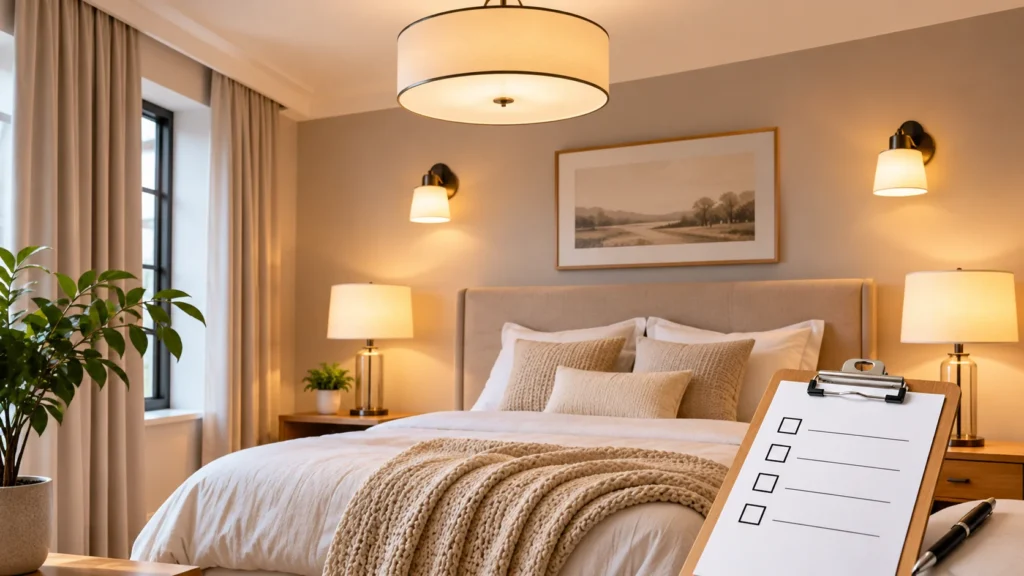
Before purchasing a fixture, confirm that it meets your practical requirements and fits the room’s proportions.
- Measure bedroom dimensions and ceiling height.
- Identify ambient, task, and accent lighting needs.
- Select a suitable lumen range.
- Choose a comfortable color temperature.
- Check fixture dimensions and bulb socket type.
- Confirm voltage and electrical compatibility.
- Check dimmer compatibility.
- Consider bulb replacement accessibility.
- Choose high color-rendering bulbs where accurate colors matter.
- Set a realistic lighting budget.
- Plan accessible switch locations.
Include these decisions in your overall bedroom decor checklist to avoid unnecessary purchases and installation changes.
Recommended Products for Better Bedroom Lighting
If you’re ready to upgrade your bedroom lighting, these three products address different needs. I selected them for their practical features rather than relying on unverified customer ratings.
Disclosure: As an Amazon Associate, I earn from qualifying purchases.
💰 Best for simple upgrades
GE Relax HD Soft White A19 LED Bulb
Best use: Everyday bedroom lighting
Choose the 2700K soft-white, 60W-equivalent version for compatible bedside and ceiling fixtures. I’d consider this option when upgrading existing lamps without adding smart controls.
🏆 Best for smart lighting
Philips Hue White Ambiance A19
Best use: Adjustable white lighting
The 800-lumen version offers adjustable white tones and smart brightness control. I’d choose it for bedrooms that need brighter daytime illumination and softer evening settings.
💡 Best for wall dimming
Lutron Diva LED+ DVCL-153P
Best use: Compatible ceiling lights
This dimmer supports up to 150W of compatible dimmable LED lighting on suitable circuits. I’d consider it for conventional ceiling fixtures that need flexible brightness without smart bulbs.
Check current product specifications, voltage, socket compatibility, dimming requirements, and regional availability before ordering.
Frequently Asked Questions
What type of lighting is best for a bedroom?
Layered lighting works best for most bedrooms. Combine a ceiling fixture for general visibility, bedside lamps for reading, and soft accent lighting for relaxation. Warm-white LED bulbs between 2700K and 3000K provide a comfortable starting point for everyday bedroom use.
Is 2700K or 3000K better for bedroom lighting?
Both temperatures work well in bedrooms. A 2700K bulb produces a softer, warmer appearance, while 3000K provides a slightly crisper warm-white tone. Choose 2700K for relaxation-focused bedside lamps or 3000K for general illumination when you prefer a cleaner appearance.
How many lumens do I need for a bedroom?
A medium-sized bedroom of approximately 120–150 square feet can start with around 1,200–2,250 lumens of general light output. Additional task lighting may improve reading and dressing visibility. Adjust brightness for ceiling height, wall colors, fixture design, and individual needs.
Should bedroom lights be warm or cool?
Warm-white lighting generally suits bedrooms because it creates a softer decorative atmosphere. Cooler or neutral white lighting can be useful for daytime activities at a desk or dressing mirror. Reduce unnecessary brightness in the evening, regardless of the chosen color temperature.
How many light sources should a bedroom have?
Most bedrooms benefit from at least two independently controlled light sources, such as a ceiling light and bedside lamp. Larger bedrooms may need additional reading lights, wardrobe illumination, or decorative fixtures. Room size and daily activities matter more than a fixed fixture count.
Final Thoughts: Choosing the Right Bedroom Lighting
Understanding how to choose bedroom lighting starts with identifying what you need the room to do. A comfortable bedroom should support everyday activities while offering a softer atmosphere when you want to relax.
Start with warm-white general lighting, add focused reading lamps, and introduce accent lights where they improve the room. Choose compatible dimmers or smart controls if you need greater flexibility.
Your next step: Look around your bedroom tonight and identify any dark corners, uncomfortable glare, or inconvenient switches. Improving one lighting layer at a time can make the entire room feel more comfortable and welcoming.