

Quick Answer
To choose curtain color for a bedroom, consider your wall color, bedding, furniture, natural lighting, and preferred atmosphere. Select light neutrals for an airy appearance, muted greens or blues for a softer atmosphere, or darker shades for a cozy look. Understanding warm and cool color undertones helps create a balanced bedroom.
Follow these six simple steps:
- Check wall colors: Choose curtains with compatible warm or cool undertones.
- Coordinate with bedding: Repeat an existing color from pillows, blankets, or rugs.
- Evaluate natural light: Consider how sunlight changes fabric appearance.
- Consider room size: Use light or wall-matching shades to reduce visual clutter in small bedrooms.
- Choose desired mood: Select soft neutrals for simplicity or deep colors for intimacy.
- Test fabric samples: Compare your favorite shades during daylight and evening hours.
Best versatile bedroom curtain colors:
- Warm neutrals: Ivory, oatmeal, beige, and taupe.
- Soft accents: Sage green, dusty blue, and muted blush.
- Deep shades: Navy blue, charcoal, and forest green.
Knowing how to choose curtain color for a bedroom can make decorating easier and prevent expensive mistakes. I recommend treating curtains as part of your overall bedroom color palette rather than an isolated accessory.
This guide covers 12 practical tips, popular color combinations, lighting considerations, and common mistakes. You’ll also find suitable curtain recommendations for different bedroom styles.
What Is Bedroom Curtain Color Selection?
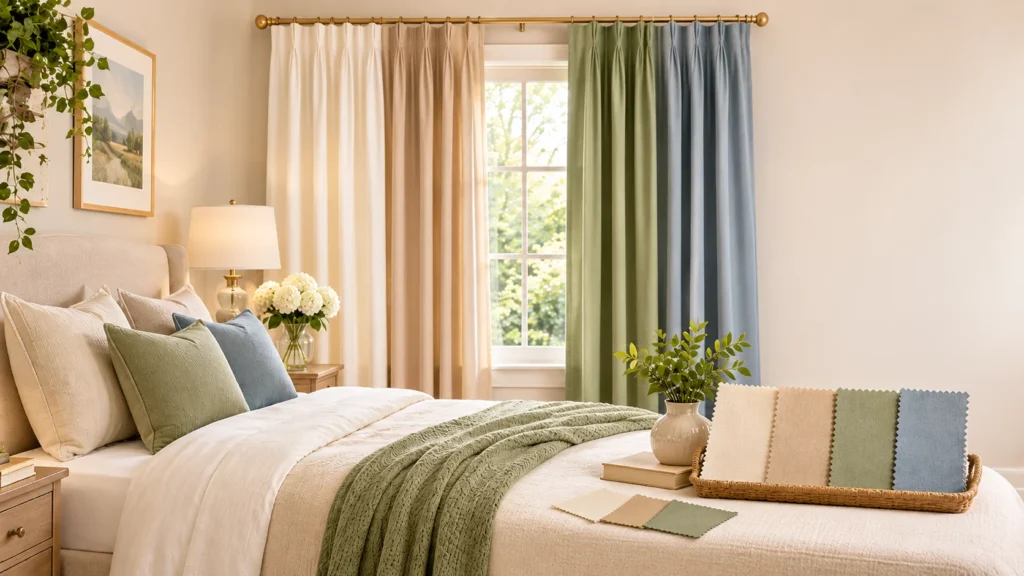
Bedroom curtain color selection is the process of choosing window treatment colors that complement your bedroom’s existing decor, lighting, and intended atmosphere.
Unlike smaller decorative accessories, curtains cover a substantial vertical surface. Their color influences how spacious, warm, bright, or intimate a bedroom appears.
A successful curtain color should balance four important elements:
- Visual harmony: Compatibility with walls and furniture.
- Atmosphere: The feeling you want your bedroom to create.
- Functionality: Privacy and light control appropriate for your needs.
- Flexibility: Compatibility with future bedding and decor changes.
My preferred starting point is to identify the bedroom’s largest permanent surfaces. Walls, flooring, and furniture usually provide better color references than seasonal accessories.
How to Choose Curtain Color for a Bedroom: 12 Expert Tips
1. Start With Your Bedroom Wall Color
Your wall color is one of the most useful references when selecting bedroom curtains. Curtains can blend into the walls or create an intentional contrast.
For a subtle look, choose a curtain shade slightly lighter or darker than your wall paint.
- White walls: ivory, sage green, beige, or navy.
- Beige walls: cream, oatmeal, olive, or warm brown.
- Gray walls: soft white, dusty blue, charcoal, or muted pink.
- Green walls: cream, natural linen, taupe, or muted pink.
- Blue walls: white, sand, light gray, or complementary blue.
Matching undertones is more important than matching color names exactly. Two beige fabrics can look noticeably different when placed together.
2. Match Warm and Cool Undertones
An undertone is the subtle underlying color that makes a shade appear warmer, cooler, or more neutral.
Warm undertones often include hints of yellow, red, or orange. Cool undertones may contain blue, violet, or certain greens.
- Warm bedroom palette: Cream, camel, terracotta, oatmeal, and warm taupe curtains.
- Cool bedroom palette: Soft gray, slate blue, cool white, and dusty lavender curtains.
- Neutral bedroom palette: Balanced greige, natural linen, and understated ivory curtains.
Compare curtain samples directly against your walls and flooring. This simple check can reveal undertone conflicts that online product photos hide.
3. Coordinate Curtains With Your Bedding
Bedroom curtains don’t need to match your comforter exactly. Repeating a secondary bedding color often creates a more natural appearance.
For example, consider a white comforter with sage green pillows and a beige throw. Sage or oatmeal curtains can connect those elements without making everything identical.
- White bedding: beige, sage, dusty blue, or taupe curtains.
- Blue bedding: ivory, gray, or complementary blue curtains.
- Floral bedding: repeat a subtle background color from the pattern.
- Dark bedding: balance it with soft neutral curtains.
If you change bedding frequently, a versatile neutral curtain is usually the easier long-term choice.
4. Consider the Size of Your Bedroom
Light-colored curtains can help a small bedroom feel less visually crowded. Shades close to the wall color also reduce abrupt transitions around windows.
Larger bedrooms can accommodate deeper shades without necessarily feeling enclosed.
- Small bedrooms: Ivory, off-white, light beige, pale gray, or soft sage.
- Medium bedrooms: Taupe, dusty blue, greige, or muted olive.
- Large bedrooms: Navy, chocolate brown, charcoal, or forest green.
Color doesn’t change the actual dimensions of your room. However, it can influence perceived spaciousness and visual balance.
5. Evaluate Natural Bedroom Lighting
Natural light can change how curtain colors appear throughout the day. A fabric that looks neutral online may reveal yellow, green, or pink undertones near your window.
In the Northern Hemisphere, window orientation offers a useful starting point.
- North-facing windows: Often suit warm ivory, oatmeal, or soft beige.
- South-facing windows: Can accommodate a wider range of warm and cool shades.
- East-facing windows: Test colors in bright morning light.
- West-facing windows: Check how warm afternoon sunlight affects fabric tones.
Nearby buildings, trees, weather, and geographic location also affect natural lighting. Always evaluate samples inside your actual bedroom.
6. Choose Colors That Support Your Desired Atmosphere
The best bedroom curtain color depends partly on how you want the room to feel. Muted shades generally create less visual intensity than highly saturated colors.
- Peaceful and understated: Sage green, dusty blue, and soft gray.
- Warm and cozy: Caramel, taupe, oatmeal, and beige.
- Elegant and dramatic: Navy, charcoal, and emerald green.
- Bright and airy: White, ivory, and pale cream.
- Soft and romantic: Muted blush, lavender, and dusty rose.
Personal preference matters more than universal color psychology rules. Choose a shade that you enjoy seeing every morning and evening.
7. Balance Curtain Color With Furniture
Furniture finishes can help determine whether your curtains should lean warm or cool. Natural wood often works beautifully with earthy textiles.
- Light oak furniture: natural linen, ivory, and sage green.
- Dark walnut furniture: cream, taupe, and muted olive.
- White furniture: soft gray, beige, dusty blue, and pastel colors.
- Black furniture: warm white, gray, camel, and muted green.
- Gray upholstered furniture: ivory, slate blue, and balanced greige.
I would avoid introducing several unrelated accent colors around large furniture pieces. Repeating one existing shade usually creates a more cohesive result.
8. Try the 60-30-10 Color Rule
The 60-30-10 rule is a flexible decorating guideline that divides a room into dominant, secondary, and accent colors.
| Proportion | Role | Example |
|---|---|---|
| 60% | Dominant color | Warm white walls |
| 30% | Secondary color | Beige curtains and bedding |
| 10% | Accent color | Sage green pillows and accessories |
Curtains often contribute to the secondary color because they occupy a considerable visual area. They can also serve as the dominant decorative accent.
Treat these percentages as approximate design proportions rather than strict measurements.
9. Decide Between Solid and Patterned Curtains
Solid-colored curtains offer flexibility and simplicity. Patterned curtains introduce more personality but require careful coordination.
- Choose solid curtains when your bedding already features bold patterns.
- Consider subtle stripes when your bedroom feels visually plain.
- Use botanical patterns to complement natural materials.
- Choose small-scale patterns for understated texture.
- Repeat one existing room color within the curtain pattern.
When uncertain, textured solid curtains provide a useful middle ground. Linen-look fabrics add visual interest without introducing complicated patterns.
10. Consider Curtain Fabric and Texture
The same color can appear different across velvet, cotton, polyester, and linen fabrics. Texture changes how light interacts with the curtain surface.
- Linen: Natural, relaxed appearance with subtle texture.
- Velvet: Rich appearance with changing highlights and shadows.
- Cotton: Simple, comfortable, and versatile appearance.
- Polyester: Available in many textures, colors, and opacity levels.
- Sheer fabric: Translucent appearance that changes with backlighting.
A textured oatmeal curtain can feel warmer than smooth beige fabric. Examine actual swatches before choosing based on color alone.
11. Separate Curtain Color From Light-Blocking Performance
Dark curtains aren’t automatically blackout curtains. Light-blocking performance depends on fabric construction, lining, and installation.
White blackout curtains can block more light through their fabric than unlined navy curtains.
- Sheer curtains: Suitable for filtered daylight.
- Light-filtering curtains: Soften daylight without creating complete darkness.
- Room-darkening curtains: Reduce incoming light considerably, depending on construction.
- Blackout curtains: Designed to prevent light transmission through the curtain fabric.
Check the edges, curtain rod position, and panel overlap if darkness matters. Light may still enter around blackout panels.
For additional information about window coverings and household energy considerations, explore the U.S. Department of Energy.
12. Test Curtain Samples Before Buying
Fabric samples offer one of the simplest ways to avoid choosing the wrong curtain color. Test at least three suitable shades inside your bedroom.
- Select a neutral shade, a muted accent, and a contrasting color.
- Position each sample beside the window.
- Compare the fabric against your wall and bedding.
- Check its appearance during morning and afternoon daylight.
- Repeat the comparison under your evening lighting.
- Choose the shade that works consistently across these conditions.
My favorite comparison method is to place warm ivory, oatmeal, and cool gray samples against the same wall. Small undertone differences become much easier to identify.
What Are the Best Curtain Colors for a Bedroom?
Ivory, beige, taupe, sage green, dusty blue, and soft gray are versatile bedroom curtain colors. The right option depends on your existing palette and preferred atmosphere.
| Color | Visual effect | Best for |
|---|---|---|
| Ivory | Bright and soft | Small and minimalist rooms |
| Beige | Warm and balanced | Neutral and farmhouse bedrooms |
| Soft gray | Clean and understated | Modern bedrooms |
| Sage green | Natural and muted | Earthy and organic decor |
| Dusty blue | Cool and gentle | Coastal and contemporary rooms |
| Taupe | Sophisticated and neutral | Transitional bedrooms |
| Navy blue | Deep and dramatic | Elegant statement windows |
| Muted blush | Soft and inviting | Romantic bedrooms |
| Charcoal | Strong and intimate | Industrial and dramatic decor |
| Forest green | Rich and earthy | Traditional and nature-inspired rooms |
These visual effects are general design tendencies rather than guaranteed results. Lighting, texture, and surrounding colors influence the final appearance.
Should Bedroom Curtains Be Lighter or Darker Than Walls?
Bedroom curtains can be lighter or darker than walls. Lighter curtains generally reduce visual weight, while darker curtains create stronger contrast around windows.
Choose Lighter Curtains When:
- Your bedroom feels small or crowded.
- You prefer a bright, minimalist appearance.
- Your furniture already contains dark finishes.
- You want the windows to blend into the background.
Choose Darker Curtains When:
- Your bedroom has a spacious layout.
- You want windows to become decorative focal points.
- Your walls and bedding are predominantly light.
- You prefer an intimate or dramatic atmosphere.
For a balanced appearance, try curtains slightly darker than light-colored walls. This provides definition without introducing excessive contrast.
How Do You Match Curtain Colors With Different Bedroom Styles?
Match curtain colors with the materials, furniture, and dominant shades associated with your bedroom’s decorating style. Avoid relying on style labels alone.
- Modern: White, gray, charcoal, and greige.
- Minimalist: Ivory, oatmeal, and light taupe.
- Bohemian: Terracotta, olive, mustard, and natural linen.
- Farmhouse: Cream, warm beige, and muted sage.
- Scandinavian: White, pale gray, and light natural tones.
- Luxury: Champagne, navy, emerald, and rich taupe.
- Coastal: Soft white, sand, and dusty blue.
- Japandi: Oatmeal, warm gray, cream, and earthy brown.
For decorating inspiration, explore bedroom interiors and window treatment ideas from Homes & Gardens.
What Curtain Colors Make a Bedroom Look Bigger?
Off-white, ivory, pale gray, light beige, and other soft neutrals can help a bedroom appear more open. Curtains that resemble the wall color also create greater visual continuity.
Combine your curtain color with suitable installation techniques for a more cohesive result.
- Hang curtains higher than the window frame when practical.
- Extend the curtain rod beyond the window edges.
- Choose floor-length panels where the layout allows.
- Avoid excessive contrast in compact bedrooms.
- Use understated patterns and lighter-looking textures.
Keep curtains clear of heaters and other heat sources. Follow installation and clearance requirements for nearby equipment.
How to Layer Bedroom Curtain Colors
Layering curtains combines two compatible colors and different opacity levels. A common arrangement uses pale sheer curtains behind lined decorative panels.
Sheers offer daytime light filtering, while heavier outer panels provide additional privacy when closed.
- White sheers with oatmeal blackout curtains.
- Ivory sheers with sage green curtains.
- Soft white sheers with navy blue curtains.
- Cream sheers with warm taupe curtains.
- Light gray sheers with charcoal curtains.
Sheer curtains alone may not provide adequate privacy at night. Close the outer panels when interior lights are on.
Common Bedroom Curtain Color Mistakes to Avoid
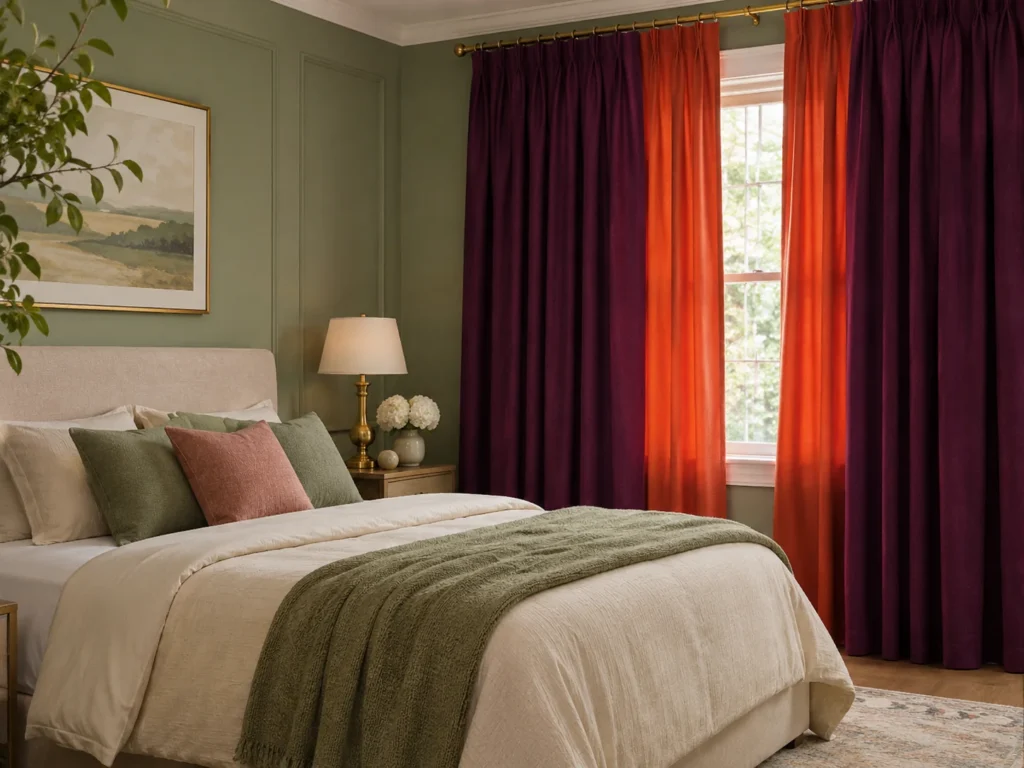
Most curtain color mistakes happen when shoppers ignore undertones, lighting, or existing decor. Careful comparison before ordering can prevent unnecessary replacements.
- Buying from photos alone: Screen settings can distort actual fabric colors.
- Ignoring undertones: Warm beige may clash with cool gray surroundings.
- Overmatching everything: Identical shades across every surface can look flat.
- Choosing excessive contrast: Bold curtains may visually overwhelm small bedrooms.
- Ignoring fabric lining: Attractive colors don’t guarantee adequate darkness or privacy.
- Following trends blindly: A fashionable shade may not suit your furniture.
- Forgetting maintenance: Consider dust visibility, washing instructions, and potential sunlight fading.
As of 2026, my general decorating recommendation remains simple: prioritize colors that complement permanent room features over short-lived style preferences.
Recommended Bedroom Curtains to Consider
If you’re ready to choose new curtains, these options represent three different approaches to bedroom color and light control.
Disclosure: As an Amazon Associate, we may earn from qualifying purchases. These editorial suitability ratings reflect the suggested use cases, not verified customer ratings or hands-on test results.
🏆 Best for neutral bedrooms
NICETOWN Oatmeal Linen-Look Blackout Curtains
★★★★★ 5/5 suitability
Available in two-panel configurations, including 52-by-84-inch panels, these curtains combine warm oatmeal coloring with blackout construction. I’d shortlist them for bedrooms with cream walls and natural wood furniture.
☀️ Best for filtered daylight
NICETOWN Oatmeal Semi-Sheer Linen Curtains
★★★★☆ 4/5 suitability
These textured, semi-sheer panels come in sizes including 52 by 84 inches. I’d choose them for daylight filtering or use them alongside heavier curtains for nighttime privacy.
🌙 Best for cool color schemes
IKEA MAJGULL Light Gray Room-Darkening Curtains
★★★★☆ 4/5 suitability
These room-darkening curtains feature heading tape and come in sizes including 145 by 250 centimeters. I’d consider them for contemporary bedrooms with cool white walls or gray furniture.
Confirm the current color, dimensions, panel quantity, fabric composition, and light-blocking specifications before purchasing. Product options may vary by retailer and region.
Frequently Asked Questions
What Is the Best Color for Bedroom Curtains?
Ivory, beige, taupe, sage green, and dusty blue are versatile bedroom curtain colors because they complement many decorating styles. Choose a shade that works with your wall undertones, bedding, furniture, and natural light rather than relying on one universally recommended color.
Should Bedroom Curtains Match the Walls or Bedding?
Bedroom curtains can coordinate with either walls or bedding, but they don’t need to match exactly. Matching the walls creates visual continuity, while repeating a secondary bedding color introduces more personality. Neutral curtains offer flexibility if you frequently change your bedding.
Are Dark or Light Curtains Better for a Bedroom?
Light curtains generally create an airy appearance, while dark curtains provide stronger contrast and a more intimate atmosphere. Neither option automatically provides better light control, which depends primarily on fabric construction, lining, and how well the curtains cover the window.
What Color Curtains Go With White Bedroom Walls?
White bedroom walls pair well with oatmeal, beige, sage green, dusty blue, soft gray, navy, and muted blush curtains. Warm white walls generally suit warm neutrals, while cooler whites often work with blue-based grays and other cool-toned fabrics.
What Curtain Color Is Best for a Relaxing Bedroom?
Muted sage green, dusty blue, warm beige, ivory, and soft taupe are popular choices for an understated bedroom atmosphere. However, color preferences are personal, and suitable lighting control, privacy, comfortable bedding, and a quiet environment also contribute to bedroom comfort.
Final Thoughts: Choosing the Right Bedroom Curtain Color
Learning how to choose curtain color for a bedroom starts with understanding your existing decor, natural light, and personal preferences. The best shade should feel intentional without overwhelming the room.
If you’re unsure where to begin, consider warm ivory, oatmeal, or balanced taupe. These versatile colors can complement many furniture finishes and bedding combinations.
Before purchasing, compare several fabric samples inside your bedroom. Check their appearance under different lighting conditions and confirm the curtain’s privacy and light-control features.
Your next step: Select three curtain colors that complement your bedroom, order fabric samples where available, and choose the shade that creates the most comfortable and cohesive space.