

Quick Answer
To layer rugs in a bedroom, start with a large, low-pile base rug and place a smaller decorative rug over it. Combine complementary colors, contrasting textures, and proportional sizes to create a cozy, balanced space. Consider your bedroom furniture arrangement before positioning either rug.
Quick Steps for Layering Bedroom Rugs:
- Choose the base: Start with a large, flat, neutral-colored area rug.
- Add an accent: Place a smaller patterned or textured rug over the base.
- Balance the sizes: Leave a visible border around the smaller rug wherever practical.
- Coordinate the colors: Repeat at least one color between both rugs.
- Secure the layers: Use compatible rug pads to reduce movement and bunching.
- Check the placement: Keep raised edges away from doors and busy walking paths.
Best Beginner Combination:
- Pair an 8 x 10-foot neutral base rug with a 5 x 7-foot vintage-style accent rug in a suitably sized bedroom.
Learning how to layer rugs in a bedroom can help you create a warmer, more inviting space without replacing your furniture. I like approaching rug layering as a combination of comfort, proportion, and practical design.
In this 2026 guide, I’ll explain how to select complementary rugs, arrange them around your bed, and avoid common decorating mistakes.
What Does Layering Rugs in a Bedroom Mean?
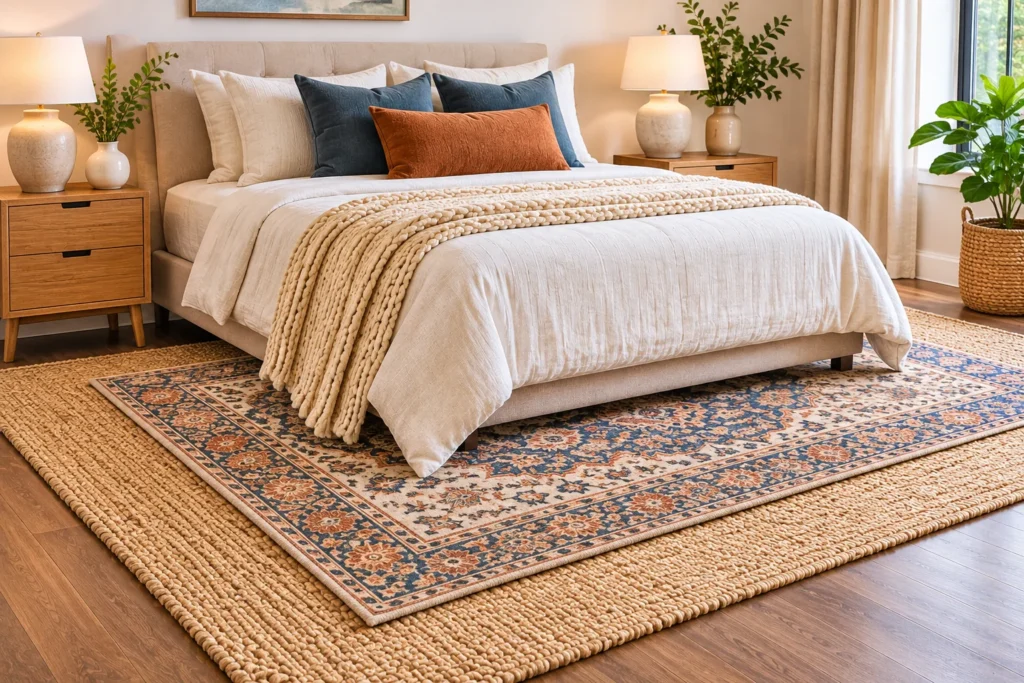
Bedroom rug layering is the practice of placing one rug partly or entirely over another rug or existing carpet. The arrangement adds texture, color, comfort, and visual depth to the bedroom.
The bottom rug usually defines the main furniture area. The upper rug introduces an additional decorative or functional element.
A successful layered rug arrangement typically includes:
- A large foundation rug that connects the bedroom furniture.
- A smaller accent rug that creates visual interest.
- Complementary materials, patterns, and colors.
- Stable backing that helps both layers remain flat.
Unlike placing two separate rugs beside each other, layering creates an intentional overlap. This makes the arrangement feel like one coordinated design.
Why Should You Layer Rugs in a Bedroom?
Layering rugs adds dimension to a bedroom while allowing you to combine decorative styles. It can also improve underfoot comfort in selected areas around the bed.
You don’t necessarily need expensive furniture to achieve a more finished appearance. Two carefully chosen rugs can change the character of an otherwise simple room.
Benefits of Layered Bedroom Rugs
- Extra comfort: Creates softer surfaces where you regularly stand or walk.
- Visual depth: Combines materials and patterns to prevent the floor from looking flat.
- Defined spaces: Separates sleeping, dressing, and reading areas.
- Decorating flexibility: Lets you replace smaller accent rugs as your style changes.
- Budget flexibility: Allows you to reuse an existing large rug.
- Personal style: Makes neutral bedrooms feel more distinctive.
Layering works particularly well when the rest of your bedroom features understated furniture and bedding. The rugs provide decorative interest without requiring additional furniture.
How to Layer Rugs in a Bedroom: 9 Easy Steps
1. Start With a Large Foundation Rug
Choose the bottom rug according to your bed dimensions, available floor space, and furniture layout. It should establish the overall shape of your rug arrangement.
I recommend starting with a relatively flat rug because a firm foundation makes the upper layer easier to position.
Suitable foundation rug materials include:
- Flatwoven cotton.
- Low-pile wool.
- Flatwoven synthetic fibers.
- Jute or sisal with a reasonably even surface.
Neutral shades such as beige, ivory, taupe, and light gray offer flexibility when selecting accent rugs.
A heavily textured foundation can work, but it makes stable layering more difficult. Avoid uneven surfaces that cause the upper rug to wrinkle.
2. Choose a Smaller Accent Rug
The upper rug should complement the foundation without hiding it completely. Select an accent rug that provides a noticeable difference in color, texture, or pattern.
My preferred approach is to make the upper rug the decorative focal point while keeping the base understated.
Popular accent rug options include:
- Distressed Persian-inspired rugs.
- Small wool area rugs.
- Geometric cotton rugs.
- Low-pile washable rugs.
- Small faux sheepskin rugs in low-traffic locations.
If your foundation already has a noticeable pattern, choose a simpler accent rug. This prevents the floor from competing with your bedding and wall decorations.
3. Select the Right Rug Size Combination
The most suitable rug size combination depends on the bedroom dimensions and intended placement. A smaller upper rug should reveal enough of the foundation to make both layers visible.
These measurements provide practical starting points rather than mandatory sizing rules.
| Bedroom Layout | Base Rug | Accent Rug | Suggested Placement |
|---|---|---|---|
| Twin bedroom | 5 x 8 ft | 3 x 5 ft | Lower bed area |
| Full bedroom | 6 x 9 ft | 4 x 6 ft | Foot of the bed |
| Queen bedroom | 8 x 10 ft | 5 x 7 ft | Lower bed area |
| King bedroom | 9 x 12 ft | 6 x 9 ft | Centered or offset |
| Bedside accent | Existing area rug | 2 x 6 ft runner | Beside the bed |
| Reading corner | 5 x 7 ft | 3 x 4 ft | Near an accent chair |
For example, an 8 x 10-foot base and a centered 5 x 7-foot accent leave an 18-inch border on every side. That creates a clearly visible frame before accounting for furniture coverage.
Use measuring tape to outline both rugs before buying. This is especially helpful when decorating a compact bedroom.
4. Mix Different Rug Textures
Combining contrasting textures creates depth without requiring bold colors. A flatwoven foundation with a soft accent rug is a simple starting point.
Consider these texture combinations:
- Natural jute with soft wool.
- Flatwoven cotton with a vintage-style rug.
- Low-pile wool with patterned cotton.
- Neutral synthetic fibers with a textured woven accent.
Keep the combined thickness manageable. Two thick rugs can create raised edges that interfere with walking and furniture stability.
The Carpet and Rug Institute provides useful educational resources about carpet materials, maintenance, and indoor flooring.
5. Coordinate Rug Colors and Patterns
Choose rugs that share at least one color or have compatible undertones. This helps the layers look intentional rather than randomly assembled.
I prefer choosing the accent rug first when it contains a distinctive pattern. Finding a neutral foundation that complements it is often easier.
| Bedroom Style | Base Rug Color | Accent Rug Style |
|---|---|---|
| Modern | Light gray | Black and ivory geometric |
| Bohemian | Natural beige | Terracotta vintage pattern |
| Farmhouse | Cream | Muted striped cotton |
| Minimalist | Ivory | Textured taupe |
| Traditional | Warm beige | Persian-inspired floral |
Repeat an accent rug color in your pillows or curtains to connect the floor with the rest of the room.
For more inspiration, explore this guide on how to decorate a bedroom with coordinated furniture, colors, and accessories.
6. Position the Rugs Around Your Bed
Place the foundation beneath the bed, then position the decorative layer where enough of its design remains visible. The foot or lower portion of the bed often works well.
Try one of these practical arrangements:
- Centered layering: Align the upper rug with the bed’s centerline.
- Offset layering: Move the smaller rug toward one side while maintaining a deliberate overlap.
- Foot-of-bed layering: Position the accent rug across the foundation near the footboard.
- Bedside layering: Add a narrow accent runner beside the bed.
Keep frequently used walking areas free from curled corners. Check that bed legs and other furniture remain level after arranging both rugs.
7. Use Compatible Non-Slip Rug Pads
Rug pads help reduce movement between the flooring and the foundation rug. A suitable rug-on-rug gripping layer may also help prevent the decorative rug from shifting.
Choose padding according to the surfaces involved:
- Hardwood flooring requires a pad compatible with its finish.
- Tile flooring benefits from a suitable gripping pad.
- Carpeted floors require carpet-compatible rug backing or padding.
- Two overlapping rugs may require a dedicated rug-on-rug pad.
Never assume a standard hardwood rug pad will work between two textile surfaces.
Retailers such as The Home Depot offer rug padding options for different floor types and installation needs.
8. Balance the Rugs With Bedroom Furniture
Layered rugs should support your existing furniture layout rather than compete with it. Keep dressers, nightstands, and benches stable on their intended surfaces.
A bench at the foot of your bed can help define the decorative rug area. However, avoid leaving furniture legs unevenly supported across thick layers.
Use this furniture checklist:
- Keep nightstands level and stable.
- Leave closet and bedroom doors unobstructed.
- Avoid placing bulky rug edges beneath moving furniture.
- Maintain comfortable access to both sides of the bed.
Read these common bedroom decorating mistakes before finalizing your arrangement.
9. Adjust the Arrangement Before Finalizing It
View the layered rugs from the bedroom entrance and both sides of the bed. Small adjustments can improve balance and make the accent rug more noticeable.
I suggest testing the arrangement during daylight and under your usual evening lighting. Rug colors can appear different as lighting conditions change.
Complete these final checks:
- Both rugs have enough visible surface.
- The accent rug complements the bedding.
- Exposed rug edges remain flat.
- Doors open without catching either layer.
- Furniture remains stable.
- The arrangement feels comfortable underfoot.
Can You Layer Rugs Over Carpet in a Bedroom?
Yes, you can place an area rug over bedroom carpet if both surfaces remain stable. Low-pile carpet generally provides an easier foundation than thick, plush carpeting.
A decorative rug can introduce color and define a sleeping area without replacing the existing carpet.
Follow these guidelines when layering over carpet:
- Choose an accent rug with a relatively flat backing.
- Use padding specifically designed for rugs over carpet.
- Avoid combining thick, unstable pile surfaces.
- Check regularly for ripples and curled corners.
- Follow the manufacturer’s cleaning and backing recommendations.
If the upper rug continues to move or bunch despite suitable padding, remove it. Appearance should never take priority over safe movement around the bedroom.
How Do You Layer Rugs in a Small Bedroom?
In a small bedroom, use two visually coordinated rugs with minimal thickness and restrained patterns. Avoid covering the entire visible floor with competing decorative elements.
A 5 x 8-foot foundation and a 3 x 5-foot accent can work in some compact layouts. Measure your available floor area before choosing these sizes.
To maintain an open appearance:
- Use light or neutral foundation colors.
- Choose a simple accent pattern.
- Keep the rug arrangement aligned with the bed.
- Leave some visible flooring around the room.
- Avoid adding unnecessary third layers.
These techniques complement other strategies for making a small bedroom look bigger without major renovations.
What Are the Best Rug Materials for Bedroom Layering?
Cotton, wool, jute, and low-pile synthetic rugs offer different advantages for bedroom layering. The right choice depends on comfort, cleaning requirements, and the stability of each surface.
| Material | Best Use | Advantages | Limitations |
|---|---|---|---|
| Jute | Base layer | Natural woven texture | Sensitive to moisture |
| Wool | Either layer | Comfortable and resilient | May shed and cost more |
| Cotton | Accent layer | Lightweight and versatile | May shift without padding |
| Polypropylene | Either layer | Often affordable and stain-resistant | Texture varies by construction |
| Polyester | Accent layer | Many decorative finishes | Some piles flatten with use |
Construction matters as much as fiber type. A tightly woven wool rug may provide a more suitable foundation than a thick synthetic shag rug.
What Common Rug Layering Mistakes Should You Avoid?
The biggest rug layering mistakes involve poor proportions, excessive thickness, unstable backing, and conflicting patterns. Most are preventable through careful measuring and material selection.
- Choosing identical sizes: Hides the foundation and eliminates the layered appearance.
- Mixing busy patterns: Makes the bedroom feel visually crowded.
- Using thick layers: Creates uneven transitions and potential tripping hazards.
- Skipping suitable padding: Allows rugs to shift or wrinkle.
- Ignoring door clearance: Causes doors to catch on raised rug surfaces.
- Overlooking maintenance: Makes cleaning between layers unnecessarily difficult.
- Blocking walking paths: Places raised rug edges in frequently used areas.
People with balance or mobility difficulties may benefit from avoiding overlapping rugs altogether. The National Institute on Aging provides resources about reducing household fall hazards.
How Should You Clean and Maintain Layered Bedroom Rugs?
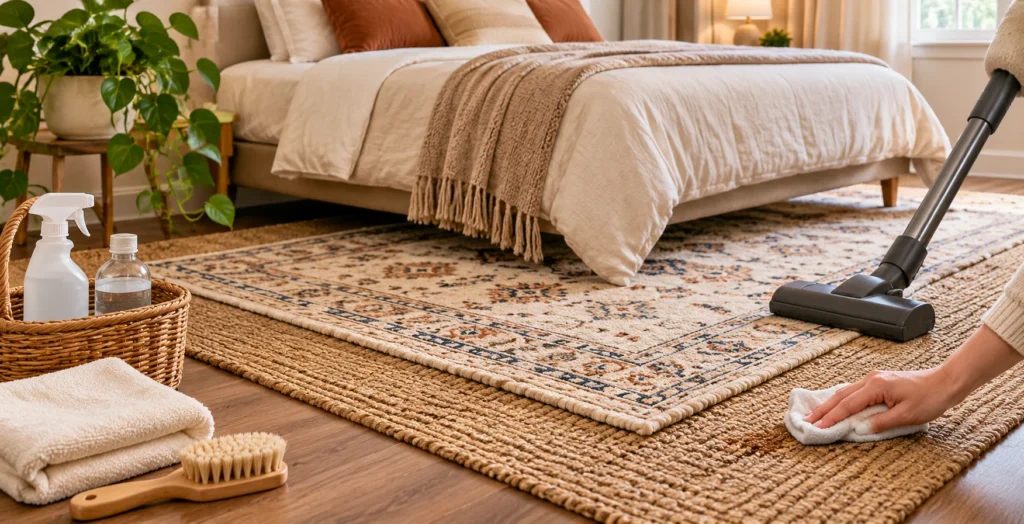
Clean both rugs according to their individual care instructions. Dust and debris can accumulate beneath the decorative layer even when its surface appears clean.
A simple maintenance routine includes:
- Vacuum exposed surfaces weekly or as needed.
- Lift the upper rug periodically to remove trapped debris.
- Blot spills promptly using a material-compatible cleaning method.
- Check the rug pads for movement or deterioration.
- Allow both rugs to dry completely before reassembling them.
- Rotate rugs when appropriate to distribute wear.
Never assume that every small cotton or synthetic rug is machine washable. Check its care label, backing, and washing instructions first.
Natural fibers such as jute often require particular care around moisture. Avoid soaking them during routine cleaning.
Recommended Products for Layering Bedroom Rugs
If you’re ready to create a layered bedroom arrangement, I’d start with these three product options. They address foundation coverage, decorative contrast, and rug stability.
Affiliate disclosure: As an Amazon Associate, I earn from qualifying purchases. The suitability ratings below are editorial assessments for the stated use cases, not verified customer ratings or hands-on test results.
🌿 Best Natural Foundation
nuLOOM Rigo Hand Woven Jute Area Rug
★★★★☆ 4/5 suitability
A natural woven jute rug with an understated design that suits neutral and bohemian bedrooms. I’d consider it for a foundation where moisture exposure is limited.
🎨 Best Decorative Accent
Loloi II Layla Collection Area Rug
★★★★½ 4.5/5 suitability
This low-profile polyester rug collection features vintage-inspired patterns and muted color combinations. I’d pair a suitably sized Layla rug with a plain foundation for decorative contrast.
🛡️ Best for Carpeted Floors
RUGPADUSA Carpet Lock Rug Pad
★★★★½ 4.5/5 suitability
A specialized rug pad intended to help stabilize area rugs over carpeted surfaces. I’d check compatibility with the specific rug backing and carpet before installation.
Frequently Asked Questions
Is it okay to layer two rugs in a bedroom?
Yes, layering two rugs can add warmth, texture, and decorative depth to a bedroom. Choose a larger foundation and a smaller accent rug, use compatible padding, and make sure the combined layers remain flat without creating unstable walking surfaces.
What size rugs should I layer under a queen bed?
An 8 x 10-foot foundation with a 5 x 7-foot decorative rug is a practical starting point for many queen bedrooms. Your room dimensions, bed frame, and furniture placement determine whether this combination provides enough visible coverage and comfortable walking space.
Can you layer patterned rugs together?
Yes, patterned rugs can work together when they share complementary colors and contrasting pattern scales. Pair a large, understated pattern with a smaller decorative motif to maintain balance and prevent the bedroom from looking excessively busy.
Do layered bedroom rugs need rug pads?
Suitable rug pads can help reduce movement, protect compatible flooring, and improve stability. Use a floor-appropriate pad underneath the foundation and consider a dedicated textile-compatible gripping layer between overlapping rugs if the upper rug shifts during everyday use.
Should layered rugs match the bedroom bedding?
Layered rugs don’t need to match bedding exactly, but repeating a color or compatible undertone helps connect the room. For example, a beige foundation and muted blue accent rug can complement ivory bedding with blue decorative pillows.
Final Thoughts: Create a Cozy Bedroom With Layered Rugs
Learning how to layer rugs in a bedroom starts with understanding proportion, texture, and placement. A well-chosen foundation and decorative accent can transform the appearance of your sleeping space.
My preferred starting point is a neutral, low-profile base combined with a smaller rug that introduces personality. Keep the overall arrangement balanced, comfortable, and easy to maintain.
Before purchasing anything, measure your bedroom and outline both rug sizes on the floor. Start with two complementary rugs and adjust their placement until the arrangement feels natural.
Start your bedroom makeover today by selecting a foundation rug that fits your furniture layout and adding an accent rug that reflects your personal style.