

Quick Answer
To choose a quilt for a bedroom, measure your mattress, decide how warm you want your bedding, and select a comfortable fabric and filling. Look for a quilt that provides enough side coverage, suits your bedroom colors, and is easy to wash. Your quilt should also complement your existing bedding and the way you prefer to layer your bed.
9 quick steps to choosing the right quilt
- Measure your mattress: Check its width, length, and depth.
- Choose the coverage: Allow enough fabric to hang over both sides.
- Consider your climate: Select lightweight or warmer bedding according to your room temperature.
- Compare materials: Consider cotton, linen, microfiber, or blends.
- Check the filling: Match its thickness and insulation to your needs.
- Inspect the stitching: Look for secure seams and even quilting.
- Match your decor: Choose colors and patterns that complement your bedroom.
- Check washing instructions: Make sure cleaning fits your routine.
- Compare overall value: Balance construction, comfort, care, and price.
A beautiful quilt can completely change how your bedroom feels. But choosing one involves more than finding a pattern you love.
I prefer starting with comfort, size, and maintenance before considering color. This guide walks you through those decisions so you can choose bedding that looks inviting and works for everyday sleep.
What Is a Bedroom Quilt?
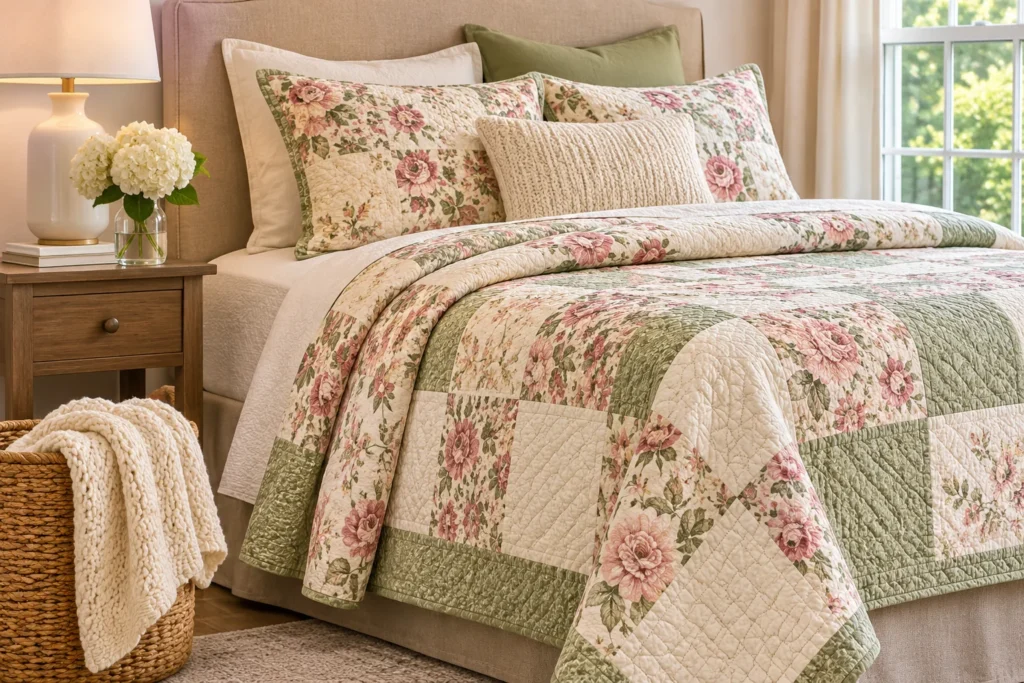
A bedroom quilt is a layered bed covering held together by rows or patterns of stitching. It usually contains a decorative outer fabric, an inner filling called batting, and a backing fabric.
In North American bedding terminology, quilts are often thinner and flatter than comforters. In other regions, including Australia, the word “quilt” may also refer to a duvet-style bed covering.
For this guide, I’m focusing mainly on decorative, stitched quilts that can be used for warmth or layered with other bedding.
How Is a Quilt Different From a Comforter?
A quilt typically has a flatter profile and more visible stitching. A comforter usually contains loftier filling that creates a puffier appearance.
Neither option is automatically better. Your bedroom temperature and preferred sleeping weight should guide the decision.
- Quilt: Useful for lightweight coverage, layering, and decorative texture.
- Comforter: Often better when you want a fuller, warmer bed covering.
- Duvet: An insert commonly paired with a removable duvet cover.
- Coverlet: Usually a relatively lightweight decorative covering with minimal bulk.
If you’re considering thicker bedding, compare these choices with this guide to choosing a comforter.
1. How Do You Choose the Right Quilt Size?
Choose a quilt according to your actual mattress measurements and desired overhang. A matching size label doesn’t always guarantee the coverage you want.
Start by measuring the mattress from edge to edge. Then measure its depth, especially if you have a thick pillow-top mattress or mattress topper.
Standard Mattress Sizes and Suggested Quilt Coverage
The following table uses standard US mattress dimensions and illustrative finished quilt sizes. Quilt manufacturers use different measurements, so always check the product listing.
| Bed Size | Mattress Size | Example Quilt Size | Side Drop |
|---|---|---|---|
| Twin | 38 × 75 in | 68 × 86 in | 15 in |
| Full | 54 × 75 in | 84 × 90 in | 15 in |
| Queen | 60 × 80 in | 90 × 90 in | 15 in |
| King | 76 × 80 in | 106 × 96 in | 15 in |
| California King | 72 × 84 in | 102 × 100 in | 15 in |
Important: These are sizing examples, not standardized quilt dimensions. The suggested side drops assume the quilt is centered and hanging evenly.
How Much Should a Quilt Hang Over a Bed?
A practical starting point is a side drop of approximately 10–18 inches, depending on your mattress and desired appearance. A shallow drop creates a neat look, while a longer drop hides more of the mattress.
Use this simple formula to estimate quilt width:
Quilt width = mattress width + (2 × desired side drop)
For example, a queen mattress measures 60 inches wide. Adding a 15-inch drop on each side gives you a 90-inch quilt width.
The mattress depth matters when choosing that drop. A quilt that looks generous on a thin mattress might expose the sides of a taller bed.
2. Which Quilt Material Is Best for a Bedroom?
Cotton is a versatile starting choice because it offers a familiar, breathable feel. Linen can suit a relaxed bedroom, while synthetic fabrics often provide affordable, easy-care options.
The outer fabric affects how a quilt feels against your skin. Its filling and stitching also influence warmth, weight, and flexibility.
Compare Common Quilt Fabrics
- Cotton: Soft, breathable, and suitable for many climates. A useful choice for everyday bedroom quilts.
- Linen: Airy, textured, and naturally relaxed in appearance. It wrinkles more readily than many synthetic fabrics.
- Polyester microfiber: Often smooth, lightweight, and budget-friendly. Breathability varies by construction.
- Cotton-polyester blends: Combine properties of both fibers. Check the blend percentage before buying.
- Velvet or decorative fabrics: Create a richer bedroom appearance but may require more careful cleaning.
I would choose cotton for a bedroom where easy comfort matters more than a polished, wrinkle-free finish. For a casual design with visible fabric texture, I’d consider linen.
You can also explore the Good Housekeeping bedding reviews and buying resources when comparing fabric performance.
3. What Quilt Filling Should You Choose?
Choose quilt filling according to your preferred warmth, weight, and care requirements. The filling affects insulation, but thickness and construction matter too.
Quilt filling is commonly called batting. It sits between the front and back fabric layers.
Common Quilt Filling Options
- Cotton batting: Generally creates a relatively flat, comfortable quilt with natural-fiber breathability.
- Polyester batting: Available in different lofts and weights, often with straightforward care requirements.
- Wool batting: Offers insulation and moisture-management properties, although some products need special care.
- Cotton-polyester batting: Balances characteristics of both materials and may offer good shape retention.
A thicker quilt doesn’t necessarily feel warmer in every situation. Fabric layers, filling density, stitching, and room temperature all influence comfort.
For additional background on different quilt fillings, see CHOICE’s quilt and doona buying guide.
4. Should You Choose a Lightweight or Thick Quilt?
A lightweight quilt is generally more versatile in warm bedrooms and for layering. A thicker quilt may provide more insulation when temperatures fall.
I recommend thinking about the temperature of your bedroom rather than buying by season alone. A well-heated bedroom in winter may need less bedding than a cool room in spring.
Match Your Quilt to Your Sleeping Conditions
- Warm bedroom: Try thin cotton quilting or another breathable, lightweight design.
- Moderate temperature: Consider a medium-weight quilt that works alone or with a blanket.
- Cold bedroom: Choose more insulating construction or combine a quilt with a duvet.
- Changing temperatures: Use a lightweight quilt with removable layers for flexibility.
If you sleep hot, avoid assuming that all natural fabrics will feel equally cool. The complete quilt construction matters.
For guidance on arranging several bedding layers, the Vermont Country Store bedding guide explains different top-cover options.
5. How Do You Match a Quilt to Your Bedroom Decor?
Choose a quilt color and pattern that work with your existing furniture, wall colors, and bedding. The quilt covers a large visual area, so its design can influence the whole bedroom.
My preferred approach is to start with the room’s dominant colors. Then I choose a quilt that complements those colors without competing with every other decorative element.
Choose a Color That Creates the Right Mood
- White or cream: Creates a fresh, bright appearance and works with many design styles.
- Beige or taupe: Supports warm, neutral, and understated bedrooms.
- Sage green: Works well with natural wood and relaxed earthy palettes.
- Dusty blue: Introduces soft color without dominating the room.
- Charcoal: Creates contrast, especially against lighter walls and furniture.
Should You Choose a Plain or Patterned Quilt?
A plain quilt is often the safer choice when your wallpaper, curtains, or cushions already contain strong patterns. A patterned quilt can become the main decorative feature of an otherwise simple bedroom.
For a modern room, I would consider geometric stitching or subtle stripes. Traditional bedrooms may suit patchwork, floral designs, or classic diamond quilting.
Texture is another useful design tool. Even a single-color quilt can look interesting when its stitching creates visible depth.
If you’re refreshing the entire room, this step-by-step guide to styling a bed can help coordinate your quilt with pillows and throws.
6. What Quilt Stitching and Construction Should You Look For?
Look for secure stitching, even filling distribution, and neatly finished edges. These details help a quilt maintain its appearance during regular use.
The stitching pattern can also influence flexibility and texture. Closely spaced stitching may produce a firmer, flatter feel than widely spaced quilting.
Check These Construction Details
- Stitch consistency: Look for reasonably even stitching without obvious loose threads.
- Edge binding: Check that the border is securely attached and neatly finished.
- Batting distribution: Watch for large lumps or unusually thin areas.
- Fabric condition: Check for snags, weak seams, and visible defects.
- Washability: Read the care label before assuming a quilt can handle machine washing.
Handmade quilts may have intentional variations that give them character. Those differences are not necessarily signs of poor workmanship.
7. How Do You Choose a Quilt That’s Easy to Clean?
Choose a quilt whose washing instructions match your household routine. Machine-washable quilts are especially practical for everyday beds, children, and households with pets.
Fabric type alone doesn’t determine whether a quilt can go in the washing machine. Its filling, dyes, stitching, and size also affect cleaning requirements.
Practical Quilt Care Tips
- Read the manufacturer’s care label before the first wash.
- Check that your washing machine has enough capacity for the quilt.
- Use a suitable gentle detergent and wash cycle when permitted.
- Avoid high drying temperatures unless the label allows them.
- Dry the quilt completely before storing it.
- Store clean quilts in a dry, ventilated location.
Large quilts may need a commercial-capacity washer even when they’re labeled machine washable. For delicate, antique, or handmade quilts, follow specialist care guidance.
For additional bedding maintenance advice, consult Good Housekeeping’s essential bedding guide.
8. How Much Should You Spend on a Bedroom Quilt?
Set your quilt budget according to how frequently you’ll use it, the materials you prefer, and the construction quality. A higher price doesn’t automatically guarantee better comfort.
As of 2026, quilt prices vary significantly across brands, fabrics, dimensions, and retailers. Comparing exact specifications is more useful than relying on price alone.
What Makes a Quilt Worth Buying?
- Correct dimensions: The quilt should cover your mattress the way you want.
- Comfortable material: Choose a fabric that feels pleasant against your skin.
- Suitable warmth: Avoid paying more for unnecessary thickness or insulation.
- Secure construction: Check seams, stitching, and filling consistency.
- Simple maintenance: Consider cleaning costs and washing requirements.
- Flexible design: Neutral or versatile patterns may work with future decor changes.
For an everyday bedroom, I would prioritize a comfortable, washable quilt over a highly decorative option requiring specialist cleaning.
9. What Mistakes Should You Avoid When Buying a Quilt?
The most common quilt-shopping mistakes involve size, warmth, cleaning, and appearance. Checking these details before buying helps prevent disappointing purchases.
Common Quilt Buying Mistakes
- Buying by label alone: A queen-size quilt may not provide enough coverage for every queen mattress.
- Ignoring mattress depth: Thick mattresses can make a correctly labeled quilt appear too short.
- Choosing appearance first: A beautiful quilt may still feel uncomfortable for everyday sleeping.
- Overlooking filling: Two quilts with similar outer fabrics can offer different warmth.
- Forgetting care requirements: Some fabrics and fillings need delicate washing or professional cleaning.
- Overmatching accessories: Too many identical patterns can make a bedroom feel visually busy.
- Ignoring return policies: Fabric texture and real-world color may differ from product photographs.
One practical example is a 60-inch-wide queen mattress with a deep foundation and thick topper. A narrow quilt may leave the sides exposed even when the packaging says queen.
That is why I’d compare the listed width and length before checking customer photographs or choosing a color.
Which Type of Quilt Works Best for Your Bedroom?
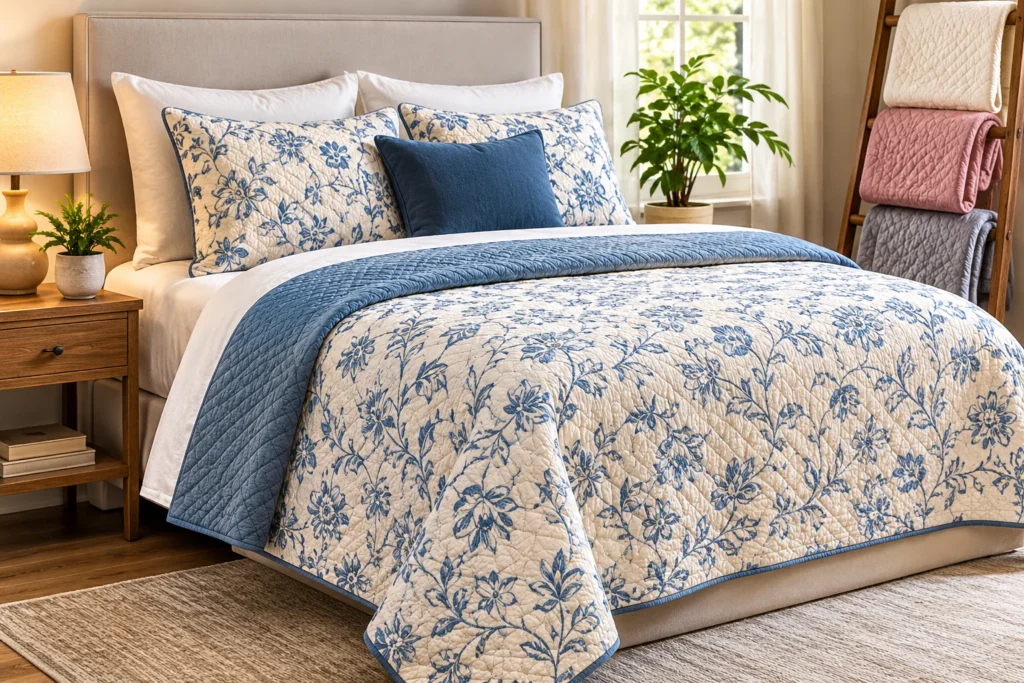
The right quilt depends on how you use your bed. A guest room may benefit from versatile bedding, while your main bedroom should prioritize personal sleeping comfort.
| Bedroom Need | Quilt to Consider | Main Benefit |
|---|---|---|
| Warm bedroom | Lightweight cotton quilt | Light coverage and breathable fabric |
| Traditional bedroom | Patchwork quilt | Decorative patterns and texture |
| Modern bedroom | Solid-color stitched quilt | Simple, coordinated appearance |
| Guest bedroom | Washable medium-weight quilt | Practical everyday care |
| Changing seasons | Lightweight quilt with layers | Adjustable warmth |
Recommended Quilts to Consider for Your Bedroom
If you’re ready to choose a quilt, these three product lines offer useful starting points for different bedroom priorities. Compare their current fabric specifications, sizes, and customer feedback before buying.
🏆 Best for Natural-Fiber Style
Brooklinen Organic Cotton Quilt Set
★★★★☆ 4.5/5 editorial fit
A cotton-focused quilt set with understated decorative texture. I’d consider this style for an everyday bedroom where breathable fabric and a clean appearance are priorities; check the current listing for fill and care details.
🌸 Best for Traditional Decor
Laura Ashley Quilt Set
★★★★☆ 4/5 editorial fit
Laura Ashley offers quilt sets in traditional decorative patterns, including floral designs. I would shortlist one for a cottage-inspired or classic bedroom, while comparing the materials of individual sets.
💰 Best for Budget Shopping
Bedsure Quilt Set
★★★★☆ 4/5 editorial fit
Bedsure offers quilt sets with simple stitching and multiple color options. I’d compare these for a guest room or budget refresh, paying close attention to fabric composition and washing instructions.
Product ratings above represent editorial suitability estimates, not verified customer review averages or hands-on test scores. Product availability and specifications may change.
Frequently Asked Questions About Choosing a Bedroom Quilt
What Is the Best Quilt Material for a Bedroom?
Cotton is a practical choice for many bedrooms because it’s generally soft, breathable, and comfortable. Linen suits people who enjoy a relaxed, textured look, while microfiber may appeal to shoppers seeking affordable, easy-care bedding. Always consider the quilt’s filling and construction alongside its outer material.
Should a Quilt Be Bigger Than the Mattress?
Yes, a quilt normally needs to be wider than the mattress to hang comfortably over both sides. A side drop around 10–18 inches is a useful starting range, depending on bed height and styling preferences. Measure the mattress and compare exact quilt dimensions before purchasing.
Is a Quilt Better Than a Comforter?
A quilt may be preferable if you want a flatter appearance, lighter bedding, or additional layering flexibility. A comforter usually provides a puffier look and may offer more warmth. Neither is universally better; the right option depends on room temperature, fabric preferences, and sleeping comfort.
Can You Use a Quilt All Year Round?
Yes, many quilts can be used throughout the year by adjusting the layers underneath or above them. A lightweight quilt might work alone during warmer months and alongside a duvet when temperatures fall. Your climate, heating, and personal comfort determine whether one quilt is sufficient.
How Often Should You Replace a Bedroom Quilt?
There’s no fixed replacement schedule for a bedroom quilt. Replace it when persistent damage, thinning filling, uncomfortable texture, or other wear makes it unsuitable for your needs. A well-made quilt that receives appropriate cleaning and storage may remain useful for many years.
Final Thoughts: How to Choose the Right Quilt for Your Bedroom
Choosing a bedroom quilt becomes easier when you focus on your needs instead of appearance alone. Begin with mattress measurements, preferred warmth, material, and cleaning requirements.
Then choose a pattern and color that complement your bedroom. A comfortable quilt should make the bed feel inviting without creating extra maintenance problems.
My final recommendation: For a versatile starting point, consider a correctly sized, machine-washable cotton quilt with simple stitching and a color you enjoy. Compare the exact filling and care label before making your final choice.
Before buying, measure your mattress and shortlist two or three quilts that meet your comfort, size, and budget requirements. That simple comparison can help you choose more confidently.