

Quick Answer
To style a bed, start with clean, fitted sheets, add a comfortable duvet or quilt, arrange your sleeping pillows, and finish with a few coordinated cushions and a textured throw. Choose two or three complementary colors, balance your layers, and keep everything practical for daily use. For a deeper look at the foundation, see this step-by-step bedding layering guide.
10 Quick Bed Styling Steps
- Prepare the mattress: Use a fitted protector and smooth sheets.
- Choose a palette: Combine two neutrals with one accent color.
- Add the duvet: Center it and allow an even drop on both sides.
- Fold the top: Reveal the sheet or quilt beneath.
- Arrange sleeping pillows: Place them neatly against the headboard.
- Add decorative shams: Use larger pillows to create depth.
- Introduce texture: Mix smooth cotton with quilting or woven fabrics.
- Include a throw: Fold or drape it across the lower bed.
- Balance proportions: Adjust pillows and covers to the bed size.
- Edit the arrangement: Remove anything that makes daily use difficult.
A beautifully styled bed can transform an ordinary bedroom without replacing the furniture. I like starting with the bedding people already own, then adjusting the arrangement before considering new accessories.
Whether you prefer a crisp hotel-inspired look or a relaxed, cozy bedroom, the same basic principles apply. This guide covers layering, pillow placement, colors, proportions, common mistakes, and affordable finishing touches.
What Does It Mean to Style a Bed?
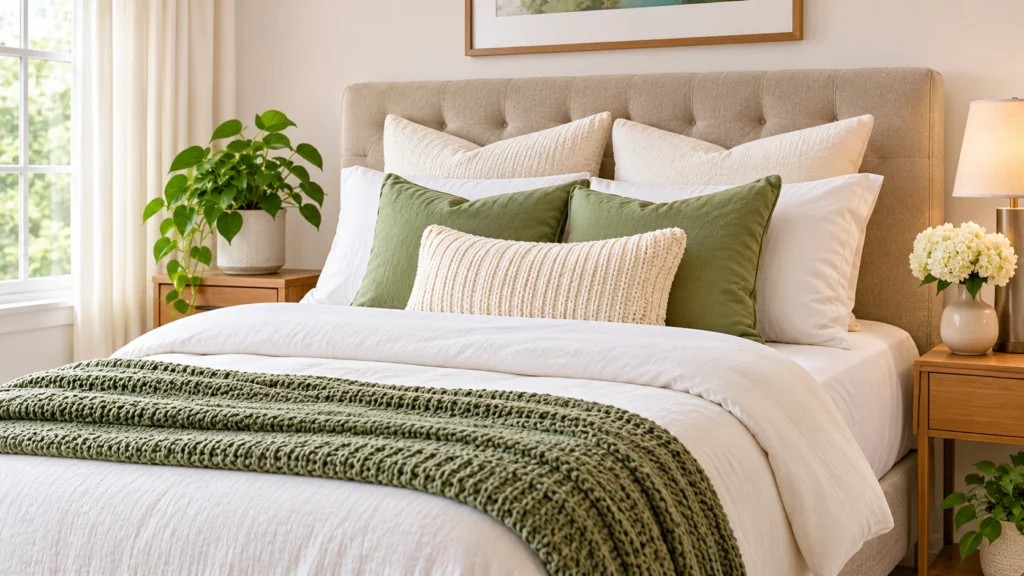
Bed styling is the process of arranging sheets, blankets, pillows, and decorative textiles to create a comfortable, coordinated sleeping space. It combines the practical job of making a bed with the visual principles of interior design.
The goal isn’t to cover every inch with cushions. It’s to create an inviting focal point that still works when you’re tired at the end of the day.
What Makes a Bed Look Professionally Styled?
Professional-looking beds usually share a few simple characteristics. Their colors relate to the bedroom, their textiles have visible depth, and their pillows form a balanced arrangement.
- Clear focal point: The bed looks inviting without competing with every other decorative item.
- Intentional proportions: Pillows, throws, and covers suit the mattress and headboard.
- Layered texture: Smooth, quilted, woven, or softly wrinkled materials create contrast.
- Coordinated colors: A limited palette helps separate pieces feel connected.
- Everyday comfort: The bed remains easy to use, clean, and remake.
The Sleep Foundation’s bedroom environment guide emphasizes comfortable bedding and personal preferences. These practical considerations should come before decorative styling.
How Do You Style a Bed Step by Step?
Start with the largest bedding pieces and work toward the smallest decorative details. This approach makes it easier to notice uneven layers before adding pillows and throws.
Step 1: Start With a Clean, Comfortable Foundation
Put a mattress protector beneath a well-fitting fitted sheet. Smooth the fabric, especially around the corners, to create an even base.
If your sheets repeatedly slide off, check their pocket depth against your mattress height. A neat foundation makes every layer above it look better.
Step 2: Choose a Simple Color Palette
Choose two main colors and one optional accent. Warm white, oatmeal, and muted sage create a relaxed combination, while white, charcoal, and navy feel more tailored.
Repeat the accent color elsewhere in the room when possible. A cushion that echoes a curtain or artwork color can connect the whole bedroom.
Step 3: Add Your Main Duvet or Comforter
Shake out the duvet or comforter, then center it over the mattress. Check the side and foot overhang before arranging anything else.
For a crisp appearance, smooth the top and straighten the edges. For a relaxed look, let the fabric’s natural drape create softness.
Step 4: Fold Back the Top Bedding Layer
Turn back the upper edge of your duvet to reveal the sheet or quilt underneath. This small detail creates visual depth without another purchase.
Try a fold approximately 12–18 inches deep as a starting point, then adjust for your bed and pillows. The measurement is a styling suggestion, not a rule.
Step 5: Arrange Your Sleeping Pillows
Start with the pillows you actually use at night. Stand them upright against the headboard or stack them neatly for a flatter, more casual finish.
Keep their cases coordinated with your sheets or duvet. This gives the arrangement a consistent background for decorative accents.
Step 6: Add Decorative Pillows Sparingly
Place larger shams toward the back and smaller accent cushions toward the front. A single lumbar pillow can sometimes create a cleaner look than several small squares.
I favor arrangements that take only a few seconds to clear before sleeping. Decorative pillows should complement the bed, not create a nightly chore.
Step 7: Mix Textures Instead of Adding More Colors
Texture creates interest when a bed uses a limited palette. Try pairing crisp cotton sheets with a quilted coverlet or a chunky woven throw.
You can also combine linen-look fabric with smooth cotton. Keep the materials comfortable and choose washable pieces for anything used frequently.
Step 8: Finish With a Throw Blanket
A throw adds a final layer of color and texture. Fold it horizontally across the foot for a tailored appearance, or drape it over one lower corner for a casual look.
Use a throw large enough to look intentional without overwhelming the mattress. A contrasting texture often matters more than a dramatic color.
Step 9: Check the Bed’s Overall Proportions
Stand at the bedroom entrance and examine the arrangement. Are the pillows hiding the headboard, or is the duvet hanging too far down?
Remove or reposition items until the composition feels balanced. Leave visible space around decorative objects instead of filling every gap.
Step 10: Make the Final Arrangement Easy to Maintain
Settle on a layout you can recreate each morning. Straightening the duvet, fluffing sleeping pillows, and replacing one throw may be enough.
Keep a basket, shelf, or suitable storage bench nearby for decorative cushions. Your bed should look welcoming without requiring a complicated routine.
How Many Pillows Should You Put on a Bed?
The best number depends on mattress size, headboard height, and personal preference. Start with your sleeping pillows, then add only the decorative pieces needed for balance.
These are practical styling examples rather than fixed requirements:
| Bed Size | Sleeping Pillows | Decorative Pillows | Suggested Look |
|---|---|---|---|
| Twin | 1–2 | 0–1 | Minimal and uncluttered |
| Full | 2 | 1–2 | Simple layered arrangement |
| Queen | 2 | 1–3 | Balanced, layered styling |
| King | 2–4 | 2–3 | Spacious, symmetrical styling |
Should Pillows Be Stacked or Standing Up?
Upright pillows emphasize height and create a structured appearance. Stacked pillows give the bed a lower, more relaxed profile.
Choose the arrangement that suits your headboard. A tall upholstered headboard can support upright shams, while a low wooden frame often looks better with fewer layers.
Which Bed Styling Look Works Best for Your Bedroom?
You don’t need to follow a single decorating trend. Choose a direction that matches the room’s furniture, colors, and atmosphere.
Hotel-Inspired Bed Styling
Use white or ivory sheets, a smooth duvet, symmetrical pillows, and clean folds. A narrow throw in navy, taupe, or charcoal can add contrast.
This style works well in modern bedrooms and spaces with simple furniture. The appeal comes from neat proportions rather than numerous accessories.
Cozy, Relaxed Bed Styling
Combine soft neutrals with a quilt, a comfortable duvet, and a textured throw. Let fabrics fall naturally instead of forcing perfectly straight lines.
For more ideas beyond the bed, explore simple ways to make a bedroom feel cozy. Lighting and surrounding materials can reinforce the bedding’s inviting appearance.
Minimalist Bed Styling
Use one main cover, two sleeping pillows, and little or no decoration. Focus on good fabric, consistent color, and an even duvet drape.
A minimal look can be especially effective with a low-profile bed. Avoid adding accessories merely to fill space.
Modern Organic Bed Styling
Combine warm whites, muted greens, earthy browns, and natural-looking textures. Linen, cotton, woven throws, and subtle quilting suit this approach.
Keep patterns understated and repeat wood tones or neutral colors from nearby furniture. The result should feel calm rather than carefully matched.
How Do You Style a Bed on a Budget?
You can improve a bed’s appearance without buying a complete bedding set. Begin by rearranging what you already have and replacing only pieces that aren’t comfortable or functional.
- Refresh pillowcases: Coordinated cases can make mismatched bedding feel intentional.
- Rearrange the duvet: Change the top fold to reveal a contrasting sheet.
- Reuse a blanket: Fold an existing blanket into a decorative foot-of-bed layer.
- Choose one accent: A cushion cover often changes the look for less than a new comforter.
- Remove clutter: Simplifying an arrangement costs nothing.
For example, picture a queen bed with white sheets, a beige comforter, and two sleeping pillows. Adding one muted green cushion and folding an existing textured blanket across the foot can create a more finished look.
I’d try that arrangement before purchasing a matching decorative set. It makes the spending decision much clearer.
How Do You Choose the Right Bedding Materials?
Choose materials by how they feel, how they wash, and how warm they make you. A beautiful cover isn’t a worthwhile purchase if it makes sleep uncomfortable.
The Sleep Foundation’s bedding guide offers useful considerations for choosing sheets, pillows, and covers. Always compare individual product construction and care labels.
- Cotton percale: Often crisp and airy, making it useful for a neat, lightweight look.
- Cotton sateen: Generally smoother with a subtle sheen and softer drape.
- Linen: Creates a relaxed, textured appearance and softens with use.
- Flannel: Often feels warmer and suits cooler sleeping environments.
- Quilted cotton: Adds visible stitching and a structured decorative layer.
Texture should never come at the expense of comfort. Place scratchier decorative textiles away from surfaces that touch your skin during sleep.
How Should You Style a Small Bed or Small Bedroom?
A small bed usually looks better with fewer, carefully chosen accessories. Large pillow arrangements and thick hanging blankets can make the room appear crowded.
Use a fitted duvet, one coordinating pillow arrangement, and a narrow throw. Maintain clear floor space beside the bed.
Small-Bed Styling Checklist
- Use one main duvet or coverlet.
- Limit decorative pillows to one or two.
- Choose light or coordinated colors.
- Keep oversized throws off the floor.
- Repeat bedding colors in nearby decor.
Remember that bed styling is part of the larger room arrangement. This bedroom decorating guide explains how to balance furniture, lighting, and visual focal points.
What Bed Styling Mistakes Should You Avoid?
Most styling problems come from poor proportions, too many decorative pieces, or bedding that doesn’t suit daily life. Fixing these issues is often easier than replacing fabrics.
- Too many pillows: Reduce the number until each pillow has a clear purpose.
- Uneven duvet placement: Center the main cover before adding accessories.
- Competing patterns: Use one dominant print and quieter supporting textiles.
- Oversized throws: Fold them into narrower bands to control visual bulk.
- Ignoring comfort: Avoid adding heavy layers purely for appearance.
- No storage plan: Give removable pillows and blankets a clean place to go.
One useful test is to remove a decorative piece and examine the bed again. If the overall arrangement feels calmer, you may not need that extra layer.
How Can You Keep a Styled Bed Looking Good Every Day?
Keep the routine simple and maintain your bedding regularly. Consistent care matters more than recreating a complicated showroom arrangement.
- Allow bedding to air as appropriate before making the bed.
- Straighten the fitted and top sheets.
- Center and smooth the duvet or quilt.
- Fluff the pillows and arrange them neatly.
- Fold the throw into its usual position.
Wash bedding according to its care labels, and pay particular attention to pillowcases and sheets. The Sleep Foundation’s mattress care advice explains why regular bedding cleaning helps protect the sleeping surface.
In 2026, there’s no need to pursue a new aesthetic every season. A repeatable arrangement using comfortable, durable textiles remains a practical choice.
Recommended Products for Styling a Bed
If your existing bedding needs a refresh, I would start with a practical duvet cover, supportive decorative inserts, or one versatile throw. These products serve different styling purposes, so you don’t need to purchase all three.
The ratings below are editorial styling-suitability scores, not verified customer review averages. Compare current specifications, prices, and availability before buying.
🏆 Best for a Coordinated Foundation
Bedsure Cotton Duvet Cover Set
★★★★☆ 4.5/5
Look for a cotton duvet cover in a neutral color, with a closure and dimensions compatible with your insert. I’d prioritize this kind of update when the main bedding is comfortable but its appearance no longer fits the room.
🛏️ Best for Decorative Pillow Styling
Utopia Bedding Throw Pillow Inserts
★★★★☆ 4.3/5
Decorative pillow inserts are available in multiple square sizes and can be paired with removable covers. I’d choose them for a bed that needs shape and visual depth without replacing the sleeping pillows.
💰 Best for an Affordable Finishing Touch
BOURINA Decorative Knit Throw Blanket
★★★★☆ 4.2/5
A decorative knit throw introduces texture without changing your main bedding. I’d consider a muted color that works across multiple seasons, checking dimensions and care instructions before ordering.
Affiliate disclosure: As an Amazon Associate, we earn from qualifying purchases.
Frequently Asked Questions About Bed Styling
How can I make my bed look like a luxury hotel bed?
Use well-fitting sheets, a full-looking duvet, and symmetrical sleeping pillows. Choose a restrained color palette, smooth the bedding, and fold back the upper duvet edge. Add one subtle accent, such as a narrow throw, rather than filling the bed with decorative cushions.
What is the best order for styling a bed?
Begin with a mattress protector and fitted sheet, then add an optional flat sheet and your main quilt, comforter, or duvet. Fold back the upper cover, arrange sleeping pillows, and add decorative cushions. Finish with a throw if it improves the look or provides useful warmth.
How do you make a bed look fluffy?
Fluff your duvet according to its care instructions and use an insert that properly fits its cover. Shake out pillows, straighten the cover, and create visible layers with a fold. Avoid choosing an overly thick or hot insert solely for a fuller appearance.
Should you use matching pillows and bedding?
Matching every piece isn’t necessary. Coordinating two or three colors while varying fabrics and patterns often creates a more interesting arrangement. Try matching the sleeping pillowcases to the sheets, then introducing texture through decorative shams or a throw.
Can you style a bed without decorative pillows?
Yes. Two neatly arranged sleeping pillows, a comfortable duvet, and an optional folded throw can make a complete, attractive bed. This minimalist approach works particularly well in small bedrooms and for people who prefer a quick morning routine.
Final Thoughts: How to Style a Bed Beautifully
Learning how to style a bed is mostly about proportion, layering, and restraint. Start with comfortable bedding, build a coordinated color story, and add texture only where it improves the arrangement.
Try styling your bed with the pieces you already own before shopping for anything new. A thoughtful fold, better pillow placement, or one contrasting throw may be all you need.
Ready to refresh your bedroom? Start with your sheets and duvet today, then experiment with one new styling detail at a time.