

Quick Answer
The ideal bedroom rug size depends on your bed dimensions, available floor space, and furniture arrangement. Following a reliable rug sizing guide, start with a 5×8 rug for a twin bed, an 8×10 rug for a queen bed, or a 9×12 rug for a king bed.
Recommended bedroom rug sizes:
- Twin bed: Choose a 5×8 or 6×9-foot rug.
- Full bed: Choose a 6×9 or 8×10-foot rug.
- Queen bed: An 8×10-foot rug suits most standard bedrooms.
- King bed: Start with a 9×12-foot rug for balanced coverage.
- California king: Consider a 9×12 or 10×14-foot rug.
- Small bedrooms: Use bedside runners or partial under-bed placement when space is limited.
Important measuring tip:
- Aim for approximately 18–24 inches of exposed rug beside the bed, whenever space allows.
Choosing a bedroom rug sounds simple until you start comparing dimensions. A rug that looks generous online can disappear beneath your bed once you bring it home.
In this rug size guide for bedrooms, I’ll explain how to match rug dimensions to your furniture, room layout, and everyday needs. You’ll also find practical measurements and placement examples to help you shop confidently.
What Is a Rug Size Guide for Bedrooms?
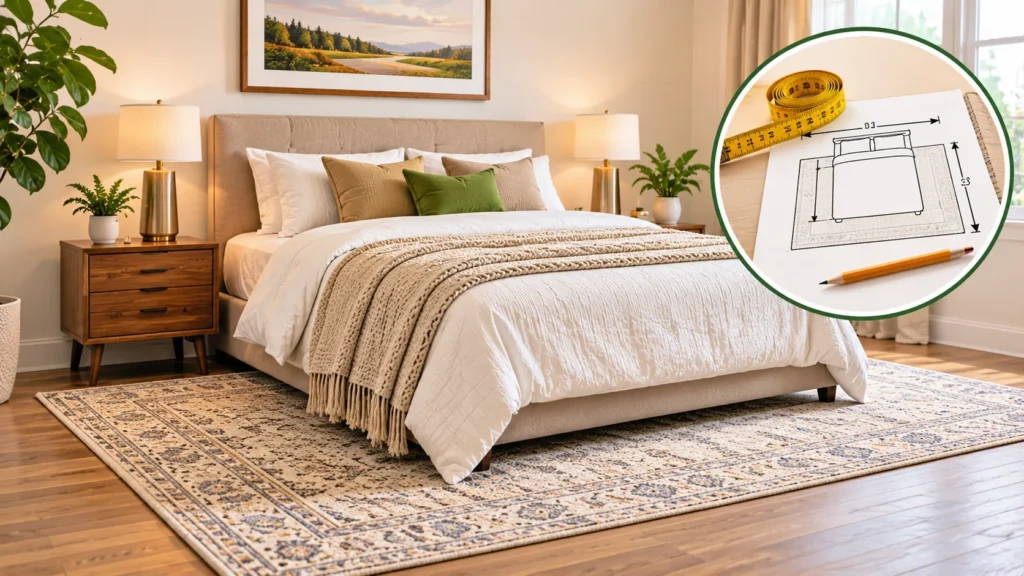
A bedroom rug size guide is a measurement-based reference that helps you select an area rug that fits your bed, furniture, and available floor space. It considers both visual balance and practical walking comfort.
The right rug creates a defined sleeping area without making the surrounding room feel crowded. It also provides a comfortable surface when you get out of bed.
Why Does Bedroom Rug Size Matter?
- Visual balance: Proper proportions connect the bed with surrounding furniture.
- Underfoot comfort: Adequate coverage provides a softer landing beside the bed.
- Floor protection: Rugs help protect covered areas from everyday wear.
- Room definition: A well-sized rug establishes a distinct sleeping zone.
- Walking comfort: Thoughtful placement keeps important pathways clear.
I prefer to establish the furniture layout before selecting decorative accessories. This approach also works when you decorate a bedroom from scratch.
Bedroom Rug Size Chart by Bed Size
Use this bedroom rug size chart as a starting point before shopping. The mattress dimensions follow common United States sizing standards, while the rug recommendations are practical decorating guidelines.
| Bed size | Mattress dimensions | Recommended rug | Larger option |
|---|---|---|---|
| Twin | 38 x 75 in. | 5 x 8 ft. | 6 x 9 ft. |
| Twin XL | 38 x 80 in. | 5 x 8 ft. | 6 x 9 ft. |
| Full | 54 x 75 in. | 6 x 9 ft. | 8 x 10 ft. |
| Queen | 60 x 80 in. | 8 x 10 ft. | 9 x 12 ft. |
| King | 76 x 80 in. | 9 x 12 ft. | 10 x 14 ft. |
| California king | 72 x 84 in. | 9 x 12 ft. | 10 x 14 ft. |
Remember that these measurements describe mattresses, not complete bed frames. Upholstered frames, storage beds, and platform beds may extend several inches beyond the mattress.
Measuring tip: Always measure the widest part of your actual bed frame rather than relying exclusively on standard mattress dimensions.
What Size Rug Should You Use Under Each Bed?
The best rug dimensions increase as the bed becomes wider and longer. However, room size and furniture placement can make a smaller or larger option more appropriate.
1. Best Rug Size for a Twin Bed
A 5×8-foot rug works well beneath a twin bed in many children’s bedrooms, guest rooms, and compact spaces. A 6×9-foot rug offers additional coverage when the room allows.
- Use a 4×6 rug beside a bed positioned against a wall.
- Choose a 5×8 rug for partial under-bed placement.
- Consider a 6×9 rug for a larger sleeping area.
- Use a 2×6 runner for narrow bedside spaces.
For children’s bedrooms, consider where the child plays and changes clothes. Additional exposed rug space may be more useful than coverage hidden beneath furniture.
2. Best Rug Size for a Full Bed
A 6×9-foot rug is a practical starting point for a full-size bed. An 8×10-foot rug creates a more generous border in medium or large bedrooms.
Position the longer rug dimension across the width of the bed when using a partial under-bed layout. This arrangement increases the soft landing area on both sides.
3. Best Rug Size for a Queen Bed
An 8×10-foot rug is my default recommendation for a standard queen bedroom. It provides a substantial foundation without requiring a particularly large room.
- 6×9 feet: Suitable for smaller rooms with partial coverage.
- 8×10 feet: A versatile choice for most standard layouts.
- 9×12 feet: Better for spacious rooms and wider furniture arrangements.
For example, placing the 10-foot side across a 60-inch queen mattress leaves approximately 30 inches of rug on each side. An actual bed frame will reduce that visible width slightly.
4. Best Rug Size for a King Bed
A 9×12-foot rug provides generous coverage beneath a standard king bed. Larger bedrooms may benefit from a 10×14-foot option, especially when nightstands or a bench share the rug.
An 8×10-foot rug can still work in a compact king bedroom. Position its longer dimension across the bed and verify the remaining walking space.
5. Best Rug Size for a California King Bed
A California king mattress measures approximately 72 inches wide and 84 inches long. A 9×12-foot rug usually offers enough room for balanced partial coverage.
The additional mattress length deserves attention when positioning the rug. Make sure you retain sufficient coverage beyond the foot of the bed.
How Do You Measure a Bedroom for an Area Rug?
Measure your bedroom, bed frame, and surrounding furniture before choosing an area rug. Then use painter’s tape to outline the proposed rug dimensions on the floor.
This simple method reveals whether a rug will interfere with doors, furniture, or walking routes. It also helps you compare two sizes without purchasing either.
- Measure the room: Record the usable floor width and length.
- Measure the bed frame: Include its outer edges, headboard footprint, and footboard.
- Measure surrounding furniture: Account for nightstands, benches, dressers, and storage units.
- Check walking routes: Make sure you can comfortably move around the furniture.
- Mark the rug outline: Use removable tape to represent your preferred dimensions.
- Test daily movements: Open doors, walk beside the bed, and check drawer clearance.
- Confirm actual dimensions: Read the manufacturer’s measurements before ordering.
I would prioritize the areas where your feet touch the floor each morning. Those spaces matter more than rug coverage concealed beneath the center of the bed.
A Simple Bedroom Rug Width Formula
Required rug width = Bed frame width + Left-side coverage + Right-side coverage
Imagine your queen bed frame measures 64 inches wide. You want at least 24 inches of exposed rug on each side.
- Bed frame width: 64 inches.
- Left-side coverage: 24 inches.
- Right-side coverage: 24 inches.
- Total required width: 112 inches.
A rug with a 10-foot dimension provides 120 inches of width. Centering it beneath the frame leaves approximately 28 inches on each side.
This calculation works for any bed size. It is particularly helpful when an upholstered frame exceeds standard mattress measurements.
How Much Rug Should Stick Out Around a Bed?
Aim for approximately 18–24 inches of visible rug on each accessible side of the bed. Larger bedrooms can accommodate more generous coverage, while smaller rooms may require compromises.
The exposed section should provide enough space to stand comfortably when leaving the bed. Also consider whether a bench or other furniture occupies the foot area.
| Location | Suggested coverage |
|---|---|
| Accessible sides of bed | 18–24 inches or more |
| Foot of bed | 12–24 inches or more |
| Between rug and walls | 12–18 inches when practical |
| Bedside runner width | 24–36 inches |
These figures are decorating guidelines rather than mandatory clearance requirements. Adjust them according to your room’s dimensions and accessibility needs.
What Are the Best Bedroom Rug Placement Layouts?
The three most versatile bedroom rug layouts are full furniture coverage, partial under-bed placement, and bedside runners. Each arrangement serves different room dimensions and budgets.
Full Coverage Under the Bed and Nightstands
A large rug beneath the bed and nightstands creates a unified furniture arrangement. This layout works especially well in spacious primary bedrooms.
- Creates a cohesive sleeping area.
- Provides extensive floor coverage.
- Requires a larger rug and sufficient room width.
Rug Under the Lower Two-Thirds of the Bed
Partial under-bed placement leaves the nightstands on the original flooring. The rug extends beneath the lower portion of the bed and into the surrounding walking areas.
This is often my preferred starting layout because it balances visible coverage with cost. It also avoids spending additional money on rug material hidden beneath nightstands.
Matching Bedside Runners
Two bedside runners provide comfortable landing areas without requiring a large central rug. They are useful in narrow bedrooms and rooms with heavy furniture.
Choose a runner width that suits your walking space. Keep both runners flat and secure to reduce slipping and tripping hazards.
Rug at the Foot of the Bed
A smaller area rug at the foot of the bed can define a dressing or seating area. It works particularly well beside a bedroom bench.
This arrangement offers limited bedside comfort, however. Use it primarily when visual definition matters more than full sleeping-area coverage.
For additional layout considerations, explore these tips for arranging furniture around a rug.
How Does Bedroom Size Affect Your Rug Choice?
A bedroom rug must fit the room as well as the bed. Two bedrooms containing identical queen beds may need different rug dimensions because their floor plans differ.
| Bedroom dimensions | Suggested rug sizes | Suitable layout |
|---|---|---|
| 8 x 10 ft. | 4×6 or 5×8 | Compact bedroom |
| 10 x 12 ft. | 6×9 or 8×10 | Partial bed coverage |
| 12 x 12 ft. | 8×10 | Standard bedroom |
| 12 x 15 ft. | 8×10 or 9×12 | Large bedroom |
| 15 x 18 ft. | 9×12 or 10×14 | Primary suite |
Use these examples as preliminary estimates, not fixed buying rules. Check the orientation of each rug against the available floor area before ordering.
Should You Choose a 6×9, 8×10, or 9×12 Bedroom Rug?
A 6×9 rug suits compact layouts, an 8×10 rug offers versatile queen-bed coverage, and a 9×12 rug better accommodates large beds. The right choice depends on how much usable rug remains visible.
- 6×9 rug: Choose this for a full bed or a compact queen bedroom with partial placement.
- 8×10 rug: Choose this for generous queen-bed coverage or a smaller king bedroom.
- 9×12 rug: Choose this for king beds, spacious queen bedrooms, or wider furniture arrangements.
The rug sizing reference from The Spruce provides additional examples of matching furniture arrangements with standard rug dimensions.
Does Rug Material or Thickness Affect Bedroom Rug Size?
Rug material does not change the required floor dimensions, but thickness affects clearance, comfort, and placement. A thick rug may interfere with doors or low storage drawers.
Consider maintenance requirements alongside appearance. A rug that fits your room should also fit your cleaning routine.
| Rug material | Main benefit | Consideration |
|---|---|---|
| Wool | Warmth and resilience | May require specialized cleaning |
| Cotton | Lightweight construction | May shift without a suitable pad |
| Polypropylene | Practical everyday maintenance | Comfort varies by construction |
| Jute | Natural texture | Can feel coarse under bare feet |
| Polyester | Often soft and affordable | May flatten under repeated pressure |
For bedrooms with limited door clearance, I would start with a low-profile rug. Remember to include the thickness of the rug pad in your measurements.
What Size Rug Pad Do You Need for a Bedroom Rug?
A rug pad should generally sit slightly inside the edges of your area rug. Leaving approximately one inch of clearance around the perimeter helps conceal the pad.
For a rug measuring exactly 8×10 feet, a pad measuring approximately 7 feet 10 inches by 9 feet 10 inches is a practical target.
- Select a pad approved for your flooring material.
- Measure the actual rug before trimming the pad.
- Keep the pad completely beneath the rug.
- Check combined thickness around doors and drawers.
Retailers such as The Home Depot offer rug pads in multiple thicknesses and dimensions. Follow the pad manufacturer’s instructions and your flooring warranty requirements.
Common Bedroom Rug Sizing Mistakes to Avoid
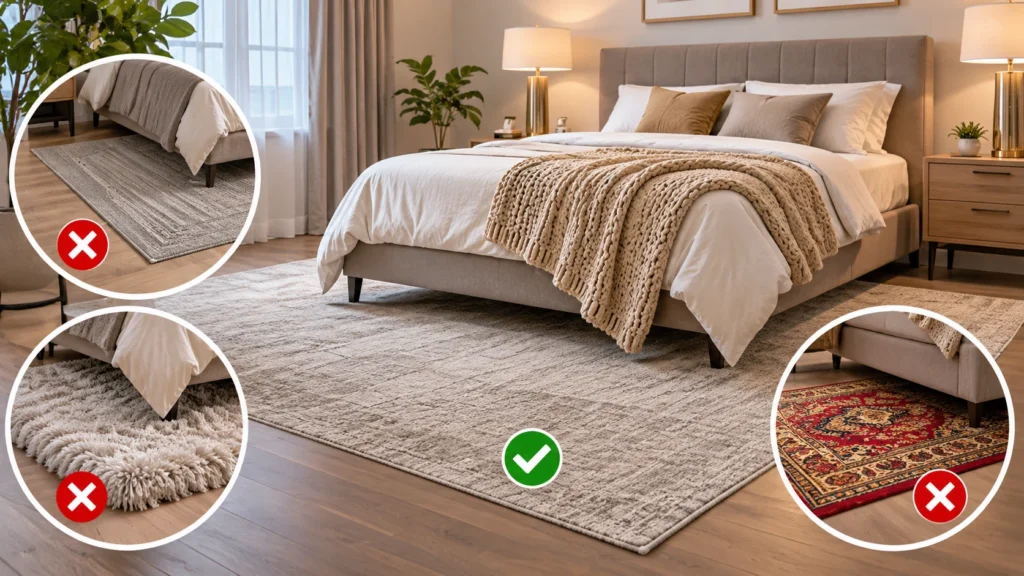
The most frequent sizing problems occur when shoppers choose a rug based on appearance or price alone. Ignoring furniture dimensions can leave an otherwise attractive rug looking disconnected.
- Buying a rug that is too small: Avoid hiding nearly the entire rug underneath the bed.
- Ignoring frame dimensions: Measure the complete furniture footprint rather than just the mattress.
- Choosing the wrong orientation: Compare both rug directions before finalizing your layout.
- Forgetting door clearance: Include pile height and rug pad thickness in your calculations.
- Covering excessive floor space: Leave a visible perimeter when the room allows.
- Skipping the rug pad: Use suitable support to help prevent movement and curling edges.
- Ignoring actual product measurements: Nominal rug sizes may differ slightly from their finished dimensions.
These problems often overlap with other common bedroom decorating mistakes. Establishing furniture proportions first makes the entire room easier to style.
Recommended Bedroom Rugs and Accessories
If you’re shopping for a bedroom rug in 2026, these three options provide useful starting points for different layouts and materials. Confirm dimensions, current prices, and care instructions before ordering.
As an Amazon Associate, I earn from qualifying purchases. The scores below represent editorial suitability assessments based on product specifications and intended use, not customer ratings or hands-on testing.
🏆 Best for Queen Bedrooms
Safavieh Adirondack 8×10 Area Rug
★★★★½ 4.5/5 editorial fit
This collection offers power-loomed rugs in practical 8×10-foot sizes and decorative patterns. I’d consider it for a queen bedroom that needs generous coverage and everyday practicality.
🌿 Best Natural Texture
nuLOOM Rigo 5×8 Jute Area Rug
★★★★☆ 4.0/5 editorial fit
The Rigo features handwoven natural-fiber construction and a compact 5×8-foot option. I’d choose it for a small farmhouse or minimalist bedroom where texture matters more than plush softness.
🛡️ Best for Rug Support
Mohawk Home Dual Surface Rug Pad
★★★★½ 4.5/5 editorial fit
The quarter-inch dual-surface version combines felt cushioning with a grippy backing and comes in multiple dimensions. I’d consider it for additional support beneath a compatible bedroom rug and flooring surface.
Frequently Asked Questions
What Is the Most Common Rug Size for a Bedroom?
An 8×10-foot area rug is a popular choice for standard bedrooms, particularly those containing queen-size beds. Smaller rooms may suit a 5×8 or 6×9 rug, while spacious bedrooms with king-size beds often benefit from a 9×12-foot rug.
Is a 5×7 Rug Too Small for a Queen Bed?
A 5×7-foot rug is generally too small for generous coverage beneath a queen bed. However, it can work at the foot of the bed or in a separate dressing area where full bedside coverage is unnecessary.
Should a Bedroom Rug Go Under the Nightstands?
A bedroom rug does not need to extend beneath the nightstands. Partial under-bed placement leaves them on the original flooring, while a larger rug covering both the bed and nightstands creates a unified arrangement in spacious bedrooms.
What Size Rug Works Best in a 12×12 Bedroom?
An 8×10-foot rug is often a suitable starting point for a 12×12-foot bedroom containing a queen bed. Check the bed’s actual dimensions, furniture placement, door clearance, and remaining floor perimeter before deciding whether that size fits your specific layout.
Does a Larger Rug Make a Small Bedroom Look Bigger?
A properly proportioned larger rug can make a small bedroom appear more cohesive by connecting furniture within one defined area. However, an oversized rug that crowds walls or obstructs walking routes may reduce the room’s sense of openness.
Final Thoughts: Choosing the Perfect Bedroom Rug Size
The best bedroom rug size balances your furniture dimensions, room proportions, and everyday comfort. A well-planned rug should support your layout rather than complicate it.
Use these starting recommendations when comparing standard sizes:
- Twin bed: 5×8 feet.
- Full bed: 6×9 feet.
- Queen bed: 8×10 feet.
- King bed: 9×12 feet.
- Large primary suite: Consider 10×14 feet when space allows.
My preferred approach is to measure the bed frame, mark the rug outline, and test the surrounding walking areas. This small amount of preparation can prevent an expensive sizing mistake.
Ready to upgrade your bedroom? Grab a tape measure, use this rug size guide for bedrooms, and compare your available floor space with the recommended dimensions.