

Quick Answer
The best bedroom lighting ideas combine ambient, task, and accent lighting to create a comfortable and functional space. Use warm white bulbs, adjustable bedside lamps, dimmable ceiling fixtures, and indirect lighting to build a cozy bedroom atmosphere that suits your daily routine.
Best lighting ideas to try:
- Layer your lighting: Combine overhead fixtures, reading lamps, and decorative lights.
- Choose warm bulbs: Use 2700K–3000K lighting for a welcoming atmosphere.
- Install dimmable lights: Adjust brightness according to your activities.
- Add bedside sconces: Save nightstand space while improving reading visibility.
- Use indirect lighting: Place concealed LED strips behind furniture for a gentle glow.
- Maximize natural light: Use sheer curtains and suitable window treatments.
Quick styling tip:
- Start with three independently controlled light sources instead of relying on one bright ceiling fixture.
A beautifully decorated bedroom can still feel uncomfortable when the lighting is wrong. I prefer starting with a lighting plan that makes the room useful during the day and inviting at night.
In this guide, I’ll share 21 bedroom lighting ideas for different room sizes, decorating styles, and budgets. You’ll also learn how to choose fixtures, bulbs, brightness levels, and practical lighting arrangements.
What Are Bedroom Lighting Ideas?
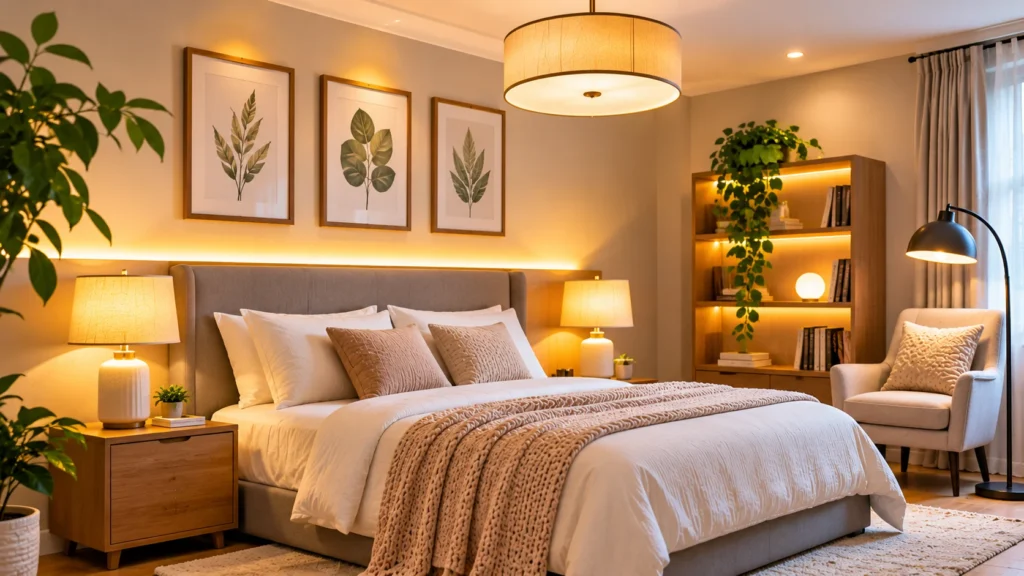
Bedroom lighting ideas are practical and decorative ways to illuminate a bedroom using natural light, artificial fixtures, and different brightness levels.
A successful arrangement supports everyday activities while complementing your furniture, wall colors, bedding, and overall interior design.
Most effective bedroom lighting plans include three layers:
- Ambient lighting: General illumination that helps you move around the room comfortably.
- Task lighting: Focused light for reading, dressing, working, or applying makeup.
- Accent lighting: Decorative illumination that highlights architectural features, artwork, or furniture.
You don’t need an expensive renovation to combine these layers. A ceiling fixture, two bedside lamps, and a small decorative light can transform an ordinary bedroom.
21 Best Bedroom Lighting Ideas for a Beautiful Space
1. Create a Layered Bedroom Lighting Scheme
Layered lighting gives you more control over your bedroom than a single overhead fixture. It also helps create visual depth by illuminating different areas independently.
Follow the principles of a residential lighting plan when deciding where each fixture belongs.
- Use ceiling lights for general visibility.
- Add bedside lamps for reading.
- Place accent lights near decorative features.
- Control each lighting layer separately.
I would prioritize this idea before purchasing additional decorative fixtures. It solves several lighting problems at once.
2. Choose Warm White LED Bulbs
Warm white LED bulbs create a softer atmosphere than many cool white alternatives. A color temperature between 2700K and 3000K provides a useful starting point for bedrooms.
Choose matching color temperatures for nearby fixtures to avoid an inconsistent appearance.
- 2700K: Soft, warm light for relaxation.
- 3000K: Warm light with a slightly cleaner appearance.
- 3500K–4000K: More neutral light for dedicated dressing or working areas.
Warm bulbs work especially well with wooden furniture, neutral bedding, cream walls, and natural textiles.
3. Install Dimmable Ceiling Lights
A dimmable ceiling light allows the same fixture to serve multiple purposes. Increase its brightness while cleaning and reduce it when preparing for bed.
Check that the bulb, fixture, and dimmer are compatible. Incompatible components may cause flickering, buzzing, or poor dimming performance.
4. Add Matching Bedside Table Lamps
Matching bedside lamps create symmetry and give each person independent control over their lighting.
Choose shades that diffuse light and prevent direct glare when you’re sitting or lying in bed.
- Fabric shades for a gentle appearance.
- Ceramic bases for traditional interiors.
- Metal bases for contemporary bedrooms.
- Wooden bases for natural decorating styles.
A matching pair works particularly well beside a queen or king-size bed.
5. Use Wall-Mounted Bedside Sconces
Wall sconces provide practical bedside illumination without occupying valuable furniture space. They’re especially useful in narrow bedrooms with compact nightstands.
Position adjustable sconces where you can reach their controls comfortably. Test the proposed height while sitting in bed before installation.
6. Hang Pendant Lights Beside the Bed
Bedside pendant lights create a modern appearance while freeing up nightstand surfaces. They can also draw attention to the headboard and surrounding wall decor.
Choose pendant fixtures with suitable shades to control glare and prevent exposed bulbs from shining directly into your eyes.
- Glass pendants for contemporary rooms.
- Woven pendants for bohemian interiors.
- Matte metal pendants for industrial decor.
Use a qualified electrician for permanent wiring and ceiling installations.
7. Add LED Strip Lights Behind the Headboard
Concealed LED strips produce indirect illumination that can make a bedroom feel softer and more visually interesting.
Install the strip so the wall reflects its light rather than exposing individual LED points.
- Choose warm white or tunable white strips.
- Use a diffuser when necessary.
- Follow installation and power supply requirements.
- Keep electrical components accessible and ventilated.
Indirect headboard lighting pairs nicely with minimalist furniture and upholstered beds.
8. Create a Reading Corner With a Floor Lamp
A floor lamp can turn an unused bedroom corner into a comfortable reading area. Choose an adjustable design that directs light toward your book.
Place the lamp beside or slightly behind your reading chair to minimize shadows and glare.
9. Install a Statement Chandelier
A statement chandelier can become the focal point of a spacious bedroom. It works particularly well in rooms with generous ceiling height.
Select a fixture that suits the scale of your bed and furniture rather than choosing the largest available design.
- Crystal chandeliers suit glamorous interiors.
- Modern linear fixtures suit contemporary rooms.
- Wooden chandeliers complement rustic decor.
- Soft globe fixtures work in transitional spaces.
10. Choose Flush-Mount Lights for Low Ceilings
Flush-mount fixtures sit close to the ceiling, making them a practical choice for bedrooms with limited overhead clearance.
Look for a diffused cover that spreads light across the room. A low-profile design can help maintain a clean, uncluttered appearance.
11. Use Smart Bedroom Lighting
Smart bulbs allow you to adjust brightness, set schedules, and sometimes change color temperature through compatible controls.
The Philips Hue bedroom lighting guide offers examples of using different lighting scenes throughout the day.
- Morning scene with brighter illumination.
- Reading scene with focused light.
- Evening scene with warm, reduced brightness.
- Nighttime scene with minimal pathway lighting.
Check whether your chosen system requires a hub, wireless connection, or compatible smart-home platform.
12. Maximize Natural Bedroom Light
Natural daylight can make a bedroom feel brighter and more spacious without additional daytime electricity use.
Use sheer curtains during the day and heavier curtains or blackout blinds when you need darkness.
- Keep large furniture away from windows.
- Clean windows regularly.
- Choose light-colored window treatments.
- Position mirrors to reflect useful daylight.
13. Add Soft Fairy Lights
Fairy lights provide decorative illumination for cozy, bohemian, or romantic bedroom designs.
Arrange them around a wall feature, shelf, or headboard according to the manufacturer’s instructions.
Use safety-certified indoor lights and keep electrical cords away from bedding and other potential hazards. Avoid damaged wires and unsuitable power supplies.
14. Illuminate Bedroom Artwork
Picture lights and adjustable spotlights highlight artwork without requiring additional decorative objects.
Choose fixtures that direct light toward the artwork rather than the bed. Consider reflections when illuminating framed prints with glass covers.
15. Install Under-Bed Lighting
Low-level under-bed lighting can help you navigate the bedroom at night without switching on a bright overhead fixture.
Motion-activated lights are particularly useful when you occasionally need to get up after bedtime.
- Choose low-brightness warm lighting.
- Conceal wiring safely.
- Position sensors to detect intended movement.
- Keep power supplies away from obstructed spaces.
16. Brighten Your Wardrobe Interior
Wardrobe lighting makes it easier to distinguish clothing colors and locate stored items.
Motion-activated or door-activated fixtures can provide illumination only when needed.
Use products specifically suitable for wardrobe installations. Maintain required clearances from clothing and other combustible materials.
17. Add Dedicated Vanity Lighting
Dedicated vanity lighting improves visibility when applying makeup, grooming, or styling your hair.
Light positioned on both sides of a mirror can reduce facial shadows compared with a single overhead source.
- Choose diffused fixtures.
- Consider bulbs with a color rendering index of 90 or higher.
- Use neutral white light where accurate color appearance matters.
Color rendering index, or CRI, describes how accurately a light source reveals colors compared with a reference source.
18. Try Decorative Table Lamps
A decorative table lamp can function as both a light source and a bedroom accessory.
Choose a base and shade that complement your furniture finishes, bedding colors, and existing decorations.
For more styling inspiration, explore this guide on balancing style and comfort in a bedroom.
19. Use Recessed Ceiling Lighting
Recessed lighting provides a streamlined appearance because the fixtures sit within the ceiling.
Instead of directing every light toward the bed, consider illuminating pathways, storage areas, and selected walls.
Ask a qualified electrician to evaluate ceiling construction, insulation requirements, fixture spacing, and electrical compatibility.
20. Create a Romantic Bedroom Lighting Arrangement
Romantic bedroom lighting depends on gentle brightness, warm tones, and carefully placed light sources.
You don’t need colored bulbs or elaborate decorations to create an intimate atmosphere.
- Use dimmable bedside lamps.
- Add flameless LED candles.
- Choose softly diffused accent lights.
- Reduce harsh overhead lighting.
Combine these ideas with soft textiles and neutral colors for a more welcoming appearance.
21. Use Rechargeable Lamps for Flexible Lighting
Rechargeable cordless lamps provide additional lighting where electrical outlets are inconvenient.
They work well on shelves, dressers, and compact nightstands, particularly in rental properties.
Check battery runtime, charging requirements, brightness settings, and manufacturer safety instructions before buying.
Which Type of Bedroom Lighting Is Best?
The best bedroom lighting depends on the activity, room dimensions, ceiling height, and available furniture space.
This comparison highlights practical fixture choices for different bedroom needs.
| Light Type | Best Use | Suggested Color Temperature |
|---|---|---|
| Ceiling fixture | General illumination | 2700K–3000K |
| Bedside lamp | Reading and relaxing | 2700K–3000K |
| Wall sconce | Space-saving task lighting | 2700K–3000K |
| LED strip | Indirect accent lighting | 2200K–3000K |
| Floor lamp | Reading corners | 2700K–3500K |
| Vanity light | Grooming and dressing | 3000K–4000K |
| Night light | Nighttime navigation | 1800K–2700K |
These color temperatures are practical design suggestions rather than mandatory lighting standards. Adjust them according to personal preference and the purpose of each fixture.
What Are the Best Lighting Ideas for Small Bedrooms?
Small bedrooms benefit from compact fixtures, reflected light, and lighting that doesn’t occupy valuable floor or furniture space.
Focus on illuminating walls and functional areas instead of filling the room with bulky lamps.
- Replace oversized bedside lamps with wall sconces.
- Use flush-mount ceiling fixtures.
- Add concealed LED strips behind the headboard.
- Choose slim adjustable reading lights.
- Use mirrors to distribute reflected light.
- Install rechargeable lamps where outlets are limited.
Coordinate your lighting with the rest of your furniture using this complete bedroom decor checklist.
How Bright Should Bedroom Lighting Be?
Bedroom lighting should provide enough illumination for everyday movement while allowing lower brightness levels during relaxation.
Compare bulbs using lumens, which describe light output, rather than watts alone.
- General lighting: Start with approximately 10–20 lumens per square foot as a rough planning estimate.
- Reading lamps: Consider bulbs around 400–800 lumens, depending on shade design, distance, and personal needs.
- Accent lighting: Use lower brightness levels that complement other fixtures.
- Night lighting: Choose the lowest brightness that permits safe navigation.
For example, a 120-square-foot bedroom might start with approximately 1,200–2,400 lumens of general lighting. Dark walls, high ceilings, fixture efficiency, and individual vision needs can change the requirement.
What Is the Best Bedroom Lighting Color?
Warm white light between 2700K and 3000K is a useful choice for general bedroom lighting, particularly during the evening.
For dedicated workspaces or dressing areas, slightly more neutral lighting may improve visibility.
- 1800K–2200K: Candle-like accent lighting.
- 2700K: Warm and inviting everyday illumination.
- 3000K: Warm white with a cleaner appearance.
- 4000K: Neutral light for selected functional areas.
Brightness and timing also matter when preparing for sleep. Reduce unnecessary light exposure near bedtime rather than relying on bulb color alone.
Explore more ideas for creating a relaxing bedroom environment that supports your nighttime routine.
How Can You Make Bedroom Lighting More Energy Efficient?
Energy-efficient bedroom lighting combines suitable LED bulbs, practical controls, and effective use of natural daylight.
The U.S. Department of Energy’s LED lighting guidance explains the advantages of energy-efficient LED technology.
- Replace inefficient bulbs with suitable LEDs.
- Compare lumen output and energy consumption.
- Turn off unnecessary decorative lighting.
- Use timers and compatible dimmers.
- Take advantage of natural daylight.
- Select motion sensors for appropriate storage areas.
In 2026, simple warm-white LEDs remain a practical option even if you don’t need smart lighting features.
Common Bedroom Lighting Mistakes to Avoid
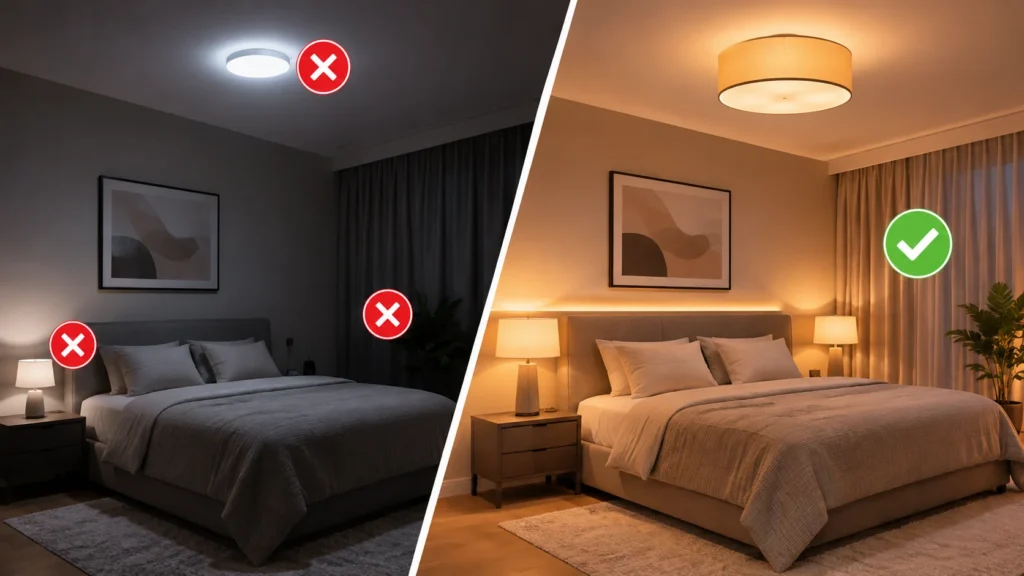
Even attractive fixtures can create uncomfortable lighting when they’re positioned incorrectly or selected without considering the room’s purpose.
- One light source: Relying entirely on a ceiling fixture limits flexibility.
- Excessive brightness: Bright fixtures can create unnecessary glare during relaxation.
- Mismatched bulbs: Inconsistent color temperatures can make the room look disconnected.
- Poor lamp placement: Incorrect positioning can create shadows while reading.
- Oversized fixtures: Large fixtures can overwhelm compact bedrooms.
- Unsafe cable placement: Loose cords can create trip hazards or become damaged.
- Incompatible controls: Incorrect dimmer combinations can cause flickering.
My preferred planning approach is to test existing lamps in different positions before buying new fixtures. This simple exercise helps identify where additional lighting would be most useful.
Recommended Products for Bedroom Lighting
If you’re ready to improve your lighting arrangement, these three products cover different practical needs.
Affiliate disclosure: As an Amazon Associate, I earn from qualifying purchases. These recommendations are based on product features rather than personal hands-on testing.
💡 Best for smart lighting
Philips Hue White Ambiance A19 Smart LED Bulb
Best feature: Adjustable white light
Offers dimming and adjustable white color temperatures through compatible controls. I’d choose this option for a bedroom that needs different lighting settings throughout the day.
📖 Best for reading
LEPOWER Metal Desk Lamp
Best feature: Adjustable light direction
An adjustable lamp with a metal shade that directs illumination toward a specific area. I’d consider it for a bedside reading setup or compact bedroom workspace.
✨ Best for accent lighting
Govee Warm White LED Strip Lights
Best feature: Indirect decorative glow
Flexible lighting strips suitable for selected furniture and accent lighting applications. I’d use them behind a headboard where reflected light can create a softer appearance.
Frequently Asked Questions About Bedroom Lighting Ideas
What type of lighting is best for a bedroom?
A combination of ambient, task, and accent lighting works best for most bedrooms. Use a ceiling fixture for general illumination, adjustable bedside lamps for reading, and decorative lights for atmosphere.
Independent controls make this arrangement more flexible throughout the day.
How can I make my bedroom lighting feel cozy?
Choose warm white bulbs around 2700K, add softly diffused bedside lamps, and reduce overhead brightness during the evening.
Indirect LED lighting, fabric lampshades, and dimmable fixtures can help create a welcoming atmosphere without requiring an expensive bedroom renovation.
How can I light a bedroom without a ceiling light?
Use a combination of floor lamps, plug-in wall sconces, bedside table lamps, and rechargeable lights. Position fixtures around different areas to distribute illumination more evenly.
A floor lamp that directs light toward a wall or ceiling can provide useful general illumination.
Are LED lights good for bedrooms?
LED lights are a practical bedroom choice because they offer energy efficiency, different color temperatures, and numerous fixture options.
Choose compatible bulbs with suitable brightness and good light quality. Warm white, dimmable LEDs are especially useful for flexible evening lighting arrangements.
Should bedroom lighting be warm or cool?
Warm white lighting generally suits bedroom relaxation areas, while neutral white lighting can be useful for dressing or working.
A combination of independently controlled fixtures allows you to adjust the appearance and brightness according to different activities and times of day.
Final Thoughts on Bedroom Lighting Ideas
The best bedroom lighting ideas don’t require buying every available fixture. Start by understanding how you use your bedroom and identifying areas that need better illumination.
I recommend beginning with a warm ceiling light, a suitable bedside reading lamp, and one decorative accent source. Expand your arrangement only when it solves a practical problem or improves the room’s appearance.
- Choose fixtures that suit your bedroom size.
- Combine different lighting layers.
- Prioritize warm and adjustable illumination.
- Keep controls convenient and accessible.
- Match lighting fixtures with your decorating style.
Ready to complete your bedroom makeover? Explore our guide on how to decorate a bedroom for more practical interior design inspiration.
Start with one lighting improvement today. A few thoughtful changes can make your bedroom more functional, comfortable, and visually inviting.