

Quick Answer
To layer lighting in a bedroom, combine ambient lighting for general visibility, task lighting for reading and dressing, and accent lighting for warmth and visual interest. Use warm white bulbs around 2700K to 3000K, position fixtures at different heights, and control each lighting layer independently. This approach helps you make a bedroom feel cozy without sacrificing everyday functionality.
Quick steps for layering bedroom lighting:
- Start with ambient: Install a ceiling fixture or indirect lighting for general illumination.
- Add task lights: Position reading lamps beside the bed and focused lighting near mirrors or desks.
- Create soft accents: Highlight artwork, shelves, or the headboard with subtle lighting.
- Choose warm bulbs: Use 2700K to 3000K light for a comfortable atmosphere.
- Install flexible controls: Use compatible dimmers or smart bulbs to adjust brightness.
- Balance fixture heights: Distribute lighting across ceiling, eye, and lower levels.
Learning how to layer lighting in a bedroom can transform an ordinary sleeping space into a comfortable, multifunctional retreat. You don’t need expensive fixtures or a complete renovation to achieve the effect.
I recommend starting with how you use your bedroom throughout the day. This guide explains how to combine different light sources, choose suitable bulbs, and avoid common lighting mistakes.
What Is Layered Lighting in a Bedroom?
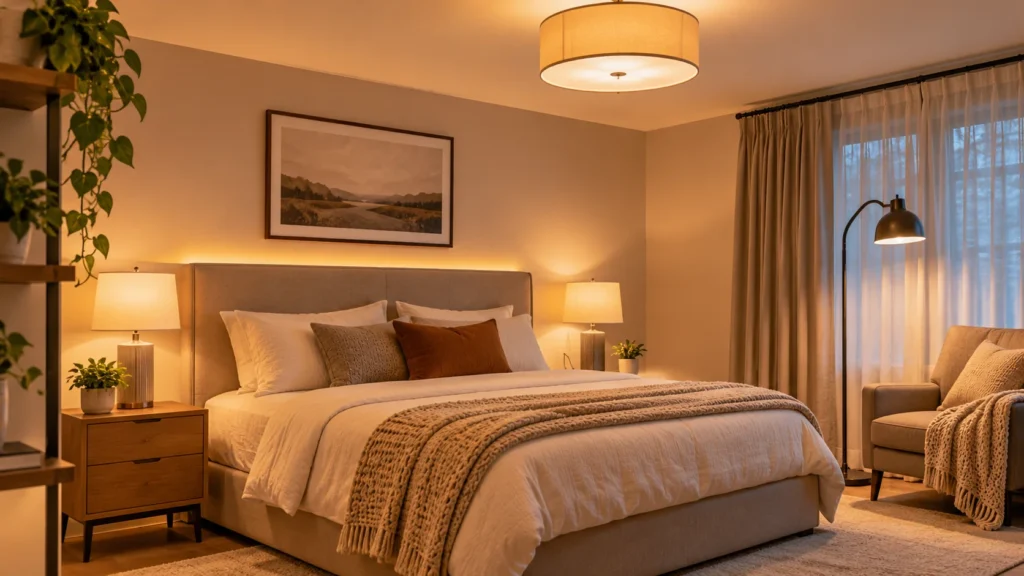
Layered bedroom lighting is a design approach that combines multiple light sources to support different activities and create a balanced atmosphere. Instead of relying on one ceiling fixture, it distributes illumination throughout the room.
The three main lighting layers are ambient, task, and accent lighting. Each serves a different purpose.
According to Lutron’s layered lighting guidance, combining these lighting types provides greater flexibility and visual depth.
The Three Main Layers of Bedroom Lighting
- Ambient lighting: Provides general illumination for moving around the bedroom.
- Task lighting: Concentrates light where you read, dress, work, or apply makeup.
- Accent lighting: Highlights decorative features and creates a softer atmosphere.
Decorative lighting can act as an optional fourth layer. A sculptural pendant or attractive table lamp adds personality while also serving a functional role.
Ambient vs. Task vs. Accent Lighting: What’s the Difference?
Ambient lighting makes the room usable, task lighting makes specific activities easier, and accent lighting adds depth. A well-designed bedroom combines these functions without making every corner equally bright.
| Lighting Type | Purpose | Fixture Examples | Suggested Color |
|---|---|---|---|
| Ambient | General visibility | Ceiling lights, pendants | 2700K–3000K |
| Task | Reading and dressing | Desk lamps, reading sconces | 2700K–4000K |
| Accent | Mood and visual depth | LED strips, picture lights | 2200K–3000K |
| Decorative | Style and personality | Chandeliers, statement lamps | 2700K–3000K |
Note: These color temperatures are practical design suggestions rather than mandatory lighting standards.
How to Layer Lighting in a Bedroom: 9 Practical Tips
1. Start With Ambient Lighting
Ambient lighting provides the foundation of your bedroom lighting plan. It should offer enough illumination to move around comfortably and complete everyday activities.
Choose a fixture that distributes light without creating excessive glare. A shaded or diffused ceiling light often works well.
Popular ambient lighting options include:
- Flush-mount ceiling lights for low ceilings.
- Semi-flush fixtures for standard-height rooms.
- Chandeliers for spacious bedrooms.
- Recessed lighting for a minimalist appearance.
- Indirect floor lamps for rooms without overhead fixtures.
A dimmable ambient fixture gives you greater control over the room’s overall brightness. Bright settings support cleaning, while lower settings create a quieter evening atmosphere.
2. Add Bedside Task Lighting
Bedside lighting makes reading, journaling, and other activities more comfortable. It also allows you to turn off the main ceiling fixture without losing useful illumination.
I favor adjustable reading lamps when two people share a bedroom. Their directional beams can illuminate a book without flooding the entire bed with light.
- Table lamps: Simple to install and easy to replace.
- Swing-arm sconces: Provide adjustable illumination while saving nightstand space.
- Bedside pendants: Create a clean appearance and free up surfaces.
- Clip-on reading lamps: Offer an inexpensive solution for compact bedrooms.
Position the fixture so the light reaches your reading material without exposing the bare bulb directly to your eyes.
3. Create Depth With Accent Lighting
Accent lighting draws attention to attractive features and introduces gentle contrasts. It helps the bedroom feel inviting rather than flat or overly bright.
Choose one or two features to highlight. Too many illuminated objects can make a peaceful bedroom feel visually busy.
- Install concealed LED strips behind the headboard.
- Highlight a favorite painting with a picture light.
- Place a small decorative lamp on a dresser.
- Illuminate open shelves with low-output LEDs.
- Use an indirect floor lamp to brighten a dark corner.
Design tip: Hide the light source whenever possible. Reflected light from a wall or headboard often looks softer than visible LED dots.
4. Choose Warm White Light Bulbs
Color temperature describes whether white light appears warm or cool. Manufacturers measure it in Kelvin, usually shown as K on bulb packaging.
For most bedrooms, I recommend warm white lighting between 2700K and 3000K. This range works particularly well with wood furniture, neutral walls, and soft textiles.
| Color Temperature | Appearance | Suggested Use |
|---|---|---|
| 2200K | Extra warm | Evening accents |
| 2700K | Soft white | Bedside and general lighting |
| 3000K | Warm white | General lighting and dressing |
| 4000K | Neutral white | Dedicated work areas |
| 5000K+ | Cool daylight | Specialized daytime tasks |
Keep nearby fixtures within a similar color temperature range. Mixing cool ceiling lights with warm bedside lamps can create an inconsistent appearance.
5. Use Lighting at Different Heights
Placing every fixture at ceiling height can leave the bedroom looking flat. Lighting at multiple heights creates a more balanced distribution of brightness.
Think of your bedroom as having three vertical lighting zones.
- Upper level: Ceiling fixtures, chandeliers, and recessed lighting.
- Middle level: Wall sconces, table lamps, and reading lights.
- Lower level: Concealed floor-level lighting and low accent lamps.
Start with upper and middle-level illumination. Add lower lighting only when it improves nighttime visibility or enhances the room’s appearance.
6. Install Dimmers or Smart Lighting Controls
Independent brightness controls allow your bedroom to adapt throughout the day. You can use brighter lighting in the morning and softer settings before bedtime.
As of 2026, smart bulbs and wireless lighting controls offer convenient options for upgrading existing fixtures without replacing the entire lighting system.
- Install compatible dimmers for general lighting.
- Use separate switches for bedside fixtures.
- Create evening routines with smart bulbs.
- Control accent lighting independently.
- Choose manual controls that remain easy to reach.
Check whether your bulbs and dimmers support each other. Incompatible equipment can cause flickering, buzzing, or unreliable brightness adjustment.
Follow manufacturer instructions and use a qualified electrician for hardwired electrical modifications.
7. Illuminate Dressing and Vanity Areas
Dressing areas need more focused illumination than relaxation zones. A single overhead fixture can cast shadows across your face when you stand in front of a mirror.
Position diffused lighting beside the mirror or use a properly designed illuminated mirror. This arrangement provides more even visibility for grooming and choosing clothes.
- Use matching lights on both sides of the mirror.
- Choose high color-rendering bulbs when possible.
- Avoid placing intense spotlights directly above your face.
- Add suitable closet lighting for better visibility.
Color Rendering Index, or CRI, describes how accurately a light source displays colors compared with a reference source. A CRI of 90 or higher is a useful preference for clothing and makeup areas.
8. Make the Most of Natural Light
Natural daylight forms an important part of your bedroom lighting arrangement. It can reduce the need for artificial illumination during daytime hours.
Use window treatments that allow you to control daylight without compromising privacy.
- Install sheer curtains to soften incoming sunlight.
- Use blackout curtains when darkness is necessary.
- Keep large furniture from blocking windows.
- Choose light-colored surfaces to reflect available daylight.
These techniques are particularly helpful when trying to make a small bedroom look bigger without changing its layout.
9. Test Your Lighting During the Day and Evening
A bedroom that looks attractive during daylight may feel uncomfortable after sunset. Test each lighting layer independently before deciding whether you need additional fixtures.
My preferred approach is to check the room from the doorway, the bed, and the dressing area. Each position reveals different shadows and glare problems.
- Check whether pathways remain visible.
- Read a book using only the bedside lamp.
- Look for uncomfortable reflections in mirrors.
- Turn off the ceiling fixture and evaluate the remaining light.
- Adjust accent lighting until it feels subtle.
Make small changes before purchasing more fixtures. Repositioning an existing lamp can solve a lighting problem without additional expense.
How Many Lumens Do You Need in a Bedroom?
A bedroom’s ideal brightness depends on its size, ceiling height, surface colors, and activities. For general lighting, around 10 to 20 lumens per square foot can serve as an initial planning estimate.
Lumens measure the amount of visible light a bulb produces. Watts measure electrical power consumption, not brightness.
| Bedroom Size | Floor Area | Estimated Ambient Output |
|---|---|---|
| 10 × 10 ft | 100 sq. ft. | 1,000–2,000 lumens |
| 12 × 12 ft | 144 sq. ft. | 1,440–2,880 lumens |
| 12 × 15 ft | 180 sq. ft. | 1,800–3,600 lumens |
| 15 × 15 ft | 225 sq. ft. | 2,250–4,500 lumens |
These are rough planning estimates, not measured illumination levels. Fixture efficiency, beam distribution, shades, and room finishes affect the light reaching each surface.
The U.S. Department of Energy’s Energy Saver resource provides information about efficient household lighting and bulb selection.
How Do You Layer Lighting in a Small Bedroom?
Layer lighting in a small bedroom using a compact ceiling fixture, wall-mounted reading lights, and one subtle accent source. Prioritize fixtures that preserve floor and nightstand space.
A small room doesn’t necessarily need fewer lighting layers. It needs appropriately sized fixtures.
- Choose a slim flush-mount ceiling light.
- Replace bulky table lamps with plug-in sconces.
- Install concealed lighting behind the headboard.
- Use light-colored lampshades to distribute illumination.
- Avoid oversized floor lamps in narrow walkways.
For a 10-by-10-foot bedroom, a ceiling fixture, two reading lights, and a small accent lamp provide a flexible starting arrangement.
How Can You Layer Bedroom Lighting Without Ceiling Lights?
You can create layered bedroom lighting without overhead fixtures by combining indirect floor lighting, bedside lamps, and plug-in accent fixtures. Each source should support a different activity or area.
This approach works well for renters and older homes where electrical modifications may be difficult.
- General lighting: A floor lamp that directs light toward the ceiling.
- Reading lighting: An adjustable bedside lamp or plug-in sconce.
- Accent lighting: A small dresser lamp or concealed LED strip.
- Nighttime lighting: A low-output motion-activated night light.
Route power cords safely along walls and keep them away from walkways. Never place ordinary electrical cords beneath rugs or where furniture can damage them.
What Is the Best Lighting Setup for Different Bedroom Activities?
The best bedroom lighting setup changes with your activity. A flexible arrangement lets you control illumination without switching every fixture on.
| Activity | Recommended Lighting | Brightness |
|---|---|---|
| Morning routine | Daylight and ambient lighting | Bright |
| Reading | Directional bedside lamp | Moderate, focused |
| Dressing | Mirror and closet lighting | Bright, even |
| Relaxing | Dimmed lamps and accents | Low |
| Nighttime movement | Low-level pathway light | Minimal but safe |
| Sleeping | Lights off when practical | Dark |
Reducing unnecessary evening illumination can complement other strategies for creating a relaxing bedroom environment.
The National Heart, Lung, and Blood Institute offers additional information about healthy sleep habits.
Common Bedroom Lighting Mistakes to Avoid
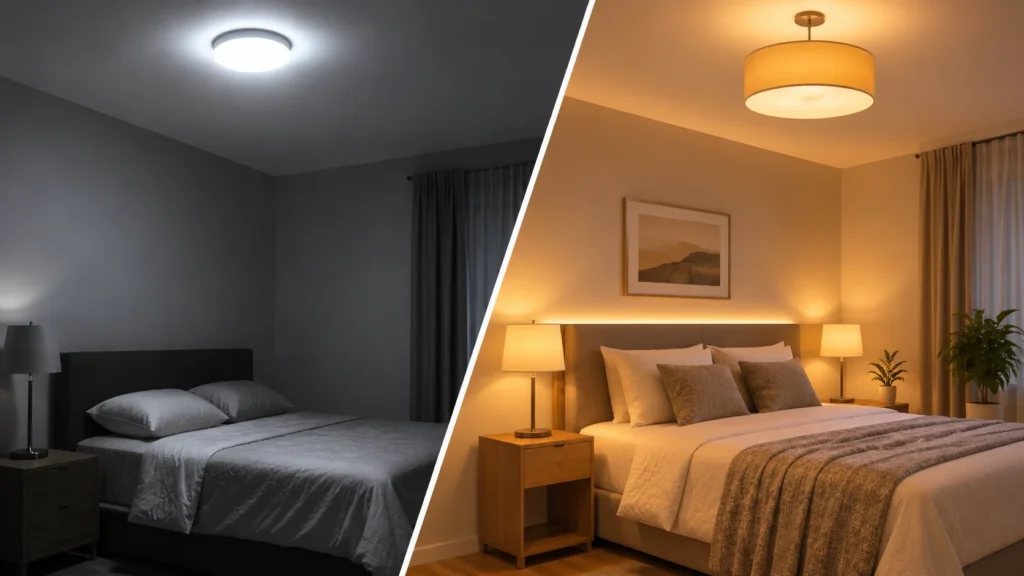
Effective lighting depends on placement and control rather than the number of fixtures. Avoid these common mistakes when planning your bedroom.
- Relying on one ceiling light: Limits flexibility and can create harsh shadows.
- Using exposed bulbs: May cause uncomfortable glare near the bed.
- Mixing unrelated color temperatures: Creates an inconsistent lighting appearance.
- Ignoring reading positions: Makes bedside lighting less useful.
- Buying oversized fixtures: Can overwhelm compact rooms.
- Using incompatible dimmers: May cause flickering or buzzing.
- Overusing accent lights: Creates unnecessary brightness and visual clutter.
- Blocking natural light: Increases dependence on artificial lighting.
Include lighting decisions in your overall bedroom decor checklist so fixtures complement your furniture, colors, and room layout.
Recommended Products for Layered Bedroom Lighting
You can begin improving your bedroom with a few carefully selected lighting accessories. These recommendations address adjustable brightness, focused reading, and independent lighting control.
Affiliate disclosure: As an Amazon Associate, I earn from qualifying purchases. These selections are based on product features and suitability, not hands-on testing. The scores below are editorial suitability assessments, not customer ratings.
🏆 Best for adjustable lighting
Philips Hue White Ambiance A19 Smart Bulb
★★★★☆ 4.5/5
The 800-lumen version offers adjustable brightness and white color temperature. I’d choose it for an existing bedside lamp that needs flexible morning and evening settings.
📖 Best for bedtime reading
Glocusent LED Neck Reading Light
★★★★☆ 4.3/5
This wearable reading light uses adjustable arms to direct illumination toward a book. I’d consider it when a shared bedroom needs focused reading light without installing another fixture.
💡 Best for brightness control
Lutron Diva LED+ Dimmer Switch
★★★★☆ 4.4/5
This wall dimmer provides brightness adjustment for compatible dimmable lighting. I’d consider it for conventional overhead LEDs after checking electrical and bulb compatibility.
Frequently Asked Questions
What are the three layers of lighting in a bedroom?
The three main layers are ambient, task, and accent lighting. Ambient lighting provides general visibility, task lighting illuminates activities such as reading or dressing, and accent lighting highlights decorative features or creates atmosphere.
How many light sources should a bedroom have?
Many bedrooms benefit from three to five light sources, depending on their size and layout. A practical arrangement includes one general fixture, two bedside lamps, and an optional accent light or dedicated dressing-area fixture.
Is 2700K or 3000K better for bedroom lighting?
Both color temperatures work well in bedrooms. Choose 2700K for a softer, warmer appearance around the bed, or 3000K for a slightly crisper warm-white appearance in general lighting and dressing areas.
Can you layer bedroom lighting on a budget?
Yes, you can layer bedroom lighting using existing lamps, inexpensive warm LED bulbs, and a plug-in accent fixture. Reposition your current lights before purchasing additional equipment, and prioritize independent controls and comfortable illumination over expensive decorative fixtures.
Should all bedroom lights have the same color temperature?
Keeping most bedroom lights within a similar color temperature range creates a cohesive appearance. You can use warmer accent lighting for evenings or a slightly cooler dedicated task light, provided the combination doesn’t create uncomfortable visual contrast.
Final Thoughts: Create a Balanced and Cozy Bedroom
Understanding how to layer lighting in a bedroom helps you create a space that feels comfortable, practical, and visually balanced. Start with general illumination, add focused task lights, and finish with subtle accents.
You don’t need to install everything at once. Begin with the areas where your current lighting causes the most inconvenience.
Your next step: Walk through your bedroom tonight and identify which lighting layer is missing. Add or reposition one fixture, then evaluate how the room feels before making further changes.