

Quick Answer
To choose bedside lamps, consider your nightstand height, mattress height, lighting needs, lampshade size, and bedroom style. Start with a lamp approximately 20–30 inches tall and a warm white LED bulb between 2700K and 3000K. Follow proper table lamp placement guidelines to reduce glare and improve comfort.
Quick Steps for Choosing Bedside Lamps
- Measure your nightstand: Choose a lamp that leaves enough space for everyday essentials.
- Check lamp height: Keep the light source shielded from your eyes when sitting in bed.
- Choose warm lighting: Use a 2700K–3000K bulb for a comfortable atmosphere.
- Select suitable brightness: Start with 300–500 lumens for general bedside use.
- Consider adjustable controls: Choose dimmable or directional lighting for different activities.
- Match bedroom decor: Coordinate the lamp’s materials, colors, and proportions with your furniture.
Practical Tip
- Test the lamp from your normal reading and sleeping positions before deciding whether its height and brightness are suitable.
Knowing how to choose bedside lamps can make your bedroom more comfortable, functional, and inviting. The right lamp does much more than decorate your nightstand.
I recommend choosing bedside lighting based on how you use your bedroom rather than appearance alone. This 2026 guide explains lamp height, brightness, shade materials, styles, and practical features.
What Does Choosing Bedside Lamps Mean?
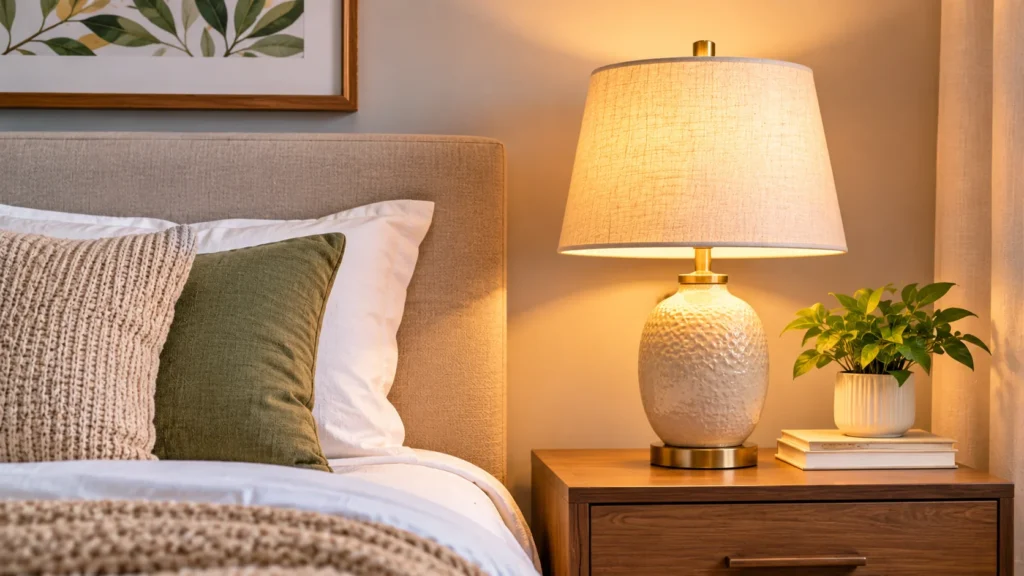
Choosing bedside lamps means selecting lighting fixtures that provide suitable illumination beside your bed while complementing your bedroom layout.
A good bedside lamp balances practical lighting with visual comfort. It should also be easy to operate without getting out of bed.
Bedside lighting generally serves three purposes:
- Task lighting: Provides focused illumination for reading and other activities.
- Ambient lighting: Creates a soft glow around the sleeping area.
- Accent lighting: Highlights decorative features and adds visual interest.
Unlike overhead fixtures, bedside lamps create a smaller, more personal lighting area. They are especially useful when you want illumination without lighting the entire room.
How to Choose Bedside Lamps: 11 Practical Tips
The best bedside lamp fits your furniture, supports your daily routine, and provides comfortable light. Work through these eleven considerations before purchasing one.
1. Determine Your Bedside Lighting Needs
Start by identifying what you normally do before going to sleep. Your activities determine the type of lighting you need.
- Reading books: Choose an adjustable lamp with focused illumination.
- Relaxing before bed: Select a shaded lamp with a soft, warm glow.
- Getting up at night: Consider a lamp with an accessible low-brightness setting.
- Charging devices: Look for a model with compatible USB charging ports.
- Decorating: Choose a lamp that complements your bedroom furniture and colors.
A decorative lamp might look beautiful but provide inadequate reading light. A directional reading lamp may work well but offer limited ambient illumination.
If you need both functions, consider an adjustable or dimmable bedside lamp.
2. Measure Your Nightstand Before Buying
Your nightstand determines how much space you have for a lamp. Measure its width, depth, and height before comparing different models.
A practical starting point is choosing a lampshade no wider than approximately two-thirds of your nightstand. This is a flexible design guideline rather than a fixed requirement.
| Nightstand Width | Suggested Shade Width | Lamp Style |
|---|---|---|
| 12–16 inches | 6–10 inches | Compact or slim |
| 17–22 inches | 10–14 inches | Standard table lamp |
| 23–28 inches | 12–17 inches | Medium decorative lamp |
| 29 inches or wider | 15–19 inches | Large statement lamp |
These measurements provide starting points, not universal rules. Always check the lamp base separately because it determines how much usable table space remains.
3. Choose the Correct Bedside Lamp Height
Most standard bedside table lamps measure approximately 20–30 inches tall. However, your ideal height depends on your mattress, nightstand, and seated eye level.
The lower edge of a conventional lampshade should generally sit around your seated eye level or slightly below it. Check that the bulb remains shielded from your direct view.
- Low nightstand: Consider a taller lamp.
- High nightstand: Choose a shorter lamp when appropriate.
- Thick mattress: Measure your seated eye level before purchasing.
- Adjustable lamp: Position the light according to your activity.
For example, imagine a nightstand measuring 24 inches high and a seated eye level measuring 49 inches from the floor.
In this situation, aim for the lower shade edge to sit roughly 25 inches above the nightstand. The lamp’s total height will depend on the shade design.
4. Select the Right Brightness in Lumens
Lumens measure the amount of visible light produced by a bulb. Watts measure electrical power consumption rather than brightness.
The U.S. Department of Energy’s guide to lumens recommends comparing light output when choosing bulbs.
| Lighting Purpose | Suggested Lumens |
|---|---|
| Soft nighttime glow | 100–200 |
| Relaxing bedside lighting | 200–400 |
| General bedside use | 300–500 |
| Reading in bed | 400–800 |
These brightness ranges are practical starting points per lamp. Actual reading comfort depends on beam direction, distance, shade material, and individual vision.
A focused 300-lumen reading lamp may illuminate a book more effectively than a brighter lamp that distributes light throughout the room.
5. Pick a Comfortable Color Temperature
Color temperature describes whether light appears warm, neutral, or cool. Manufacturers express this measurement in Kelvin, abbreviated as K.
- 2200K–2700K: Extra-warm light for a relaxing evening atmosphere.
- 2700K–3000K: Warm white light suitable for most bedrooms.
- 3500K–4000K: More neutral light for activities requiring visual detail.
- 5000K and above: Cooler daylight-like illumination that may feel harsh at bedtime.
I generally recommend starting with 2700K for decorative bedside lamps. A dimmable 3000K bulb may offer a useful balance for reading and everyday activities.
For more ways to improve the atmosphere, explore this guide on how to create a relaxing bedroom.
6. Choose the Best Lampshade Material
Lampshade materials affect brightness, glare, and the direction of light. They also influence how the lamp looks when switched off.
- Linen shades: Provide a soft, textured appearance with diffused light.
- Cotton shades: Offer a casual look suitable for everyday bedrooms.
- Metal shades: Direct light toward a specific area, making them useful for reading.
- Frosted glass shades: Create diffused illumination with a clean, modern appearance.
- Paper shades: Produce a gentle glow but require careful handling.
- Rattan shades: Introduce natural texture and may create decorative light patterns.
Choose lighter-colored fabric when you want more surrounding illumination. Dark or opaque shades typically concentrate light through their openings.
Always use shades and bulbs that meet the fixture manufacturer’s requirements.
7. Consider Dimmable Bedside Lamps
Dimmable bedside lamps let you adjust brightness according to different activities. This makes one fixture more useful throughout the evening.
A practical lighting routine might look like this:
- Early evening: Medium brightness for general activities.
- Reading time: Higher brightness directed toward your book.
- Before sleeping: Lower brightness for a gentler atmosphere.
- Nighttime movement: A low setting that provides sufficient visibility.
Check that the bulb, dimmer, and fixture are compatible. Standard non-dimmable LED bulbs may flicker or malfunction with unsuitable dimmers.
The Department of Energy’s LED lighting information explains the characteristics and capabilities of LED technology.
8. Match Your Bedroom Decorating Style
Bedside lamps should complement your bedroom without competing with every other decorative element. Focus on coordinating materials, colors, and shapes.
| Bedroom Style | Suggested Bedside Lamp |
|---|---|
| Modern | Geometric metal or glass lamp |
| Minimalist | Slim neutral-colored lamp |
| Traditional | Ceramic or brass lamp with fabric shade |
| Farmhouse | Wood or rustic ceramic lamp |
| Bohemian | Rattan or textured woven lamp |
| Scandinavian | Simple wood and white lamp |
| Industrial | Black metal adjustable lamp |
Matching lamps create a balanced appearance, while coordinated mismatched lamps add personality. Either approach can work when proportions remain suitable.
Use this bedroom decor checklist to coordinate lighting with the other elements of your room.
9. Look for Useful Controls and Features
Convenient controls make bedside lamps easier to use when you are tired or sitting comfortably in bed. The switch should remain within easy reach.
Useful features include:
- Touch-sensitive brightness controls.
- Accessible rotary dimmer switches.
- Adjustable lamp heads and flexible arms.
- USB-A or USB-C charging ports.
- Compatible smart bulbs and voice controls.
- Replaceable LED bulbs.
- Stable, weighted lamp bases.
Prioritize features that solve an everyday problem. Charging ports are less important if your nightstand already has convenient charging facilities.
Simple mechanical switches can also be preferable for people who dislike complicated controls or illuminated buttons at night.
10. Plan for Small Bedrooms and Limited Space
Small bedrooms benefit from lighting that leaves nightstands clear. A bulky lamp can occupy valuable space and make the bedside area feel crowded.
- Wall-mounted lamps: Free the entire nightstand surface.
- Clamp lamps: Attach to suitable furniture edges.
- Bedside pendants: Provide overhead bedside light without a table base.
- Slim table lamps: Occupy less usable space.
- Rechargeable lamps: Offer flexible placement without a permanent trailing cable.
Choose wall-mounted fixtures only when your wall and mounting method can safely support them. Hardwired fixtures may require professional installation.
A compact lamp also works well alongside other techniques for making a bedroom look bigger.
11. Check Energy Efficiency and Electrical Safety
LED bulbs are a practical choice because they generally use less electricity than equivalent incandescent bulbs. They also tend to last longer under suitable operating conditions.
Before purchasing, review the fixture’s electrical specifications and installation instructions.
- Choose products with appropriate recognized electrical safety certification.
- Check the fixture’s maximum permitted bulb wattage.
- Confirm compatibility with your local voltage and outlets.
- Keep lamps and cords away from bedding and other heat-sensitive materials.
- Place table lamps on stable, level surfaces.
- Replace damaged electrical cords or fixtures.
- Avoid routing electrical cords beneath rugs.
Organizations such as UL Solutions provide testing and certification services for electrical products.
A beautiful lamp is not worth choosing if its construction, electrical specifications, or stability are unsuitable.
How Tall Should a Bedside Lamp Be?
A bedside lamp around 20–30 inches tall is a reasonable starting point for many standard bedroom layouts. The correct height ultimately depends on the combined height of your bed and nightstand.
Use this simple measurement method:
- Measure your nightstand height from the floor.
- Sit upright in your normal reading position.
- Measure your eye level from the floor.
- Subtract the nightstand height from your seated eye level.
- Use that measurement to estimate a suitable lower shade-edge height.
Remember that lower shade-edge height differs from total lamp height. Adjustable reading lamps also follow different positioning requirements.
Which Type of Bedside Lamp Is Best?
Shaded table lamps suit general bedroom lighting, while directional lamps work better for focused reading. Wall-mounted models are particularly useful when bedside space is limited.
| Lamp Type | Best For | Limitation |
|---|---|---|
| Table lamp | General use and decor | Uses table space |
| Adjustable reading lamp | Focused illumination | Limited ambient glow |
| Wall sconce | Small bedrooms | Requires mounting |
| Pendant lamp | Space-saving decor | Installation requirements |
| Cordless lamp | Flexible placement | Requires recharging |
Should Bedside Lamps Match?
Bedside lamps do not need to match exactly. Matching lamps create symmetry, while different lamps can produce a more personalized bedroom.
Choose matching lamps when your nightstands, headboard, and furniture already follow a symmetrical arrangement.
When mixing lamps, maintain visual consistency through:
- Similar overall heights.
- Coordinated shade colors.
- Complementary materials and finishes.
- Matching light color temperatures.
- Suitable brightness for each person’s needs.
Different lamp designs are especially useful when one person reads at night and the other prefers softer illumination.
What Is the Best Bedside Lamp for Reading?
The best bedside reading lamp provides adjustable, focused illumination without exposing your eyes to direct glare. It should illuminate the page comfortably without disturbing someone sleeping nearby.
Look for these characteristics:
- An adjustable head or flexible neck.
- A shade that shields the light source.
- Comfortable brightness at your reading distance.
- A stable base or secure mounting system.
- Accessible on-and-off controls.
Position the beam over your book rather than toward your face. Adjust the lamp angle whenever you change your reading position.
Common Bedside Lamp Buying Mistakes
Many bedside lighting problems result from choosing appearance before functionality. Avoid these mistakes when comparing lamps.
- Buying oversized lamps: They reduce usable nightstand space.
- Ignoring lamp height: Poor positioning can expose the bulb directly to your eyes.
- Choosing excessive brightness: Strong illumination can feel uncomfortable in a dark bedroom.
- Using incompatible dimmers: Unsuitable combinations may cause flickering.
- Ignoring switch placement: Difficult-to-reach switches make everyday use inconvenient.
- Relying entirely on bedside lamps: Other lighting layers may still be necessary.
- Overlooking cord length: Poor cable placement creates unnecessary clutter.
Think of bedside lamps as one part of a complete bedroom lighting arrangement. Combine them with suitable overhead and accent lighting when needed.
How to Test Your Bedside Lighting Setup
Before buying or permanently positioning a lamp, check how the lighting works during your normal evening routine.
- Switch off your overhead bedroom lighting.
- Turn on your bedside lamp.
- Sit in your normal reading position.
- Check whether the bulb creates direct glare.
- Read a few pages and assess the illumination.
- Check whether light spills onto the other side of the bed.
- Adjust brightness and shade positioning.
- Confirm that you can reach the switch comfortably.
This practical check is more useful than judging a lamp solely from product photographs. It helps reveal uncomfortable brightness and inconvenient positioning.
Soft lighting can also contribute to the techniques discussed in this guide on how to make a bedroom feel cozy.
Recommended Bedside Lamps
If you are ready to compare specific models, these three options address different bedside lighting needs.
Affiliate disclosure: As an Amazon Associate, I earn from qualifying purchases. The following scores are editorial assessments based on product features and intended use, not customer ratings or hands-on testing.
📖 Best for Reading
IKEA RANARP Work Lamp
★★★★☆ 4/5
Features an adjustable arm and head, a 17-inch overall height, and a metal shade for directional lighting. I would consider it for readers who want a replaceable bulb and adjustable beam direction.
🏠 Best for Small Nightstands
IKEA NÄVLINGE LED Work Lamp
★★★★☆ 4/5
Offers an integrated 2700K warm white LED and an adjustable neck in a slim design. I would shortlist it for a compact nightstand where focused lighting matters more than broad room illumination.
💡 Best for Flexible Mounting
IKEA RANARP Wall/Clamp Spotlight
★★★½☆ 3.5/5
Combines an adjustable spotlight with wall or clamp mounting options. I would choose this design when saving nightstand space is a priority and a suitable mounting location is available.
Frequently Asked Questions
What size lamp should I put on a bedside table?
A lamp measuring approximately 20–30 inches tall suits many standard nightstands, although mattress height and seated eye level matter more. Start with a shade no wider than around two-thirds of the nightstand, leaving sufficient space for personal items.
Is warm or cool light better for bedside lamps?
Warm white light between 2700K and 3000K is generally preferable for bedside lamps because it creates a softer bedroom atmosphere. Neutral light may suit detailed activities, but adjustable brightness and good light direction are also important for reading comfort.
How many lumens should a bedside lamp have?
Approximately 300–500 lumens is a useful starting point for general bedside lighting. Reading may require 400–800 lumens, depending on the lamp’s direction and distance. A dimmable fixture offers greater flexibility when switching between activities.
Should a bedside lamp be taller than the headboard?
A bedside lamp does not need to be taller than the headboard. Its height should primarily support comfortable illumination from your normal seated position, while its overall proportions should complement the headboard and nearby furniture.
Do I need two bedside lamps?
Two bedside lamps work well in shared bedrooms because each person can control their own lighting. However, one lamp may be sufficient for a single sleeper, a compact bedroom, or a room that already has additional task lighting.
Final Thoughts on Choosing Bedside Lamps
Learning how to choose bedside lamps starts with understanding your space and daily routine. The best option balances comfortable illumination, suitable proportions, convenient controls, and bedroom style.
Start with a warm white bulb, an appropriately sized shade, and a lamp that keeps direct glare away from your eyes.
- Measure your bed and nightstand first.
- Choose brightness according to your activities.
- Prioritize accessible controls.
- Use adjustable lighting when reading regularly.
- Choose a design that complements your bedroom.
You do not need expensive lighting to create a welcoming bedroom. A carefully selected bedside lamp can improve both the functionality and atmosphere of your space.
Take your measurements today, compare suitable designs, and choose a bedside lamp that makes your evening routine more comfortable.