

Quick Answer
To choose bedside lamps, consider your mattress height, nightstand dimensions, reading habits, brightness needs, and bedroom style. Start with a lamp approximately 20–30 inches tall, a warm 2700K LED bulb, and an accessible switch. Coordinate your lamps with your overall bedroom lighting plan for a comfortable and functional space.
How to choose the right bedside lamp:
- Measure your nightstand: Choose a lamp that leaves enough space for everyday bedside essentials.
- Check shade height: Keep the light source shielded from your eyes when sitting in bed.
- Select suitable brightness: Start around 400–800 lumens for a conventional reading lamp, adjusting for distance and shade design.
- Choose warm lighting: Use a 2700K bulb for a welcoming bedroom atmosphere.
- Consider adjustable controls: Dimmers, touch switches, and movable lamp heads improve flexibility.
- Match bedroom decor: Coordinate the lamp’s shape, finish, and proportions with surrounding furniture.
Practical tip:
- Sit against your pillows and check where the lampshade sits relative to your eyes before committing to a particular lamp height.
Knowing how to choose bedside lamps can make your bedroom more comfortable, attractive, and functional. The right lamp should support your nighttime routine without creating glare or taking up unnecessary space.
I recommend choosing bedside lighting based on how you use your bed rather than appearance alone. This guide explains the measurements, lighting features, and design decisions that matter most.
What Is a Bedside Lamp?
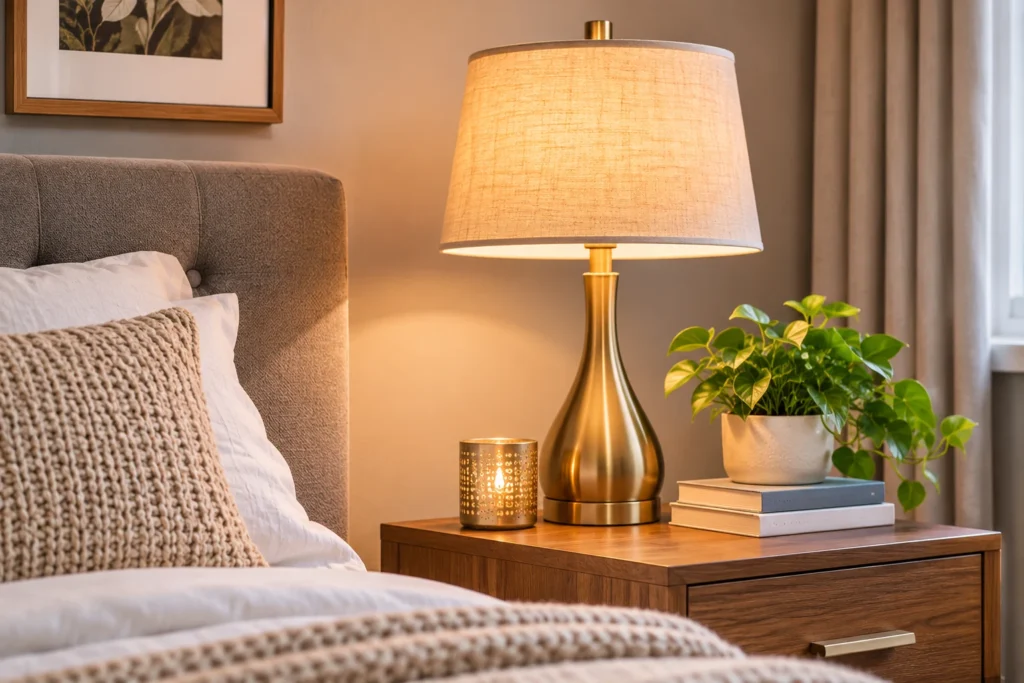
A bedside lamp is a light fixture positioned near a bed to provide convenient illumination for reading, relaxing, and nighttime activities. It can also serve as a decorative element that complements bedroom furniture.
Unlike overhead lighting, bedside lamps provide more localized illumination. This makes them useful when you want light without illuminating the entire bedroom.
What Are the Main Functions of Bedside Lamps?
- Task lighting: Illuminates books, journals, and other reading materials.
- Ambient lighting: Creates a gentle background glow.
- Accent lighting: Highlights decorative furniture and bedroom features.
- Nighttime convenience: Provides accessible lighting without requiring you to leave the bed.
- Bedroom decoration: Adds texture, color, and visual balance.
How to Choose Bedside Lamps: 11 Important Factors
The best bedside lamp combines suitable dimensions, comfortable light, convenient controls, and an attractive design. Consider the following factors before buying one.
1. Measure Your Nightstand First
Your nightstand determines how much space you have for a lamp. A large decorative base may look attractive but leave little room for practical items.
I suggest measuring the usable tabletop rather than relying on the overall furniture dimensions. Include any raised edges or decorative details that reduce available space.
- Measure the width and depth of the tabletop.
- Reserve space for your phone, water, and other essentials.
- Check whether the lampshade extends beyond the tabletop.
- Make sure the base sits securely on a flat surface.
Smaller tables often benefit from narrow lamp bases or wall-mounted lighting. Choosing an appropriately sized lamp starts with knowing how to choose a nightstand that fits your bedroom.
2. Choose the Correct Bedside Lamp Height
Conventional bedside table lamps often work well within a height range of approximately 20–30 inches. However, your mattress height and sitting position should determine the final measurement.
The goal is to illuminate your reading area without exposing your eyes directly to a bright bulb. Shade shape and lamp placement are equally important.
| Nightstand Height | Suggested Lamp Height | Typical Application |
|---|---|---|
| 18–22 inches | 26–30 inches | Low nightstand |
| 23–26 inches | 22–28 inches | Standard nightstand |
| 27–30 inches | 18–24 inches | Tall nightstand |
For example, a 24-inch nightstand paired with a 26-inch lamp creates a total fixture height of 50 inches above the floor. Whether this works depends on your mattress and the position of the shade opening.
3. Select the Right Lampshade Size
A properly sized lampshade balances the lamp base and controls how light spreads. Oversized shades can crowd narrow nightstands, while undersized shades may expose the bulb.
For traditional table lamps, a shade width roughly twice the base width can be a useful starting point. Sculptural and directional lamps may follow different proportions.
- Use narrow shades on compact bedside tables.
- Choose wider shades when you need broader illumination.
- Consider translucent fabric for a softer glow.
- Use directional shades for focused reading light.
Always check the shade’s widest measurement before ordering online. Leave enough clearance from walls, curtains, and nearby furniture.
4. Choose the Right Type of Bedside Lamp
Bedside lamps come in several designs, and each serves a different purpose. Your available space and lighting preferences should guide the decision.
| Lamp Type | Best For | Main Limitation |
|---|---|---|
| Traditional table lamp | General lighting and decoration | Requires tabletop space |
| Adjustable reading lamp | Focused reading | Limited ambient illumination |
| Wall-mounted sconce | Small nightstands | May require installation |
| Pendant bedside light | Contemporary bedrooms | Requires careful positioning |
| Smart bedside lamp | Custom lighting routines | May require an app or compatible hub |
| Cordless lamp | Flexible placement | Requires charging |
I would prioritize adjustable reading lamps for frequent readers and shaded table lamps for general bedroom use. Wall-mounted fixtures are worth considering when tabletop space is limited.
5. Determine How Bright Your Bedside Lamp Should Be
Bedside lamp brightness should match the activity you want to perform. Reading generally requires more useful light on the page than relaxing before bedtime.
Lumens measure the total visible light a source produces. Watts measure energy consumption rather than brightness.
| Lighting Purpose | Starting Brightness |
|---|---|
| Soft nighttime glow | 50–150 lumens |
| Relaxing and ambient lighting | 150–300 lumens |
| General bedside lighting | 300–500 lumens |
| Conventional shaded reading lamp | 400–800 lumens |
A focused reading lamp may need fewer lumens because it directs light toward the page. The U.S. Department of Energy’s lighting guidance explains how light output differs from energy consumption.
6. Choose a Comfortable Color Temperature
Color temperature describes whether light appears warm, neutral, or cool. Manufacturers express this measurement in Kelvin, represented by the letter K.
Warm white lighting around 2700K is a practical starting point for most bedrooms. It creates a softer appearance than cooler white lighting.
- 2200–2700K: Warm, intimate lighting for evening relaxation.
- 2700–3000K: Comfortable general bedside lighting.
- 3500–4000K: More neutral lighting for specific task preferences.
- 5000K and above: Cool daylight appearance that may feel too stark for evening use.
Brightness and color temperature work together, so a warm bulb can still be uncomfortably bright. Dimming helps create a gentler atmosphere.
7. Look for Dimmable and Accessible Controls
Dimmable bedside lamps allow you to adjust brightness for different activities. This makes one fixture more versatile throughout the evening.
The switch should remain accessible when you are lying down or sitting upright. Avoid designs that require awkward reaching behind furniture.
- Touch-sensitive controls for convenient operation.
- Rotary dimmers for gradual brightness adjustment.
- Three-level switches for simple brightness selection.
- Remote controls for flexible positioning.
- Physical switches that work without an internet connection.
When purchasing a dimmable bulb, confirm that both the bulb and lamp controls support the same dimming method. Incompatible combinations may flicker or fail to dim smoothly.
8. Match the Lamp With Your Bedroom Decor
Bedside lamps should complement the materials, colors, and proportions already present in your bedroom. They do not need to match every decorative object.
I prefer choosing a lamp finish that repeats at least one existing material or color. This helps the room feel intentional without making everything identical.
- Modern bedrooms: Simple geometric shapes and matte metal finishes.
- Traditional bedrooms: Ceramic bases and fabric shades.
- Minimalist bedrooms: Compact fixtures with clean silhouettes.
- Farmhouse bedrooms: Natural wood, neutral shades, and textured finishes.
- Luxury bedrooms: Glass, brass, and refined sculptural forms.
- Bohemian bedrooms: Woven materials and expressive shapes.
Natural textures and warm light are particularly useful when you want to make a bedroom feel cozy without replacing existing furniture.
9. Consider the Lampshade Material
Lampshade materials influence how much light reaches the surrounding area. They also affect the appearance of the fixture when switched off.
- Linen: Provides a relaxed texture and diffused lighting.
- Cotton: Offers a versatile appearance and soft illumination.
- Frosted glass: Distributes light without a prominent exposed bulb.
- Metal: Directs light toward a specific area.
- Paper: Creates a lightweight appearance and gentle glow.
Choose a shade designed for the lamp and its permitted bulb type. Never place decorative fabric over a fixture to reduce brightness.
10. Decide Whether You Need Smart Features
Smart bedside lamps can provide scheduled lighting, remote dimming, and adjustable colors. These features are optional rather than essential for comfortable bedside lighting.
When shopping in 2026, consider whether a smart feature solves an everyday problem. Simple controls may be more convenient than an app during nighttime use.
- Scheduled evening dimming.
- Gradual morning brightening.
- Adjustable white light settings.
- Voice-controlled switching.
- Compatibility with existing smart home systems.
- Built-in charging ports for supported devices.
Check whether the lamp still offers manual controls when your network is unavailable. Also confirm charging output and smart home compatibility before purchasing.
11. Check Electrical Safety and Build Quality
A bedside lamp should have a stable base, undamaged wiring, and suitable electrical components. Decorative appearance should never take priority over safe operation.
Look for electrical safety certification appropriate to your country and follow the manufacturer’s installation instructions.
- Use bulbs that comply with the fixture’s maximum rating.
- Keep electrical cords away from pinch points and walking areas.
- Choose a base that resists accidental tipping.
- Keep lamps away from bedding and combustible materials.
- Replace damaged plugs or cords instead of attempting temporary repairs.
- Use a qualified electrician for hardwired installations when necessary.
Review the Consumer Product Safety Commission’s extension cord guidance if your lamp cannot reach an existing outlet safely.
Should Bedside Lamps Be Taller Than the Headboard?
Bedside lamps do not need to be taller than the headboard. Their height should primarily support comfortable lighting and maintain visual balance.
A tall headboard may pair well with shorter lamps. Conversely, a low platform bed can benefit from taller fixtures that add vertical interest.
- Avoid placing a bright exposed bulb at seated eye level.
- Consider the overall silhouette of the bed and nightstands.
- Position the shade to illuminate your intended reading area.
Do Bedside Lamps Need to Match?
Bedside lamps do not need to match exactly. Matching lamps create symmetry, while different lamps can accommodate individual lighting preferences.
If you choose mismatched fixtures, maintain at least one shared design element. Similar finishes, shade colors, or overall heights can visually connect the two sides.
Matching vs. Mismatched Bedside Lamps
| Feature | Matching Lamps | Mismatched Lamps |
|---|---|---|
| Appearance | Symmetrical | Personalized |
| Lighting flexibility | Similar functions | Individual functions |
| Best for | Formal or balanced decor | Eclectic or practical spaces |
How Do You Position Bedside Lamps for Reading?
Position a reading lamp so its beam reaches your book without shining directly into your eyes. Adjustable fixtures work well because you can change the direction as needed.
For a shared bedroom, focused lighting can also reduce the amount of light reaching the other side of the bed.
- Sit in your normal reading position.
- Place the lamp near your shoulder area.
- Direct the light downward toward your book.
- Check the page for strong shadows or reflections.
- Adjust the brightness until reading feels comfortable.
For additional positioning advice, explore this table lamp placement guide covering height, furniture, and lighting arrangements.
What Are the Most Common Bedside Lamp Buying Mistakes?
The biggest mistakes include selecting the wrong size, overlooking glare, and buying fixtures with inconvenient controls. These problems are easier to prevent before purchasing.
- Choosing appearance without considering lighting performance.
- Buying a lamp that occupies the entire nightstand.
- Selecting a bulb based only on wattage.
- Ignoring the height of the mattress.
- Buying non-dimmable bulbs for dimmer-equipped lamps.
- Overlooking cord length and outlet locations.
- Using identical lamps despite different reading preferences.
- Choosing an unstable base for a frequently used surface.
Before ordering, compare the product dimensions with your measurements. This simple step helps avoid unnecessary returns.
Bedside Lamp Buying Checklist
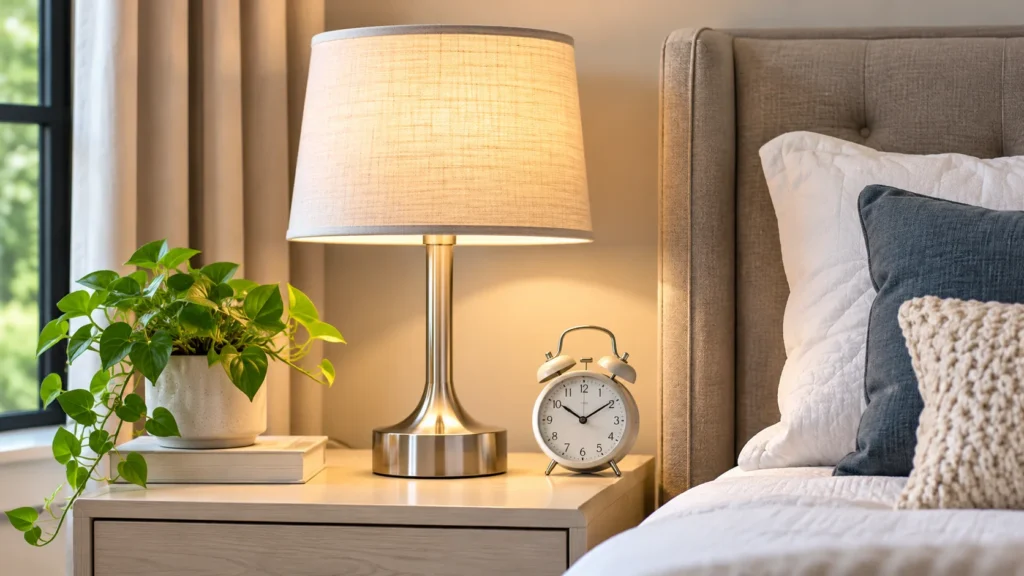
Use this checklist to compare bedside lamps before purchasing. A suitable lamp should satisfy your practical needs as well as your design preferences.
- ✓ Suitable height for the bed and nightstand
- ✓ Appropriate shade width and base dimensions
- ✓ Comfortable brightness for intended activities
- ✓ Warm white lighting option
- ✓ Convenient switch placement
- ✓ Compatible bulb and dimming controls
- ✓ Stable construction and safe electrical components
- ✓ Finish that complements bedroom furniture
- ✓ Reasonable price and suitable warranty
Consider the lamp alongside your complete bedroom decor checklist so it works with your furniture, bedding, and other lighting fixtures.
Recommended Bedside Lamps for Different Needs
If you are ready to compare specific products, these three IKEA models illustrate different approaches to bedside lighting. I selected them based on their published design features rather than hands-on testing.
Check the lighting and furniture collections at IKEA for current specifications and purchasing availability.
Affiliate disclosure: This section contains affiliate links. We may earn a commission from qualifying purchases at no additional cost to you.
📖 Best for reading
IKEA NÄVLINGE LED Desk Lamp
Recommended for focused task lighting
The lamp features adjustable directional lighting, a 220-lumen integrated LED, and a compact design. I would consider it for frequent nighttime reading where precise beam placement matters.
🌙 Best for ambient lighting
IKEA FADO Table Lamp
Recommended for a soft bedroom glow
The 10-inch globe design distributes light through a rounded glass shade. I would pair it with a compatible warm LED bulb for gentle ambient lighting rather than focused reading.
✨ Best for adjustable atmosphere
IKEA FADO / KAJPLATS Smart LED Lamp
Recommended for customizable lighting
This combination pairs a decorative globe lamp with a smart LED bulb offering adjustable white and colored light. I would consider it for bedrooms that benefit from multiple lighting settings.
Frequently Asked Questions
What Is the Ideal Height for a Bedside Lamp?
Many conventional bedside lamps measure approximately 20–30 inches tall, but the ideal height depends on your furniture. Choose a fixture that directs useful light toward your reading area while shielding your eyes from the bulb when sitting comfortably in bed.
What Color Light Is Best for Bedside Lamps?
Warm white light around 2700K is a suitable choice for general bedside lighting because it produces a welcoming appearance. A dimmable bulb allows you to reduce brightness during relaxation while maintaining enough light for other nighttime activities.
How Many Lumens Should a Bedside Lamp Have?
For conventional shaded bedside lamps, approximately 300–500 lumens is a reasonable starting point for general lighting. Reading may benefit from 400–800 lumens, although focused reading fixtures can work with lower output because they direct light toward the page.
Can You Use Wall Sconces Instead of Bedside Lamps?
Yes, wall sconces are useful alternatives to bedside table lamps, especially in small bedrooms. Adjustable or downward-facing sconces provide convenient reading light while freeing tabletop space, although some models require professional electrical installation and careful mounting measurements.
Are LED Bulbs Better for Bedside Lamps?
LED bulbs are a practical choice because they offer energy-efficient lighting and a wide range of brightness and color temperature options. Choose an LED bulb compatible with your fixture, and check dimmer compatibility when using adjustable brightness controls.
Final Thoughts: How to Choose Bedside Lamps
Learning how to choose bedside lamps starts with understanding your nighttime habits, furniture dimensions, and lighting preferences. A well-chosen lamp should improve both bedroom comfort and everyday convenience.
I recommend prioritizing comfortable light, appropriate proportions, and accessible controls before considering decorative extras. A warm LED bulb and a properly positioned shade are excellent starting points.
Your next step: Measure your nightstand, check your seated eye level, and decide whether you need focused reading light or a gentle ambient glow.
Use those measurements to compare suitable lamps and create a bedroom lighting arrangement that feels comfortable every evening.