

Quick Answer
An area rug is better for a bedroom that needs generous floor coverage, warmth, and a unified appearance. A runner is better for narrow bedrooms, tight bedside spaces, and targeted underfoot comfort. When deciding between the two, consider your bedroom furniture clearance, bed size, and available floor space.
Which rug works best for your bedroom?
- Large bedrooms: Choose an 8 × 10 or 9 × 12-foot area rug for balanced coverage.
- Small bedrooms: Use a narrow bedside runner to preserve visible floor space.
- Maximum comfort: An area rug provides more continuous softness around the bed.
- Budget-friendly styling: A single runner generally requires less material and may cost less.
- Easy maintenance: Smaller runners are usually easier to lift, reposition, and clean.
- Shared bedrooms: Use matching runners on both sides if a large area rug doesn’t fit.
My practical recommendation
- Choose an area rug when you want to transform the entire bedroom. Choose runners when you primarily want a comfortable place to step out of bed.
Choosing between an area rug and a runner for a bedroom sounds simple until you start measuring the available floor space. Both options can create a comfortable bedroom, but they solve different decorating problems.
I prefer to make this decision based on how the room functions rather than appearance alone. This guide compares rug sizes, placement, comfort, maintenance, costs, and bedroom layouts to help you choose confidently.
What Is the Difference Between an Area Rug and a Runner?
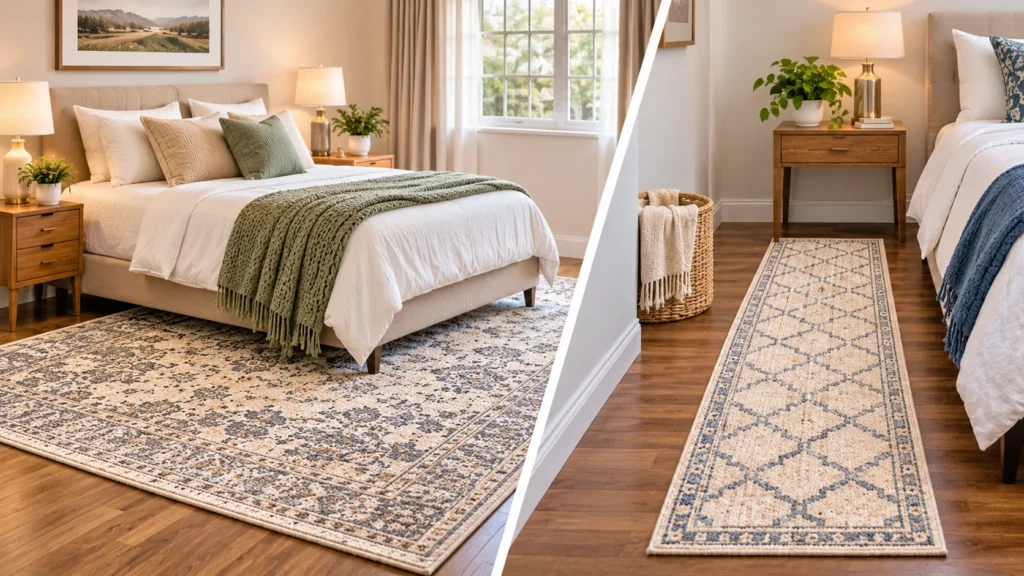
An area rug is a removable floor covering designed to cover a substantial section of a room. A runner rug is a long, narrow floor covering designed for walkways and restricted spaces.
In bedrooms, area rugs usually sit underneath the bed or surrounding furniture. Runners typically sit beside the bed or across its foot.
What Is a Bedroom Area Rug?
A bedroom area rug creates a visual connection between the bed, surrounding furniture, and floor. It can make separate pieces of furniture feel like part of one arrangement.
Common bedroom area rug sizes include:
- 4 × 6 feet for compact spaces.
- 5 × 8 feet for smaller bedrooms.
- 6 × 9 feet for medium bedrooms.
- 8 × 10 feet for many queen-bed layouts.
- 9 × 12 feet for larger king-bed arrangements.
Area rugs work particularly well in bedrooms with hardwood, laminate, tile, or vinyl flooring. They add texture while reducing the amount of exposed hard flooring.
What Is a Bedroom Runner Rug?
A bedroom runner is a rectangular rug with a considerably longer length than width. It creates a narrow strip of softness without covering most of the bedroom floor.
Popular runner dimensions include:
- 2 × 4 feet for short bedside spaces.
- 2 × 6 feet for compact bed layouts.
- 2 × 8 feet for longer bedside walkways.
- 2.5 × 8 feet for wider sleeping areas.
- 2.5 × 10 feet for extended walkways.
I particularly like runners when furniture occupies most of the bedroom. They add comfort without requiring you to move a heavy bed frame.
Area Rug vs Runner for a Bedroom: Side-by-Side Comparison
The biggest differences between area rugs and runners involve floor coverage, placement flexibility, and visual impact. Neither option is universally better.
| Feature | Area Rug | Runner Rug |
|---|---|---|
| Common sizes | 5 × 8 to 9 × 12 ft | 2 × 4 to 2.5 × 10 ft |
| Floor coverage | Broad | Targeted |
| Example coverage | 8 × 10 ft = 80 sq. ft. | 2 × 8 ft = 16 sq. ft. |
| Best room type | Medium or large bedroom | Small or narrow bedroom |
| Placement | Under the bed | Beside or at the foot of the bed |
| Visual effect | Unifies furniture | Defines walkways |
| Underfoot comfort | Multiple sides of the bed | Specific walking areas |
| Cleaning | More demanding | Generally easier |
| Installation | May require moving furniture | Usually simple |
| Relative cost | Generally higher | Generally lower per rug |
| Rug pad | Recommended | Especially important |
For perspective, an 8 × 10-foot area rug contains five times the floor-covering material of a 2 × 8-foot runner. However, actual prices depend on construction, material, quality, and brand.
When Should You Choose an Area Rug for a Bedroom?
Choose an area rug when you want substantial floor coverage and a bedroom that feels visually connected. It works especially well beneath a centrally positioned bed with accessible space on both sides.
Area rugs are particularly useful when the bed is the room’s primary focal point.
Advantages of Bedroom Area Rugs
- Unified appearance: Connects the bed and nearby furniture through a shared floor covering.
- Greater comfort: Creates a larger soft surface for walking barefoot.
- Warmer atmosphere: Reduces the amount of exposed cold flooring.
- Sound absorption: Helps soften footsteps and some reflected sound.
- Decorative impact: Introduces color, pattern, and texture across the room.
- Furniture stability: Heavy furniture may help anchor portions of the rug.
Disadvantages of Bedroom Area Rugs
- Larger sizes may require a higher initial budget.
- Installation can involve lifting or moving heavy furniture.
- Cleaning underneath the bed becomes more difficult.
- Part of the rug may remain hidden beneath the mattress.
- Oversized rugs can interfere with furniture and door clearance.
If your goal is to create a coordinated, hotel-inspired bedroom, I would generally start with an area rug. It provides a strong foundation for the rest of the decor.
When Should You Choose a Runner for a Bedroom?
Choose a runner when floor space is limited or when you only need softness in specific walking areas. Runners are particularly practical beside beds positioned against walls.
They also work well in rental homes where furniture arrangements may change frequently.
Advantages of Bedroom Runners
- Space efficiency: Fits narrow gaps between beds, walls, and furniture.
- Lower initial cost: One runner may cost less than a comparable large rug.
- Simple installation: Usually requires no major furniture movement.
- Easy repositioning: Can move to another room when your layout changes.
- Targeted comfort: Covers the exact area where your feet touch the floor.
- Convenient maintenance: Smaller washable designs may fit more easily into household washing machines.
Disadvantages of Bedroom Runners
- Provide less overall floor coverage.
- May shift without appropriate nonslip backing or a rug pad.
- Do not visually connect furniture as effectively.
- Multiple runners can make the floor look busy.
- Exposed edges require careful placement to reduce tripping hazards.
A runner makes sense when most of an area rug would disappear beneath the bed. You can concentrate your budget on the flooring you actually use.
What Size Area Rug or Runner Should You Use for Your Bed?
Bedroom rug size depends on your mattress dimensions, actual bed frame, and available walking space. Aim for enough visible rug to create a comfortable landing without crowding the room.
The following measurements are practical starting points rather than mandatory design rules. You can also explore the illustrated bedroom layouts in the Rugs Direct rug sizing guide.
| Bed Size | Mattress Size | Area Rug | Runner |
|---|---|---|---|
| Twin | 38 × 75 in. | 5 × 8 ft | 2 × 4 or 2 × 6 ft |
| Full | 54 × 75 in. | 5 × 8 or 6 × 9 ft | 2 × 6 ft |
| Queen | 60 × 80 in. | 8 × 10 ft | 2 × 6 or 2 × 8 ft |
| King | 76 × 80 in. | 9 × 12 ft | 2.5 × 6 or 2.5 × 8 ft |
| California King | 72 × 84 in. | 9 × 12 ft | 2.5 × 8 ft |
How Much Rug Should Extend Beyond the Bed?
A useful starting point is approximately 18 to 24 inches of exposed rug on each accessible side. Larger bedrooms can accommodate more coverage.
For example, an 8 × 10-foot rug positioned with its 10-foot side across a queen mattress provides 30 inches of coverage on each side. A wider bed frame will reduce that exposed measurement.
Measurement tip: Use the outside width of your bed frame instead of the mattress width. Mark the proposed rug boundaries with painter’s tape before purchasing.
What Is the Best Area Rug Placement in a Bedroom?
The best area rug placement typically positions the rug beneath the lower portion of the bed. This arrangement balances visible coverage with efficient use of material.
For a coordinated layout, consider how the rug relates to the nightstands and surrounding furniture.
1. Place the Entire Bed on the Rug
This arrangement places the bed and potentially both nightstands within the rug’s boundaries. It creates a spacious, coordinated appearance.
It works best with generously sized bedrooms and larger rugs.
2. Place the Rug Under the Lower Two-Thirds of the Bed
This is one of my preferred arrangements because it leaves more rug visible around the bed. The nightstands usually remain on the uncovered floor.
The arrangement offers several practical benefits:
- Reduces unnecessary rug coverage beneath nightstands.
- Creates soft landing areas on both sides.
- Extends comfort beyond the foot of the bed.
- Can accommodate smaller rugs than full-bed placement.
3. Place a Rug Across the Foot of the Bed
A smaller rectangular rug at the foot can define a dressing area or bedroom bench. This works when bedside clearance is limited.
For more ideas, explore this guide on arranging furniture around a rug to create balanced furniture groupings.
What Is the Best Runner Rug Placement in a Bedroom?
The most practical runner placement is parallel to the bed along the side you regularly use. Leave a comfortable margin between the rug and surrounding obstacles whenever space permits.
A runner should cover your walking path rather than disappear beneath furniture.
1. Use One Runner Beside the Bed
A single runner works well for twin beds, single sleepers, and beds positioned against walls. Place it where you normally stand when getting out of bed.
2. Place Matching Runners on Both Sides
Matching runners create visual balance while providing separate landing areas for two sleepers. This is a practical alternative when a large area rug won’t fit.
3. Position a Runner at the Foot
A horizontal runner can soften the floor between the bed and dresser. Make sure drawers and doors operate freely above the rug.
4. Create a Three-Runner Layout
Two bedside runners and one foot-of-bed runner can surround the main walking areas. Keep their colors and textures coordinated to avoid a fragmented appearance.
Is an Area Rug or Runner Better for a Small Bedroom?
A runner is often more practical for a narrow bedroom with limited bedside clearance. However, a correctly sized area rug can make a small bedroom look more cohesive.
The right choice depends on the proportions of the room rather than its square footage alone.
- Narrow bedroom: Choose a runner along the main walking path.
- Square bedroom: Consider an area rug beneath the lower portion of the bed.
- Bed against a wall: Use one runner on the accessible side.
- Limited door clearance: Choose a thin rug with a compatible low-profile pad.
- Visually cluttered bedroom: A single area rug may create a calmer appearance.
Imagine a bedroom with a queen bed and just 30 inches of walking space beside it. A 24-inch-wide runner would leave six inches of uncovered width within that passage.
That layout may be easier to manage than installing a large rug. For additional space-saving strategies, read this guide on making a bedroom look bigger.
Which Bedroom Rug Material Should You Choose?
Both area rugs and runners come in natural and synthetic materials. Choose the fiber based on comfort, cleaning requirements, durability, and sensitivity to texture.
| Material | Main Advantage | Consideration |
|---|---|---|
| Wool | Comfort and resilience | Higher cost and possible shedding |
| Cotton | Lightweight construction | May wrinkle or wear faster |
| Polypropylene | Stain resistance | Feel varies by construction |
| Polyester | Soft texture | Some styles may flatten over time |
| Jute | Natural woven appearance | Coarser texture and moisture sensitivity |
I generally favor soft, low-pile or medium-pile rugs for everyday bedrooms. These provide comfortable footing without creating unnecessarily bulky edges.
Is an Area Rug More Expensive Than a Runner?
A large area rug generally costs more than a single runner of comparable material and construction. However, two premium runners may cost more than one affordable area rug.
Compare the complete cost of each layout before ordering.
- Purchase price of every rug required.
- Cost of suitable rug pads.
- Delivery charges for oversized rugs.
- Cleaning and maintenance expenses.
- Potential replacement costs.
Two 2 × 8-foot runners cover 32 square feet combined. An 8 × 10-foot area rug covers 80 square feet, although much of it may sit beneath the bed.
My preferred approach is to spend more on the surface that provides the greatest everyday benefit.
Can You Use Both an Area Rug and a Runner in a Bedroom?
Yes, you can combine an area rug and a runner when the bedroom contains separate functional zones. The combination works particularly well in larger bedrooms with dressing areas or walk-in closets.
Keep each rug connected to a specific purpose.
- Place an area rug beneath the bed.
- Use a runner between wardrobes.
- Position a runner beside a dressing table.
- Repeat one color across both rugs.
- Avoid overlapping raised edges in walking areas.
Combining rugs should make a bedroom feel more organized rather than divided into unnecessary sections. Consider the overall palette when planning your bedroom decor.
Do Bedroom Area Rugs and Runners Need Rug Pads?
A compatible rug pad is generally recommended beneath both area rugs and runners. It can improve grip, add cushioning, and reduce direct contact between the rug backing and flooring.
Runners often benefit most because they lack heavy furniture to hold them in place.
- Select a pad approved for your specific flooring finish.
- Choose a thickness that maintains door clearance.
- Keep the pad slightly smaller than the rug.
- Check that all corners remain flat.
- Replace damaged or deteriorating pads.
Loose rugs and raised edges can contribute to falls. For households with older adults, consult the CDC’s fall prevention resources and consider removing loose rugs where necessary.
Which Rug Is Easier to Clean and Maintain?
A runner is generally easier to maintain because its smaller dimensions make lifting and repositioning simpler. Large area rugs can collect dust in sections concealed beneath furniture.
Always follow the manufacturer’s care instructions, regardless of rug size.
Bedroom Rug Maintenance Checklist
- Vacuum regularly using the appropriate setting.
- Blot spills promptly instead of rubbing them.
- Check underneath the rug for trapped moisture.
- Rotate rugs when appropriate to distribute wear.
- Wash machine-washable rugs according to their care labels.
- Ensure rugs dry completely before reinstalling them.
Machine-washable designs can be convenient, but larger sizes may require particular washer capacities. The Ruggable wash and care guide illustrates why size and construction affect cleaning requirements.
What Mistakes Should You Avoid When Choosing Bedroom Rugs?
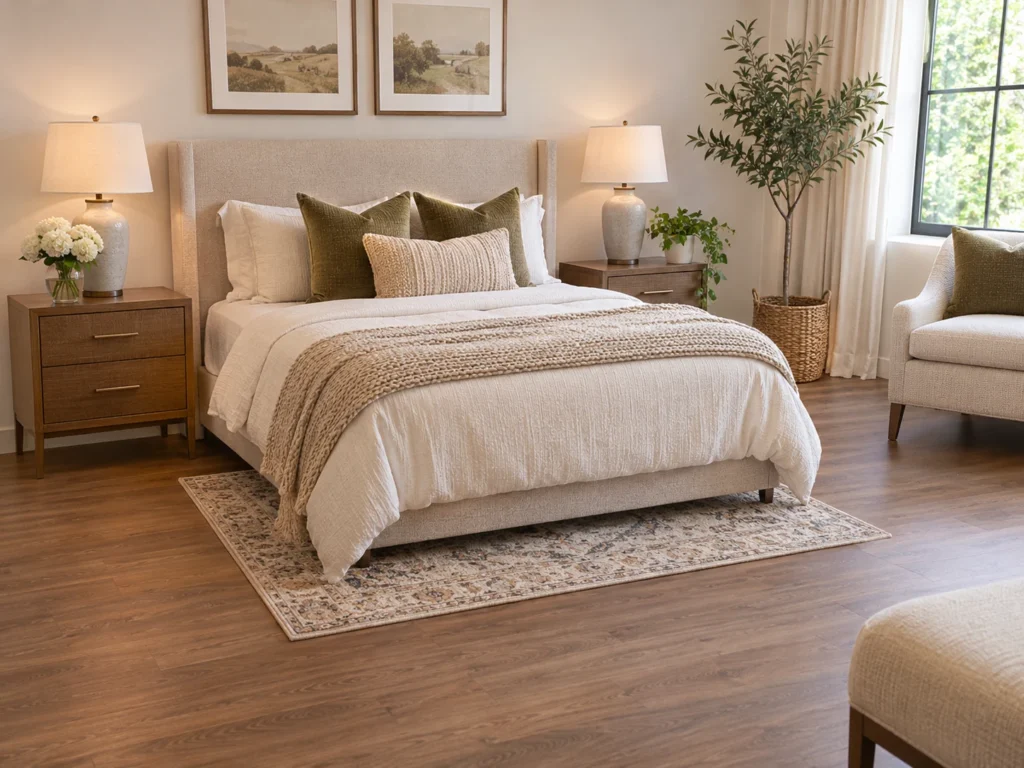
The most common mistake is choosing a rug based on appearance without considering its actual placement. An attractive rug becomes frustrating when it interferes with everyday movement.
- Buying without measuring: Check the bed frame and available floor space first.
- Choosing excessive thickness: Include the rug pad when checking door clearance.
- Ignoring exposed corners: Keep edges flat and secure.
- Using too many patterns: Coordinate rugs with bedding and furniture.
- Hiding the entire rug: Ensure enough material remains visible to provide useful comfort.
- Forgetting cleaning access: Consider how you will maintain the rug after installation.
My rule for bedroom decorating in 2026 is straightforward: prioritize fit and function over temporary trends. A correctly positioned rug remains useful even when your decorating preferences change.
Review these additional bedroom decorating mistakes to avoid before finalizing your layout.
Recommended Area Rugs and Runners for Bedrooms
If you’re ready to shop, these options represent three different bedroom flooring needs. Compare the available dimensions and material details before making your selection.
Affiliate disclosure: As an Amazon Associate, we earn from qualifying purchases. The following editorial suitability ratings reflect the intended use cases, not verified customer review averages or hands-on testing.
🏆 Best for broad coverage
Safavieh Adirondack ADR109 Area Rug
★★★★☆ 4/5
Available in an 8 × 10-foot size, this power-loomed rug features a low-profile construction and decorative border. I’d consider it for queen bedrooms needing balanced coverage and relatively straightforward maintenance.
🛏️ Best for narrow bedrooms
Safavieh Adirondack ADR276 Runner Rug
★★★★☆ 4/5
The 2.5 × 8-foot runner offers a narrow rectangular shape and low-pile construction. I’d choose this style for accessible bedside spaces where a large rug would be inconvenient.
🌿 Best for natural texture
nuLOOM Rigo Handwoven Jute Runner
★★★½☆ 3.5/5
This handwoven jute design comes in runner and area rug formats. I’d consider it for farmhouse or organic bedroom styling, provided you enjoy a firmer natural-fiber texture.
Frequently Asked Questions
Is a Runner Better Than an Area Rug for a Bedroom?
A runner is better for narrow bedrooms, limited budgets, and targeted bedside comfort. An area rug is better when you want broader floor coverage, a coordinated furniture arrangement, and softness around multiple sides of the bed.
Can You Put Two Runners Beside a Queen Bed?
Yes, matching runners on both sides of a queen bed provide separate walking surfaces and create visual balance. Consider runners approximately 2 to 2.5 feet wide and 6 to 8 feet long, depending on the available floor space.
Should a Bedroom Runner Be Longer Than the Bed?
A bedroom runner does not need to extend beyond the entire bed length. It should cover your main standing and walking areas while maintaining safe clearance around nightstands, doors, and other furniture.
Does an Area Rug Make a Bedroom Look Bigger?
A correctly sized area rug can make a bedroom appear more spacious by connecting furniture and reducing visual fragmentation. An excessively large rug that crowds the walls may have the opposite effect, so measure carefully before purchasing.
Are Bedroom Runners Safe on Hardwood Floors?
Bedroom runners can work on hardwood floors when they remain flat and securely positioned. Use a nonslip pad compatible with the flooring finish, inspect loose edges regularly, and remove rugs that create persistent tripping hazards.
Final Verdict: Area Rug or Runner for Your Bedroom?
Choose an area rug if you want to establish a cohesive bedroom layout with generous coverage and warmth. Choose a runner if your priority is practical comfort within narrow or restricted spaces.
For many medium and large bedrooms, an area rug beneath the bed offers the most complete decorating solution. For smaller bedrooms, one or two runners may provide better value and easier maintenance.
Before purchasing, measure your bed frame and mark the proposed rug placement on the floor. Choose the option that improves your bedroom’s appearance without sacrificing comfortable movement.
Start with your available space, choose the right dimensions, and select a rug that makes every morning a little more comfortable.