

Quick Answer
To arrange wall art in a bedroom, establish a focal point, choose artwork proportional to your furniture, and maintain consistent spacing between frames. Coordinate artwork with your bedroom wall decor to create a balanced, comfortable, and visually connected space.
How to arrange bedroom wall art:
- Choose a focal point: Identify the main wall or furniture piece you want to highlight.
- Measure your space: Aim for artwork covering approximately two-thirds of the furniture width.
- Set hanging height: Position standalone artwork around 57–60 inches from the floor to its center.
- Maintain even spacing: Leave approximately 2–3 inches between grouped frames.
- Test the layout: Use paper templates before installing hanging hardware.
- Install securely: Choose suitable hardware for your wall material and artwork weight.
Practical tip:
- Avoid heavy glass frames and adhesive-only hanging systems directly above sleeping areas.
Knowing how to arrange wall art in a bedroom can transform an ordinary space into a thoughtfully decorated retreat. Even beautiful artwork can look awkward when its size, spacing, or placement feels disconnected from the room.
In this 2026 guide, I’ll explain the practical measurements and layout techniques that make bedroom artwork look intentional. You’ll also discover arrangement ideas for different bedroom sizes, furniture layouts, and decorating styles.
What Is Bedroom Wall Art Arrangement?
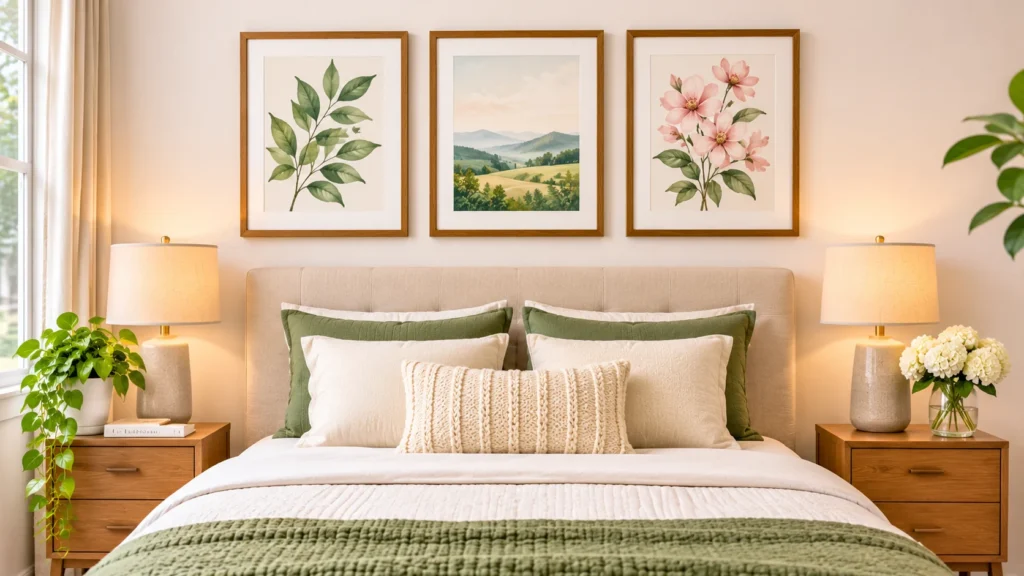
Bedroom wall art arrangement is the process of positioning artwork, photographs, prints, and decorative pieces to create visual balance. It considers the relationship between artwork, furniture, wall dimensions, colors, and architectural features.
A successful arrangement makes individual pieces feel connected rather than randomly placed. It also supports the bedroom’s relaxing atmosphere.
What makes a good wall art arrangement?
- Artwork that fits the available wall space.
- A clearly defined visual focal point.
- Consistent spacing between related pieces.
- Colors that complement bedding and furniture.
- Appropriate hanging height.
- Enough empty wall space to prevent clutter.
- Secure installation suitable for the wall surface.
The goal isn’t to cover every empty wall. A carefully selected arrangement often looks more sophisticated than a room filled with unrelated artwork.
How to Arrange Wall Art in a Bedroom: 12 Practical Tips
Start by identifying your bedroom’s main visual feature, then select artwork that complements it. These twelve techniques will help you create a coordinated arrangement without unnecessary decorating expenses.
1. Choose a Main Focal Point
A focal point is the feature that naturally attracts attention when someone enters a room. In most bedrooms, the bed and headboard serve this purpose.
I recommend deciding which wall deserves the most visual attention before purchasing artwork. This prevents competing arrangements from overwhelming the bedroom.
Popular bedroom focal points include:
- The wall above the headboard.
- A dresser or dressing table.
- An accent wall opposite the bed.
- A reading corner.
- An empty wall beside a window.
If your headboard already has a bold design, consider simpler artwork or decorate an adjacent wall instead.
2. Measure Your Wall and Furniture
Wall measurements help determine the appropriate artwork size. Measure both the available wall area and the furniture positioned beneath it.
A useful decorating guideline is choosing an arrangement approximately two-thirds to three-quarters as wide as the furniture below. Treat this as a starting point rather than a strict requirement.
Recommended wall art width above standard beds
| Bed Size | Standard Width | Suggested Art Width |
|---|---|---|
| Twin | 38 inches | 25–29 inches |
| Full | 54 inches | 36–41 inches |
| Queen | 60 inches | 40–45 inches |
| King | 76 inches | 51–57 inches |
| California King | 72 inches | 48–54 inches |
Note: These suggested dimensions use standard US mattress widths. Measure your actual headboard or bed frame before choosing artwork.
3. Hang Artwork at the Correct Height
Standalone artwork generally looks balanced when its center sits approximately 57–60 inches above the floor. This guideline creates a comfortable viewing position in many residential spaces.
Artwork positioned above furniture follows a different principle. The relationship between the furniture and artwork matters more than a fixed floor measurement.
Start with these hanging height guidelines:
- Empty wall: Artwork center approximately 57–60 inches above the floor.
- Above a headboard: Approximately 8–10 inches above its top edge, if space permits.
- Above a dresser: Approximately 6–10 inches above the furniture.
- Gallery wall: Treat the entire arrangement as one visual composition.
The Home Depot offers picture-hanging resources covering placement, wall preparation, and mounting hardware.
4. Keep Consistent Spacing Between Frames
Even spacing creates visual order and helps separate artworks without making them feel disconnected. For most bedroom gallery walls, a gap of 2–3 inches works well.
Smaller frames may benefit from tighter spacing. Larger pieces often need additional breathing room.
- Small frames: approximately 1.5–2 inches apart.
- Medium frames: approximately 2–3 inches apart.
- Large frames: approximately 3–4 inches apart.
- Matching frame sets: maintain equal gaps throughout.
Measure from the outer edges of each frame, not the artwork inside it. This small detail makes a noticeable difference when arranging mixed frame sizes.
5. Use Symmetrical Arrangements for a Calm Appearance
Symmetrical arrangements position matching or similarly sized artwork evenly around a central point. They work particularly well in traditional, minimalist, and contemporary bedrooms.
Matching frames above a bed create structure without adding unnecessary visual activity. I would choose this approach for a bedroom that already contains patterned bedding.
Popular symmetrical arrangements include:
- Two matching botanical prints.
- Three equally sized landscape panels.
- Four photographs arranged in a square grid.
- Six prints arranged in two equal rows.
Symmetry can also complement matching nightstands and bedside lamps.
6. Try an Asymmetrical Gallery Wall
An asymmetrical gallery wall combines different artwork sizes and shapes while maintaining overall visual balance. It creates a more relaxed and personalized decorating style.
Begin with one large anchor piece and position smaller frames around it. Repeat a frame finish or accent color to connect the individual artworks.
- Select the largest artwork as your anchor.
- Place medium-sized frames around it.
- Fill suitable gaps with smaller pictures.
- Adjust spacing until the arrangement feels balanced.
- Photograph the finished floor layout before hanging.
The IKEA home decorating resources offer inspiration for combining frame styles and creating coordinated picture displays.
7. Coordinate Wall Art With Bedroom Colors
Artwork doesn’t need to match every bedroom color. Repeating one or two existing accent colors is usually enough to create a visual connection.
For example, a sage green bedroom can benefit from botanical prints containing muted green and cream tones. Warm wooden frames can connect the artwork with natural furniture finishes.
- Neutral bedrooms: Abstract prints, soft landscapes, and beige artwork.
- Modern bedrooms: Geometric patterns and monochrome photography.
- Bohemian bedrooms: Earth tones and textured artwork.
- Coastal bedrooms: Muted blues and ocean-inspired prints.
- Traditional bedrooms: Botanical illustrations and classic paintings.
Understanding how to make a bedroom feel cozy can help you select artwork that supports a welcoming atmosphere.
8. Balance Different Artwork Sizes
Combining large and small artworks creates visual variety. The key is preventing several small pieces from appearing disconnected on an oversized wall.
For a mixed arrangement, use one dominant artwork and several supporting pieces. Smaller pictures should strengthen the composition rather than compete for attention.
- Use large artwork to establish structure.
- Place medium frames near the main piece.
- Add small frames where the composition needs balance.
- Keep the overall arrangement proportional to nearby furniture.
Consider the visual weight of each piece, too. Dark colors and thick frames often attract more attention than lighter designs of the same size.
9. Create a Layout Before Hanging Anything
Planning your arrangement on the floor helps prevent unnecessary holes and positioning mistakes. Paper templates make it easier to transfer the design onto your bedroom wall.
- Measure every frame’s outside dimensions.
- Cut paper templates to match the frames.
- Arrange the templates on the floor.
- Transfer them onto the wall using suitable low-tack tape.
- Check alignment from the bedroom entrance.
- Mark the actual hardware positions.
- Remove the templates and install the artwork securely.
My preferred planning approach is to photograph the arrangement before making holes. Comparing two layouts side by side often reveals spacing problems that are difficult to notice otherwise.
10. Consider Bedroom Lighting
Lighting changes how artwork colors, textures, and frame finishes appear. Poorly positioned lighting can also create reflections across glass-covered pictures.
Check your artwork during both daytime and evening conditions. A piece that looks attractive in natural daylight may need different illumination at night.
- Avoid prolonged exposure to direct sunlight.
- Position lamps to minimize reflections.
- Use soft ambient lighting for a relaxing appearance.
- Consider dedicated picture lights for feature artwork.
- Choose matte finishes where glare becomes distracting.
11. Leave Enough Empty Wall Space
Negative space refers to the empty area surrounding decorative objects. It gives artwork breathing room and makes individual arrangements easier to appreciate.
Bedrooms often benefit from fewer decorations than busy living areas. Leaving one wall relatively simple can help the room feel visually peaceful.
- Avoid filling every corner with artwork.
- Keep decorative pieces clear of door frames.
- Leave space around windows and light fixtures.
- Separate unrelated artwork arrangements.
12. Install Artwork Safely
Safe artwork installation depends on frame weight, wall construction, and appropriate hanging hardware. Always check the manufacturer’s installation instructions before mounting decorative pieces.
Bedroom safety deserves extra attention because people spend extended periods beneath nearby wall decorations.
- Use suitable screws, hooks, or rated wall anchors.
- Locate wall studs when installing heavier items.
- Avoid heavy glass artwork directly above beds.
- Check for concealed pipes and electrical wiring before drilling.
- Inspect hanging hardware periodically.
- Follow all manufacturer weight and placement restrictions.
For removable hanging systems, consult the official Command product instructions. Certain picture-hanging strips specifically prohibit installation above beds.
What Are the Best Bedroom Wall Art Layouts?
The best bedroom wall art layout depends on available wall space, furniture dimensions, and your preferred decorating style. Structured arrangements suit minimalist spaces, while mixed gallery walls offer more personality.
| Layout | Typical Pieces | Best For |
|---|---|---|
| Statement artwork | 1 | Minimalist bedrooms |
| Diptych | 2 | Balanced arrangements |
| Triptych | 3 | Wide furniture |
| Grid gallery | 4–9 | Modern bedrooms |
| Mixed gallery | 5–10 | Personalized interiors |
| Vertical arrangement | 2–4 | Narrow walls |
How to Arrange Wall Art Above a Bed
Center your artwork relative to the headboard and choose a composition that complements its width. Leave approximately 8–10 inches between the headboard and artwork when the available space allows.
Lightweight canvas or textile artwork can be a better choice than heavy glass frames. Every piece still requires suitable, secure mounting.
Example arrangement for a queen bed
- Headboard width: 60 inches.
- Target artwork width: approximately 40–45 inches.
- Suggested arrangement: three 12-inch-wide frames.
- Spacing between frames: 2.5 inches.
- Total arrangement width: 41 inches.
This layout creates a proportional display without extending beyond the headboard. It also provides a useful starting point for choosing matching frame sets.
Explore these ideas for decorating the wall behind a bed if you prefer alternatives to traditional framed artwork.
How to Arrange Wall Art in a Small Bedroom
Small bedrooms benefit from simple artwork arrangements that preserve open wall space. Choose one main display instead of decorating every available surface.
A vertical arrangement can make effective use of a narrow wall. Light-colored artwork and slim frames may also help the room feel less visually crowded.
- Choose one appropriately sized statement piece.
- Use narrow vertical arrangements beside furniture.
- Select frames with simple profiles.
- Limit competing patterns and colors.
- Keep artwork clear of storage areas and doors.
- Avoid oversized arrangements in narrow walkways.
How to Arrange Wall Art Without Nails
Removable picture-hanging strips can help display lightweight artwork on compatible surfaces without making nail holes. They are especially useful in rental bedrooms when permitted by the property owner.
However, removable systems have specific surface, weight, and installation restrictions. Never assume that an adhesive hanger is suitable for every location.
Alternative display methods include:
- Manufacturer-approved removable picture hooks.
- Small artwork displayed on a stable dresser.
- Secure picture ledges installed away from sleeping areas.
- Freestanding decorative artwork.
Follow the manufacturer’s preparation and curing instructions. Avoid adhesive-only picture hanging directly above beds.
Common Bedroom Wall Art Arrangement Mistakes
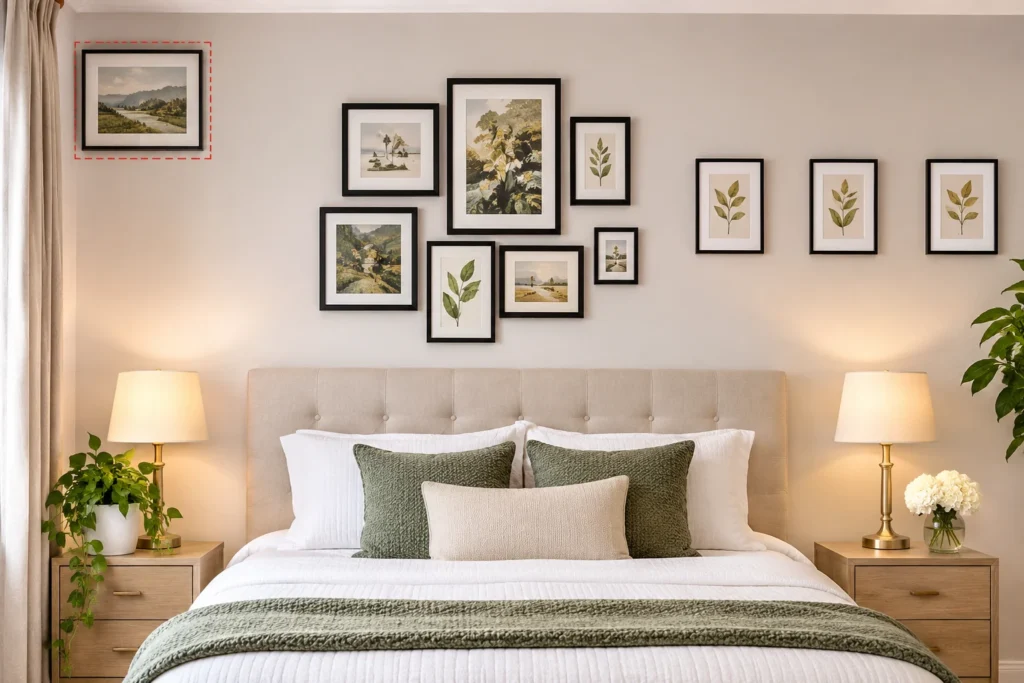
Most arrangement mistakes involve incorrect measurements, inconsistent spacing, or poor coordination with furniture. Fortunately, planning can prevent many of these problems.
| Common Mistake | Practical Solution |
|---|---|
| Hanging artwork too high | Use eye-level or furniture-based positioning. |
| Choosing undersized artwork | Measure the furniture before purchasing. |
| Uneven frame spacing | Use a measuring tape and paper templates. |
| Too many decorative pieces | Preserve empty space around artwork. |
| Conflicting artwork colors | Repeat selected bedroom accent colors. |
| Unsuitable hanging hardware | Match mounting hardware to wall type and weight. |
A coordinated bedroom decor checklist can help you evaluate artwork alongside furniture, lighting, bedding, and accessories.
Recommended Tools for Arranging Bedroom Wall Art
The right tools make measuring, positioning, and installing artwork easier. Here are three practical options for different decorating needs.
Affiliate disclosure: As an Amazon Associate, we earn from qualifying purchases. Recommendations are based on intended use and product features, not hands-on testing.
🏆 Best for precise alignment
BLACK+DECKER BDL220S Laser Level
A wall-mountable laser level designed to help align pictures and decorative objects. I’d consider it for gallery walls where straight rows and consistent alignment are priorities.
💰 Best for basic measurements
STANLEY PowerLock 12-Foot Tape Measure
A compact measuring tape suitable for checking wall dimensions, furniture widths, and frame spacing. It’s a practical starting tool for almost any artwork arrangement.
🏠 Best for removable displays
Command Picture Hanging Strips
Removable adhesive strips for compatible lightweight frames and wall surfaces. I’d reserve these for suitable locations away from beds and follow the specific package limitations.
Frequently Asked Questions
What is the 57-inch rule for hanging wall art?
The 57-inch rule recommends positioning the center of standalone artwork approximately 57 inches above the floor, creating a comfortable viewing height for many interiors. When hanging artwork above bedroom furniture, use the furniture’s dimensions and available wall space instead of applying this guideline rigidly.
How many pictures should I hang above my bed?
One large artwork, two matching pictures, or three coordinated panels can create an attractive arrangement above a bed. The total composition should complement the headboard width, leave sufficient surrounding space, and use lightweight artwork with secure mounting appropriate for a sleeping area.
Should bedroom wall art be centered on the wall or the bed?
Artwork directly above a bed generally looks best when centered relative to the headboard rather than the entire wall. This approach visually connects the artwork with the furniture, particularly when the bed sits off-center because of windows, doors, or other architectural features.
How far apart should pictures be on a bedroom wall?
Approximately 2–3 inches between medium-sized picture frames is a useful starting point for bedroom gallery walls. Smaller frames may look better with narrower gaps, while larger artwork can benefit from wider spacing depending on the overall arrangement and available wall area.
Should every bedroom wall have artwork?
No, every bedroom wall doesn’t need artwork because empty wall space contributes to visual balance. Decorating one or two carefully selected areas often creates a more coordinated and relaxing bedroom than placing unrelated pictures across every available surface.
Final Thoughts
Learning how to arrange wall art in a bedroom starts with understanding proportion, placement, spacing, and visual balance. Expensive artwork isn’t necessary to create an attractive room.
Focus on one main arrangement, coordinate colors with existing decor, and test your layout before installing hardware. Keep safety in mind whenever placing decorations near sleeping areas.
Start today: Measure your bedroom wall, choose your favorite artwork, and experiment with paper templates until you discover a layout that feels right for your space.