

Quick Answer
To choose bed sheets, start with your sleeping temperature, preferred fabric feel, and mattress measurements. Look for breathable materials, a weave that suits your comfort preferences, and fitted-sheet pockets deep enough for your mattress. Don’t assume a higher thread count means better quality. The Consumer Reports sheet buying guide also emphasizes looking beyond marketing claims.
9 steps to choosing the right sheets
- Choose your fabric: Cotton, linen, lyocell, and microfiber offer different comfort and care benefits.
- Pick your weave: Percale feels crisp, while sateen has a smoother finish.
- Check thread count: Prioritize fiber quality instead of chasing the highest number.
- Measure your mattress: Match the sheet dimensions and pocket depth to your bed.
- Consider temperature: Choose lighter, more breathable fabrics if you sleep hot.
- Inspect construction: Look for secure elastic, neat seams, and clear fabric labeling.
- Check maintenance: Choose washing instructions that suit your routine.
- Set your budget: Spend on useful fabric and fit features rather than marketing claims.
- Review before buying: Check returns, included pieces, and customer feedback.
Choosing bed sheets sounds simple until you’re comparing cotton types, thread counts, weaves, and confusing size labels. I’ve found that the most useful approach is to start with how you want your bed to feel.
In this guide, I’ll explain nine practical buying decisions that make sheet shopping easier. You’ll also learn which common upgrades are worth considering and which claims deserve skepticism.
What Should You Know Before Choosing Bed Sheets?
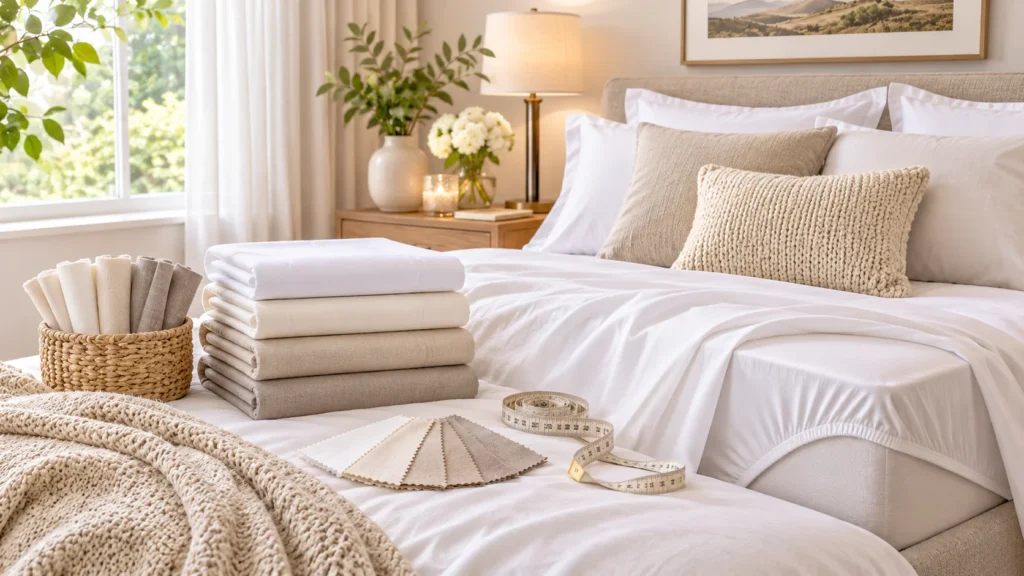
Bed sheets are fabric coverings that protect your mattress and provide a comfortable surface for sleeping. The best sheets for you depend on fabric, construction, fit, temperature, and care requirements.
Most standard sheet sets include a fitted sheet, a flat sheet, and one or two pillowcases. Some sets omit the flat sheet, so check the package contents.
- Fitted sheet: Wraps around your mattress and stays in place with elastic.
- Flat sheet: Lies between you and your blanket or comforter.
- Pillowcases: Cover your pillows and complete the set.
A smooth, beautiful sheet isn’t automatically comfortable. A poor fit or unsuitable weave can make an expensive set frustrating to use.
1. Which Bed Sheet Material Should You Choose?
Start with material because fiber composition strongly influences breathability, feel, care, and price. Cotton is a versatile everyday option, while linen and microfiber serve different preferences.
Cotton Sheets
I’d recommend 100% cotton as a sensible starting point for many shoppers. It offers familiar comfort, good breathability, and plenty of choices across different budgets.
- Long-staple cotton: Uses longer fibers that can produce smoother, stronger yarns.
- Pima cotton: A long-staple cotton type valued for softness and durability.
- Egyptian cotton: Can be excellent, but the label alone doesn’t guarantee superior quality.
- Organic cotton: May appeal to buyers seeking certified organic textile production.
Pay attention to the actual fiber-content label. The Federal Trade Commission’s cotton labeling guidance explains why cotton claims must accurately describe fiber content.
Linen Sheets
Linen comes from flax fibers and has a relaxed, textured feel. It works particularly well for people who enjoy an airy bed rather than a perfectly smooth surface.
New linen can feel less soft than expected. Many linen sheets become more supple after repeated washing and regular use.
Lyocell Sheets
Lyocell is a manufactured cellulosic fiber, commonly made using wood-derived cellulose. It often feels smooth and drapes softly around the body.
Choose it if you prefer a silky texture without the typical care requirements of silk. Follow the manufacturer’s instructions because finishes and fabric construction vary.
Microfiber Sheets
Microfiber sheets typically use finely woven polyester fibers. They’re often affordable, soft from the first wash, and resistant to wrinkling.
However, some microfiber sheets retain more warmth than breathable cotton or linen options. They wouldn’t be my first choice for someone who regularly overheats.
2. Percale vs. Sateen: Which Weave Is Better?
Percale generally feels crisp and lightweight, while sateen feels smoother and more drapey. Neither weave is universally better; the right choice depends on your preferred sleeping surface.
The weave describes how threads cross each other in the fabric. It isn’t the same thing as the fiber used to make the sheets.
Bed Sheet Fabric and Weave Comparison
| Type | Typical Feel | Temperature | Best For |
|---|---|---|---|
| Cotton percale | Crisp, matte, airy | Usually cooler | Hot sleepers |
| Cotton sateen | Smooth, soft, drapey | Often slightly warmer | Softness seekers |
| Linen | Textured, relaxed | Airy | Warm climates |
| Lyocell | Silky, fluid | Varies by construction | Smooth texture |
| Polyester microfiber | Soft, brushed | Often warmer | Budget-friendly bedding |
Here’s my practical rule: choose cotton percale if you love crisp hotel-style bedding. Choose cotton sateen if you’d rather have a silky, smooth finish.
Neither option guarantees a certain sleeping temperature. Fabric weight, yarn quality, and room conditions also matter.
3. What Is the Best Thread Count for Bed Sheets?
For many cotton sheets, roughly 200–400 thread count is a useful shopping range rather than a strict quality standard. Fiber quality and weave usually deserve more attention than a bigger number.
Thread count describes the combined number of lengthwise and crosswise threads within one square inch of woven fabric. Some manufacturers use multi-ply yarn calculations that make comparisons difficult.
- 200–300: A common range for crisp cotton percale sheets.
- 300–400: Often suitable for smooth cotton sateen sheets.
- 400–600: Can be worthwhile, depending on fiber quality and construction.
- 800–1,000+: Not automatically softer, cooler, or longer-lasting.
The FTC has addressed potentially misleading thread-count calculations in its consumer protection guidance. A dramatic thread-count claim shouldn’t replace clear product specifications.
Don’t compare thread counts across completely different materials as if they measure identical qualities. Linen, jersey, and microfiber often require different buying criteria.
4. How Do You Choose the Correct Bed Sheet Size?
Measure your mattress width, length, and height before ordering sheets. A fitted sheet needs enough pocket depth to fit the mattress and any topper securely.
For example, a 12-inch mattress with a 3-inch topper has a combined height of approximately 15 inches. I’d look for a fitted sheet rated to accommodate that complete height.
Common U.S. Mattress Sizes
| Mattress Size | Width | Length |
|---|---|---|
| Twin | 38 inches | 75 inches |
| Twin XL | 38 inches | 80 inches |
| Full | 54 inches | 75 inches |
| Queen | 60 inches | 80 inches |
| King | 76 inches | 80 inches |
| California King | 72 inches | 84 inches |
These are standard mattress dimensions, not guaranteed sheet measurements. Actual fitted-sheet dimensions and stretch vary by manufacturer.
Check Pocket Depth Carefully
- Standard pockets: Often designed for mattresses around 7–12 inches thick.
- Deep pockets: Frequently accommodate mattresses around 13–17 inches thick.
- Extra-deep pockets: Some products accommodate approximately 18–22 inches.
These categories aren’t standardized across all brands. Always check the stated maximum mattress depth instead of trusting the label alone.
Also inspect the fitted-sheet elastic. All-around elastic generally offers more consistent grip than elastic limited to the corners.
5. Which Bed Sheets Are Best for Hot Sleepers?
Hot sleepers often benefit from breathable, lightweight cotton percale or linen sheets. These fabrics can help reduce the stuffy feeling associated with heavier or less breathable bedding.
However, no sheet can guarantee cool sleep. Mattress construction, bedding layers, humidity, and bedroom temperature also affect comfort.
Choose Sheets Based on Your Sleeping Climate
- Hot and humid rooms: Try lightweight cotton percale or linen.
- Moderate temperatures: Cotton percale or sateen can both work well.
- Cool bedrooms: Consider cotton sateen, flannel, or another warmer-feeling fabric.
- Changing seasons: Keep a lighter set for summer and a warmer set for winter.
If you frequently wake up feeling overheated, I would adjust the entire bedding setup. A thick comforter can overwhelm the benefits of cooling sheets.
6. How Can You Tell If Bed Sheets Are Good Quality?
Good-quality bed sheets usually combine appropriate fibers, even construction, secure stitching, and reliable sizing. Price and thread count alone aren’t dependable measures of overall quality.
I recommend inspecting the product description for specific details rather than relying on words like “luxury” or “premium.”
- Fiber disclosure: Look for clear percentages, such as 100% cotton.
- Construction: Check for consistent seams and neatly finished edges.
- Elastic: Prefer fitted sheets with secure, continuous elastic.
- Fabric weight: Consider whether the material feels appropriate for your climate.
- Transparency: Look for specific dimensions, fabric details, and care instructions.
Do Bedding Certifications Matter?
Certifications can help you assess specific manufacturing or testing claims. However, a certification doesn’t guarantee that the sheets will feel comfortable to you.
- OEKO-TEX Standard 100: Indicates textile components have been tested against a list of harmful substances.
- Global Organic Textile Standard: Addresses organic textile processing and related requirements.
For more information, consult OEKO-TEX and the Global Organic Textile Standard. Verify the specific product’s certification rather than assuming every item from a brand qualifies.
7. How Easy Should Bed Sheets Be to Wash?
Choose sheets you can clean regularly without complicated care procedures. Easy maintenance is particularly valuable for everyday bedding and busy households.
Before buying, inspect the care label and confirm whether machine washing and tumble drying are allowed. Some fabrics need lower temperatures or gentler handling.
Practical Care Tips
- Wash regularly: Weekly washing is a practical starting routine for many households.
- Follow temperature instructions: Avoid assuming hot water is suitable for every fabric.
- Avoid overloading: Give sheets enough room to move during washing.
- Dry carefully: Excessive heat can contribute to shrinkage and fabric damage.
- Rotate sets: Keep a second set available while the first is being cleaned.
Linen may develop an attractive relaxed texture after washing. Cotton percale can wrinkle, while microfiber often needs less ironing.
I would choose a fabric whose normal appearance you enjoy. Buying sheets that require constant ironing can turn a simple bedding upgrade into extra work.
8. How Much Should You Spend on Bed Sheets?
Set your budget according to material quality, construction, and expected use rather than brand reputation alone. Good sheets exist at several price levels.
As a practical shopping framework, these are reasonable U.S. budget categories for a queen-size set. They’re illustrative planning ranges, not live market averages.
- Under $40: Budget microfiber and selected promotional cotton sets.
- $40–$100: Many everyday cotton options, including some percale and sateen sets.
- $100–$200: More choices in long-staple cotton, premium finishes, and specialty fabrics.
- Over $200: Luxury collections, some linen sets, and higher-end specialty bedding.
Don’t pay more solely because packaging advertises an enormous thread count. A well-made, moderately priced cotton set may fit your needs better.
Is It Worth Buying Expensive Sheets?
Expensive sheets can be worth considering when they offer a fabric feel, fit, or construction you genuinely prefer. A higher price doesn’t automatically produce better sleep.
I’d spend extra only after confirming the material, pocket depth, care instructions, and return policy. Those details affect everyday satisfaction more directly than luxury branding.
9. What Should You Check Before Buying Bed Sheets Online?
Before ordering online, confirm the sheet set’s fabric composition, included pieces, dimensions, and return conditions. Product photos alone rarely reveal how sheets will feel after repeated washing.
I also recommend reading customer reviews that describe long-term use. Reports about shrinking, pilling, loose elastic, or fading are more informative than first-impression compliments.
Final Bed Sheet Shopping Checklist
- Confirm the sheet material and fiber percentages.
- Choose percale, sateen, or another construction based on comfort preferences.
- Check mattress dimensions and maximum fitted-sheet pocket depth.
- Verify the number and size of included pillowcases.
- Read the washing and drying instructions.
- Review recent buyer feedback about durability and fit.
- Check the return window and any exclusions for washed bedding.
- Compare the complete set price, including shipping.
One detail buyers often miss is pillowcase sizing. King pillowcases may not be included with every king-size sheet set.
Which Bed Sheets Should You Buy for Different Needs?
If you’re unsure where to start, match your main comfort priority to a specific fabric type. This usually narrows the choices quickly.
- Best for hot sleepers: Lightweight cotton percale or breathable linen.
- Best for silky softness: Cotton sateen or lyocell.
- Best for easy maintenance: Polyester microfiber or wrinkle-resistant blends.
- Best for a crisp hotel feel: Cotton percale.
- Best for cooler nights: Cotton flannel or a suitably weighted sateen.
- Best everyday starting point: A well-fitting 100% cotton sheet set.
As of 2026, there are plenty of credible options across these categories. I’d focus on finding the right fabric experience before comparing minor differences between brands.
Recommended Bed Sheets Worth Comparing
If you’re ready to choose a set, these three real product lines represent different buying priorities. My preference ratings below are editorial suitability estimates, not verified customer review scores or hands-on test results.
🏆 Best for Crisp Cotton Comfort
Brooklinen Classic Percale Core Sheet Set
★★★★☆
Editorial fit: 4.5/5
This cotton percale set emphasizes a crisp, breathable feel. I’d shortlist it for someone who prefers structured, hotel-style bedding rather than silky sateen. Check current sizing and pocket-depth specifications before ordering.
💰 Best Value Cotton Option
California Design Den Everyday Ease 400 Sateen Sheet Set
★★★★☆
Editorial fit: 4.4/5
Made with 100% long-staple cotton and a 400-thread-count sateen weave, this set targets smooth everyday comfort. I’d consider it when looking for cotton softness without jumping immediately into luxury pricing.
🧺 Best for Easy-Care Softness
Mellanni Iconic 4-Piece Microfiber Sheet Set
★★★★☆
Editorial fit: 4.2/5
This brushed microfiber set focuses on softness and convenient maintenance. I’d consider it for a guest bedroom or a budget-focused setup, although cotton or linen may suit hot sleepers better.
Shopping note: These Amazon links open search results, not guaranteed product listings. Confirm the seller, product details, price, and availability before purchasing.
Frequently Asked Questions About Choosing Bed Sheets
What Is the Best Material for Bed Sheets?
For many households, 100% cotton is an excellent starting choice because it balances breathability, comfort, and easy maintenance. Cotton percale generally feels crisper, while cotton sateen feels smoother. Linen is another useful option for people who enjoy textured, airy bedding.
Is 400 Thread Count Good for Bed Sheets?
Yes, 400 thread count can be a good choice for cotton sheets, especially sateen. However, thread count doesn’t independently determine softness or durability. Check the cotton quality, weave, fabric construction, and manufacturer specifications before making your decision.
Should I Buy Percale or Sateen Sheets?
Choose percale if you prefer crisp, lightweight bedding with a matte appearance. Choose sateen if you enjoy a smoother, softer surface with more drape. Both can be comfortable, and neither is automatically superior in quality.
How Many Sets of Bed Sheets Do I Need?
Two sets per bed are practical for many households. You can use one set while washing the other, making regular bedding changes easier. A third set may be useful for households with children, pets, frequent guests, or limited laundry access.
How Often Should You Replace Bed Sheets?
Replace bed sheets when they develop persistent thinning, holes, damaged elastic, uncomfortable pilling, or other problems that washing cannot fix. There’s no universal replacement schedule. Fabric quality, washing habits, frequency of use, and personal comfort determine how long a set remains useful.
Final Thoughts: How to Choose Bed Sheets With Confidence
The easiest way to choose bed sheets is to prioritize comfort, fit, and maintenance before luxury claims. Start with a fabric that suits your sleeping temperature, then choose a weave you enjoy.
For many buyers, well-made cotton sheets provide the best all-around starting point. Percale is especially appealing for a crisp feel, while sateen suits those seeking a smoother finish.
Before ordering, measure your mattress and double-check the set contents. A thoughtful purchase can make your everyday bed more comfortable without unnecessary spending.
Ready to upgrade your bedding? Use the nine-point checklist above, compare a few suitable materials, and choose the sheets that fit your sleeping habits and budget.