

Quick Answer
To choose a duvet cover, measure your duvet insert, select a comfortable fabric, and check the closure and inside ties. Cotton percale suits sleepers who prefer crisp bedding, while sateen feels smoother and linen offers a relaxed texture. Choose a washable cover that complements your bedroom and works with your bedding layers.
9 Quick Steps to Choose the Right Duvet Cover
- Measure your insert: Check its actual length and width rather than relying on the size label.
- Choose the fabric: Compare cotton, linen, lyocell, flannel, and microfiber.
- Consider temperature: Choose a fabric and weave that suit your sleeping environment.
- Compare the weave: Percale feels crisp; sateen feels smoother and drapes differently.
- Inspect the closure: Look for dependable buttons, a zipper, or secure fabric ties.
- Check internal anchors: Corner ties or loops help prevent the insert from shifting.
- Match your decor: Select colors and patterns that complement your existing bedding.
- Read care instructions: Confirm washing, drying, and maintenance requirements.
- Compare overall value: Consider construction, durability, included pieces, and price.
Choosing a duvet cover seems simple until you’re comparing fabrics, sizes, closures, and dozens of colors. A beautiful cover can still disappoint when it traps heat or bunches around the insert.
I prefer starting with practical details before looking at patterns. This guide explains what matters, which features deserve your money, and how to avoid common buying mistakes.
What Is a Duvet Cover, and Why Does It Matter?
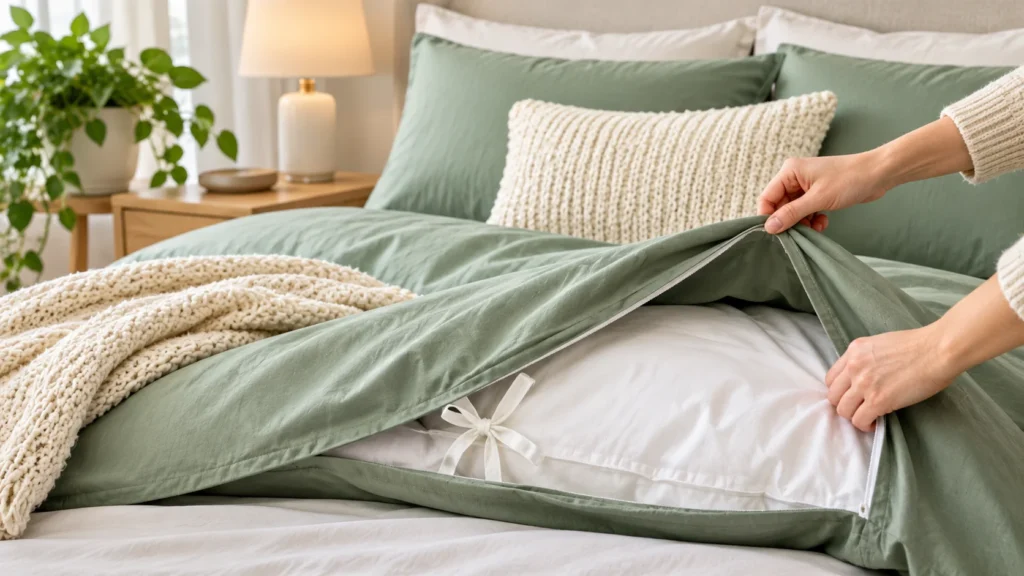
A duvet cover is a removable fabric shell that surrounds a duvet insert. It protects the insert from everyday dirt while giving your bed a finished appearance.
Think of it as a large pillowcase for your comforter. You can remove and wash the cover without washing the entire insert every time.
A good duvet cover serves three important purposes:
- Protection: Helps keep skin oils, dust, and everyday dirt away from the insert.
- Comfort: Changes how your bedding feels against your skin.
- Appearance: Lets you refresh your bedroom without replacing the entire duvet.
The duvet insert supplies most of the warmth and loft. The cover influences surface feel, airflow, weight, and how neatly everything stays together.
That’s why I recommend shopping for these two bedding components separately. Each should perform its own job well.
1. How Do You Choose the Right Duvet Cover Size?
Choose a duvet cover using your insert’s actual dimensions rather than its advertised size. Two queen-size products from different manufacturers may not measure exactly the same.
Measure the insert flat from side to side and top to bottom. Compare those measurements with the cover’s listed dimensions.
Common Duvet Cover Sizes
The following measurements are examples often seen in the US market. Actual sizes vary by manufacturer, so always verify the specific product.
| Size Label | Example Dimensions | Typical Use |
|---|---|---|
| Twin | 68 × 86 inches | Single beds |
| Twin XL | 68 × 90 inches | Longer single beds |
| Full/Queen | 88 × 92 inches | Full and queen beds |
| King | 104 × 90 inches | King beds |
| California King | 104 × 98 inches | Longer king beds |
These are illustrative measurements, not universal standards. Some brands combine king and California king into one size.
Should Your Duvet Cover Be Bigger Than Your Insert?
A close dimensional match generally produces the neatest fit. An oversized cover may leave empty corners and allow the insert to collect at one end.
Some sleepers intentionally choose a slightly smaller cover for a fuller appearance. That approach works best when the manufacturer recommends the pairing.
My practical tip: Lay your insert on the bed and measure it before shopping. This simple step prevents many frustrating fit problems.
2. What Is the Best Material for a Duvet Cover?
The best duvet cover material depends on your preferred texture, sleeping temperature, budget, and laundry routine. Cotton is a versatile starting point, but linen and other fabrics have distinct advantages.
Here is how the most common materials compare.
Cotton: The Versatile Everyday Choice
Cotton duvet covers are popular because they combine comfort, breathability, and straightforward maintenance. Their exact feel depends heavily on the weave and finishing process.
I would start with cotton when choosing bedding for a guest bedroom. It offers several textures without requiring unusual care.
Linen: Relaxed and Breathable
Linen comes from flax fibers and has a distinctive natural texture. It often feels crisp initially and becomes more supple with repeated washing.
Its airy character makes it appealing in warm bedrooms. However, linen wrinkles easily and typically costs more than basic cotton.
Lyocell: Smooth and Drapey
Lyocell is a manufactured cellulosic fiber made from dissolved wood pulp. Duvet covers containing it often feel smooth and drape softly.
It can be appealing if you dislike crisp fabric. Check the care label because washing requirements vary by construction and finish.
Microfiber: Affordable and Easy to Handle
Microfiber duvet covers commonly use fine polyester fibers. They can feel soft, dry quickly, and cost less than many natural-fiber alternatives.
However, some microfiber covers retain more warmth and moisture than breathable cotton or linen. That trade-off matters for hot sleepers.
Flannel: Cozy for Cold Weather
Flannel has a brushed surface that creates a soft, fuzzy feel. Cotton flannel is particularly appealing during cold nights.
It generally feels warmer than lightweight percale. I wouldn’t make it my first choice for a hot, humid bedroom.
Duvet Cover Material Comparison
| Material | Typical Feel | Best For | Main Trade-Off |
|---|---|---|---|
| Cotton percale | Crisp, matte | Everyday use, warm sleepers | Wrinkles easily |
| Cotton sateen | Smooth, silky | Soft, elegant bedding | Can feel warmer |
| Linen | Textured, airy | Relaxed styling, warm climates | Higher cost, wrinkles |
| Lyocell | Smooth, fluid | Softness and drape | Care varies |
| Microfiber | Soft, lightweight | Budget bedding | May trap heat |
| Cotton flannel | Fuzzy, warm | Cold bedrooms | Less suited to summer |
For further information about textile descriptions, review the Federal Trade Commission’s textile guidance. The fiber content matters more than a vague luxury description.
3. Should You Choose Percale or Sateen?
Choose percale for a crisp, matte feel and sateen for a smoother, more fluid finish. Both are fabric weaves rather than separate fiber types.
A weave describes how threads interlace. Two covers made from cotton can feel noticeably different because of their construction.
Choose Percale If You Prefer:
- A crisp, freshly washed feel.
- A matte rather than shiny appearance.
- Lightweight bedding for warmer rooms.
- A casual, classic hotel-inspired look.
Choose Sateen If You Prefer:
- A smoother surface against your skin.
- Soft draping around the duvet insert.
- A subtle sheen and polished appearance.
- A less crisp feel than traditional percale.
I wouldn’t choose between them using photographs alone. Feeling fabric samples offers a better sense of their differences.
Fabric weight and finishing also matter. Not every sateen cover feels heavy, and not every percale cover feels equally cool.
4. What Duvet Cover Is Best for Hot Sleepers?
Hot sleepers should prioritize a breathable cover and a duvet insert appropriate for the room temperature. Lightweight cotton percale and linen are sensible starting choices.
The cover cannot completely compensate for an overly warm insert. Consider both pieces together before spending more money.
Features Worth Looking For
- Breathable construction: Lightweight cotton or linen is often comfortable in warm rooms.
- Suitable fabric weight: Avoid unnecessarily thick or heavily brushed fabrics.
- Practical care: Pick a cover you can wash regularly during hot weather.
- Appropriate insert: Pair the cover with lightweight fill suited to your climate.
For summer, I would compare a lightweight cotton percale cover with a washed linen option. The better choice depends on whether you enjoy crispness or texture.
For winter, sateen or flannel may feel more inviting. Still, room temperature and the duvet insert affect overall comfort more directly.
5. Which Duvet Cover Closure Is Best?
A good closure keeps the opening secure while allowing easy removal for washing. Zippers, buttons, and fabric ties are the most common options.
Each works well when properly constructed. Your preference should reflect convenience and appearance.
Zipper Closures
- Usually quick to open and close.
- Create a tidy finished edge.
- Work best when the zipper feels sturdy and moves smoothly.
- May require repair if the zipper breaks.
Button Closures
- Offer a traditional bedding appearance.
- Are relatively straightforward to repair.
- Can take longer to fasten.
- May develop gaps between buttons.
Fabric Tie Closures
- Provide a relaxed, decorative finish.
- Are common on some linen designs.
- Require tying and untying during laundering.
- May loosen if not secured properly.
For frequent washing, I’d lean toward a good zipper or sturdy buttons. Decorative ties make more sense when appearance is the main priority.
6. Do Duvet Covers Need Corner Ties?
Corner ties aren’t mandatory, but they’re a helpful feature. They connect the insert to the cover and reduce unwanted shifting.
Some covers include four interior ties, while others offer additional attachment points. Your duvet insert also needs compatible loops or another secure attachment method.
Why Internal Ties Matter
- Keep the insert aligned with the corners.
- Reduce bunching during sleep.
- Make the bed easier to straighten.
- Help maintain an evenly filled appearance.
Imagine waking up with the insert gathered near your feet while the upper cover feels empty. Internal anchors help prevent that annoyance.
Buying tip: Check product photographs for internal ties and compatible insert loops. A secure outside closure alone won’t stop all movement inside.
7. How Do You Choose the Best Duvet Cover Color and Pattern?
Choose a color that works with your sheets, walls, furniture, and lighting. The duvet covers a large visible area, so its color strongly influences the room.
I recommend starting with the bedroom’s existing palette. This keeps the cover from becoming an expensive mismatch.
Reliable Color Choices
- White: Creates a fresh, versatile appearance but shows stains more readily.
- Ivory and beige: Add warmth to neutral bedrooms.
- Sage green: Works well with wood furniture and natural textures.
- Light gray: Suits many contemporary spaces.
- Navy blue: Adds contrast and a more dramatic look.
- Subtle stripes: Introduce pattern without overwhelming the bed.
If your room already has patterned curtains or wallpaper, consider a solid duvet cover. A simple design helps balance competing visual details.
You can explore more combinations in this bedroom decorating guide.
Should You Choose Light or Dark Bedding?
Light covers often make smaller bedrooms feel visually open. Dark shades can create contrast, especially with pale walls and furniture.
Neither choice is automatically more practical. Consider visible lint, pet hair, stains, and how often you wash the bedding.
For a calm bedroom, I would start with soft neutral colors. See these ideas for making a bedroom feel cozy without adding unnecessary clutter.
8. Does Thread Count Matter When Buying a Duvet Cover?
Thread count matters less than many shoppers expect. Fiber quality, weave, fabric weight, and construction also influence comfort and longevity.
Thread count describes the number of yarns woven across a square inch of fabric. It doesn’t measure softness or quality on its own.
What Should You Check Instead?
- Fiber content: Confirm whether the product contains cotton, linen, polyester, or a blend.
- Weave: Choose percale, sateen, or another construction based on your preferred feel.
- Fabric density: Look for a balanced fabric rather than the largest advertised number.
- Stitching: Inspect seam strength and overall finishing.
- Manufacturer details: Prefer clear specifications over vague promotional claims.
A well-made 250-thread-count cotton percale cover may be more appealing than a poorly constructed cover advertising an extremely high count.
The number alone doesn’t tell the full story. Compare complete product specifications before deciding.
The FTC’s Textile Fiber Rule explains required fiber disclosures for covered textile products.
9. How Much Should You Spend on a Duvet Cover?
Set your budget after deciding which fabric and features matter most. Spending more doesn’t guarantee a better sleeping experience.
As a general shopping framework, use these approximate US budget bands. They aren’t verified current market averages.
| Budget | Common Options | What to Prioritize |
|---|---|---|
| Under $40 | Basic microfiber and sale items | Accurate sizing and dependable closures |
| $40–$100 | Many cotton options and selected blends | Fabric feel and washing performance |
| $100–$200 | Premium cotton and some linen covers | Construction, fiber quality, and finishing |
| Above $200 | Luxury linens and specialty designs | Clear benefits that justify the premium |
For everyday bedding, I would rather buy a comfortable, well-fitting midrange cover than pay extra for decorative packaging.
Also check whether the price includes pillow shams. Some listings sell only the duvet cover, which changes the total cost.
How Can You Tell Whether a Duvet Cover Is Good Quality?
A quality duvet cover should have consistent stitching, accurately described materials, secure fastenings, and clear care instructions. Attractive product photography cannot confirm those details.
Use this checklist before making your purchase.
- Check the full fiber composition.
- Read the exact dimensions in inches or centimeters.
- Confirm the type of closure.
- Look for interior corner ties or attachment points.
- Examine close-up photographs of seams.
- Read customer feedback about shrinking, fading, and pilling.
- Confirm whether matching pillowcases or shams are included.
- Review washing instructions and the return policy.
If possible, order a fabric swatch before choosing an expensive cover. Texture and color can look different on a screen.
For more guidance on textile fiber descriptions, consult the FTC’s textile labeling guide.
What Mistakes Should You Avoid When Choosing a Duvet Cover?
The most expensive mistakes usually involve incorrect sizing, uncomfortable materials, or overlooked product details. A little preparation can prevent all three.
- Buying by mattress size alone: Measure your actual duvet insert before selecting a cover.
- Ignoring the fabric: Don’t choose a cover solely because its color looks attractive.
- Trusting thread count: Consider construction and fiber quality instead of one number.
- Forgetting internal ties: Check how the insert stays securely positioned.
- Overlooking laundry care: Avoid delicate fabrics if you need convenient weekly washing.
- Assuming a set is included: Read the contents list before ordering.
- Ignoring the return policy: Confirm whether you can return an unsuitable cover after opening it.
My favorite shopping shortcut is to compare the exact specifications of two or three covers side by side. It makes differences easier to see.
How Should You Wash and Maintain a Duvet Cover?
Follow the manufacturer’s care label because cleaning requirements vary by fabric and finish. Most everyday covers are designed for regular laundering, but not all tolerate the same settings.
Simple Duvet Cover Care Routine
- Remove the insert: Open the closure and detach all interior ties.
- Check the label: Confirm water temperature, cycle, detergent, and drying instructions.
- Secure the closure: Close zippers or buttons when recommended to reduce tangling.
- Avoid overloading: Give the cover space to move through the washing machine.
- Dry appropriately: Follow the label and avoid excessive heat.
- Reinsert carefully: Secure the corners before fastening the outside closure.
Wash frequency depends on skin contact, pets, sweating, and whether you use a top sheet. Weekly or every-other-week washing is a practical starting point for many households.
Some fabrics need more careful treatment than others. When you’re uncertain, follow the product’s specific instructions rather than a universal washing rule.
How Do You Put a Duvet Cover On Easily?
The inside-out method makes fitting a duvet cover much easier. It allows you to secure the insert corners before pulling the fabric into place.
- Turn the duvet cover inside out.
- Lay it flat on your bed.
- Place the duvet insert directly on top.
- Connect the matching corner ties and loops.
- Reach through the opening and grasp the far corners.
- Pull or shake the cover over the insert.
- Straighten the edges and secure the closure.
For larger duvets, a second person makes the process easier. Once everything is secured, shake the duvet gently to distribute the filling.
Then arrange your pillows and finishing layers. A bedroom decor checklist can help you coordinate the rest of the room.
Which Duvet Covers Are Worth Considering in 2026?
If you’re ready to shop, these three named options represent different fabric preferences. They’re specification-based recommendations, not products I’ve personally tested.
Check dimensions, availability, current prices, and customer feedback before ordering. The ratings below are editorial suitability scores, not verified customer-review averages.
🏆 Best for Crisp Cotton
Brooklinen Classic Percale Duvet Cover
★★★★☆ 4.5/5
This cotton percale option offers a crisp, matte feel and a classic bedding appearance. I’d shortlist it for someone who prefers lightweight, hotel-style bedding rather than silky fabrics.
🌿 Best for Natural Texture
Quince European Linen Duvet Cover
★★★★☆ 4.5/5
Made from European linen, this cover features corner ties and a button closure. I’d consider it for a relaxed, textured bedroom where natural wrinkles are part of the appeal.
✨ Best for Smooth Sateen
The Company Store Legends Hotel Supima Cotton Sateen Duvet Cover
★★★★☆ 4/5
This option uses Supima cotton with a smooth sateen finish and wrinkle-resistant treatment. I’d consider it for a polished bedroom where softness and an elegant drape matter more than crispness.
Shopping note: These buttons open Amazon search results, not guaranteed product listings. Confirm the exact brand, seller, dimensions, and fiber content before purchasing.
Frequently Asked Questions About Choosing a Duvet Cover
What is the best duvet cover material for everyday use?
Cotton is an excellent everyday choice because it comes in several comfortable weaves and is generally easy to maintain. Percale suits people who enjoy crispness, while sateen offers a smoother feel. Choose linen when you prefer a textured look and don’t mind wrinkles.
Should a duvet cover be the same size as the duvet insert?
Yes, a close match is usually best. Measure both products because manufacturers use different dimensions for the same size labels. A cover that’s too large may look empty in places, while one that’s too small may compress the insert or distort its shape.
Are expensive duvet covers worth buying?
Expensive duvet covers can be worthwhile when they offer better fibers, stronger construction, or a texture you prefer. However, price alone doesn’t guarantee comfort or durability. Compare fabric composition, measurements, stitching, wash instructions, and customer feedback before paying more.
Is a cotton or linen duvet cover better?
Cotton is generally a versatile choice with multiple textures and price points. Linen has a more distinctive texture and a naturally relaxed appearance. Both can work in warm bedrooms, but your preference for crispness, smoothness, wrinkles, and maintenance should guide the decision.
Do you need to wash a duvet cover before using it?
Washing a new duvet cover before its first use is a sensible choice if the care label permits it. This can remove loose finishing residues and packaging dust. Check the manufacturer’s instructions first, especially for delicate materials, specialty finishes, or products with restrictive washing requirements.
Final Verdict: How Should You Choose Your Duvet Cover?
The best duvet cover is one that fits your insert, feels comfortable, and suits your daily routine. Focus on these essentials before color, pattern, or marketing claims.
- For a reliable everyday choice: Start with cotton percale.
- For a silky finish: Consider cotton sateen.
- For breathable texture: Compare linen options.
- For a limited budget: Consider practical microfiber covers.
- For colder bedrooms: Look at cotton flannel.
Whatever material you choose, verify the exact size, internal ties, closure, and washing instructions. Those details often matter more than the brand name.
Start by measuring your existing duvet, then shortlist two or three covers that meet your needs. A careful choice can make your bed more comfortable and your bedroom easier to maintain.