

Quick Answer
To layer bedding, start with a mattress protector and fitted sheet, add a flat sheet if preferred, then layer a lightweight blanket or quilt beneath a duvet or comforter. Finish with sleeping pillows, decorative pillows, and a folded throw. Choose breathable fabrics and coordinated colors for a comfortable, inviting bed. For a complete room makeover, explore our bedroom decorating guide.
7 Steps to Layer Bedding
- Protect the mattress: Use a well-fitting protector to guard against spills and everyday wear.
- Fit the sheets: Stretch a fitted sheet smoothly over every corner.
- Add a top sheet: Include a flat sheet if you prefer a separate washable layer.
- Build adjustable warmth: Spread a lightweight blanket, coverlet, or quilt across the bed.
- Arrange the duvet: Add your comforter or duvet and fold it back for visible depth.
- Style the pillows: Place sleeping pillows behind a small number of decorative pillows.
- Finish with texture: Drape a throw across the foot of the bed.
Simple Styling Tip
- Use fewer layers in summer: Remove heavy blankets and choose lighter fabrics.
- Keep colors coordinated: Combine two or three complementary shades with varied textures.
A beautifully layered bed can make an ordinary bedroom feel warm, welcoming, and thoughtfully designed. You don’t need luxury bedding or dozens of pillows to achieve that look.
I’ve found that the best approach is to focus on comfort first, then build texture and visual depth. This guide explains the right layering order, practical styling choices, and simple adjustments for every season.
What Does It Mean to Layer Bedding?
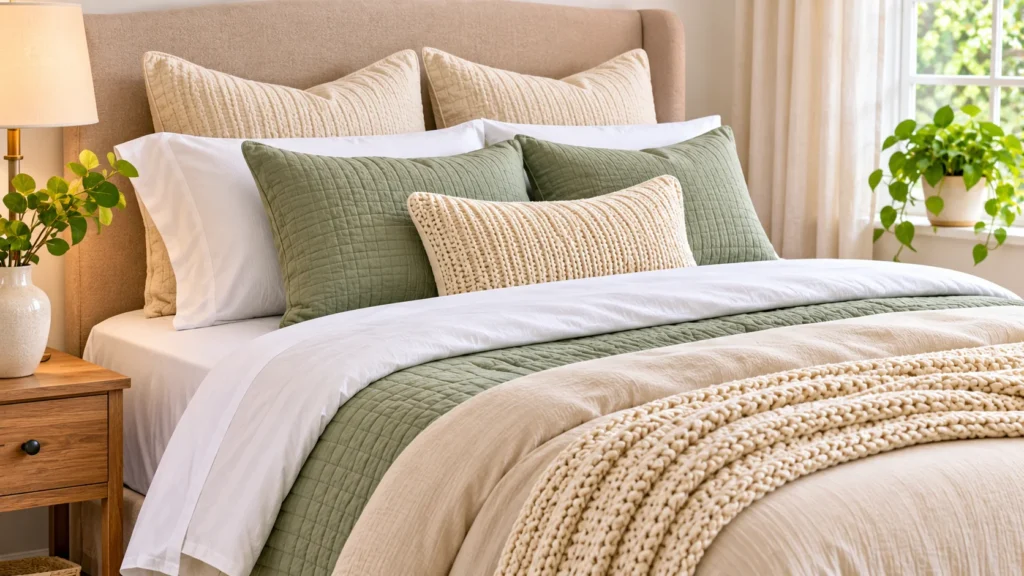
Layering bedding means arranging sheets, blankets, quilts, duvets, and pillows in a practical order. Each piece contributes comfort, warmth, texture, or visual interest.
The goal isn’t to pile everything onto your mattress. It’s to create a bed that feels comfortable throughout the night and looks inviting during the day.
Most layered beds use three functional groups:
- Foundation layers: Mattress protector, fitted sheet, and optional flat sheet.
- Comfort layers: Blanket, quilt, coverlet, duvet, or comforter.
- Decorative layers: Pillow shams, accent cushions, and throw blankets.
You can simplify these groups based on your climate and preferences. A warm bedroom may need only sheets and a thin quilt.
For additional inspiration, our guide to making a bedroom feel cozy explains how fabric, lighting, and color work together.
What Bedding Layers Do You Actually Need?
You don’t need every bedding accessory sold in stores. Start with a few comfortable essentials, then add decorative pieces only when they serve a purpose.
Here’s a practical comparison of common bedding layers.
| Bedding Layer | Main Purpose | Typical Material | Essential? |
|---|---|---|---|
| Mattress protector | Protects mattress | Cotton blends or waterproof fabric | Recommended |
| Fitted sheet | Covers sleeping surface | Cotton, linen, or blends | Yes |
| Flat sheet | Provides washable contact layer | Cotton or linen | Optional |
| Quilt or blanket | Adds adjustable warmth | Cotton, wool, or polyester | Optional |
| Duvet or comforter | Provides main insulation | Down or alternative fill | Climate-dependent |
| Decorative pillows | Adds height and visual depth | Various fabrics | Optional |
| Throw blanket | Adds texture and extra warmth | Knit, cotton, or fleece | Optional |
The biggest difference between an ordinary bed and a polished one is often presentation. Even affordable bedding looks better when every layer has a clear purpose.
How to Layer Bedding Step by Step
The easiest way to layer bedding is to work from the mattress upward. This order keeps practical sleeping layers underneath decorative elements.
Step 1: Start With a Mattress Protector
Place a mattress protector directly over your mattress before adding sheets. Choose one that fits securely without creating noticeable wrinkles.
A protector can help prevent stains and moisture damage. It also provides a removable layer that’s easier to clean than the mattress itself.
- Choose a fitted protector for straightforward installation.
- Check mattress depth before buying.
- Look for a washable design.
- Make sure the protector doesn’t bunch underneath your sheets.
If you use a mattress topper, arrange it according to the manufacturer’s instructions. Most setups place the topper beneath the protector.
Step 2: Add a Smooth Fitted Sheet
The fitted sheet forms your main sleeping surface. Stretch its elastic corners around the mattress and smooth out loose fabric.
I prefer starting with a simple solid-colored sheet because it makes coordinating the remaining layers easier. White, cream, and soft beige work particularly well.
Consider these fabric options:
- Cotton percale: Crisp, lightweight, and comfortable for many warm sleepers.
- Cotton sateen: Smooth, slightly lustrous, and generally softer-feeling.
- Linen: Relaxed-looking with distinctive natural texture.
- Flannel: Brushed for a warmer, softer feel in colder rooms.
For a comfortable fit, measure your mattress height, including any topper. A fitted sheet with insufficient pocket depth may slip off the corners.
Step 3: Layer a Flat Sheet
Lay a flat sheet evenly over the fitted sheet if you enjoy sleeping beneath one. Keep the upper edge near the head of the bed.
You can tuck the bottom underneath the mattress or leave it loose. Tucking creates a tailored appearance, while leaving it free allows easier movement.
For a classic hotel-style finish, fold the upper edge over your blanket. This creates a clean fabric border and introduces another visible layer.
If you prefer sleeping directly beneath a washable duvet cover, skip this step. There isn’t one correct arrangement for every sleeper.
Step 4: Add a Lightweight Blanket, Quilt, or Coverlet
Spread a lightweight layer over your flat sheet for extra warmth and texture. A cotton quilt or waffle-weave blanket works well for this purpose.
I like using a thin quilt beneath a larger duvet because the combination creates depth without requiring an excessively bulky blanket.
Choose the middle layer based on your needs:
- Waffle blanket: Creates a casual, textured appearance.
- Quilt: Adds stitched patterns and moderate warmth.
- Coverlet: Provides a lighter, tailored decorative finish.
- Wool blanket: Offers extra insulation in colder conditions.
During warmer months, this middle layer may become your main covering. There’s no reason to keep a heavy duvet on the bed when you don’t need it.
Step 5: Place Your Duvet or Comforter on Top
A duvet or comforter usually provides the bed’s fullest, most noticeable layer. Spread it evenly and adjust the sides for balanced draping.
For a plush appearance, fold the upper third downward. This reveals the quilt or blanket underneath and creates a more interesting layered effect.
Remember that duvets and comforters aren’t exactly the same.
- Duvet: A filled insert typically used inside a removable cover.
- Comforter: A finished filled covering commonly used without a separate cover.
Both options can work beautifully. The Sleep Foundation’s comforter guide explains their practical differences.
A useful styling trick is to pull the duvet slightly below the headboard before folding it back. This leaves enough room for your pillows without hiding the decorative layers.
Step 6: Arrange Your Pillows From Back to Front
Place the largest pillows near your headboard, followed by sleeping pillows and smaller decorative cushions. This creates height without overwhelming the mattress.
For a queen-size bed, a simple arrangement might include:
- Two large European-style square pillows or shams.
- Two standard or queen sleeping pillows.
- One small lumbar cushion at the front.
European pillows, often called Euro pillows, are commonly around 26 by 26 inches. They create a substantial backdrop, especially against a tall headboard.
On a king-size bed, you can use three Euro pillows and two king sleeping pillows. Keep the arrangement practical enough to remove easily at bedtime.
Decorative pillows should complement your bed, not cover the entire sleeping area. One well-chosen accent cushion is often enough.
Step 7: Finish With a Throw Blanket
Place a decorative throw across the lower portion of the bed. You can fold it neatly or drape it casually for a relaxed appearance.
I prefer a loosely folded throw when the duvet already looks structured. That contrast makes the bedding feel welcoming rather than overly formal.
- Fold a knit throw into thirds for a tidy appearance.
- Drape it diagonally for a relaxed, lived-in style.
- Choose a contrasting texture rather than a competing pattern.
- Keep the throw lightweight when the room is warm.
A single throw is usually enough. Multiple decorative blankets can create clutter and make everyday bed-making unnecessarily complicated.
How Do You Make Layered Bedding Look Like a Hotel Bed?
Hotel-style bedding looks polished because its layers are smooth, coordinated, and intentionally arranged. You can recreate that effect without purchasing an expensive bedding collection.
Start with a restrained color palette and focus on neat presentation.
Use a Simple Color Scheme
Choose one dominant color, one supporting shade, and one accent. For example, combine white bedding with warm beige and muted olive green.
This keeps the bed visually calm while allowing different textures to stand out.
Keep the Main Layers Smooth
Pull fitted sheets tight, straighten the top sheet, and center the duvet. Small adjustments make a noticeable difference.
Wrinkled linen can look intentionally relaxed, but uneven edges often make a bed feel unfinished.
Create Fullness Without Excessive Bulk
Choose a duvet insert that properly fills its cover. An undersized insert can leave loose corners and an uneven appearance.
Some people size up their duvet for additional side coverage. Check your mattress dimensions and bed height before deciding.
Fold Back the Upper Layers
Fold the duvet downward to reveal a clean sheet border or contrasting quilt. This provides the visual depth often associated with hotel beds.
For a wider bedroom refresh, our relaxing bedroom guide covers lighting, clutter control, and other comfort essentials.
How Should You Layer Bedding for Different Seasons?
The best bedding arrangement changes with temperature and personal comfort. Your decorative style can stay consistent while the functional layers change.
Summer Bedding Layers
Warm-weather bedding should feel light and easy to adjust. Many people prefer breathable cotton or linen sheets with a thin covering.
- Fitted sheet
- Optional flat sheet
- Lightweight cotton quilt or coverlet
- Minimal decorative pillows
- Optional thin throw
A heavy comforter may be unnecessary during hot nights. Store it away if it makes the bed uncomfortable.
Winter Bedding Layers
Cold-weather bedding benefits from adjustable insulation. Combining a blanket and duvet lets you respond to changing nighttime temperatures.
- Mattress protector and fitted sheet
- Flat sheet for an extra contact layer
- Warm blanket or quilt
- Season-appropriate duvet or comforter
- Soft throw for additional warmth
According to Sleep Foundation’s discussion of bedding and bedroom temperature, the interaction between covers and room conditions can influence sleep comfort.
Don’t assume more layers always mean better sleep. Adjust them when you feel too warm.
Spring and Fall Bedding Layers
Transitional seasons work well with adaptable medium-weight bedding. Keep a quilt on the bed and add a duvet only when temperatures drop.
A folded throw offers another simple adjustment without changing your entire bedding collection.
What Colors and Textures Work Best for Layered Bedding?
A good layered bed balances color and texture rather than relying on numerous patterns. Choose a consistent palette, then create contrast through fabric finishes.
Here are four combinations worth considering:
- Warm neutral: Ivory sheets, oatmeal quilt, beige duvet, and brown knit throw.
- Modern minimalist: White sheets, pale gray coverlet, white duvet, and charcoal accent pillow.
- Soft natural: Cream sheets, sage-green quilt, linen duvet cover, and woven throw.
- Relaxed coastal: White sheets, light-blue quilt, sand-colored duvet, and textured cotton throw.
Texture is especially useful when your bedding uses similar colors. Smooth cotton, quilted stitching, linen, and chunky knit each reflect light differently.
You can achieve visual variety without adding bright colors or complicated patterns.
How Can You Layer Bedding Without Making Your Bed Too Hot?
To avoid overheating, use fewer heavy layers and prioritize breathable contact fabrics. Choose bedding according to your room temperature rather than appearance alone.
A systematic review of bedding materials and sleep quality examined how fibers and thermal comfort interact. Its findings also highlight limitations in the available research, so no single fabric guarantees better sleep.
Try these practical adjustments:
- Use cotton percale or linen sheets if you prefer a lighter feel.
- Replace a heavy duvet with a thin quilt in warmer conditions.
- Avoid stacking several insulating blankets unnecessarily.
- Choose removable layers that you can adjust overnight.
- Wash bedding according to its care instructions to maintain comfort.
The fabric closest to your skin matters as much as the outer covering. A soft, comfortable fitted sheet should come before decorative upgrades.
What Are the Most Common Bedding Layering Mistakes?
Most bedding mistakes involve excessive layers, poor proportions, or inconvenient styling. A few simple changes can improve both appearance and everyday use.
- Using too many pillows: Large stacks take up space and require unnecessary rearranging each night.
- Choosing the wrong duvet size: Insufficient coverage can make the sides look uneven.
- Ignoring mattress depth: Shallow fitted sheets may slip off thick mattresses.
- Mixing too many patterns: Competing prints can make the bedding look busy.
- Overlooking the climate: Heavy layers can become uncomfortable in warm rooms.
- Skipping fabric care: Poor washing and drying habits can affect texture and appearance.
- Buying decoration before essentials: Attractive cushions can’t compensate for uncomfortable sheets.
My favorite budget-friendly approach is to improve one layer at a time. Start with the sheets, then upgrade the main covering before purchasing decorative extras.
This also helps keep the finished bed practical. For more ideas, see our bedroom decor checklist.
How Do You Layer Bedding on a Budget?
You can create an attractive layered bed with a fitted sheet, one main covering, two sleeping pillows, and a throw. Additional pieces aren’t necessary for every bedroom.
Focus spending on materials that affect sleep comfort, and save on decorative accessories.
- Reuse your existing sheets: Choose coordinating colors rather than replacing everything.
- Buy one versatile quilt: Use it as the main cover in summer and an extra layer in winter.
- Refresh the duvet cover: A different color can dramatically change your bed’s appearance.
- Limit accent pillows: One lumbar pillow creates a finished look.
- Shop by measurements: Correct sizing prevents expensive mistakes.
For example, white sheets, a sage quilt, and a cream duvet create a coordinated look using only three main fabrics. Add a textured throw when you want more contrast.
As of 2026, shoppers can find bedding across many price ranges. Material, construction, fit, and care requirements deserve more attention than decorative marketing claims.
Which Bedding Products Are Worth Considering?
If you’re building a layered bed from scratch, I would prioritize comfortable sheets, a versatile middle layer, and a properly sized duvet insert. These three purchases support most of the arrangements covered above.
The following are established product lines worth comparing. The scores below are editorial suitability estimates for the stated use cases, not verified customer-review averages or personal testing results.
🏆 Best for a Crisp Base Layer
Brooklinen Classic Percale Core Sheet Set
★★★★☆ 4.5/5
This cotton percale sheet collection offers the crisp feel associated with classic hotel bedding. I would shortlist it for a simple, breathable foundation beneath a quilt or duvet. Confirm the current set contents and mattress fit before buying.
💰 Best for Affordable Texture
Bedsure Cotton Waffle Blanket
★★★★☆ 4.3/5
Its waffle texture adds visual interest without requiring bold patterns. I would consider it as a lightweight middle layer or a standalone covering in warmer weather. Compare the exact fiber composition and size.
🛏️ Best for a Fuller Top Layer
Utopia Bedding Comforter Duvet Insert
★★★★☆ 4.2/5
This down-alternative option provides a fluffy top layer and is available in multiple sizes. I would consider it for a budget-conscious duvet setup. Check the warmth level, dimensions, and care label before ordering.
Affiliate disclosure: This article contains affiliate links. We may earn a commission from qualifying purchases at no additional cost to you. Product availability and specifications may change.
Frequently Asked Questions About Layering Bedding
What is the correct order for layering bedding?
The usual order is mattress protector, fitted sheet, optional flat sheet, lightweight blanket or quilt, and duvet or comforter. Finish with sleeping pillows, decorative pillows, and a throw. You can leave out unnecessary layers depending on your bedroom temperature, personal preferences, and desired appearance.
Do you put a quilt under or over a duvet?
Both arrangements work. Placing a quilt beneath a duvet adds adjustable warmth and allows you to reveal contrasting texture when folding back the duvet. Placing a quilt over a duvet creates a decorative top layer, although it may feel heavier. Choose the arrangement that feels comfortable.
How many pillows should a layered bed have?
Two comfortable sleeping pillows are enough for many beds, while one to three decorative pillows can add visual interest. Larger beds may accommodate more. Avoid buying so many cushions that you spend unnecessary time removing them each night or struggle to find space for them.
Can you layer bedding without a duvet?
Yes. A fitted sheet, optional flat sheet, and lightweight quilt can create a complete layered bed. Add a textured throw and a few coordinated pillows for decoration. This arrangement is particularly practical during warmer weather or for people who prefer less insulating bedding.
How can I make my bedding look fluffy without buying expensive products?
Choose a properly sized duvet insert, smooth the sheets, and fold back the top covering to reveal another layer. Arrange pillows upright against the headboard and use one textured throw. Correct proportions and tidy styling often make a bigger visual difference than adding expensive decorative pieces.
Final Thoughts: How to Layer Bedding Beautifully
Learning how to layer bedding is about finding the right balance between comfort, warmth, and appearance. Start with quality sheets, add a suitable covering, and finish with a few thoughtful decorative details.
You don’t need every layer every night. A simple, adjustable arrangement is easier to maintain and more comfortable throughout the year.
Start by improving the bedding you already own. With coordinated colors, varied textures, and careful arrangement, even a basic bed can become the most inviting feature in your bedroom.