

Quick Answer
To choose bedroom curtains, consider light control, privacy, fabric, color, window dimensions, and your bedroom’s decorating style. Choose blackout curtains for darker sleeping conditions, sheer curtains for natural daylight, or layered curtains for flexibility. Coordinate your curtains with your bedding and bedroom rug ideas to create a balanced interior.
How to choose the right bedroom curtains:
- Determine light control: Choose blackout, room-darkening, or sheer curtains according to your sleeping preferences.
- Measure your windows: Aim for a combined curtain width of approximately 1.5 to 2.5 times the rod width.
- Select suitable fabric: Consider cotton, linen, polyester, or velvet based on your needs.
- Coordinate the colors: Match curtain undertones with your walls, furniture, and bedding.
- Choose appropriate length: Floor-length curtains create an elegant appearance in most bedrooms.
- Consider layering: Combine sheer and blackout panels for flexible privacy and daylight control.
Quick tip: Hang your curtain rod 4–6 inches above the window frame when the available wall space permits.
Learning how to choose bedroom curtains can transform an ordinary bedroom into a comfortable, stylish retreat. The right curtains influence everything from morning sunlight to nighttime privacy.
In this 2026 guide, I’ll walk you through practical ways to select curtains that suit your bedroom, sleeping habits, decorating preferences, and budget.
What Are Bedroom Curtains?
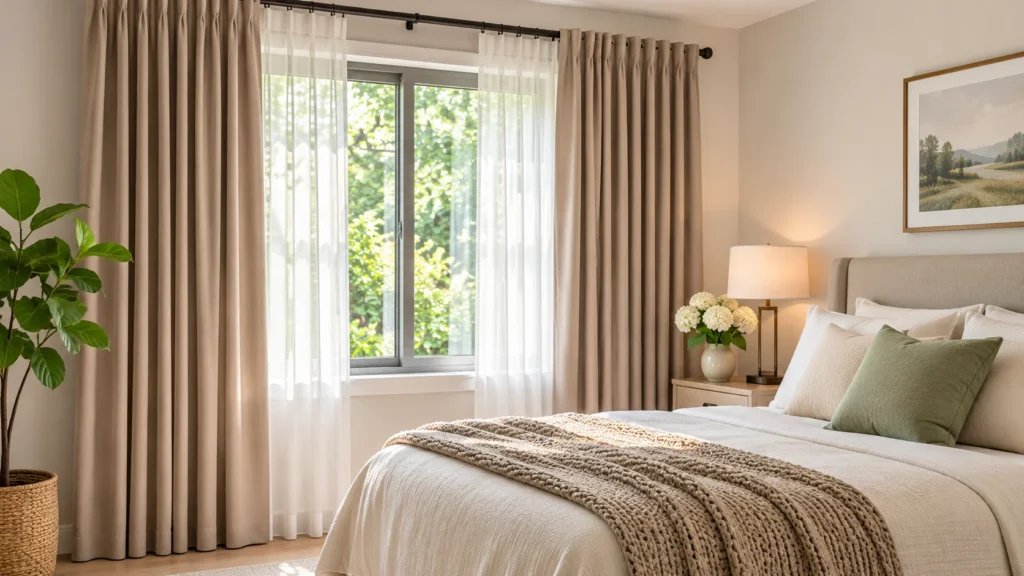
Bedroom curtains are fabric window coverings designed to regulate incoming light, provide privacy, and complement bedroom decor. Depending on their material and construction, they may also improve thermal comfort.
Unlike purely decorative window treatments, bedroom curtains often serve several practical purposes. Their functionality matters just as much as their appearance.
- Control natural sunlight and glare.
- Increase nighttime privacy.
- Complement bedroom furniture and textiles.
- Help reduce unwanted heat transfer.
- Create a softer, more comfortable atmosphere.
- Visually improve window proportions.
A well-chosen curtain balances these functions without making your bedroom unnecessarily dark or visually crowded.
1. Determine How Much Light You Want to Block
Start by deciding whether you prefer a bright bedroom during the day or a darker sleeping environment. This decision helps narrow your curtain choices immediately.
Blackout Curtains
Blackout curtains use dense fabrics, specialized coatings, or additional lining to block light through the material. They are particularly useful for daytime sleepers and bedrooms exposed to streetlights.
- Suitable for shift workers.
- Helpful for bedrooms facing bright streetlights.
- Useful for people sensitive to morning sunlight.
- Can provide excellent privacy when fully closed.
Remember that blackout fabric cannot eliminate light entering around curtain edges. Proper installation is essential.
Room-Darkening Curtains
Room-darkening curtains reduce incoming sunlight without necessarily blocking it completely. They offer a practical compromise between blackout panels and lightweight curtains.
Choose them when you enjoy some natural morning light but want reduced glare during the afternoon.
Sheer Curtains
Sheer curtains allow daylight to pass through while softening its intensity. Their lightweight construction creates an airy appearance that suits many small bedrooms.
However, sheer curtains generally cannot provide dependable nighttime privacy when indoor lights are on.
2. Compare Different Types of Bedroom Curtains
The best curtain type depends on your sleeping preferences, window exposure, privacy requirements, and decorating goals.
| Curtain Type | Light Control | Privacy | Best For |
|---|---|---|---|
| Blackout | Very high | High | Dark sleeping rooms |
| Room-darkening | Moderate to high | High | Everyday bedrooms |
| Sheer | Low | Low | Bright bedrooms |
| Thermal | Varies | Moderate to high | Temperature control |
| Layered | Adjustable | Adjustable | Flexible window styling |
Note: Actual light control and privacy depend on fabric opacity, lining, panel coverage, and installation.
For most bedrooms, I would start with room-darkening curtains or a layered arrangement. Both offer flexibility without sacrificing appearance.
3. Choose the Best Fabric for Bedroom Curtains
The best bedroom curtain fabric combines appropriate light control, attractive texture, and manageable maintenance. Fabric weight also affects how naturally curtains hang.
- Cotton: Offers a casual, comfortable appearance and comes in several weights and finishes.
- Linen: Creates a relaxed, textured appearance but may need lining for stronger privacy.
- Polyester: Often affordable, durable, and relatively easy to maintain.
- Velvet: Provides rich texture, substantial weight, and an elegant appearance.
- Voile: Offers a lightweight, translucent finish that works well as an inner curtain layer.
- Fabric blends: Combine different material characteristics, depending on their fiber composition.
For a minimalist bedroom, linen-look polyester or cotton curtains can be an attractive starting point. Velvet works particularly well in traditional or luxurious interiors.
Always check the lining and construction separately. Fabric type alone doesn’t determine blackout performance.
4. How Do You Choose the Right Bedroom Curtain Color?
Choose bedroom curtain colors that complement the undertones of your walls, bedding, flooring, and furniture. Neutral colors offer flexibility, while deeper shades create visual contrast.
Popular Bedroom Curtain Colors
- White: Creates a clean and airy appearance.
- Beige: Adds warmth without overwhelming the room.
- Light gray: Complements modern and minimalist interiors.
- Sage green: Introduces a natural, muted accent.
- Navy blue: Creates depth and sophisticated contrast.
- Charcoal: Works well in contemporary bedrooms.
- Terracotta: Adds warmth to neutral and earthy color palettes.
- Taupe: Coordinates with many wood finishes and neutral textiles.
My preferred approach is to choose a curtain color that repeats an existing shade in the bedroom. A cream curtain might echo a cream bedspread without requiring every textile to match.
View fabric samples beside your walls during daylight and after sunset. Artificial lighting can noticeably change how a curtain color appears.
5. How Do You Measure Bedroom Windows for Curtains?
Measure your intended curtain rod width and the distance between the hanging position and your desired curtain endpoint. Don’t rely exclusively on the dimensions of the window glass.
Step-by-Step Curtain Measurement
- Measure the full outside width of the window frame.
- Decide how far the curtain rod will extend beyond each side.
- Measure the planned usable rod width.
- Multiply that width by your desired curtain fullness.
- Measure from the appropriate hanging point to the desired hem position.
- Account for curtain rings, hooks, grommets, or rod pockets.
- Confirm whether the advertised curtain dimensions apply to each panel or the complete set.
Curtain Width Calculation Example
Imagine your window measures 48 inches wide. Extending the rod 6 inches beyond each side creates a usable rod width of 60 inches.
- Window width: 48 inches.
- Total rod width: 60 inches.
- Desired fullness: 2 times the rod width.
- Total curtain fabric width: 120 inches.
- Required width for each of two panels: 60 inches.
Measurement formula: Total curtain width = usable rod width × desired fullness ratio.
A fuller curtain usually creates more attractive folds. However, heavy fabric may require less fullness than lightweight sheer material.
6. What Is the Best Curtain Length for a Bedroom?
Floor-length curtains are an excellent choice for many bedrooms because they visually emphasize wall height. Shorter curtains work better when furniture or heating equipment limits clearance.
| Curtain Length | Position | Best Use |
|---|---|---|
| Sill length | At the windowsill | Compact windows |
| Apron length | Below the windowsill | Casual bedrooms |
| Floor length | At or just above the floor | Most bedrooms |
| Puddle length | Extra fabric rests on the floor | Decorative interiors |
Common ready-made curtain lengths include 63, 84, 96, and 108 inches. Available sizes vary by manufacturer and curtain style.
For everyday bedrooms, I prefer curtains that finish approximately half an inch above the floor. This arrangement offers an attractive finish without collecting as much floor dust.
7. Match Curtains to Your Bedroom Decorating Style
Your curtains should complement the room’s existing design rather than compete with it. Consider furniture shapes, decorative textures, and the overall color palette.
- Modern bedroom: Solid gray, white, or charcoal curtains with clean lines.
- Minimalist bedroom: Simple neutral panels with subtle texture.
- Bohemian bedroom: Textured linen-look fabrics or earthy patterns.
- Traditional bedroom: Pleated curtains, velvet, or classic patterns.
- Scandinavian bedroom: Lightweight ivory, beige, or pale gray curtains.
- Luxury bedroom: Full-length drapes with elegant folds and quality lining.
- Farmhouse bedroom: Natural-looking fabrics with muted neutral shades.
When the bedroom already contains patterned bedding or a decorative headboard, plain curtains can create visual balance. Patterned curtains work best when surrounding elements remain relatively simple.
8. How Do You Choose Curtains for a Small Bedroom?
Choose light-colored, floor-length curtains with a simple design to make a small bedroom feel more spacious. Mounting the rod above the window can emphasize vertical space.
- Use ivory, beige, pale gray, or soft neutral shades.
- Choose fabrics with a streamlined drape.
- Extend the rod beyond the window frame where possible.
- Avoid excessively bulky decorative accessories.
- Use subtle vertical patterns if desired.
- Select a curtain color close to the wall color.
A wider rod allows open curtain panels to sit farther away from the glass. This can expose more of the window and improve natural daylight.
Small bedrooms can still benefit from blackout curtains. Choose a light-facing fabric with a blackout lining if you want darkness without a heavy visual appearance.
9. Consider Thermal Insulation and Noise Control
Thermal curtains may improve bedroom comfort by reducing some heat transfer around windows. Their effectiveness depends on fabric construction, window quality, and installation.
According to Efficient Window Coverings, closer-fitting drapes and improved edge coverage can support better thermal performance.
When Should You Choose Thermal Curtains?
- Your bedroom receives intense afternoon sunlight.
- Windows feel unusually cold during winter.
- Your room experiences noticeable temperature fluctuations.
- You want to supplement existing window insulation.
- You need heavier curtains for privacy and light control.
Look for window attachments with independently assessed energy performance through resources such as the Attachments Energy Rating Council.
Heavier curtains may also reduce some indoor sound reflections. However, ordinary bedroom curtains cannot reliably soundproof a room or eliminate traffic noise.
10. Layer Bedroom Curtains for Maximum Flexibility
Layered bedroom curtains combine two window coverings to provide adjustable daylight, privacy, and decorative texture. A sheer inner layer and blackout outer layer are a particularly useful combination.
How to Layer Curtains
- Install a double curtain rod or compatible double-track system.
- Place lightweight sheer curtains closest to the window.
- Hang room-darkening or blackout panels on the outer rod.
- Coordinate the colors and lengths of both curtain layers.
- Leave enough clearance for each layer to move independently.
During the day, open the heavier curtains while keeping the sheers closed. At night, close the outer panels for stronger privacy and light control.
This approach is especially useful in bedrooms that serve as reading spaces or home offices during daylight hours.
11. Choose Suitable Curtain Rods and Hanging Styles
Your curtain rod should support the weight of the curtains and suit their hanging mechanism. The heading style influences appearance, movement, and potential light gaps.
- Grommet curtains: Metal-ring openings create large, contemporary folds.
- Rod-pocket curtains: Fabric sleeves offer a simple, gathered appearance.
- Back-tab curtains: Hidden fabric tabs create a cleaner front-facing finish.
- Pinch-pleat curtains: Structured folds suit formal and elegant bedrooms.
- Track-mounted curtains: Suitable for streamlined installations and ceiling-mounted designs.
Check the rod’s weight rating and bracket spacing before installing heavy drapes. Wider installations may require a compatible center support.
In children’s bedrooms, choose cordless window treatments whenever possible. The Consumer Product Safety Commission warns that accessible window-covering cords can create strangulation hazards.
Keep curtains clear of heaters, open flames, and equipment requiring ventilation. Follow all applicable manufacturer clearance instructions.
12. Avoid Common Bedroom Curtain Mistakes
Many curtain problems result from inaccurate measurements or prioritizing appearance over everyday functionality. Avoid these mistakes before purchasing new panels.
- Buying narrow panels: Insufficient fabric produces flat-looking curtains and unwanted gaps.
- Choosing the wrong length: Curtains may appear awkward when they stop at an unintended height.
- Ignoring privacy: Sheer fabrics may expose the interior at night.
- Mounting rods too low: This can make windows appear smaller.
- Overlooking fabric care: Some materials require specialized cleaning.
- Ignoring light gaps: Blackout panels need appropriate coverage around their edges.
- Using inadequate hardware: Heavy curtains require suitable rods, brackets, and fasteners.
- Skipping fabric samples: Online product photos may not accurately represent colors under your bedroom lighting.
Measure twice and check the product’s complete specifications before ordering. This simple habit can prevent unnecessary returns and installation problems.
How Much Should You Spend on Bedroom Curtains?
Set your curtain budget according to window size, required light control, fabric quality, hardware, and installation needs. Compare the complete project cost rather than panel prices alone.
- Budget option: Ready-made polyester or simple sheer panels.
- Mid-range option: Quality lined curtains with durable hanging hardware.
- Premium option: Custom-sized drapes, specialized lining, or professionally installed tracks.
Remember to include curtain rods, brackets, hooks, additional panels, and possible alterations in your budget.
Prioritize functional requirements first. An affordable curtain that fits properly may perform better for your needs than expensive drapes with inadequate coverage.
How Do You Maintain Bedroom Curtains?
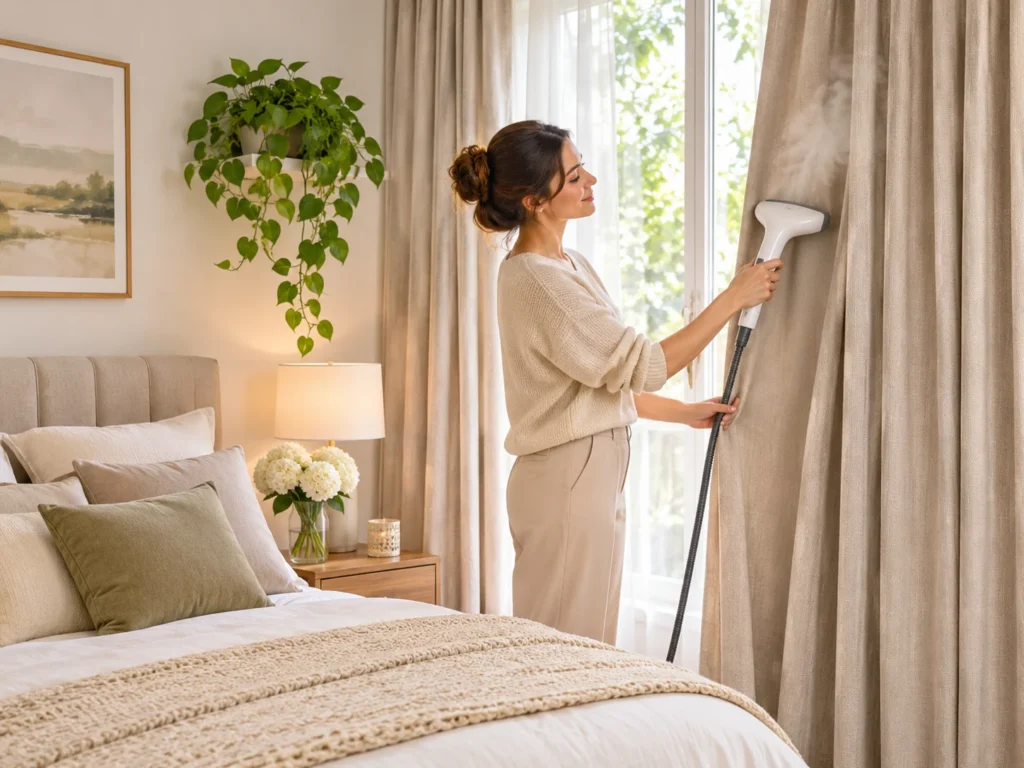
Regular maintenance keeps curtains looking fresh and prevents excessive dust accumulation. Always follow the manufacturer’s fabric care instructions.
- Remove surface dust regularly using a suitable vacuum attachment.
- Check care labels before machine washing.
- Remove detachable metal hooks before laundering.
- Avoid excessive heat on coated blackout fabrics.
- Use gentle cleaning methods on delicate sheer curtains.
- Check brackets and hanging hardware periodically.
Some lined or coated curtains require specialized cleaning. Incorrect washing can damage the lining or change the panel’s dimensions.
Recommended Bedroom Curtains Worth Considering
If you’re ready to upgrade your bedroom windows, these three curtain options address different priorities. Compare their dimensions and construction with your measurements before purchasing.
Affiliate disclosure: As an Amazon Associate, I earn from qualifying purchases. Recommendations are based on available product specifications and intended use rather than hands-on testing.
🌙 Best for light blocking
NICETOWN 100% Blackout Grommet Curtains
Recommended use: Light-sensitive sleepers
Available in a two-panel configuration measuring 52 × 84 inches per panel, these curtains feature a grommet heading and blackout construction. I’d consider them for bedrooms exposed to bright sunlight or streetlights.
☀️ Best for daylight
IKEA LILL Sheer Curtains
Recommended use: Lightweight curtain layering
These translucent rod-pocket curtains come in a white two-panel configuration. I’d choose them as an inner layer for a bright bedroom that also needs separate nighttime privacy.
🏡 Best for versatile hanging
IKEA MAJGULL Blackout Curtains
Recommended use: Coordinated bedroom decor
MAJGULL blackout panels are available in gray and selected lengths, including 57 × 84 inches. Their heading tape offers flexible installation options, making them worth considering for a coordinated bedroom.
Frequently Asked Questions
What type of curtains is best for a bedroom?
Blackout curtains are suitable for bedrooms requiring maximum darkness and privacy, while room-darkening curtains offer a more balanced approach. Layered sheer and blackout curtains are ideal when you want natural daylight during the day and stronger privacy at night.
Should bedroom curtains be lighter or darker than the walls?
Bedroom curtains can be lighter or darker than the walls depending on your decorating goals. Lighter curtains create a softer, more open appearance, while darker curtains introduce contrast and visual depth; lining and fabric construction matter more for actual light blocking.
Should bedroom curtains touch the floor?
Floor-length bedroom curtains can touch the floor or finish approximately half an inch above it for a clean appearance. Shorter curtains may be more practical when furniture, heaters, or other obstacles prevent safe and convenient floor-length installation.
Are blackout curtains better than regular curtains?
Blackout curtains are better when your priority is reducing incoming light and improving nighttime privacy. Regular light-filtering curtains may be preferable if you enjoy natural daylight, and a layered arrangement offers the flexibility to switch between both conditions.
How wide should bedroom curtains be?
The combined width of bedroom curtain panels should generally measure around 1.5 to 2.5 times the usable curtain rod width. A fullness ratio of approximately two times provides attractive folds for many standard fabrics, although certain heading styles require different amounts.
Final Thoughts: How to Choose Bedroom Curtains
Understanding how to choose bedroom curtains starts with identifying your everyday needs. Light control, privacy, accurate measurements, and suitable fabric should guide your purchasing decisions.
For most bedrooms, full-length curtains in a coordinating neutral shade provide a versatile foundation. Add blackout lining or a separate sheer layer when your sleeping preferences require more flexibility.
Final recommendation: Measure your windows, establish your privacy requirements, and choose curtains that complement your existing bedroom textiles. Prioritize proper fit and everyday comfort before decorative details.
Start by measuring your bedroom windows today, then compare curtain fabrics and colors to create a comfortable space that reflects your personal style.