

Quick Answer
To choose bedroom wall art, select artwork that complements your bedroom colors, furniture, decorating style, and desired atmosphere. Choose artwork spanning approximately two-thirds to three-quarters of your headboard width and coordinate it with your overall bedroom wall decor.
Quick steps for choosing bedroom wall art:
- Measure your wall: Determine how much space is available before purchasing artwork.
- Choose suitable colors: Coordinate artwork with your bedding, furniture, and wall colors.
- Match your style: Select abstract, botanical, landscape, or photographic artwork that reflects your preferences.
- Select appropriate sizes: Balance artwork proportions with the furniture beneath it.
- Plan the placement: Create a balanced arrangement with consistent spacing.
- Prioritize safe installation: Use suitable mounting hardware and avoid heavy objects directly above sleeping areas.
My decorating tip:
- Use painter’s tape to outline your artwork on the wall before purchasing or installing it.
Choosing bedroom wall art can transform an ordinary sleeping space into a comfortable, stylish, and personal retreat. I prefer approaching artwork as part of the entire bedroom design rather than treating it as an afterthought.
This guide explains how to select the right artwork, colors, dimensions, frames, and arrangements without wasting money on mismatched decorations.
What Is Bedroom Wall Art?
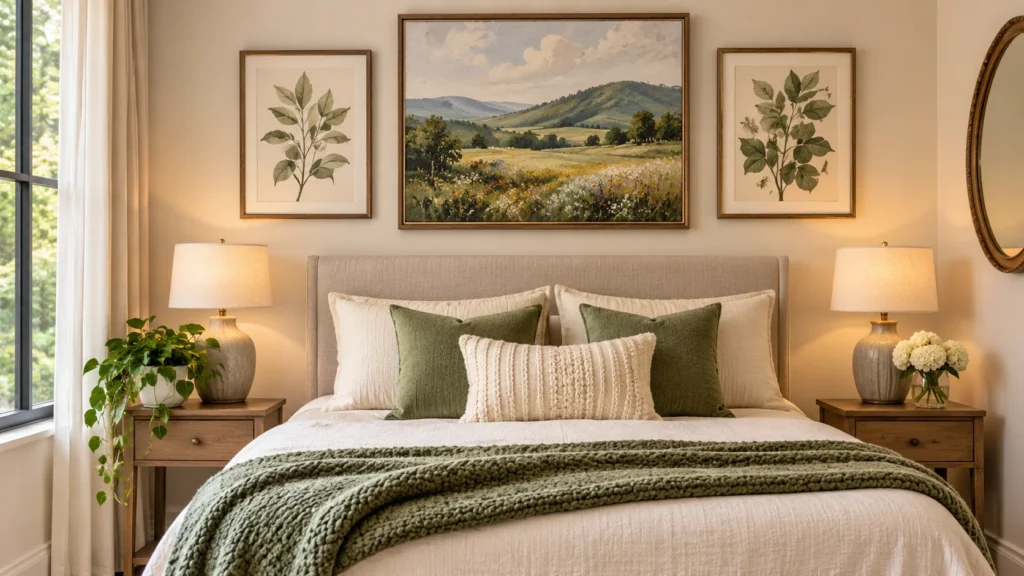
Bedroom wall art is decorative artwork displayed on bedroom walls to improve visual appeal, express personality, and complement the room’s interior design.
It includes everything from traditional paintings to modern prints and handmade decorative pieces. The right artwork helps establish a visual focal point.
Popular Types of Bedroom Wall Art
- Canvas prints: Lightweight options with a contemporary appearance.
- Framed artwork: A classic choice for traditional and modern bedrooms.
- Abstract paintings: Ideal for adding color, movement, and personality.
- Botanical prints: Natural illustrations that complement relaxed interiors.
- Landscape artwork: Scenic designs featuring mountains, oceans, or forests.
- Photography: Personal photographs or artistic photographic prints.
- Textile art: Woven pieces that introduce texture and softness.
- Minimalist illustrations: Simple designs that suit uncluttered spaces.
Artwork doesn’t need to be expensive to look attractive. Its proportions, placement, and connection with the room often matter more than its price.
How to Choose Bedroom Wall Art: 12 Essential Tips
1. Identify Your Bedroom Decorating Style
Start by identifying the decorating style already present in your bedroom. Your artwork should feel connected to the furniture, textiles, and architectural details around it.
Different decorating styles naturally complement different kinds of artwork.
| Bedroom Style | Recommended Wall Art | Frame Style |
|---|---|---|
| Modern | Abstract or geometric prints | Black or metal |
| Minimalist | Line drawings and neutral prints | Slim black or white |
| Bohemian | Botanical and textile artwork | Natural wood |
| Farmhouse | Vintage landscapes | Rustic wood |
| Scandinavian | Nature prints and soft abstracts | Light oak |
| Traditional | Classical paintings | Decorative wood or gold |
| Coastal | Ocean and beach landscapes | White or natural wood |
You don’t need to follow a particular style strictly. However, repeating a few existing colors or materials creates a more intentional appearance.
2. Choose Wall Art That Matches Your Bedroom Color Palette
The best bedroom wall art colors complement your existing color palette without making the room feel repetitive. Look at your bedding, curtains, rugs, and furniture before selecting artwork.
I suggest choosing artwork that repeats one or two existing room colors while introducing a subtle accent shade.
Recommended Color Combinations
- White bedroom: Beige, sage green, charcoal, or muted blue artwork.
- Gray bedroom: Dusty pink, navy, cream, or muted gold accents.
- Beige bedroom: Terracotta, olive green, and warm brown artwork.
- Blue bedroom: White, sand, soft gray, or complementary warm tones.
- Green bedroom: Cream, natural brown, and botanical artwork.
- Dark bedroom: Light neutral prints or carefully selected contrasting artwork.
If you already have a colorful rug, repeat one of its secondary colors in your artwork. My guide to choosing a bedroom rug color explains how to coordinate these elements.
3. Select the Right Wall Art Size
Choose artwork according to the available wall space and the furniture beneath it. Oversized artwork can dominate a small wall, while undersized artwork may look disconnected from large furniture.
A useful starting point is selecting artwork approximately 67% to 75% as wide as the furniture below it.
Bedroom Wall Art Size Guide
| Bed Size | Standard Mattress Width | Suggested Art Width |
|---|---|---|
| Twin | 38 inches | 25–29 inches |
| Full | 54 inches | 36–41 inches |
| Queen | 60 inches | 40–45 inches |
| King | 76 inches | 51–57 inches |
| California King | 72 inches | 48–54 inches |
Important: These recommendations use standard US mattress widths as examples. Measure your actual headboard because its width may differ from the mattress.
For multiple artworks, include the outside frame dimensions and the gaps between each piece when calculating total width.
4. Consider the Mood You Want to Create
Bedroom artwork should support the atmosphere you enjoy spending time in. A peaceful bedroom may benefit from understated imagery, while an expressive bedroom can accommodate stronger colors.
- Relaxing atmosphere: Soft landscapes, watercolor prints, and gentle botanical designs.
- Cozy atmosphere: Earth tones, textured artwork, and warm illustrations.
- Luxury atmosphere: Large abstract paintings and refined framing.
- Romantic atmosphere: Soft floral prints and meaningful photographs.
- Creative atmosphere: Original illustrations, geometric patterns, and expressive art.
Color preferences are personal, so don’t assume that everyone finds the same artwork relaxing. Choose images that make you feel comfortable.
5. Choose the Right Artwork Subject
Artwork subjects influence the character of your bedroom. Select imagery that reflects your interests and feels appropriate for your private space.
My preferred starting point is choosing one subject category and exploring different interpretations before making a purchase.
- Mountain and forest landscapes.
- Ocean and coastal scenery.
- Abstract shapes and organic patterns.
- Botanical and floral illustrations.
- Meaningful travel photographs.
- Black-and-white photography.
- Personal illustrations and family memories.
For affordable classical artwork, explore the Metropolitan Museum of Art Open Access collection, which provides public-domain artwork images for unrestricted use.
6. Decide Between One Large Artwork and Multiple Pieces
A single large artwork creates a strong focal point with minimal visual clutter. Multiple artworks offer more opportunities to combine colors, subjects, and personal memories.
| Arrangement | Advantages | Best For |
|---|---|---|
| Single large artwork | Clean, strong focal point | Minimalist bedrooms |
| Two-piece set | Simple visual symmetry | Modern bedrooms |
| Three-piece set | Balanced horizontal layout | Wide walls |
| Gallery wall | Personal and adaptable | Creative interiors |
For example, two frames measuring 20 inches wide with a 3-inch gap create a 43-inch arrangement. That provides a balanced starting point above a standard queen-size headboard.
7. Select Frames That Complement Your Furniture
Picture frames help connect artwork with surrounding furniture and decorative materials. Their colors, thickness, and finishes can change how a print looks.
- Black frames: Create contrast and complement contemporary interiors.
- White frames: Maintain a light and understated appearance.
- Natural wood frames: Introduce warmth and organic texture.
- Gold frames: Add a decorative or traditional touch.
- Frameless canvas: Offers a simple, contemporary appearance.
Repeat a frame finish already present in your furniture or lighting fixtures. An oak frame, for example, can visually connect artwork with oak bedside tables.
8. Plan the Best Location for Bedroom Wall Art
The best location depends on the artwork dimensions and your bedroom layout. Focus on walls that offer enough visibility without interfering with furniture or movement.
Best Places to Display Bedroom Wall Art
- On the wall opposite the bed.
- Above a bedroom dresser.
- Beside the bed.
- Above a reading chair.
- On an empty accent wall.
- Above the headboard when safe mounting is possible.
For more focal-wall inspiration, explore my guide on how to decorate the wall behind a bed.
9. Hang Artwork at the Correct Height
For an open wall, position the center of your artwork approximately 57–60 inches above the floor as a starting point. Adjust this height when displaying artwork above furniture.
Above a headboard, a gap of approximately 6–10 inches can help connect the artwork visually with the bed.
- Measure the available wall area.
- Determine your preferred artwork center.
- Mark the frame outline using painter’s tape.
- Check the arrangement from different viewpoints.
- Install hardware suitable for the wall and artwork weight.
These measurements are flexible decorating guidelines rather than strict requirements. Tall headboards and low ceilings may require different proportions.
For additional installation guidance, consult the IKEA picture hanging guide.
10. Balance Artwork With Bedroom Lighting
Lighting changes how artwork colors and textures appear throughout the day. Examine your chosen artwork under natural daylight and your usual evening lighting.
- Use warm ambient lighting for a softer appearance.
- Position lamps to reduce reflections on framed prints.
- Choose matte finishes when glare becomes distracting.
- Avoid prolonged direct sunlight on valuable artwork.
The Library of Congress framing and preservation guidelines explain how exposure to light can permanently damage paper-based artwork.
Consider displaying reproductions instead of valuable original prints in bedrooms that receive strong sunlight.
11. Prioritize Safe Bedroom Wall Art Installation
Safe installation matters more than decorative appearance, particularly near sleeping areas. Heavy frames, glass panels, and inadequately secured artwork can create unnecessary hazards.
I recommend placing heavier decorative objects on walls away from the bed whenever possible.
- Check the complete weight of the artwork and frame.
- Identify whether your wall contains drywall, masonry, or another material.
- Use mounting hardware rated for the artwork and wall type.
- Avoid heavy glass frames directly above sleeping areas.
- Choose lightweight artwork when appropriate.
- Consult a professional installer if you are uncertain about the wall structure.
Manufacturer instructions also matter. For example, Command picture hanging strip instructions specifically prohibit installation above beds.
12. Set a Budget Before Buying Bedroom Wall Art
Establish an artwork budget before shopping. Remember that framing, printing, delivery, and mounting hardware can increase the total cost.
In 2026, affordable decorating options include downloadable prints, secondhand frames, and custom reproductions of public-domain artwork.
Example Bedroom Wall Art Budgets
- Under $30: Printable artwork, existing photographs, and reused frames.
- $30–$75: Small framed prints or coordinated artwork sets.
- $75–$150: Larger canvas prints or several coordinated frames.
- $150 and above: Custom framing, larger artwork, or selected original pieces.
These are illustrative planning budgets, not verified retailer prices. Actual costs depend on size, materials, location, and quality.
How Do You Choose Wall Art for a Small Bedroom?
Choose appropriately scaled artwork with a simple composition and colors that complement the room. A carefully selected focal piece can make the bedroom feel more organized.
Small bedrooms don’t necessarily require tiny artwork. One substantial print may create less visual clutter than numerous unrelated decorations.
- Choose one main artwork instead of covering every wall.
- Consider vertical artwork for narrow spaces.
- Use simple frames with slim profiles.
- Leave visible empty space around each arrangement.
- Repeat existing colors rather than introducing too many new ones.
If your room already contains patterned bedding or curtains, understated artwork can provide welcome visual balance.
What Is the Best Wall Art for a Large Bedroom?
Large bedrooms can accommodate oversized paintings, coordinated canvas sets, and spacious gallery walls. Select artwork that relates to the furniture rather than filling empty walls randomly.
- Use a large landscape to anchor a wide wall.
- Arrange three complementary prints over a dresser.
- Create a gallery wall near a seating area.
- Introduce textured artwork for additional visual interest.
- Maintain consistent colors between separate decorating zones.
Check the artwork alongside the other elements in your bedroom decor checklist to maintain a coordinated design.
How to Create a Bedroom Gallery Wall
A bedroom gallery wall combines several artworks into one coordinated arrangement. A successful layout uses consistent spacing, balanced proportions, and a shared visual connection.
- Select a theme: Choose related photographs, illustrations, or complementary artwork.
- Collect your frames: Use matching finishes or a deliberately coordinated mixture.
- Plan the arrangement: Organize the frames on the floor before installing them.
- Set consistent spacing: Start with approximately 2–3 inches between adjacent frames.
- Create paper templates: Transfer the arrangement to the wall using paper and painter’s tape.
- Install each piece: Use suitable hardware and check alignment with a spirit level.
Start with your largest artwork and arrange the smaller pieces around it. This makes it easier to establish a balanced composition.
Common Bedroom Wall Art Mistakes to Avoid
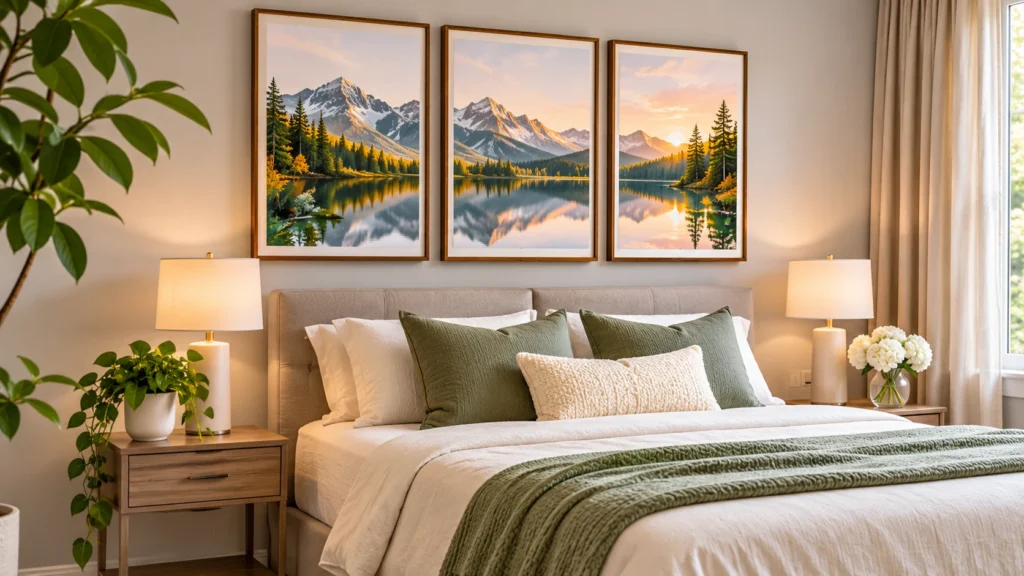
Most decorating mistakes come from incorrect proportions, unrelated colors, or rushed placement decisions. A little planning can prevent unnecessary purchases and wall damage.
- Choosing artwork before measuring: Always confirm the available dimensions.
- Hanging pictures too high: Keep artwork visually connected to surrounding furniture.
- Using too many colors: Maintain a coordinated palette.
- Overcrowding the walls: Allow enough empty space between decorative elements.
- Ignoring lighting: Check for glare and excessive sunlight exposure.
- Following trends blindly: Prioritize artwork you genuinely enjoy.
- Using unsuitable mounting hardware: Match hardware to the wall type and artwork weight.
My favorite planning technique is outlining proposed frame sizes with painter’s tape. You can evaluate the proportions before spending money or drilling holes.
Recommended Products for Bedroom Wall Art
If you’re ready to decorate your bedroom walls, these products can help with framing, artwork arrangement, and planning.
Affiliate disclosure: As an Amazon Associate, I earn from qualifying purchases.
🏆 Best for modern framing
IKEA RÖDALM 16 x 20-Inch Picture Frame
★★★★☆ Editorial fit: 4/5
A simple oak-effect picture frame suitable for photographs, botanical prints, and downloadable artwork. I’d choose it for a bedroom with natural wood furniture and warm neutral colors.
🎨 Best for layout planning
ScotchBlue Original Multi-Surface Painter’s Tape 2090
★★★★☆ Editorial fit: 4/5
Useful for temporarily outlining picture frames and gallery wall arrangements on suitable painted surfaces. I’d recommend testing the tape on a small inconspicuous area first.
📏 Best for measuring
Stanley PowerLock 25-Foot Tape Measure
★★★★½ Editorial fit: 4.5/5
A retractable measuring tape suitable for checking wall dimensions, furniture widths, and frame spacing. I’d keep one nearby when planning a bedroom gallery wall.
Editorial fit scores reflect suitability for the stated decorating task. They are not verified customer ratings or results from hands-on product testing.
Frequently Asked Questions
What type of wall art is best for a bedroom?
Landscape paintings, botanical prints, understated abstract artwork, and meaningful photographs are popular choices for bedrooms. The best option depends on your decorating style, available wall space, and personal preferences rather than any universal rule.
What size wall art should I put above my bed?
Aim for a total artwork width of approximately two-thirds to three-quarters of your headboard width. Measure the actual headboard and include frame dimensions and gaps when planning multiple pieces. Use appropriate mounting hardware and avoid heavy objects above sleeping areas.
Should bedroom wall art match the bedding?
Bedroom wall art doesn’t need to match bedding exactly. Repeating one or two colors from your bedding creates a coordinated appearance while allowing the artwork to introduce contrast, texture, or additional accent colors.
How many pieces of wall art should a bedroom have?
One to three main artworks can be enough for many bedrooms, while larger rooms may accommodate gallery walls and additional decorative pieces. Focus on visual balance and available space instead of following a fixed number.
Where should you not hang bedroom wall art?
Avoid displaying valuable paper artwork in strong direct sunlight or placing heavy, inadequately secured frames above sleeping areas. Artwork should also stay clear of door swings, furniture movement, and locations where people might accidentally strike it.
Final Thoughts: Choosing the Perfect Bedroom Wall Art
Learning how to choose bedroom wall art becomes easier when you consider your decorating style, available space, and existing colors. The goal is to create a bedroom that feels balanced and reflects your personality.
I recommend starting with one artwork you genuinely enjoy and building the remaining decorations around it. Measure carefully, consider different layouts, and select safe installation methods.
Start decorating today: Choose your favorite bedroom wall, identify a suitable artwork style, and outline your preferred dimensions before purchasing the piece.