

Quick Answer
The most useful small living room storage ideas combine furniture with hidden compartments, shallow closed cabinets, vertical shelves, and containers that keep daily essentials easy to reach. Begin by removing what you do not need, then choose storage for the items you actually use. Protect walkways and anchor furniture that could tip.
A compact living room often has to handle relaxing, entertaining, games, work, and household overflow. The solution is not to fit a cabinet into every corner. It is to give belongings a sensible home without crowding the seating area.
Choose only the ideas that solve your room’s particular problems.
What Should You Check Before Adding Storage?
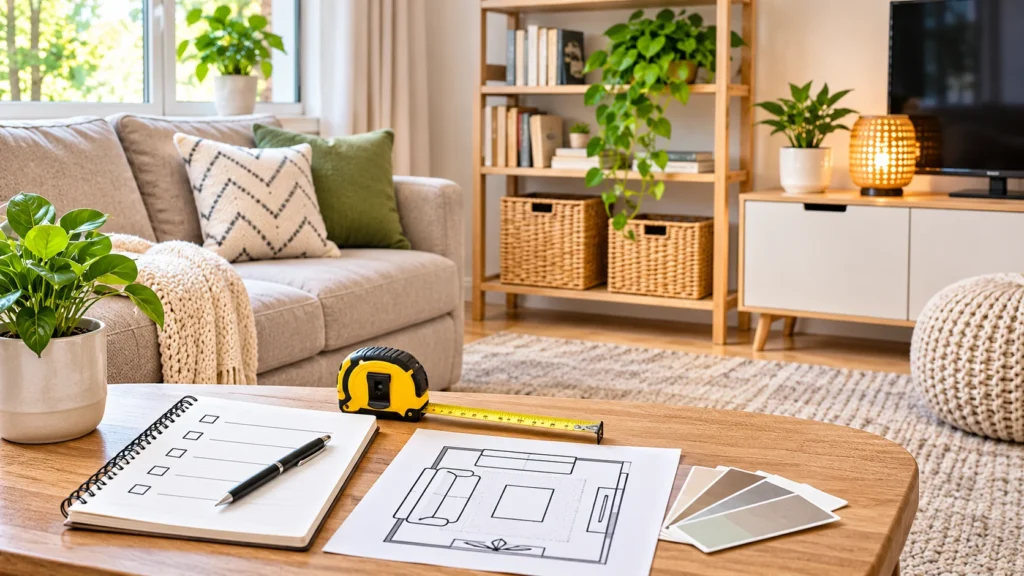
First, identify what is creating the mess. Gather loose items into groups: electronics, books, toys, blankets, paperwork, and decorative objects. Keep frequently used items nearby.
Measure available wall widths, furniture depths, door swings, sockets, heating vents, and the route people use to cross the room. Do not block a doorway or drawer.
For a broader approach to arranging furniture, consult the small living room layout guide before buying another storage unit.
| What needs storing? | Best starting option |
|---|---|
| Blankets and cushions | Lidded storage ottoman |
| Remote controls and chargers | Table drawer or small organizer |
| Books and display items | Anchored vertical shelving |
| Games, toys, mixed supplies | Closed cabinet or labeled bins |
15 Small Living Room Storage Ideas Worth Trying
1. Swap a Basic Footstool for a Storage Ottoman
A storage ottoman hides throws, spare cushion covers, and lightweight games while serving as a footrest. In some rooms, a sturdy, appropriately designed model can also replace a separate coffee table.
Check the lid mechanism and interior opening before buying. To compare designs, browse storage ottomans on Amazon (affiliate search). As an Amazon Associate, we earn from qualifying purchases. Avoid lids that are awkward to open.
2. Make Your Sofa Do a Second Job
A sofa with built-in drawers or a lift-up compartment can store seasonal textiles without occupying another wall.
If you already own a sofa, measure its underside before considering low storage boxes. Keep boxes away from reclining mechanisms, cables, vents, and anything that needs ventilation.
3. Choose a Coffee Table With Drawers or a Shelf
Instead of letting controllers, coasters, notebooks, and pens spread across the tabletop, give them one drawer or lower shelf.
Make sure the table still leaves knee room and an easy route around the sofa. The guide to furniture for small living rooms offers additional advice on choosing pieces that fit.
4. Replace an Open TV Stand With Closed Media Storage
A low cabinet with doors can conceal gaming accessories, board games, and miscellaneous cables. Keep ventilation and plug access clear.
Do not assume every closed cabinet can safely hold a television. Follow the unit’s load limits and installation instructions, and secure the television as its manufacturer directs.
5. Use Tall, Narrow Shelves Instead of Wide Cabinets
Where wall space is scarce, a narrow bookcase uses height without covering much floor. Reserve lower levels for heavier books and often-used items; keep decorative pieces and less-used possessions higher up.
Secure tall furniture to the wall with suitable hardware. The U.S. Consumer Product Safety Commission recommends anchoring bookcases and other furniture to reduce tip-over risks.
6. Mix Open Cubes With Closed Baskets
Cube shelves work well for mixed collections because each opening can have a purpose. Display a few books or favorite objects; place toys, craft supplies, and cables inside fitted bins.
Measure both the cube opening and the container before shopping. Matching baskets are optional. Anchor the unit according to its instructions.
7. Add Floating Shelves Where Floor Space Is Tight
Floating shelves can hold small books, plants, or framed pictures without taking up floor area.
Check the wall type, fixing method, and rated load. Do not rely on removable adhesive strips for heavy shelves, and avoid placing heavy objects where a fall could injure someone.
8. Use a Slim Console Behind the Sofa—Only if It Fits
In an open-plan room, a narrow console can hold a lamp, baskets, and a charging tray while defining the seating area. It is most useful when the sofa already sits away from the wall.
Skip this idea if the console steals space from a necessary walkway.
9. Give an Unused Corner One Storage Purpose
A corner can support a small cabinet, triangular shelf, or basket for blankets. Choose the contents first, then the furniture; otherwise an attractive corner stand may simply collect random objects.
For example, a reading corner might need only one basket for current books and a compact side table.
10. Put a Storage Bench Beneath a Suitable Window
A low bench can combine occasional seating with room for soft furnishings, games, or pet accessories. Ensure the lid or drawers open fully.
Keep radiators, heating outlets, and required window access unobstructed. Use only benches intended to bear a person’s weight if they will serve as seats.
11. Try a Narrow Rolling Cart for Flexible Supplies
A compact cart can hold children’s craft materials, remote controls, or a small home-office kit. Roll it beside the sofa when needed, then park it in a measured alcove.
Choose stable wheels and respect shelf weight limits; avoid using an unsecured cart to store hazardous or fragile objects within children’s reach.
12. Add Hooks or a Peg Rail for Everyday Accessories
If your living room connects directly to the entrance, a short rail for lightweight bags, headphones, or reusable totes can prevent those items from covering chairs.
Use suitable anchors for the wall and the weight involved. Keep hooks away from narrow routes where hanging bags could catch on someone passing through.
13. Make Existing Side Tables More Useful
A side table with a lower tier can hold one small basket for magazines or charging accessories.
Resist stuffing the lower shelf until it becomes inaccessible. The ideal container can be lifted out without moving the table or disturbing nearby seating.
14. Hide a Small Workstation in One Cabinet
When the living room doubles as an office, a designated drawer or slim cabinet can hold laptop accessories, documents, and stationery. Put a tray inside so tiny items do not disappear beneath larger ones.
At the end of the day, return the entire work kit to that single location. This prevents a temporary desk setup from taking over the sofa and coffee table.
15. Divide Existing Drawers and Cabinets Before Buying More
Small trays, shelf risers, and labeled containers can increase the usefulness of storage you already own. Divide one large cabinet into zones for electronics, games, paperwork, and seasonal items.
Leave enough spare room to remove items easily rather than packing every compartment tight.
Which Storage Setup Works Best for Your Room?
For a very narrow living room, prioritize a shallow media cabinet and high storage instead of placing multiple chests along the floor. In a square room, one storage ottoman and a corner bookcase may be sufficient. In a studio, consider dual-purpose furniture and one movable cart.
For renters, start with freestanding storage that can be properly secured using permitted methods, along with baskets and drawer organizers. Ask permission before drilling when required. Heavy furniture still needs appropriate anchoring; renter-friendly must not mean unstable.
For a room shared with children, use lower, accessible bins for everyday toys and keep heavy items down low. For more decisions about daily use, see how to create a functional living room.
What Small Living Room Storage Mistakes Should You Avoid?
- Buying containers first: Sort and measure your belongings before selecting baskets or cabinets.
- Blocking movement: Open every door and drawer and walk the normal route before committing.
- Choosing only open shelves: Too many visible objects can make the room feel busy; combine display with closed storage.
- Ignoring access: Do not bury daily essentials behind rarely used possessions.
- Overloading furniture: Follow manufacturers’ limits, secure unstable units, and keep heavier objects low.
One practical rule helps: if an item is difficult to put away, the storage place may be too far from where you use it or too awkward to open. Change the location before buying another organizer.
Manufacturers such as IKEA’s small-space planning guide also highlight furniture that serves multiple functions and mobile storage as ways to make compact living areas more flexible.
If you need a specific storage piece, these examples illustrate three different uses. Ratings below are customer scores displayed on IKEA’s US site during research, not independent product tests; check the current listings and local availability before ordering.
VERTICAL ORGANIZATION
IKEA KALLAX Shelving Unit With Underframe
★★★★★ 4.7/5 on IKEA
A 30⅜-inch-wide shelving option that provides open cube storage. Useful for books and bins when you have wall height available; follow the anchoring instructions.
HIDDEN CLUTTER
IKEA BESTÅ Shelf Unit With Door
★★★★☆ 4.3/5 on IKEA
A shallow 8⅝-inch-deep cabinet with a door for visual clutter. Check wall-mounting and positioning requirements for your chosen configuration.
FLEXIBLE STORAGE
IKEA NISSAFORS Narrow Utility Cart
★★★★☆ 4.0/5 on IKEA
A 7½-inch-wide mobile cart for light supplies in tight gaps. Check the 9-pound-per-tier limit and whether its wheels suit your floor.
Frequently Asked Questions
How can I add storage to a small living room without buying furniture?
Start by decluttering, reassigning the drawers and cabinets you already have, and using small dividers or baskets. Moving daily items closer to where they are used can solve more than purchasing another unit.
Is open shelving or closed storage better for a compact room?
A combination is usually more practical. Open shelves suit attractive, regularly used objects; closed compartments conceal mixed supplies and reduce visual clutter. Choose based on what you actually store.
What should I store in a living room storage ottoman?
Lightweight blankets, cushion covers, games, and other soft items are sensible choices. Keep the contents within the manufacturer’s limits and avoid anything that would be damaged by pressure or trapped moisture.
Can I use tall shelves in a rental apartment?
Yes, provided the unit is suitable for the room and can be secured according to its instructions. Check your tenancy rules and arrange approved anchoring rather than leaving a tall, tip-prone unit unsecured.
How do I store children’s toys without making the room look cluttered?
Use a small number of accessible bins with clear categories, such as blocks, art supplies, and games. Return toys to the same low storage spots after use; store heavy or hazardous items separately.
How much empty space should I leave inside storage cabinets?
There is no universal percentage. Leave enough room to pull out bins, see what you own, and open drawers without shifting other items. A cabinet packed to the edge is often difficult to maintain.
Conclusion
Good small living room storage makes everyday routines easier without turning every free surface into another cabinet. Start with the objects that repeatedly end up on the sofa or floor, then give each category one accessible place. A hidden-storage ottoman, a shallow cabinet, or a carefully chosen vertical shelf may solve several problems at once.
Before buying, check the dimensions, walking route, and installation requirements. Then organize the storage you already have.