

Quick Answer
To clean a living room rug, check its care label, remove loose dirt with a suitable vacuum, blot stains, and use a fiber-compatible cleaner only if wet cleaning is permitted. Remove leftover moisture and dry the rug completely, including its underside, before replacing furniture. Never soak jute, sisal, silk, or a rug with unverified cleaning instructions.
A living room rug collects dust, crumbs, shoe grit, pet hair, and the occasional drink spill. The safest cleaning routine depends less on how dirty it looks than on what its fibers, dyes, and backing can tolerate.
Most rugs benefit from regular vacuuming and prompt spot treatment. A full wash is a separate decision. The steps below help you choose the right level of cleaning without creating fading, shrinkage, damaged backing, or moisture trapped against the floor.
What Do You Need to Clean a Living Room Rug?
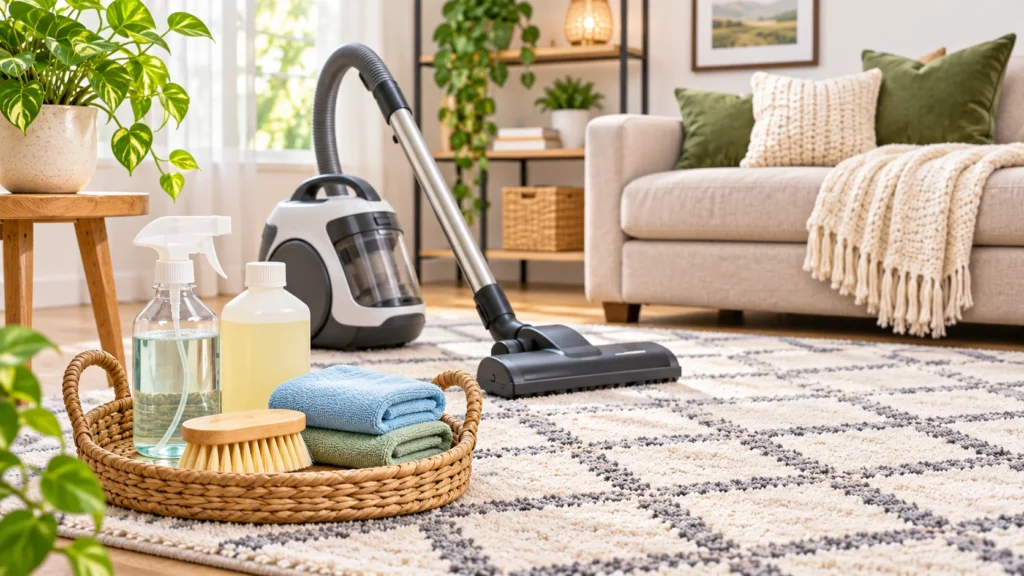
Start with tools that remove loose dirt and absorb spills. Add liquid cleaner only after checking the rug’s instructions.
- A vacuum with adjustable suction and an appropriate floor or upholstery attachment
- Clean white microfiber cloths or unprinted paper towels
- A soft brush for loose debris, if the rug’s construction allows brushing
- A rug-approved spot cleaner appropriate for the fiber and dye
- Clean, dry towels and a fan for drying
- Access to the rug’s label or manufacturer’s care guide
You do not automatically need a shampooer, steam cleaner, vinegar, or a bucket of soapy water. Using the wrong liquid is often riskier than leaving a small mark for professional treatment.
Which Cleaning Method Is Safe for Your Rug Material?
Check the sewn-in label, online product details, and any cleaning restrictions before you begin. A fiber name alone does not guarantee that the dye or backing is washable.
| Rug type | Practical cleaning approach |
|---|---|
| Polypropylene, nylon, polyester | Vacuum regularly; spot clean or extract only if the full rug construction permits it. |
| Wool | Use gentle suction and approved wool-safe treatment; avoid heat, harsh scrubbing, and saturation. |
| Cotton | Some small rugs are machine washable, but only when the label confirms it. |
| Jute, sisal, seagrass | Use dry vacuuming and manufacturer-approved dry treatment; avoid home wet washing. |
| Silk, antique, handmade, delicate | Use careful surface maintenance and a specialist for substantial cleaning. |
The Carpet and Rug Institute’s rug-care guidance stresses following care directions, protecting fringe, and using appropriate cleaners. For natural-fiber rugs, moisture damage can be more serious than ordinary surface dust.
Warning
If there is no reliable care information, do not assume that a rug can be soaked or steam cleaned. Backing adhesives, natural dyes, and underlying flooring may react badly to moisture even when the visible fibers look durable.
How Do You Clean a Living Room Rug Step by Step?
For a typical household rug, start dry and increase cleaning intensity only when the label allows it. The following eight steps cover routine refreshes, localized stains, and optional deeper cleaning.
Step 1: Clear the Rug and Inspect Both Sides
Remove toys and movable decor. Carefully shift coffee tables or chairs off the rug without dragging heavy legs across the pile. Look for fading, loose loops, frayed edges, or a crumbling non-slip backing.
Lift a corner and inspect the rug pad and floor. If either is damp, address the moisture source and dry everything before continuing. Washing over existing dampness can make the problem harder to fix.
Step 2: Shake Out Loose Dirt When Practical
Carry a small rug outdoors and shake it carefully, keeping its edges supported. A large or fragile rug may be safer left on the floor for vacuuming. Do not vigorously beat an old, loosely woven, or damaged rug.
Sand and crumbs caught near the base of the pile are easier to remove before any liquid touches them.
Step 3: Vacuum Slowly and Gently
Vacuum the surface in overlapping passes, adjusting suction to the construction. Turn off aggressive rotating brushes on looped, shag, delicate, or fringe-heavy rugs when recommended by the manufacturer.
For a rug that can be lifted safely, vacuum the underside with suitable suction, then clean the pad and exposed floor. Keep fringe out of the beater bar rather than pulling it through the vacuum head.
Step 4: Blot Fresh Stains Before They Spread
For liquid spills, press a dry white cloth onto the spot and lift it straight up. Repeat with clean sections until little more transfers. Scoop up thicker spills first with a spoon, and vacuum dry particles before treating the remaining mark.
Work from the outside of a stain toward its center. Rubbing can spread pigment or distort the rug’s texture.
Step 5: Test a Compatible Cleaner in a Hidden Area
Choose a product specifically permitted for the rug’s material. Test a small, inconspicuous spot, let it dry fully, and inspect for dye transfer, water rings, texture change, or discoloration.
If the test fails, stop. Do not attempt to counteract the problem with stronger detergent or household bleach.
Step 6: Spot Clean With Minimal Moisture
For rugs approved for water-based spot cleaning, apply the cleaner exactly as directed, preferably to a cloth when instructions allow. Dab gently, use only the recommended amount, and avoid soaking the backing.
Remove residue as the product label directs. Some cleaners require a light water blot; others have different instructions. Resist the temptation to mix several products in the same spot.
Step 7: Deep Clean Only When the Label Permits
If the rug is explicitly washable, follow its specified machine-washing or extraction instructions. Small machine-washable rugs must also fit the washer’s capacity; forcing a heavy, wet rug into a machine can damage both.
A portable extractor can help with approved synthetic rugs and localized messes, but do not use one merely because it works on wall-to-wall carpet. Antique rugs, natural-fiber rugs, and unfamiliar backings are poor candidates for experimental home washing.
Step 8: Dry the Rug and Floor Completely
Press dry towels onto damp spots, use fans and ventilation, and keep people and pets away while the rug dries. If you lifted the rug, ensure the underside and pad also dry before putting everything back.
A rug can feel dry on top while its backing remains moist. Replace furniture only after confirming both sides and the floor beneath are dry. If you are rearranging the room afterward, our living room styling guide explains how to position a rug beneath your seating group.
How Should You Handle Common Living Room Rug Stains?
The first response is usually absorption, not scrubbing. What happens next depends on the stain and the rug’s cleaning restrictions.
- Coffee or tea: Blot promptly, then use an approved water-based spot cleaner on a water-safe rug. Avoid flooding the surrounding area.
- Food and muddy footprints: Lift solids first. Let ordinary mud dry before carefully vacuuming loose soil; treat remaining discoloration according to the care label.
- Pet urine: Absorb as much as possible. Use an enzyme product only if it is compatible with the material, dyes, and backing. Do not apply hot steam to a fresh urine spot.
- Grease: Remove residue without spreading it. Use a material-approved spot product rather than improvised solvent mixtures.
- Persistent odors: Check the rug pad and floor. An odor returning after surface treatment may indicate contamination or moisture beneath the pile.
The American Cleaning Institute’s carpet-and-rug advice also emphasizes quick attention to stains and dabbing instead of rubbing. Stains that penetrate a delicate rug’s foundation may need a specialist rather than repeated home treatment.
How Often Should You Vacuum or Deep Clean the Rug?
Vacuum about once a week as a starting point, and more frequently where people walk, children play, or pets shed. Adjust the schedule to visible debris and the rug’s tolerance for vacuuming.
Spot cleaning should happen when a spill occurs. Deep cleaning is not automatically a monthly task: the right interval depends on traffic, rug material, manufacturer guidance, and whether vacuuming still removes the dirt. For delicate or valuable rugs, ask a suitable specialist before scheduling a full clean.
Regular attention to the pad and floor also matters. When restoring the furniture arrangement after cleaning, the complete living room decorating guide offers useful rug-placement considerations to keep walking paths and seating practical.
What Rug-Cleaning Mistakes Should You Avoid?
- Skipping the label: Synthetic surface fibers do not prove that the backing is washable.
- Scrubbing hard: Friction may damage loops, fringe, dyes, or delicate pile.
- Overusing soap: Residue may attract dirt and become difficult to rinse out.
- Soaking natural fibers: Jute, sisal, and seagrass can distort or discolor with moisture.
- Ignoring the underside: Moisture against hardwood or a rug pad can remain hidden.
- Using heat without permission: Hot water or steam may be unsuitable for wool, adhesives, or dyed materials.
A useful decision rule is simple: if the spill is small and the rug is water-safe, careful spot cleaning is reasonable. If the rug is delicate, dye transfers, or the stain reaches the backing, stop before making a costly problem worse.
Which Cleaning Tools Are Worth Considering?
These are two different tools for different situations—not universal solutions for every rug. Verify your rug’s care instructions before purchasing or using either one.
SPOT-CLEANING OPTION
FOLEX Instant Carpet Spot Remover
The manufacturer describes this as a water-based cleaner for colorfast materials that tolerate damp cleaning. Best considered for isolated marks after a successful hidden-area test; not for dry-clean-only rugs.
PORTABLE EXTRACTION OPTION
BISSELL Little Green 1400B
A corded portable spray-and-suction cleaner with a 48-ounce clean-water tank, intended for compatible rugs, carpets, and upholstery. Consider it for wet-cleanable rugs and localized spills, never for moisture-sensitive fibers.
As an Amazon Associate, we earn from qualifying purchases. These links open search results; check the exact item and seller before buying. No independent star ratings or hands-on test claims are implied.
Frequently Asked Questions
Can you clean a living room rug without a machine?
Yes. Regular vacuuming and careful spot cleaning are enough for many routine messes. A machine is useful only when the rug permits that cleaning method and the dirt requires it.
Can you wash an area rug while it is on hardwood flooring?
Avoid soaking or washing a rug directly over hardwood. Move it to a suitable location if full washing is permitted, and keep the floor dry. Even limited spot cleaning should not leave moisture trapped beneath the rug.
Is baking soda safe for every rug?
No. Fine powder can be difficult to remove from deep pile or delicate weaves, and not all manufacturers recommend it. Check care instructions instead of treating baking soda as a universal deodorizer.
Can you use dish soap to clean a rug?
Only if the rug manufacturer permits that type of cleaning solution. Dish soap may leave a sticky residue, and too much moisture can damage backing or dyes. A specified rug-safe product is the more reliable choice.
How do you know when a rug is fully dry?
Check the face, backing, pad, and flooring separately. None should feel cool or damp, and no moisture should transfer to a dry towel. Drying time varies with thickness, airflow, humidity, and how much liquid was used.
When should you hire a professional rug cleaner?
Choose a rug specialist for silk, valuable handmade or antique pieces, unstable dyes, serious pet contamination, water damage, or stains that remain after gentle approved treatment. Ask whether they handle your specific fiber and construction.
Conclusion
Cleaning a living room rug starts with the label, not the cleaning solution. Remove grit gently, blot stains promptly, and use moisture only when the material and construction allow it. Finish by checking the rug’s backing, pad, and floor for dryness. With consistent vacuuming and material-appropriate care, most rugs can stay presentable without frequent aggressive washing.