

Quick Answer
The most useful living room storage ideas combine furniture that hides clutter, wall space that stores items vertically, and small organizers placed where things are used. Start with a storage ottoman, a cabinet-style TV stand, baskets, or a bookcase with inserts. Measure access and walking space before adding furniture, and secure tall units properly.
A living room collects blankets, games, books, chargers, toys, and paperwork. Smart storage keeps these accessible without filling every wall.
These 16 ideas suit small apartments and family rooms. Choose only what fits your layout.
How Should You Plan Living Room Storage Before Buying Anything?
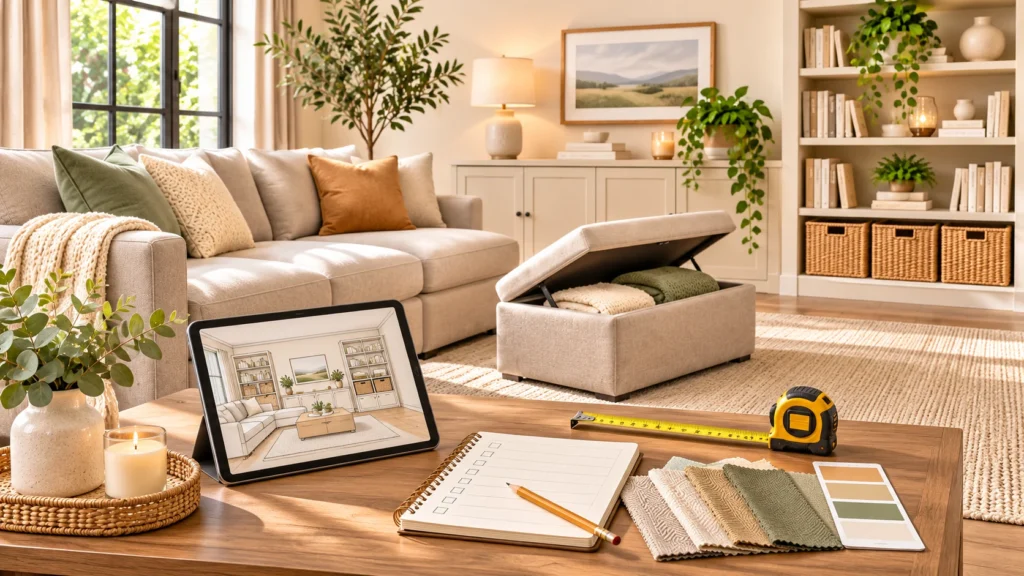
Start by sorting clutter into categories and identifying where each category naturally collects. Storage works better when the destination is close to the activity: remotes near seating, games near the TV, and blankets near the sofa.
- Collect and sort: Make groups for media, reading, textiles, toys, hobbies, and miscellaneous items. Move anything that belongs in another room.
- Separate daily from occasional: Keep daily items at comfortable reaching height. Use less accessible shelves for seasonal or infrequently used belongings.
- Measure real clearance: Record the available width, depth, and height, then allow extra room for opening drawers, lifting lids, and walking past furniture.
- Choose open or closed storage: Display attractive books and objects openly; conceal cords, small accessories, and visually busy collections behind doors or inside matching boxes.
If the room already feels cramped, check the layout before adding anything. Our living room space planning guide helps you evaluate furniture placement and traffic routes.
16 Living Room Storage Ideas That Make Everyday Clutter Easier to Manage
1. Use a Storage Ottoman Instead of an Extra Cabinet
A storage ottoman is useful for throws, spare cushions, and board games. It doubles as a footrest, and certain models are also designed for seating. Check the manufacturer’s load rating before sitting on one.
Measure the space needed to raise the lid. A lift-off top may be awkward beneath a low table or in a narrow seating arrangement, so prioritize the opening style as well as the overall dimensions.
2. Pick a Coffee Table With Drawers or a Lower Shelf
Coffee table drawers hold coasters, remotes, and chargers; lower shelves fit books or baskets. Some lift-top designs double as temporary work surfaces.
Keep the top partly clear for drinks and activities. For decorative arrangements that stay functional, see our coffee table decor ideas.
3. Choose a TV Console With Closed Compartments
Cabinet doors make it easier to hide game controllers, remote accessories, manuals, and media collections. Use small trays or dividers inside so the cabinet does not become one large miscellaneous drawer.
Keep equipment ventilation openings clear, and maintain access to outlets and cables. Follow the electronic device’s clearance instructions rather than packing items tightly around it.
4. Add Baskets Where Clutter Actually Lands
Use a basket beside the sofa for blankets and a smaller one for chargers or craft supplies.
Limit each basket to a clear category. A label inside the rim helps family members return things without making the room look like a storeroom.
5. Replace an Open Side Table With One Drawer
A narrow side table with a drawer can keep glasses, pens, notepads, and small electronics within reach. This is often more practical than adding a separate storage chest beside an armchair.
Check the drawer’s full extension and nearby chair movement. A slim table is useful only when people can open it comfortably.
6. Place a Slim Console Behind the Sofa
Where there is a genuine gap behind the couch, a shallow console can provide room for a lamp, a tray, or baskets on a lower shelf. This works particularly well with a floating sofa in an open-plan living room.
Do not push furniture into a walkway or block ventilation and outlets. Our console table decor guide shows how to keep the surface useful without overloading it.
7. Mix Open and Closed Sections in a Cube Bookcase
Use some cubbies for books and framed objects and others for fitted bins or cabinet inserts. The combination offers easy access without exposing every collection. Choose inserts sized for the exact shelf openings rather than relying on a generic “cube” label.
A bookcase may also divide a shared space, but freestanding placement does not remove tip-over concerns. Follow the product’s orientation and anchoring instructions.
8. Install Floating Shelves for Light, Frequent-Use Items
Wall shelves create storage above furniture without taking another footprint on the floor. Use them for lightweight books, framed pieces, or small boxes. A short run above a desk nook often works better than filling the whole wall.
Choose fixings appropriate to the wall material and the shelf’s rated load. Leave some breathing room around displayed objects; our shelf decor ideas explain how to balance storage with styling.
9. Take Advantage of a Tall, Narrow Bookcase
A tall bookcase uses height instead of floor space. Place heavy items low and keep everyday essentials within reach.
Safety matters: Tall shelving and other tip-prone furniture should be anchored according to the manufacturer’s guidance. The U.S. CPSC Anchor It guidance explains how furniture restraints work and what installation supplies may be required.
10. Make an Awkward Corner Useful
Give an unused corner a purpose with a small library, game cabinet, or hobby basket.
Check the door swing and sightlines first. A cabinet that protrudes into a pathway can make the room less functional even when it adds storage capacity.
11. Add Low Storage Beneath a Window
A low bench with built-in compartments can hold cushions or reading materials while preserving views. Existing deep window ledges may support small trays, provided the items do not block window operation or required access.
Keep radiators, air vents, and emergency exits unobstructed. A window seat should be designed to support sitting loads rather than assembled from ordinary storage boxes.
12. Create a Dedicated Toy Return Zone
In family spaces, use low bins that children can reach and recognize. Sort toys into broad categories rather than complicated subgroups: building pieces, soft toys, and art materials are usually enough.
Use age-appropriate containers and keep seldom-used toys outside the daily play zone.
13. Store Games Vertically in One Cabinet
Group games upright where their packaging permits, or use labeled containers for complete sets. Separate controllers and batteries.
A single dedicated shelf makes it easier to see what you own and avoids spreading games across the TV stand, coffee table, and closet.
14. Use Magazine Files for Paper and Thin Books
Magazine files keep catalogs, notebooks, and loose papers upright inside cabinets or on bookcase shelves.
Recycle outdated paperwork regularly. A container should help you find current material, not preserve every leaflet indefinitely.
15. Give Chargers and Small Tech One Home
Use a ventilated electronics organizer, shallow tray, or drawer dividers near the seating area. Separate cables with reusable ties and keep frequently used chargers easy to identify.
Do not place powered adapters or charging devices under blankets or inside sealed containers. Keep equipment clear of heat and follow its operating instructions.
16. Try a Narrow Rolling Cart for Flexible Hobbies
A slim cart can hold knitting, art, or work supplies. Give it one purpose and park it outside walkways.
Measure the wheels and handles, not only the shelves. Locking casters can help keep a suitable cart steady, but never treat a utility cart as a step stool.
Which Storage Solution Fits Your Living Room Best?
Choose by the problem you need to solve rather than the largest amount of storage a unit promises.
| Situation | Start with | Check first |
|---|---|---|
| Small apartment | Ottoman or compact closed console | Footprint and opening clearance |
| Lots of books | Anchored bookcase | Shelf load and wall fixing |
| Children’s toys | Low, easy-access bins | Age suitability and safe lids |
| Media clutter | TV cabinet with dividers | Device ventilation and cable access |
Renters can start with portable baskets. Check lease restrictions before mounting shelves, and never substitute adhesive hooks for required furniture anchors.
How Can You Keep the Storage Looking Calm?
Use consistent containers and preserve open display space. Too many organizers can still look cluttered.
- Use closed storage for busy-looking collections and open shelves for a few things you want to enjoy seeing.
- Keep frequently used items close so putting them back is quicker than leaving them out.
- Reset the room daily: return remotes, gather toys, fold throws, and clear one main tabletop.
- Review full bins monthly: donate, relocate, recycle, or discard items that no longer belong in the living room.
For additional inspiration, IKEA’s small-space storage examples illustrate how closed cabinets, open shelving, and vertical storage can work together.
Common Living Room Storage Mistakes to Avoid
- Buying before sorting: More furniture can become a place to hide things you do not need.
- Ignoring drawer and lid clearance: A unit can fit the wall but fail in daily use.
- Overloading wall shelves: Observe rated loads, suitable fixings, and installation instructions.
- Using only open shelving: Too many exposed small items can make an organized room look busy.
- Blocking vents or walkways: Storage should not compromise safe movement, heating, or electronics.
If you need a couple of small, defined containers rather than new furniture, these examples illustrate different uses. Ratings are IKEA U.S. customer-review averages shown on the researched listings, not independent testing or endorsements.
Small Electronics & Accessories
IKEA KUGGIS Box With Lid, 7 × 10¼ × 6 in
★★★★☆ 4.7/5 — IKEA customer rating
A lidded, stackable box for media gadgets and smaller loose items. Its compact format suits a shelf or cabinet when you want fewer visible accessories; check the exact shelf depth before ordering.
Natural-Look Cube Storage
IKEA BULLIG Bamboo Box, 12½ × 13¾ × 13 in
★★★★☆ 4.4/5 — IKEA customer rating
A bamboo storage box designed to fit KALLAX shelving. It offers a warmer, textured look for books, records, and accessories, but requires a larger cubby than the KUGGIS option.
As an Amazon Associate, we earn from qualifying purchases. Amazon search results may show different sellers or products; confirm the model, measurements, and current availability before buying.
Frequently Asked Questions
How can I add storage without buying furniture?
Declutter existing drawers, assign a shelf to each category, and reuse baskets or containers already at home. Organizing one cabinet properly may provide enough capacity without adding another unit.
What is the cheapest way to store blankets in a living room?
Use a basket you already own or dedicate one shelf inside an existing cabinet. If you need a new container, measure the folded blankets before choosing its size.
Can open shelving make a small room look cluttered?
Yes, especially when every shelf holds loose objects. Combine displayed books with a few matching boxes and leave some areas open to reduce visual noise.
Where should I put items I use only a few times a year?
Place occasional-use belongings in labeled, accessible upper cabinets or another appropriate storage area outside the main living zone. Avoid loading high shelves with heavy items.
Are storage benches suitable for window areas?
They can be, if they are designed for the intended load and do not block window operation, ventilation, or exits. Check the bench specification and the room’s clearances first.
How do I keep a living room tidy when several people share it?
Assign broad, easy-to-recognize storage categories and one accessible return spot for each. A brief daily reset is more realistic than expecting everyone to maintain an elaborate sorting system.
Conclusion
Good living room storage starts with a simple question: where does the clutter come from? Give those items practical homes, use furniture that earns its floor space, and make sure every cabinet, shelf, and container remains easy and safe to use. Start with one problem area rather than buying a complete storage system at once.