

Quick Answer
The best home theater living room ideas combine comfortable seating, a well-positioned TV or projector, layered lighting, improved audio, and a clutter-free layout. You can create a cinematic atmosphere in a small apartment or spacious family room without turning the entire space into a dedicated movie theater.
A home theater living room should feel exciting on movie night and comfortable on an ordinary afternoon. The challenge is balancing a big-screen experience with the furniture, natural light, storage, and walking space that make a living room useful.
You don’t need rows of recliners or black walls to make it work. Thoughtful screen placement, comfortable seating, and flexible lighting often matter more than elaborate decorations.
These 15 home theater living room ideas cover modern, cozy, minimalist, and space-saving designs, with practical advice for adapting each one to your home.
15 Home Theater Living Room Ideas That Balance Style and Comfort
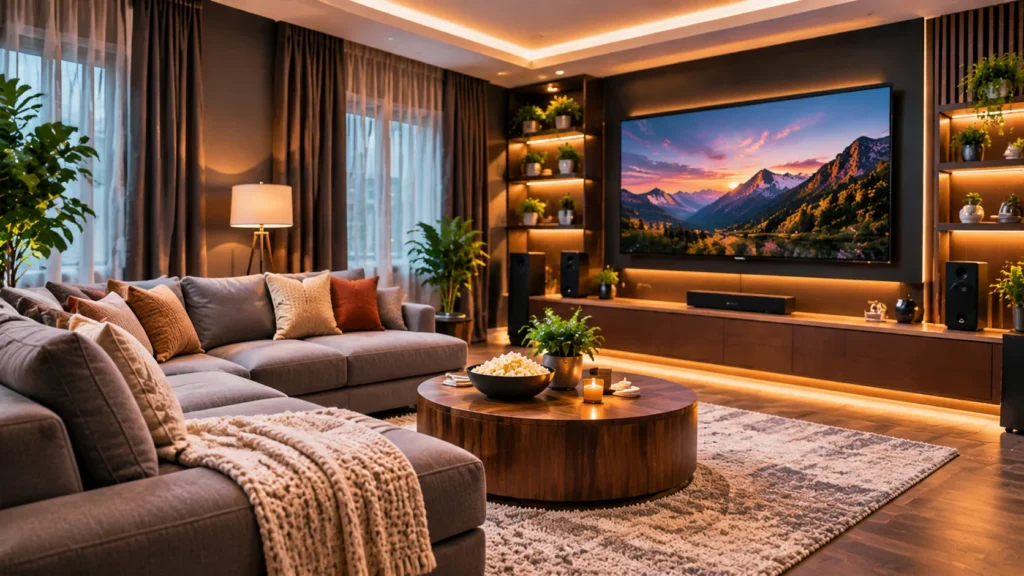
Start with the room’s main limitations: available wall space, windows, seating distance, and the number of people who usually watch together. Then choose ideas that improve both your movie experience and the room’s everyday function.
1. Create a Modern TV Feature Wall
A dedicated TV feature wall gives your living room a clear visual center without requiring a separate theater room.
Choose one wall for the television, then organize the surrounding furniture and storage around it. Wood panels, matte paint, or a simple built-in media unit can give the screen a finished appearance.
- Use a low-profile media console to keep the arrangement visually balanced.
- Choose matte finishes to minimize distracting reflections.
- Hide visible cables with suitable cable channels or properly installed in-wall wiring.
- Keep nearby decorative objects from blocking the screen or speakers.
Best for: Contemporary living rooms where the television is the primary entertainment feature.
2. Design a Cozy Sectional Sofa Theater
A sectional sofa makes a family-friendly theater setup feel relaxed rather than formal.
Position the main seating area directly toward the screen while keeping enough space to walk around the sofa. A chaise section creates room for stretching out during longer movies.
Choose supportive cushions, durable upholstery, and a depth that suits the people who use the room most often. A sofa that feels luxurious for lounging may not provide comfortable upright viewing for everyone.
Best for: Family movie nights, open-plan living areas, and households that prioritize comfort.
3. Add a Projector for a Big-Screen Movie Experience
A projector can make an ordinary living room feel more like a cinema, particularly when you have a large, unobstructed wall.
A retractable screen lets the room return to a less technology-focused appearance when movie night ends. A ceiling-mounted or properly positioned short-throw projector may also help preserve floor space.
Before choosing this layout, check:
- How much daylight enters the room.
- Whether curtains can control unwanted light.
- The projector’s required throw distance and mounting position.
- The screen’s compatibility with the projector.
- Where power, audio, and video cables will run.
Important distinction: A projector is not automatically better than a television. In a bright family room used throughout the day, a suitable TV is often the more practical display.
4. Build a Minimalist Home Theater
Minimalist home theater design places emphasis on the screen, seating, and a few carefully selected materials.
Use a simple entertainment console, neutral furniture, and concealed storage. Keep the wall surrounding the screen relatively uncluttered to reduce visual distractions.
A warm white, greige, or muted taupe palette can preserve a bright everyday atmosphere. A darker screen wall adds contrast without requiring every surface to be dark.
For more ways to coordinate these finishes, explore our guide to neutral living room colors.
Best for: Small apartments, modern homes, and rooms where a large entertainment system would otherwise feel overwhelming.
5. Use Indirect LED Lighting for a Cinematic Atmosphere
Indirect lighting makes a living room theater feel atmospheric without leaving people in complete darkness.
Place suitable LED lighting behind the TV, inside shelving, or along architectural details. Warm, dimmable lamps can create a softer atmosphere than bright ceiling fixtures.
For the most flexible arrangement, separate your lighting into three functions:
- Everyday lighting: Comfortable general illumination for regular activities.
- Movie lighting: Low, indirect illumination that avoids distracting screen glare.
- Task lighting: A reading or table lamp that can operate independently.
Our living room lighting guide explains how to combine these layers throughout a multipurpose space.
Lighting Tip
Test your lighting from the actual viewing seat. A strip or lamp that looks attractive from the doorway may produce an annoying reflection on the television.
6. Make a Small Living Room Feel Like a Theater
A compact room can deliver an engaging viewing experience when the layout is efficient.
Instead of filling the space with bulky recliners and multiple speaker stands, choose furniture that leaves comfortable circulation routes.
- Mount the television at a comfortable viewing height.
- Consider a compact soundbar if separate speakers would obstruct the room.
- Choose a streamlined sofa rather than oversized seating.
- Use wall-mounted or closed storage to reduce clutter.
- Add a rug and curtains to soften the space.
Best for: Apartments, studio homes, and narrow living rooms.
7. Create a Dark and Moody Cinema Corner
Deep wall colors can give a living room a dramatic theater-inspired appearance, especially around the screen.
Charcoal, navy, forest green, and dark brown are possible choices. Matte finishes are especially useful near a display because glossy surfaces can produce distracting reflections.
You don’t need to paint the entire room. A single dark feature wall paired with lighter upholstery can provide a cinematic backdrop while maintaining a welcoming daytime atmosphere.
Balance the darker colors with warm table lamps, natural wood, textured fabrics, and carefully controlled accents.
8. Upgrade the Sound Without Filling the Room With Speakers
Clear dialogue and well-balanced sound contribute strongly to an enjoyable home theater experience.
For simple installations, a soundbar can reduce equipment clutter. A traditional speaker system offers more flexibility in placement and separation when the room can accommodate it.
Possible configurations include:
- Soundbar: A compact upgrade for everyday TV watching.
- 3.1 system: Left, center, and right speakers plus a subwoofer, useful for emphasizing dialogue clarity.
- 5.1 system: Adds surround channels for directional effects.
- Dolby Atmos setup: Adds a height dimension using compatible equipment and speaker arrangements.
Speaker position matters as much as the number of speakers. Consult Dolby’s official surround sound speaker placement guide when planning your arrangement.
Best for: Anyone who values dialogue clarity, music, and immersive sound but wants the system to fit the room rather than dominate it.
9. Use Curtains and Rugs for a More Comfortable Theater
Soft furnishings improve the feeling of comfort and help reduce some distracting sound reflections in a living room.
Thick curtains, upholstered seating, and a generously sized rug can make hard-surfaced rooms feel less echoey. They also introduce warmth and texture into technology-heavy interiors.
Choose blackout curtains when you need better daylight control for movie viewing, especially with a projector.
Remember that curtains and rugs are not the same as soundproofing. They may improve the acoustic character inside a room, but they will not reliably prevent powerful bass from reaching neighboring rooms.
10. Design a Multipurpose Living Room With a Hidden Screen
If the living room is primarily used for conversation and relaxation, the entertainment equipment does not need to remain the visual focus all day.
Consider a retractable projector screen, a TV cabinet with doors, or furniture that incorporates the display into a larger storage arrangement.
The goal is to create two useful modes: a welcoming everyday living room and a comfortable movie-watching environment.
Keep access to ventilation, power outlets, and equipment controls in mind when designing concealed storage.
11. Create a Family-Friendly Movie Night Setup
A family theater works best when everyone can sit comfortably and the room remains easy to use.
Choose stain-resistant fabrics, stable furniture, accessible storage, and flexible seating. Ottomans or floor cushions can provide extra places to sit without requiring permanent theater chairs.
Keep snacks and drinks on a stable surface away from electronics. Secure tall furniture and televisions appropriately, especially in homes with children.
Best for: Families who want a shared entertainment space instead of a formal cinema room.
12. Combine a Fireplace and Home Theater
A fireplace and television can share a living room, but their placement requires careful planning.
Mounting a TV directly above a fireplace may create an uncomfortable upward viewing angle. Heat exposure and manufacturer clearance requirements can also be concerns.
If possible, position the screen on an adjacent wall or create separate focal areas. A flexible furniture layout can preserve the fireplace as an architectural feature without compromising everyday viewing comfort.
For alternative furniture arrangements, see our living room layouts with a TV.
13. Build a Warm, Scandinavian-Inspired Home Theater
Scandinavian-inspired design can make entertainment equipment feel integrated into a calm, comfortable living room.
Combine light wood, soft neutral walls, cozy textiles, and simple furniture shapes. Keep the screen wall uncluttered while introducing warmth through a large rug, throws, and understated lighting.
This approach is particularly useful when a traditional black-and-red cinema aesthetic would feel out of place.
Best for: Bright, airy living rooms where movies are only one of several daily activities.
14. Add Built-In Storage Around the Entertainment Wall
A well-designed entertainment unit can keep consoles, remotes, media devices, and accessories organized.
Use a combination of closed cabinets and open shelving. Reserve suitable open or ventilated areas for electronics that produce heat, and maintain access to cables and power connections.
Avoid placing speakers deep inside enclosed cabinets unless the equipment is specifically designed for that installation. Cabinet surfaces can interfere with sound reproduction.
Built-ins are especially valuable when equipment storage would otherwise spill into the main seating area.
15. Create a Flexible Smart Home Theater
A smart theater setup can simplify movie night by coordinating compatible lighting, audio, and display controls.
Instead of manually adjusting several devices, create a repeatable routine for watching films. For example, one routine might dim supported lights, select the desired TV input, and set a suitable audio mode.
Prioritize reliable everyday controls over complicated automation. Physical switches and straightforward remote-control options should remain easy for other household members to use.
Best for: Multipurpose living rooms where convenience and quick transitions matter.
How Should You Arrange a Living Room Home Theater?
Begin with the screen and the main viewing seat. Once those positions work, arrange the remaining furniture and audio equipment around them.
Three layout patterns cover many common situations:
| Layout | Best Situation | Main Consideration |
|---|---|---|
| Straight-on sofa | Small or rectangular rooms | Simple screen alignment and viewing comfort |
| L-shaped sectional | Family rooms | Side seats have different viewing angles |
| Sofa with movable chairs | Open-plan and multipurpose rooms | Preserves flexibility for conversation and guests |
For any arrangement, avoid making people walk directly between the main sofa and the screen. Also check sightlines from secondary seats before committing to a large media unit or fixed projector screen.
How Do You Choose the Right TV Size and Viewing Distance?
The right screen size depends on viewing distance, available wall space, and how immersive you want the experience to feel.
A theater-oriented arrangement generally uses a larger portion of your field of view than casual television watching. However, individual preferences vary, especially in rooms used for sports, gaming, and conversation.
Measure from your usual seated eye position to the planned screen location. Then compare screen sizes at that distance instead of choosing based on wall width alone.
The THX home theater viewing guide provides additional guidance on viewing angles and screen placement.
For a more detailed size-selection process, see our living room TV size guide.
What Should You Prioritize When Planning Your Home Theater?
Plan the experience before concentrating on decorative upgrades. A beautiful media wall will not compensate for a screen that’s uncomfortable to watch or a room where dialogue is difficult to hear.
- Set the viewing position. Decide where the main sofa or chairs will sit.
- Choose the display location. Account for windows, glare, and comfortable screen height.
- Plan the audio. Make sure speakers have appropriate positions and are not blocked by furniture.
- Control lighting. Separate movie lighting from normal everyday lighting.
- Organize cables and storage. Maintain safe, accessible connections and device ventilation.
- Add finishing touches. Use rugs, curtains, cushions, and artwork to make the room inviting.
Key Insight
Plan your screen, seating, and speakers as one system. Choosing them independently can leave you with a beautiful room that has awkward sightlines, blocked sound, or uncomfortable seating.
What Home Theater Design Mistakes Should You Avoid?
Many disappointing living room theaters suffer from layout and lighting problems rather than a lack of expensive equipment.
- Mounting the TV too high: Repeated upward viewing can become uncomfortable.
- Ignoring window reflections: Glare can make a good display difficult to enjoy during the day.
- Placing speakers behind furniture: Obstructions can reduce clarity and interfere with sound imaging.
- Choosing oversized seating: Large recliners or sectionals can block circulation and crowd smaller rooms.
- Relying only on ceiling lights: Bright overhead fixtures can create glare and make movie lighting harder to control.
- Hiding electronics without ventilation: Enclosed equipment needs the clearances and airflow specified by its manufacturer.
- Overlooking everyday use: A living room that works only for movies may be inconvenient for the rest of the household.
Fixing these issues usually deserves priority over adding extra themed decorations.
Frequently Asked Questions
Can you turn a small living room into a home theater?
Yes. A compact living room can become an enjoyable home theater with a correctly positioned TV, comfortable seating, improved audio, and controllable lighting. A separate cinema room is not necessary.
Is a TV or projector better for a living room theater?
A TV is generally easier to use in a bright, multipurpose room. A projector can offer a much larger image but usually benefits from stronger light control and more careful installation planning.
What colors work best for a home theater living room?
Charcoal, navy, olive, and muted earth tones can create a dramatic screen backdrop. Warm white, beige, and greige also work well when the space must remain bright and welcoming during the day. Matte finishes around the screen can help limit reflections.
Do you need surround sound for a living room home theater?
No. A well-positioned soundbar or simple stereo setup can improve everyday viewing. Surround sound becomes more useful when immersive movie audio is a priority and the room allows appropriate speaker placement.
How can you make a home theater look expensive on a budget?
Focus on a tidy media wall, concealed cables, cohesive colors, layered lighting, and comfortable textiles. These changes can create a more polished appearance without elaborate construction or luxury seating.
Final Thoughts
The most successful home theater living room ideas make movie watching more enjoyable without compromising everyday comfort.
Start with the essentials: a screen that suits your seating distance, a comfortable furniture arrangement, clear audio, and flexible lighting. Then choose the decorative details that match your home, whether that’s a minimalist media wall, cozy sectional seating, or a dramatic cinema-inspired color palette.
A well-planned living room doesn’t have to look like a traditional movie theater to deliver a rewarding cinematic experience.