

Quick Answer
To choose throw pillows for a bed, start with the mattress size, select two or three coordinating colors, and combine different pillow shapes and textures. Most beds look balanced with one to five decorative pillows, depending on their width and your preferred style. Build your arrangement from the back forward, following the same principles used to style a beautiful bed.
Follow These Six Simple Steps
- Measure your bed: Choose pillow sizes that suit the mattress and headboard.
- Choose a color palette: Repeat two or three colors from your bedding or bedroom decor.
- Mix pillow sizes: Place larger squares behind smaller squares or lumbar pillows.
- Balance patterns: Combine one noticeable pattern with quieter solids or textures.
- Choose practical fabrics: Look for removable covers and materials suitable for your lifestyle.
- Keep the arrangement manageable: Leave enough space for sleeping and remove decorative pillows at bedtime.
My Favorite Starting Point
- Queen bed: Try two 20-inch square pillows and one 12-by-20-inch lumbar pillow.
- King bed: Try three 22-inch square pillows and one longer lumbar pillow.
Throw pillows can make an ordinary bed look thoughtfully decorated. Yet choosing the right combination often feels harder than it should.
I prefer arrangements that look welcoming without creating extra work every evening. This guide explains how to choose pillow sizes, colors, fabrics, inserts, and layouts that make sense for your bedroom.
What Should You Consider Before Choosing Throw Pillows?
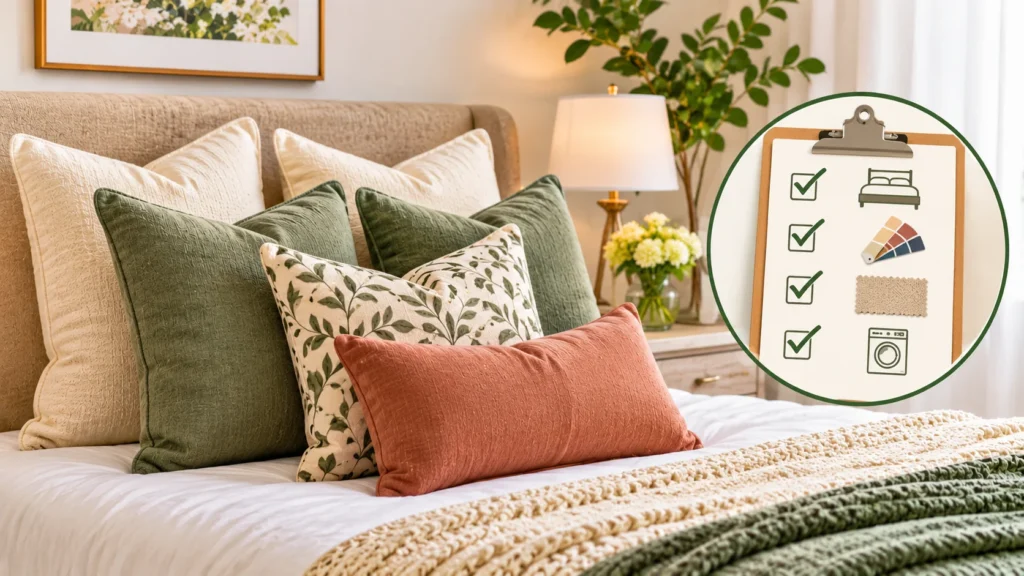
The best throw pillows complement your bed’s proportions, existing bedding, and everyday routine. Start with those practical details before shopping for decorative designs.
A pillow that looks beautiful in a product photograph might overwhelm a narrow bed. Similarly, an elaborate arrangement may become frustrating if you remake your bed daily.
What Are Throw Pillows for a Bed?
Bed throw pillows are decorative cushions placed in front of sleeping pillows to add color, texture, shape, and visual interest. Unlike regular sleeping pillows, their main purpose is bedroom styling.
They commonly come in square, rectangular, round, and bolster shapes. Some offer comfortable back support while sitting upright, although they aren’t necessarily suitable for overnight sleeping.
Before choosing, consider:
- Mattress size: A twin bed needs a smaller arrangement than a king.
- Headboard height: Taller headboards can visually support larger pillows.
- Bedding colors: Pillow colors should connect with your duvet, quilt, or sheets.
- Room style: Minimalist bedrooms usually benefit from fewer accents.
- Maintenance: Washable covers are useful in busy households.
- Storage space: Decorative pillows need somewhere clean to go at night.
Practical tip: Photograph your bed before buying anything. The picture makes it easier to notice missing colors, uneven proportions, or excessive decoration.
What Size Throw Pillows Should You Choose for Your Bed?
Choose throw pillow sizes according to your mattress width and the desired number of layers. Larger beds can accommodate bigger cushions without looking crowded.
For most bedrooms, square pillows between 18 and 24 inches provide a useful foundation. A smaller lumbar pillow can complete the arrangement.
Throw Pillow Size Guide by Bed Size
The following dimensions are practical decorating suggestions, not strict industry standards. Adjust them for your headboard, sleeping pillows, and preferred appearance.
| Bed Size | Mattress Width | Suggested Pillow Sizes | Decorative Pillows |
|---|---|---|---|
| Twin | 38 inches | One 16–18-inch square or small lumbar | 1–2 |
| Full | 54 inches | 18–20-inch squares; small lumbar | 2–3 |
| Queen | 60 inches | 20–22-inch squares; 12 × 20-inch lumbar | 3–4 |
| King | 76 inches | 22–24-inch squares; longer lumbar | 3–5 |
| California King | 72 inches | 22–24-inch squares; longer lumbar | 3–5 |
Mattress widths above reflect standard U.S. sizes; decorative pillow recommendations are flexible. Always compare the complete arrangement with the usable width of your headboard.
Should You Mix Square and Lumbar Pillows?
Yes. Combining square and lumbar pillows creates visual contrast without requiring many different designs.
Square pillows establish the main arrangement, while a rectangular lumbar adds a lower horizontal line. I find this combination particularly useful when a bed already has large sleeping pillows.
- Euro pillows: Usually 26 × 26 inches, suitable for substantial back layers.
- Large squares: Typically 22 × 22 or 24 × 24 inches for spacious beds.
- Medium squares: Usually 18 × 18 or 20 × 20 inches for versatile layering.
- Lumbar pillows: Common options include 12 × 20 and 14 × 24 inches.
- Round pillows: Best used sparingly as a playful accent.
Design tip: Avoid choosing every pillow in exactly the same size. A small change in height or shape often creates a more considered arrangement.
How Many Throw Pillows Should You Put on a Bed?
Most beds need fewer decorative pillows than showroom displays suggest. One to five accents usually provide enough styling flexibility for everyday bedrooms.
The right quantity depends on bed size, sleeping habits, and available storage. Start small, then add pillows only if something feels visually unfinished.
Minimalist Arrangement
Use one lumbar pillow centered against your sleeping pillows. This approach adds color without hiding the headboard or creating clutter.
It’s especially practical for twin beds, guest rooms, and compact bedrooms.
Balanced Everyday Arrangement
Place two matching square pillows behind one coordinating lumbar pillow. The repeated shapes create order, while the front pillow provides contrast.
This is my preferred starting layout for a queen bed. Three decorative pillows add enough detail without making bedtime complicated.
Full Layered Arrangement
Start with large Euro shams, add medium decorative pillows, and finish with a smaller lumbar. This creates a more substantial, hotel-inspired presentation.
Remember that hotel-style decorating doesn’t require filling every available inch. Negative space helps the arrangement feel intentional.
How Do You Choose Throw Pillow Colors That Match Your Bedding?
Choose pillow colors by repeating tones already present in your bedding, artwork, curtains, or rug. A coordinated palette usually works better than purchasing unrelated colors you happen to like.
A simple approach is to select one foundation color, one supporting color, and one accent. These colors don’t need equal representation.
Use a Simple Three-Color Palette
- Foundation: White, cream, beige, gray, or another dominant bedding color.
- Supporting color: Sage green, dusty blue, taupe, or muted terracotta.
- Accent: A deeper or warmer shade that adds contrast.
For example, white bedding can work beautifully with sage green squares and a textured cream lumbar. A small amount of dark olive adds depth without overwhelming the room.
If your bedding already contains a bold pattern, choose mostly solid pillows. This helps prevent too many designs from competing.
Which Pillow Colors Work With Popular Bedding Colors?
| Bedding Color | Suggested Pillow Colors | Overall Effect |
|---|---|---|
| White | Sage, beige, navy, terracotta | Fresh and adaptable |
| Beige | Cream, rust, olive, brown | Warm and earthy |
| Gray | Cream, charcoal, dusty blue | Calm and contemporary |
| Navy | White, camel, oatmeal, muted gold | Classic and contrasting |
| Sage Green | Ivory, tan, olive, dusty rose | Soft and natural |
These combinations are design suggestions rather than fixed rules. Personal taste and natural bedroom lighting should guide your final choice.
How Should You Mix Throw Pillow Patterns and Textures?
Mix patterns by varying their scale and giving each pillow a clear visual role. A large pattern, a subtle texture, and a solid color often work well together.
Avoid combining several competing prints of similar size. The eye needs quieter areas to appreciate the more decorative details.
Try the One-Pattern, One-Texture, One-Solid Method
- Patterned pillow: Choose a botanical print, stripe, check, or geometric design.
- Textured pillow: Add woven cotton, linen, boucle, or another tactile material.
- Solid pillow: Use a color that appears elsewhere in the arrangement.
For a neutral bedroom, I like a subtle striped pillow beside a woven beige cushion. A plain olive lumbar then provides a quiet finishing touch.
Texture can also create interest without introducing another color. That’s useful when you want a peaceful, monochromatic bedroom.
Which Fabrics Are Best for Bed Throw Pillows?
The best fabric depends on how frequently you handle the pillows and how much maintenance you’re comfortable with. Appearance matters, but care requirements deserve equal attention.
- Cotton: Versatile and often easy to maintain, depending on the cover’s instructions.
- Linen: Relaxed appearance with natural texture and visible creasing.
- Velvet: Soft, rich-looking surface suited to elegant bedroom accents.
- Boucle: Distinctive looped texture that works well in neutral rooms.
- Polyester blends: Available in many finishes, often at accessible prices.
- Knitted fabrics: Add softness and a casual, cozy appearance.
Check the actual care label before assuming a pillow cover can go into the washing machine. Embroidery, trims, and delicate fibers may require special treatment.
For more ideas on combining soft furnishings, see this guide to making a bedroom feel cozy.
How Do You Arrange Throw Pillows on a Bed?
Arrange decorative pillows from tallest to shortest, working from the headboard toward the foot of the bed. This creates depth while keeping smaller accents visible.
The exact arrangement can remain simple. You don’t need professional styling experience to achieve a balanced result.
A Five-Step Pillow Arrangement Method
- Position sleeping pillows: Place your regular pillows neatly against the headboard.
- Add the back layer: Stand large Euro pillows or decorative squares behind the smaller accents.
- Introduce medium pillows: Center or pair them across the width of the bed.
- Place a lumbar pillow: Use one rectangular cushion near the front.
- Check the proportions: Step back and remove anything that makes the arrangement feel crowded.
Symmetry creates a neat, traditional appearance. Asymmetry feels more casual and can work well in modern or eclectic bedrooms.
If you enjoy layered bedding, coordinate your cushions with the blanket and duvet arrangement. This guide to layering bedding explains how the different pieces work together.
How Can You Style a Queen Bed?
For a practical queen-bed arrangement, position two 20-inch decorative squares in front of your sleeping pillows. Finish with one 12-by-20-inch lumbar cushion.
Choose matching squares for symmetry or complementary textures for a relaxed appearance. Keep the lumbar in a color that connects the arrangement.
How Can You Style a King Bed?
A king bed can support three large squares or a pair of substantial Euro shams. Add a longer lumbar cushion if the arrangement needs a central focal point.
Choose the simplest layout that suits your headboard. A king mattress doesn’t automatically require an elaborate collection of cushions.
What Pillow Inserts Should You Choose?
Choose an insert based on the pillow cover’s dimensions, fabric, and desired fullness. The insert affects the finished shape as much as the decorative cover.
For many soft covers, an insert approximately one to two inches larger than the cover creates a fuller appearance. A 20-by-20-inch insert, for example, may work well inside an 18-by-18-inch cover.
This is a guideline rather than a universal rule. Stiff materials, tightly constructed covers, and some manufacturer designs may need an insert closer to the labeled size.
Down, Down-Alternative, or Polyester?
- Down or feather blend: Often compressible, shapeable, and suitable for a relaxed decorative appearance.
- Down alternative: Provides a feather-free option, with firmness varying by construction.
- Polyester fiberfill: Often affordable and lightweight, although lower-density inserts may lose shape sooner.
A better insert can sometimes improve pillows you already own. Before replacing every cover, check whether the existing inserts have become flat.
For examples of available filling materials, explore Pottery Barn’s decorative pillow insert collection.
How Can You Choose Throw Pillows for Different Bedroom Styles?
Match your pillow selection to the mood and materials already established in your bedroom. This creates a connected design rather than a collection of unrelated accessories.
Modern Minimalist Bedroom
- Choose one or two accent pillows.
- Use restrained colors such as cream, taupe, or charcoal.
- Favor simple shapes and subtle textures.
Boho Bedroom
- Mix woven fabrics with warm earthy colors.
- Try muted terracotta, cream, rust, or olive.
- Combine patterns while repeating at least one color.
Farmhouse Bedroom
- Start with cream, beige, or muted green pillows.
- Introduce understated stripes or checks.
- Use natural-looking woven fabrics for texture.
Hotel-Inspired Bedroom
- Use symmetrical rows of generously filled pillows.
- Keep the main palette neutral.
- Finish with one contrasting lumbar or accent pillow.
Whichever style you prefer, the entire room should feel connected. Our bedroom decor checklist can help you coordinate bedding with the rest of your furnishings.
What Common Throw Pillow Mistakes Should You Avoid?
The most common mistake is choosing pillows individually without considering the completed bed. Good-looking cushions can still feel mismatched when their proportions, colors, or textures compete.
Watch for these issues before purchasing:
- Too many pillows: Leave breathing room around the arrangement and headboard.
- Incorrect proportions: Avoid oversized cushions on narrow beds.
- Matching everything: Introduce texture or subtle contrast instead of buying only identical pieces.
- Ignoring inserts: An underfilled cover can make an otherwise attractive pillow look flat.
- Choosing difficult fabrics: Consider washing instructions before committing to delicate materials.
- Forgetting storage: Plan where pillows will go overnight.
I also recommend avoiding expensive full pillow collections before testing a simpler layout. Start with a pair of covers and one accent, then evaluate the result.
How Can You Keep Bed Throw Pillows Clean and Looking Good?
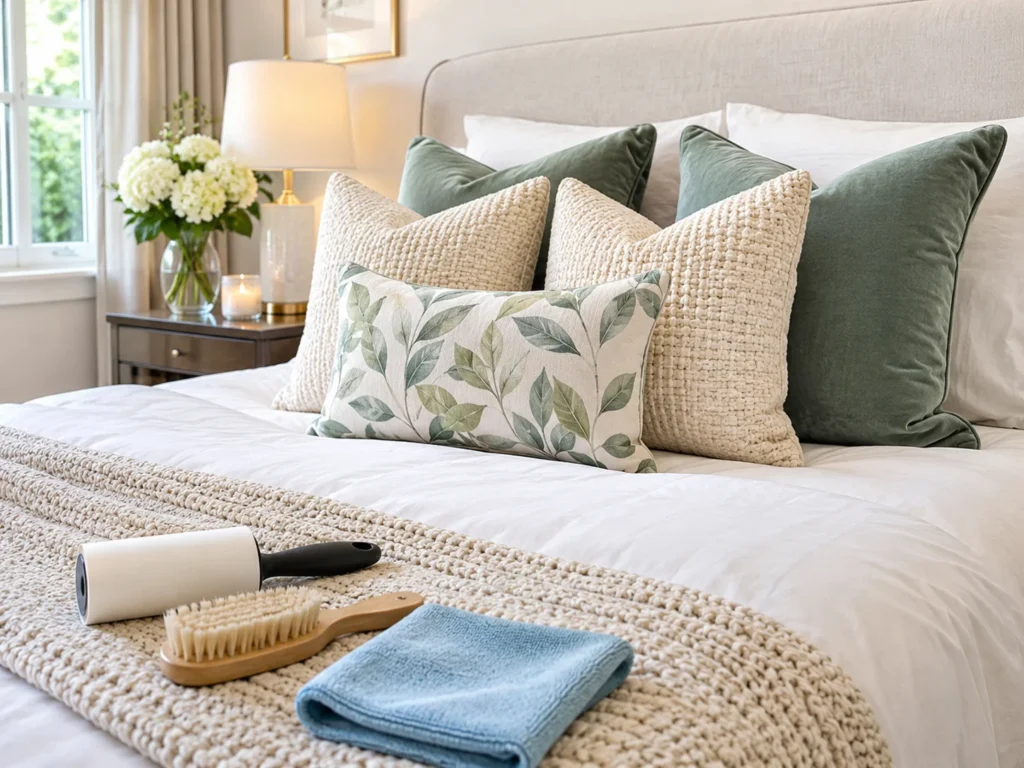
Maintain decorative pillows by following their care labels, removing surface dust, and reshaping the inserts when needed. Removable covers can make regular cleaning much more manageable.
For practical care:
- Check the fabric and insert care instructions separately.
- Remove covers before washing when the manufacturer permits it.
- Spot-clean minor marks using a product appropriate for the material.
- Dry washable inserts thoroughly according to their labels.
- Fluff and rotate cushions to help maintain their shape.
- Store seasonal covers in a clean, dry location.
A decorative pillow doesn’t need constant washing, but visible stains and odors should be addressed promptly. Households with pets or children may benefit from simpler, removable covers.
The American Cleaning Institute offers general guidance on caring for household textiles and laundry.
Which Throw Pillows and Inserts Are Worth Considering?
If you’re ready to shop, start with practical products rather than buying a complete decorative set. I would prioritize washable covers, suitable insert dimensions, and colors that fit your existing bedding.
These three established product lines suit different shopping priorities. The ratings below represent my editorial suitability estimates, not verified customer review averages.
🏆 Best for Versatile Styling
MIULEE Decorative Throw Pillow Covers
★★★★☆ 4.5/5 editorial fit
MIULEE offers decorative cover options in common square sizes, including 18-by-18-inch styles. I would consider these for changing bedroom colors without replacing existing pillow inserts. Check the fabric and closure details of the specific listing.
💰 Budget-Friendly Insert Option
Utopia Bedding Throw Pillow Inserts
★★★★☆ 4.0/5 editorial fit
These polyester-filled decorative inserts are sold in several standard sizes, including 18-by-18 and 20-by-20 inches. I would consider them when filling multiple covers affordably. Compare the filling weight and customer feedback before choosing.
✨ Best for Premium Filling Options
Pottery Barn Decorative Pillow Inserts
★★★★☆ 4.5/5 editorial fit
Pottery Barn offers decorative inserts in different shapes and filling types, including down-alternative options. I would consider this collection for a more tailored layered arrangement. Choose your fill and size based on the cover specifications.
Frequently Asked Questions About Bed Throw Pillows
Should Throw Pillows Match Your Bedding?
Throw pillows don’t need to match your bedding exactly. They should share at least one coordinating color, material, or visual element. Using contrasting textures and complementary shades creates interest while keeping the bed cohesive. If your duvet has a busy pattern, choose mostly solid decorative pillows.
How Many Throw Pillows Look Good on a Queen Bed?
Three decorative pillows make an excellent starting arrangement for a queen bed. Two medium square pillows and one smaller lumbar provide symmetry and contrast. You can use more pillows for a fuller appearance, but keep the arrangement comfortable to remove and store every night.
Should Throw Pillows Be Bigger Than Sleeping Pillows?
Not necessarily. Decorative pillows can be larger, smaller, or differently shaped than your sleeping pillows. Large Euro pillows work well as a back layer, while smaller lumbar cushions create a finishing accent. Choose proportions that complement your headboard and leave enough visible space.
Can You Sleep on Decorative Throw Pillows?
Some decorative pillows can provide temporary comfort, but they aren’t always designed for overnight neck support. Rough textures, trims, and unusual shapes may feel uncomfortable. Use a suitable sleeping pillow for your normal sleep position and move decorative cushions away from the sleeping area at bedtime.
How Often Should You Replace Bed Throw Pillows?
There is no fixed replacement schedule for decorative pillows. Replace an insert when it becomes permanently flattened, damaged, or difficult to clean. Covers may last considerably longer with proper care. If you want a fresh appearance, replacing covers can be more economical than buying entirely new cushions.
Final Thoughts: Choosing Throw Pillows That Work for Your Bed
Learning how to choose throw pillows for a bed becomes easier when you focus on proportions, color coordination, and daily practicality. A thoughtful combination of shapes and textures usually looks better than an oversized collection of matching accessories.
My advice is to start with two coordinating squares and one lumbar pillow for a queen bed, then adjust the arrangement. Choose washable fabrics where practical and invest in inserts that hold their shape.
Start with what you already own. Rearrange your current pillows, identify one missing color or texture, and purchase only what improves the finished bed.