

Quick Answer
To decorate the wall behind a bed, create a focal point using an accent paint color, wallpaper, lightweight artwork, decorative paneling, or a statement headboard. Choose decorations that complement your bedding, furniture, and overall bedroom decor without making the sleeping area feel crowded.
Follow these six simple steps:
- Measure the wall: Determine how much space is available above and beside your headboard.
- Choose a focal point: Select one main decorative feature rather than several competing elements.
- Coordinate your colors: Match wall decorations with your bedding and furniture.
- Balance the proportions: Aim for a central decorative arrangement around two-thirds of the bed width.
- Add soft lighting: Use bedside lamps or suitable wall lighting to highlight textures and colors.
- Prioritize safety: Avoid heavy mirrors, glass frames, and loaded shelves directly above the sleeping area.
Best decorating tip:
- For a calm, stylish bedroom, combine one simple wall treatment with coordinated bedding and warm lighting.
The wall behind your bed can transform the entire bedroom without replacing your furniture. Yet this important space often remains empty or becomes overcrowded with decorations.
In this 2026 guide, I’ll explain how to decorate the wall behind a bed using practical ideas for different room sizes, budgets, and decorating styles. You’ll also learn how to choose suitable proportions and avoid common installation mistakes.
What Is Bedroom Wall Decor Behind a Bed?
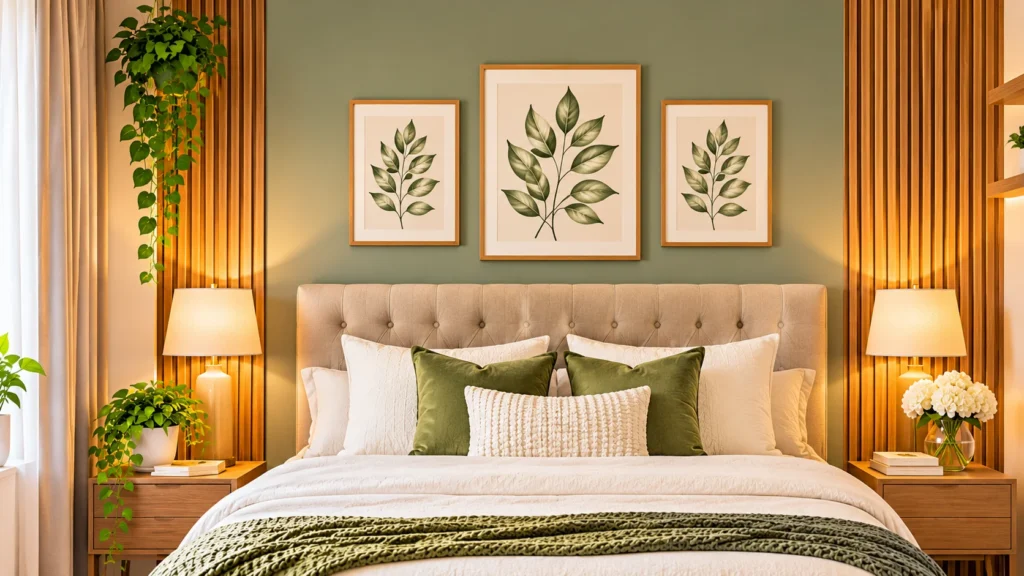
Bedroom wall decor behind a bed refers to decorative treatments and design elements that visually highlight the wall surrounding the headboard. It creates a focal point that connects the bed with the rest of the room.
Unlike decorations on other bedroom walls, above-bed decor needs to complement the sleeping area without interfering with comfort or safety.
Popular headboard wall decorating options include:
- Accent paint colors.
- Decorative wallpaper.
- Lightweight canvas or fabric artwork.
- Wood slat wall treatments.
- Decorative wall molding.
- Statement headboards.
- Wall-mounted bedside lighting.
- Painted murals and geometric patterns.
The best option depends on your available space, preferred style, and whether you own or rent your home.
How to Decorate the Wall Behind a Bed: Step-by-Step Guide
Start by measuring the available wall space, selecting a focal point, and coordinating your colors. Then choose decorations that fit the room’s proportions and can be installed safely.
Step 1: Measure Your Bed and Wall
Measure the bed width, headboard height, and distance between the headboard and ceiling. These measurements help prevent decorations from looking too small or oversized.
For a central decorative arrangement, I suggest starting with a width of approximately 60–75% of the bed width.
| Bed Size | Standard US Width | Suggested Decor Width |
|---|---|---|
| Twin | 38 inches | 23–29 inches |
| Full | 54 inches | 32–41 inches |
| Queen | 60 inches | 36–45 inches |
| King | 76 inches | 46–57 inches |
| California King | 72 inches | 43–54 inches |
These suggested dimensions are decorating guidelines, not installation requirements. Measure your actual headboard because bed frames often extend beyond mattress dimensions.
Step 2: Choose One Main Focal Point
A focal point is the feature that naturally attracts attention when you enter the bedroom. The wall behind your bed is often the ideal location.
Choose one dominant feature, such as:
- A painted accent wall for a minimalist bedroom.
- Botanical wallpaper for a nature-inspired room.
- Vertical wood paneling for a modern bedroom.
- A soft textile wall hanging for a bohemian style.
- An oversized upholstered headboard for a luxurious appearance.
A strong central feature usually looks more intentional than several unrelated decorations.
Step 3: Coordinate Your Bedroom Colors
Choose wall colors that complement your bedding, curtains, flooring, and furniture. Repeat one or two existing colors to create a connected design.
- Warm neutrals: Beige, cream, oatmeal, and taupe.
- Nature-inspired colors: Sage green, olive, and muted brown.
- Modern colors: Charcoal, soft gray, and off-white.
- Calming colors: Dusty blue, muted lavender, and pale green.
- Rich accent colors: Navy, forest green, and terracotta.
Test paint samples during the morning and evening before committing. Natural and artificial lighting can change how colors appear.
Step 4: Plan the Decorative Arrangement
Mark the bed’s centerline and experiment with your decorative layout before drilling holes or applying wallpaper. Paper templates can help you visualize the finished arrangement.
For example, a 40-inch-wide fabric artwork can provide balanced proportions above a standard queen-size bed. Check that the arrangement leaves enough visual space around the headboard.
Step 5: Complete the Look With Lighting
Soft lighting can highlight decorative textures and make the headboard wall feel more inviting. Consider warm-white bulbs around 2700K–3000K for a comfortable evening atmosphere.
Explore this guide on how to choose bedroom lighting to coordinate ambient, task, and accent lighting with your wall decor.
15 Stylish Ideas for Decorating the Wall Behind a Bed
You don’t need an expensive renovation to create an attractive headboard wall. These ideas range from simple weekend projects to more permanent architectural upgrades.
1. Paint a Bedroom Accent Wall
An accent wall uses a contrasting paint color to distinguish one wall from the others. It’s one of the simplest ways to give your bedroom a clear focal point.
- Choose sage green for a natural appearance.
- Use navy for a dramatic, sophisticated look.
- Try beige or taupe for understated warmth.
- Choose dusty blue for a softer atmosphere.
For painting preparation and indoor air quality information, consult the EPA’s indoor air quality resources and follow your paint manufacturer’s ventilation instructions.
2. Install Decorative Wallpaper
Wallpaper introduces pattern, color, and visual texture without requiring additional hanging decorations. It works particularly well behind beds with simple headboards.
Popular wallpaper designs include:
- Botanical prints.
- Subtle geometric patterns.
- Faux grasscloth textures.
- Abstract watercolor designs.
- Vintage floral patterns.
Removable wallpaper may suit renters, provided the landlord approves it and the wall surface passes an application test.
3. Hang a Lightweight Statement Artwork
A single oversized artwork can give the bedroom a clean, gallery-inspired appearance. Choose a lightweight fabric print or unglazed canvas rather than a heavy glass-framed piece.
Abstract designs, landscapes, and botanical illustrations work well with neutral bedding.
I prefer artwork that repeats a color already present in the room. This approach makes even a simple decorating arrangement feel connected.
4. Create a Wood Slat Accent Wall
Vertical wood slats add depth, texture, and an architectural appearance. They complement contemporary, Scandinavian, and Japandi-inspired bedrooms.
- Light oak creates an airy appearance.
- Walnut introduces darker, warmer tones.
- White-painted slats suit minimalist interiors.
- Partial-width paneling can highlight the headboard.
Install panels according to the manufacturer’s instructions and check that all components are securely attached.
5. Add Decorative Wall Molding
Wall molding creates geometric or rectangular patterns that add architectural detail to an otherwise plain surface. Painting the molding and wall the same color produces a refined appearance.
Consider simple rectangular panels for traditional bedrooms or narrow vertical patterns for contemporary spaces.
This option works especially well when you want a hotel-inspired bedroom without extensive wall accessories.
6. Decorate With a Fabric Wall Hanging
A fabric wall hanging adds softness and texture above the bed. It can also introduce subtle patterns without the visual weight of a large frame.
Suitable options include woven textiles, quilts, lightweight tapestries, and minimalist fabric prints.
Choose secure mounting hardware and avoid heavy decorative rods directly over the sleeping area.
7. Use an Oversized Upholstered Headboard
An oversized headboard can function as both furniture and wall decor. It fills a large portion of the wall while creating a comfortable visual backdrop.
- Bouclé fabric adds soft texture.
- Linen creates a relaxed, natural appearance.
- Velvet introduces a luxurious finish.
- Channel tufting emphasizes vertical lines.
Choose a stable headboard with suitable mounting or bed-frame connections.
8. Paint a Decorative Arch Behind the Bed
A painted arch creates the appearance of a headboard feature without requiring a separate decorative structure. It’s particularly useful for bedrooms with simple or low-profile bed frames.
Center the arch behind your bed and choose a color that contrasts gently with the surrounding wall.
Painter’s tape and a carefully drawn template can help produce a cleaner outline.
9. Install Bedside Wall Sconces
Wall sconces frame the bed while providing practical lighting. They also free up nightstand space, which can benefit smaller bedrooms.
- Adjustable sconces work well for reading.
- Fabric-shade sconces provide softer illumination.
- Metal sconces complement modern furniture.
- Plug-in models may reduce installation work.
Position fixtures beside the bed rather than directly above pillows. Use a qualified electrician when permanent wiring is required.
10. Create a Two-Tone Feature Wall
A two-tone wall combines two paint colors to create depth and visual separation. A horizontal division can emphasize the headboard without adding physical decorations.
Try a muted darker color on the lower section and a lighter shade above it.
This technique is especially useful when decorating on a limited budget.
11. Add a Painted Wall Mural
A mural turns the entire headboard wall into a decorative feature. It can introduce scenery, abstract shapes, or soft botanical patterns.
Unlike several individual accessories, a mural provides a continuous visual composition.
Choose subdued colors if you want the bedroom to maintain a calm appearance.
12. Use Decorative Mirrors Beside the Bed
Mirrors can reflect light and create a greater sense of depth. However, avoid installing heavy mirrors directly above the sleeping area.
Place securely mounted mirrors beside the bed, above suitable nightstands, or on an adjacent wall instead.
For smaller rooms, these additional tips on how to make a bedroom look bigger can help improve visual space without overcrowding the walls.
13. Create a Minimalist Gallery Arrangement
A gallery arrangement combines multiple artworks into one coordinated composition. Lightweight unframed prints offer an alternative to heavy glass-framed artwork above a bed.
Use consistent spacing and a limited color palette. A starting gap of two to three inches between pieces can help maintain visual balance.
Arrange paper templates on the wall before installing the final decorations.
14. Add Indirect Headboard Lighting
Indirect lighting creates a gentle glow around the headboard or feature wall. It can highlight textures without introducing another dominant decorative element.
Use lighting products designed for indoor installation and follow their mounting and electrical instructions.
The U.S. Department of Energy’s LED lighting guide provides useful information about LED technology and energy efficiency.
15. Leave the Wall Intentionally Minimal
Sometimes the best decorating decision is to avoid adding more objects. A beautiful headboard, coordinated bedding, and simple wall color can create a complete bedroom design.
Minimal wall decor works especially well in rooms with patterned bedding or visually prominent furniture.
For more inspiration, explore this guide on how to make a bed look hotel-like using simple, coordinated styling.
Which Bedroom Wall Decorating Idea Is Best?
The best wall treatment depends on your budget, decorating preferences, and installation requirements. Paint generally requires fewer materials than architectural paneling, while wallpaper offers greater pattern variety.
| Decor Option | Relative Cost | Difficulty | Best For |
|---|---|---|---|
| Accent paint | Low | Easy | Budget updates |
| Wallpaper | Medium | Moderate | Pattern and texture |
| Wood slats | High | Advanced | Modern interiors |
| Fabric artwork | Low–medium | Easy | Soft, cozy decor |
| Wall molding | Medium–high | Moderate–advanced | Elegant bedrooms |
| Painted arch | Low | Easy–moderate | Simple DIY projects |
Relative costs and difficulty vary with wall size, material quality, preparation requirements, and local labor prices.
How High Should You Decorate Above a Headboard?
For lightweight wall artwork, a gap of approximately six to ten inches above the headboard is a useful visual starting point. Adjust this spacing according to the ceiling height, artwork dimensions, and sitting clearance.
The goal is to make the decoration feel connected to the bed rather than floating near the ceiling.
- Measure from the top of the headboard.
- Center the main decoration relative to the bed.
- Check the available ceiling clearance.
- Preview the arrangement using paper templates.
- Consider whether the decoration could fall into the sleeping area.
Aesthetic spacing does not guarantee installation safety. The USGS earthquake preparedness handbook recommends soft decorative materials above beds instead of potentially dangerous heavy objects.
How Can You Decorate the Wall Behind a Bed Without a Headboard?
You can create a visual headboard using paint, wallpaper, decorative molding, or a fabric treatment. These options define the sleeping area without requiring a traditional furniture headboard.
Try one of these practical alternatives:
- A painted semicircle or arch.
- A rectangular contrasting color block.
- A wallpapered section extending beyond the mattress.
- Securely installed decorative wall paneling.
- A lightweight textile arrangement.
A painted feature is especially useful when floor space is limited or your bed frame has no headboard attachment.
How to Decorate the Wall Behind a Bed on a Budget
Repainting, creating simple wall patterns, and reusing existing textiles can refresh the headboard wall without a major investment. Focus on one meaningful change instead of purchasing several small accessories.
- Use leftover paint to create a geometric feature.
- Make an unframed fabric wall decoration.
- Rearrange existing lightweight artwork.
- Choose a small wallpaper accent section.
- Coordinate existing lamps and bedding.
- Refresh a compatible headboard with a fabric cover.
Before buying anything, review this bedroom decor checklist to determine which updates will have the greatest impact.
Common Mistakes When Decorating the Wall Behind a Bed
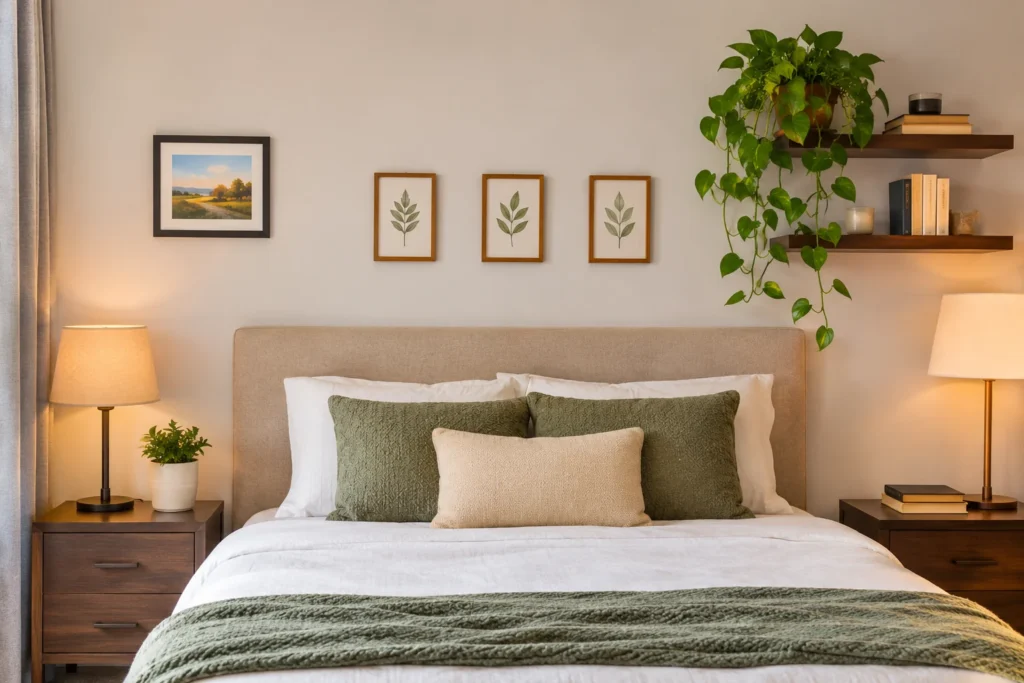
Overcrowding, poor proportions, and unsuitable mounting methods can undermine an otherwise attractive bedroom design.
Avoid these common mistakes:
- Choosing undersized decorations: Tiny individual objects can look disconnected from a wide bed.
- Using too many colors: Unrelated shades can make the sleeping area appear busy.
- Hanging artwork too high: Excessive spacing weakens the connection between the bed and wall decor.
- Ignoring wall materials: Drywall, masonry, plaster, and wood require different installation methods.
- Installing heavy overhead objects: Mirrors, glass artwork, and loaded shelves can create falling-object hazards.
- Ignoring lighting: Harsh shadows can hide decorative textures or exaggerate wall imperfections.
- Skipping surface preparation: Dust, moisture, and uneven surfaces can affect paint and wallpaper adhesion.
The Building America Solution Center’s anchoring guidance offers additional information about reducing falling-object hazards.
Recommended Products for Bedroom Wall Decorating
If you’re ready to update the wall behind your bed, these two products can help with practical painting and wallpaper projects.
Affiliate disclosure: As an Amazon Associate, I earn from qualifying purchases.
🏆 Best for textured accent walls
RoomMates Grasscloth Blue Peel and Stick Wallpaper RMK11314WP
★★★★☆ Editorial suitability: 4/5
This vinyl wallpaper provides a grasscloth-inspired texture and covers approximately 28.18 square feet per roll. I’d consider it for adding visual depth to a smooth headboard wall without heavy decorations.
💰 Best for budget DIY painting
ScotchBlue Original Multi-Surface Painter’s Tape 2090
★★★★½ Editorial suitability: 4.5/5
This multi-surface painter’s tape helps define paint edges and decorative patterns on compatible surfaces. I’d choose it for planning geometric designs, two-tone walls, and simple painted headboard features.
The scores represent editorial suitability for the suggested projects, not verified customer ratings or hands-on test results. Check current product specifications and surface compatibility before purchasing.
Frequently Asked Questions
What looks best on the wall behind a bed?
Accent paint, textured wallpaper, lightweight fabric artwork, and decorative wall paneling are attractive choices for the wall behind a bed. Select one feature that complements your headboard, bedding, and bedroom furniture while maintaining balanced proportions and safe installation.
Should you leave the wall above your bed empty?
Leaving the wall above your bed empty is perfectly acceptable, especially when you have a decorative headboard or patterned bedding. An intentionally minimal wall can create a calm appearance and eliminate the risks associated with heavy overhead decorations.
What size artwork should go above a queen bed?
A decorative arrangement approximately 36–45 inches wide generally creates balanced proportions above a standard 60-inch queen-size bed. Adjust the dimensions to suit the actual headboard width and ceiling height, and prioritize lightweight artwork with secure mounting.
How can I decorate behind my bed without drilling holes?
Use approved removable wallpaper, accent paint, painted geometric patterns, or a freestanding decorative headboard. These options can refresh the wall without drilling into it, although renters should obtain permission and check surface compatibility before applying adhesives or paint.
Is it safe to put shelves above a bed?
Shelves directly above a bed can create falling-object hazards, particularly when they hold books, plants, or heavy accessories. A safer approach is to install storage shelves on another wall and use paint, wallpaper, or lightweight textile decor behind the bed.
Final Thoughts
Learning how to decorate the wall behind a bed is about balancing visual appeal, comfort, and practical safety. A coordinated accent wall can transform the room without an expensive furniture upgrade.
My preferred starting point is a simple wall treatment that complements the headboard and bedding. Add soft lighting and carefully selected textures rather than filling every available space.
Start by measuring your headboard, choosing a color palette, and selecting one of these 15 decorating ideas that fits your bedroom and budget.