

Quick Answer
Bedroom decor is the combination of colors, furniture, bedding, lighting, window treatments, artwork, rugs, storage, and decorative accessories used to shape how a bedroom looks and feels. Good bedroom decor also supports comfort, organization, and rest, which is why I recommend treating the room as both a visual space and a comfortable sleep environment.
The main parts of bedroom decor
- Color palette: Wall colors, bedding, furniture finishes, and accents create the room’s overall mood.
- Furniture: Beds, nightstands, dressers, benches, and chairs determine function and layout.
- Textiles: Bedding, curtains, rugs, throws, and cushions add softness, warmth, and texture.
- Lighting: Ceiling lights, bedside lamps, and accent lighting control both visibility and atmosphere.
- Decorative accents: Artwork, mirrors, plants, books, and personal objects give the bedroom character.
- Storage: Organized storage helps the room stay visually calm instead of cluttered.
A useful starting point
- Choose the bed and one main color first, then build the rest of the decor around them.
I think bedroom decor is easiest to understand when you stop thinking about individual decorations. You’re creating one coordinated environment rather than collecting attractive objects.
This guide explains what counts as bedroom decor, what doesn’t, and how to build a room that feels comfortable and intentional.
What Is Bedroom Decor?
Bedroom decor is the visual and functional styling of a bedroom through furniture, color, textiles, lighting, accessories, and arrangement. Its purpose is to make the room attractive, comfortable, useful, and personal.
Decor can be as simple as new bedding and a bedside lamp. It can also involve coordinating nearly every visible element in the room.
Definition: Bedroom decor is the collection and arrangement of decorative and functional elements that establish a bedroom’s appearance, atmosphere, and personality.
The important word is arrangement. A beautiful rug, lamp, or headboard can still look disconnected when nothing around it shares its colors, proportions, or style.
What Does Bedroom Decor Include?
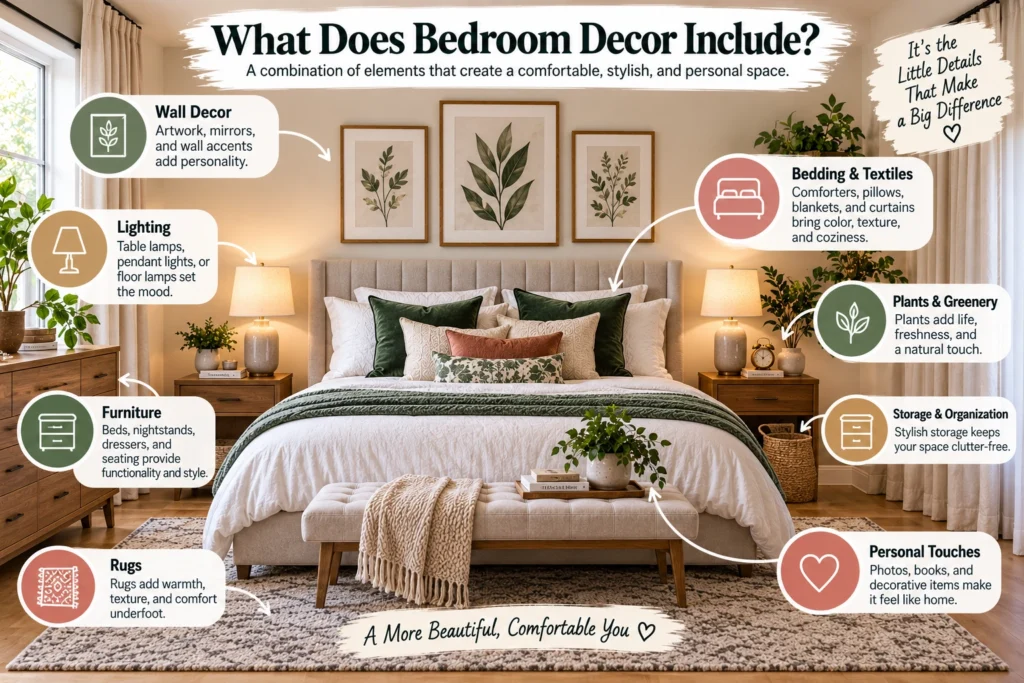
Bedroom decor includes almost everything you deliberately choose to influence the room’s appearance or atmosphere. Some elements are decorative, while others serve practical purposes too.
- Wall colors and finishes: Paint, wallpaper, paneling, and accent walls create the visual background.
- The bed: The frame, headboard, bedding, and pillows usually form the room’s main focal point.
- Furniture: Nightstands, dressers, wardrobes, chairs, desks, and benches add function and visual weight.
- Lighting: Ceiling fixtures, bedside lamps, sconces, and accent lamps create different lighting layers.
- Window treatments: Curtains, shades, and blinds manage privacy, daylight, and visual softness.
- Floor decor: Rugs introduce color, pattern, comfort, and texture.
- Wall decor: Artwork, photographs, mirrors, shelves, and tapestries add personality.
- Soft furnishings: Throws, decorative pillows, upholstery, and cushions help connect colors and textures.
- Accessories: Books, trays, plants, baskets, clocks, vases, and personal objects finish the room.
I usually divide those pieces into three groups: the foundation, functional layers, and finishing touches. That makes decorating much easier.
The foundation
Your foundation includes the bed, walls, floor, and largest furniture pieces. These elements occupy the most visual space.
Choose them first whenever possible. Small accessories are much easier to change later.
The functional layers
Functional decor includes lighting, curtains, storage, nightstands, and rugs. These items should solve a practical problem while supporting your visual direction.
- Bedside lamps provide task and evening light.
- Blackout curtains help control exterior light.
- Rugs provide softness and visual definition.
- Closed storage can reduce visible clutter.
The finishing touches
Finishing touches are the smaller pieces that make the room feel individual. Think artwork, books, plants, decorative pillows, photographs, and collected objects.
This is where personality matters most. I would rather see three meaningful objects than fifteen accessories bought simply to fill empty space.
How Is Bedroom Decor Different From Interior Design?
Bedroom decor mainly deals with the visible styling of an existing room. Interior design can extend into space planning, built-in elements, electrical layouts, construction materials, and structural decisions.
| Area | Bedroom Decor | Interior Design |
|---|---|---|
| Main focus | Appearance, atmosphere, comfort | Space, function, systems, and appearance |
| Typical choices | Bedding, art, rugs, lamps, colors | Layouts, built-ins, finishes, lighting plans |
| Structural work | Usually none | May be involved |
| DIY friendly | Often | Depends on project scope |
Changing your duvet cover, curtains, artwork, and lamps is decorating. Moving a wall or redesigning built-in storage belongs closer to interior design.
Why Does Bedroom Decor Matter?
Bedroom decor matters because bedrooms aren’t only visual spaces. They’re environments where comfort, light, temperature, organization, and personal preferences meet.
The Sleep Foundation’s bedroom guidance recommends considering factors such as darkness, noise, temperature, bedding, and comfort when creating a sleep-friendly room.
- Comfort: Soft textiles, suitable furniture, and thoughtful lighting can make everyday routines easier.
- Organization: Good storage reduces the amount of visual clutter competing for attention.
- Atmosphere: Color, texture, and lighting can make the same room feel energetic, dramatic, soft, or restful.
- Personal identity: Photos, books, art, and collected objects make a generic room feel like yours.
Air quality deserves attention too. The U.S. Environmental Protection Agency recommends controlling pollution sources, maintaining ventilation, and managing moisture in homes.
How Do You Choose Bedroom Decor?
Start with the way you want the bedroom to feel rather than a shopping list. A clear direction prevents unrelated purchases from slowly turning into visual clutter.
- Define the mood. Choose words such as calm, warm, minimal, romantic, dramatic, natural, or traditional.
- Measure the room. Record wall lengths, window locations, door swings, and furniture clearances before buying larger pieces.
- Choose the bed. It is normally the largest visual element and the easiest anchor for the room.
- Build a simple palette. Start with one dominant color, one supporting tone, and a smaller accent color.
- Add functional furniture. Buy what your routine requires rather than filling every empty wall.
- Layer the lighting. Combine general light with bedside or task lighting and softer accent light.
- Add textiles. Use curtains, bedding, rugs, and throws to soften hard surfaces.
- Finish with personal decor. Add artwork and accessories only after the larger pieces feel balanced.
My rule is simple: big decisions first, small decorations last. It saves money because you aren’t trying to rescue an unfocused room with more accessories.
A simple bedroom decor example
Imagine a 10-by-12-foot bedroom with white walls, a medium wood bed, and one window. I would first choose a soft neutral duvet and warm bedside lighting.
- Add one muted green or blue accent color.
- Repeat that accent in two or three smaller places.
- Use one substantial artwork piece over the bed instead of many tiny items.
- Add a textured throw at the foot of the bed.
- Use curtains close to the wall color to keep the room visually open.
Nothing in that plan is complicated. The consistency is what makes it look designed.
What Are the Most Popular Bedroom Decor Styles?
You don’t have to follow a named style, but style categories can help you make consistent decisions. Use them as direction rather than strict rules.
- Modern: Clean lines, restrained colors, simple furniture, and limited accessories.
- Minimalist: Fewer visible objects, practical furniture, closed storage, and generous negative space.
- Scandinavian: Light tones, natural wood, simple shapes, and soft layered textiles.
- Bohemian: Layered patterns, natural materials, plants, handmade accents, and relaxed arrangements.
- Traditional: Symmetry, classic furniture forms, substantial fabrics, and familiar patterns.
- Rustic: Wood, earthy colors, textured fabrics, and natural-looking materials.
- Contemporary: Current shapes, finishes, and colors rather than one fixed historical style.
For more visual directions, the IKEA bedroom planning and decorating guides show how furniture, textiles, storage, and lighting can work together.
How Can You Decorate a Small Bedroom?
Small bedrooms benefit from restraint more than tiny furniture everywhere. Fewer well-scaled pieces often create a cleaner result.
- Choose one focal point: Usually the bed or wall behind it.
- Use vertical space: Wall-mounted lighting and shelves can free floor and tabletop space.
- Prefer closed storage: Hiding everyday items reduces visual noise.
- Limit competing patterns: One strong pattern usually has more impact than several unrelated ones.
- Use mirrors intentionally: Position them where they reflect useful light or an attractive view.
- Keep walkways clear: Don’t sacrifice comfortable movement just to add another decorative object.
Multi-purpose furniture can help too. A storage bed or nightstand with drawers earns its floor space twice.
What Bedroom Decor Mistakes Should You Avoid?
Most decorating problems come from buying pieces individually without considering the room as a whole. These mistakes are easy to prevent.
- Buying everything at once: Live with the main pieces before deciding what the room still needs.
- Using only overhead lighting: Add bedside or lower-level lighting for a softer evening atmosphere.
- Choosing furniture that’s too large: Measure before ordering and preserve useful walking space.
- Overusing decorative pillows: Enough to add color is useful; enough to require daily storage becomes work.
- Ignoring curtain function: Beautiful curtains aren’t helpful if unwanted exterior light remains a problem.
- Displaying every accessory: Empty space gives important objects room to stand out.
Safety also matters when furnishing bedrooms. The U.S. Consumer Product Safety Commission’s Anchor It! guidance recommends securing top-heavy furniture such as dressers when tip-over hazards are present.
Bedroom Decor and Sleep: What Should You Prioritize?
A stylish bedroom shouldn’t work against sleep. As of 2026, sleep-environment guidance continues to emphasize darkness, comfortable temperature, reduced noise, and suitable bedding.
| Bedroom factor | Practical benchmark | Decor response |
|---|---|---|
| Light | Keep the room dark during sleep | Blackout curtains or effective shades |
| Temperature | Sleep Foundation cites roughly 60–71°F (15.6–22°C) | Choose bedding layers you can add or remove |
| Humidity | EPA recommends below 60%, ideally 30–50% | Avoid decor choices that trap persistent moisture |
| Clutter | Keep frequently used areas organized | Use drawers, baskets, and closed storage |
The takeaway is straightforward. Decor should serve the room rather than forcing the room to serve the decor.
How Much Bedroom Decor Do You Actually Need?
You need enough decor to establish a clear mood and meet your practical needs. You don’t need an object on every surface or artwork on every wall.
A useful bedroom can begin with surprisingly few pieces.
- One comfortable bed and coordinated bedding
- One or two bedside surfaces
- Suitable lighting
- Window coverings
- Necessary clothing storage
- One rug if the floor needs softness
- A small group of meaningful decorative accents
Once those elements work together, stop and look at the room before adding anything else. A finished room doesn’t need to look full.
Bedroom Decor Products I’d Consider First
If you’re ready to add a few practical pieces, I’d focus on items that improve both the bedroom’s appearance and how it works.
🏆 Best for Mood Lighting
IKEA TÄRNABY Dimmable Table Lamp
★★★★☆ 4.6/5 retailer rating when checked
This compact 10-inch lamp has a built-in dimmer and uses a replaceable dimmable bulb. I like it for bedside use because you can reduce the light instead of relying on a bright ceiling fixture late in the evening.
🌙 Best for Light Control
NICETOWN 100% Blackout Curtains
★★★★☆ around 4.8/5 on current NICETOWN listings
NICETOWN offers lined and thermal-insulated blackout options in multiple sizes and colors. I’d prioritize curtains like these when exterior light is the main thing making an otherwise comfortable bedroom feel unfinished.
🛏️ Best Texture Upgrade
Bedsure Cotton Waffle Weave Blanket
★★★★☆ 4.8/5 retailer rating when checked
Bedsure’s waffle blanket uses 100% cotton with a textured weave and comes in several bed sizes and colors. It’s the type of practical layer I like because it adds visible texture without requiring another purely decorative object.
Frequently Asked Questions About Bedroom Decor
What is considered bedroom decor?
Bedroom decor includes the colors, furniture, bedding, curtains, rugs, lighting, artwork, mirrors, plants, accessories, and other visible elements used to style a bedroom. Functional items such as storage and lighting can also count as decor when their appearance contributes to the room.
What is the difference between bedroom decor and bedroom furniture?
Bedroom furniture refers mainly to functional pieces such as beds, dressers, wardrobes, nightstands, and chairs. Bedroom decor is broader because it includes furniture plus colors, textiles, lighting, wall art, rugs, and decorative accessories.
What should I decorate first in a bedroom?
Start with the largest visual elements: the bed, wall color, major furniture, and window treatments. Once those pieces establish the room’s palette and style, add rugs, lighting, artwork, pillows, and smaller accessories.
How can I make my bedroom look better without spending much?
Remove unnecessary clutter first, then restyle what you already own. Changing the bedding arrangement, moving artwork, simplifying bedside surfaces, improving lamp placement, and introducing one coordinated accent color can noticeably change a room without major purchases.
Does bedroom decor affect sleep?
Decor itself isn’t a sleep treatment, but bedroom choices can affect the sleep environment. Light-blocking window treatments, comfortable bedding, suitable temperature, reduced clutter, and less disruptive nighttime lighting can help create conditions that are more supportive of rest.
Final Takeaway
Bedroom decor is more than decoration. It’s the deliberate combination of furniture, color, lighting, textiles, storage, and personal details that determines how your bedroom looks, feels, and functions.
Start with the bed and major visual elements, solve practical needs next, then add personality slowly. When every object has a reason to be there, even a simple bedroom can feel complete.