

Quick Answer
To decorate a bedroom, start with the room’s function and layout before buying accessories. Choose a simple color palette, create a strong focal point around the bed, layer practical lighting, add comfortable textiles, then finish with art and personal details. A sleep-friendly bedroom setup should also consider darkness, noise, temperature, and comfort.
Decorate your bedroom in this order
- Define the purpose: Decide whether the room is mainly for sleeping, reading, working, dressing, or several uses.
- Fix the layout: Position the bed and essential furniture before choosing decorative pieces.
- Choose three colors: Use one dominant shade, one supporting shade, and one smaller accent color.
- Build around the bed: Let the headboard, wall treatment, artwork, or bedding create a clear focal point.
- Layer the lighting: Combine general room light with bedside task lighting and softer accent light.
- Add texture last: Finish with curtains, rugs, pillows, throws, plants, art, and meaningful objects.
A bedroom works best when it feels intentional rather than simply filled with attractive things. I prefer to solve the layout, color, lighting, and bedding first because those decisions control almost everything that follows.
You also don’t need to decorate the whole room in one shopping trip. A calm bedroom usually improves faster when you make a few larger decisions first, then add smaller details slowly.
What Does Decorating a Bedroom Actually Involve?
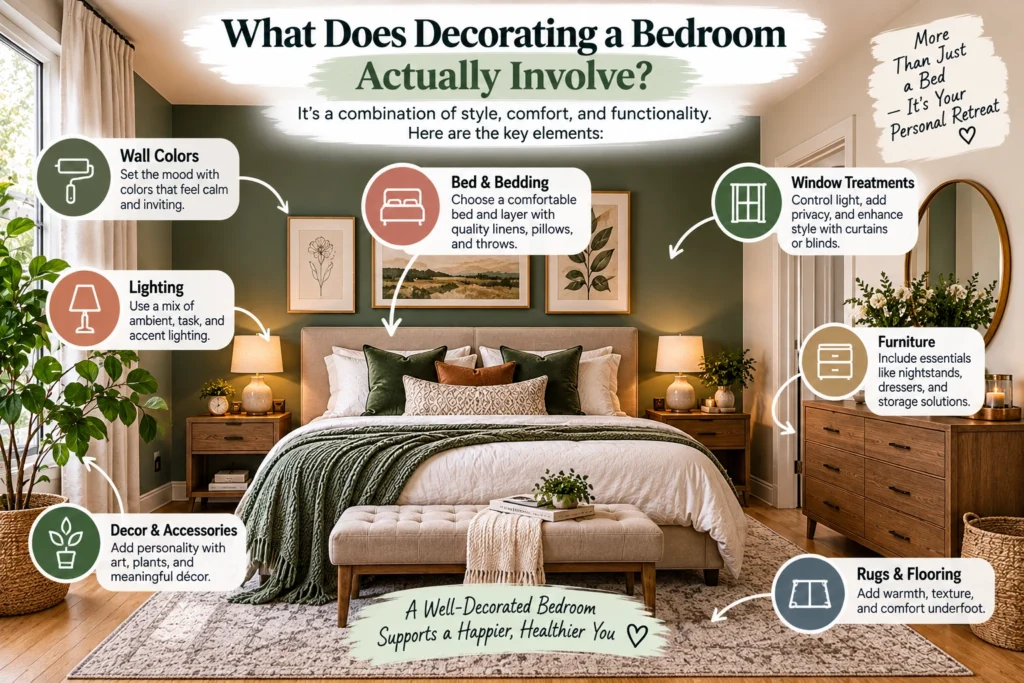
Bedroom decorating is the process of coordinating layout, color, furniture, lighting, textiles, wall decor, and personal objects to create a comfortable and visually connected space. It isn’t the same as simply buying decorations.
The best rooms balance appearance with daily function. Your bed should be easy to reach, drawers should open properly, lighting should match how you use the space, and clutter should have somewhere to go.
- Layout determines how easily you move through the room.
- Color creates the overall visual mood.
- Lighting changes how those colors and materials appear.
- Textiles add softness, warmth, and texture.
- Wall decor gives empty surfaces structure and personality.
- Storage keeps the finished room from quickly becoming cluttered.
Where Should I Start When Decorating a Bedroom?
Start with the layout and the bed. The bed is normally the largest visual object, so its position affects nightstands, lighting, rugs, dressers, artwork, and walking space.
Before buying anything, measure the room. Record the wall lengths, window locations, door swing, closet access, outlets, and the width of your existing furniture.
Use a simple decorating order
- Measure the bedroom. Don’t rely on memory when shopping for furniture or rugs.
- Choose the bed position. Look for a solid visual anchor and comfortable circulation.
- Place essential furniture. Add nightstands, a dresser, wardrobe, desk, or chair only when they serve a purpose.
- Select the color palette. Make this decision before buying multiple textiles.
- Plan the lighting. Think beyond one ceiling fixture.
- Choose bedding and a rug. These large surfaces strongly affect the room’s appearance.
- Finish with art and accessories. Small decor should support the room rather than rescue it.
My rule is simple: don’t buy the decorative objects first. It becomes much easier to choose lamps, pillows, frames, and baskets once the larger visual decisions are settled.
How Do I Choose Bedroom Colors That Work Together?
A three-color palette is an easy starting point. Choose one dominant color, one supporting neutral or secondary color, and one smaller accent color.
For example, you might use warm white walls, medium oak furniture, and muted green accents. Another room could combine soft gray, cream, and rust without feeling overly coordinated.
- Dominant color: Use it across the largest surfaces, such as walls or major bedding.
- Secondary color: Repeat it through furniture, curtains, rugs, or larger accessories.
- Accent color: Use smaller amounts in pillows, artwork, pottery, or throws.
Should a small bedroom use only light colors?
No. Light colors can make boundaries feel less prominent, but small bedrooms can also handle deep colors when the palette is controlled.
A darker wall behind the bed can create a strong focal point without overwhelming every surface. If you use dark paint, balance it with lighter bedding, adequate lighting, and some visual breathing room.
Think about paint and indoor air, too
If you’re repainting, ventilate the room well and follow the product instructions. The U.S. Environmental Protection Agency’s guidance on volatile organic compounds notes that paints, finishes, furnishings, and many household products can release VOCs.
Don’t treat a color decision as purely visual. A bedroom needs to be pleasant to occupy after the decorating work is finished.
How Should I Arrange Bedroom Furniture?
Arrange furniture around movement, storage access, and the bed’s visual position. A beautiful layout becomes frustrating when closet doors hit furniture or you squeeze past a dresser every morning.
Keep only pieces that earn their floor space. A bedroom often feels more finished after removing one unnecessary item rather than adding another.
- Bed: Give it the strongest practical wall when possible.
- Nightstands: Keep everyday items and bedside lighting within easy reach.
- Dresser: Leave enough room to open drawers comfortably.
- Chair or bench: Add one only if it won’t become a permanent clothing pile.
- Desk: Separate the work zone visually from the bed when space allows.
Don’t overlook furniture safety
Top-heavy dressers and similar furniture should be secured where required. The U.S. Consumer Product Safety Commission’s Anchor It! guidance recommends securing furniture and TVs to reduce tip-over hazards, especially in homes with children.
Follow the furniture manufacturer’s anchoring instructions. Decorative styling should never interfere with safe installation.
What Size Rug Should I Use Under the Bed?
The rug should feel connected to the bed instead of looking like a small mat floating underneath it. Your exact choice depends on room dimensions, nightstand placement, and how much visible rug you want.
These are practical starting points rather than fixed design standards:
| Bed Size | Easy Rug Starting Point | Best For |
|---|---|---|
| Twin | 5 × 8 ft | Small bedrooms and partial-under-bed placement |
| Full | 5 × 8 or 6 × 9 ft | Compact to medium rooms |
| Queen | 8 × 10 ft | Balanced coverage around a queen bed |
| King | 9 × 12 ft | Larger bedrooms and generous side coverage |
Measure the actual floor before ordering. A rug size that works beautifully in one queen bedroom may crowd the walls in another.
How Do I Make a Bedroom Look More Expensive?
Use fewer materials, repeat them deliberately, and pay attention to scale. Expensive-looking rooms usually feel controlled rather than packed with costly accessories.
Start by simplifying what people see first. Matching every item isn’t necessary, but repeating a few colors, finishes, and shapes creates visual continuity.
- Hang curtains generously: Fuller curtain panels usually look more intentional than narrow panels stretched across a window.
- Use substantial bedding: Layer a fitted sheet, duvet or comforter, sleeping pillows, and one or two decorative layers.
- Choose larger artwork: One properly scaled piece can look calmer than many undersized objects.
- Repeat finishes: Echo a wood tone, metal finish, or fabric texture in two or three places.
- Hide visual clutter: Use drawers, baskets, trays, and closed storage for everyday objects.
Spacing matters just as much as the objects. Leaving part of a dresser, wall, or nightstand empty gives the eye somewhere to rest.
What Lighting Is Best for a Bedroom?
Use at least two lighting layers whenever possible. One bright ceiling fixture rarely handles dressing, reading, relaxing, and nighttime movement equally well.
I think about bedroom lighting in three categories:
- Ambient lighting: General illumination from a ceiling light, chandelier, or several lamps.
- Task lighting: Focused light for reading, dressing, or working.
- Accent lighting: Softer light that highlights a wall, shelf, artwork, or architectural feature.
At night, lower light levels often feel more restful than bright overhead lighting. Current sleep guidance also emphasizes keeping the bedroom dark during sleep and reducing disruptive evening light.
How Can I Make My Bedroom Feel Cozy Without Cluttering It?
Add texture before adding more objects. A rug, curtains, bedding, upholstered furniture, and one throw can soften a room without consuming every available surface.
A cozy bedroom doesn’t require a dozen pillows or crowded shelves. Use materials that feel different from one another but still belong to the same palette.
- Linen or cotton curtains
- A woven or low-pile rug
- Soft bedding
- One textured throw
- A wood, ceramic, or fabric lamp
- A small amount of greenery
Keep the room comfortable as well as attractive
Decoration shouldn’t compromise ventilation or create unnecessary moisture problems. The EPA’s indoor air quality resources emphasize source control, ventilation, and moisture management as important parts of healthier indoor air.
Avoid blocking air vents with furniture or heavy textiles. If you’ve just painted or introduced strong-smelling materials, follow ventilation and product-label guidance.
How Do I Decorate a Bedroom on a Small Budget?
Spend first on the changes with the largest visual impact. Paint, bedding, lighting, furniture placement, and window treatments usually change a room more than small decorative purchases.
Try improving what you already own before replacing everything.
- Rearrange the furniture. This costs nothing and can solve visual balance immediately.
- Remove clutter. Edit the room before buying storage containers for things you don’t need.
- Change the bedding. A different duvet or comforter can shift the whole palette.
- Upgrade one lamp or bulb. Better light can change how every color in the room appears.
- Create a focal wall. Use paint, removable decor, or one larger piece of art.
- Reuse frames and accessories. Move decor from other rooms before buying replacements.
What Are the Most Common Bedroom Decorating Mistakes?
The biggest mistake is decorating individual objects instead of decorating the room as a whole. A lamp, rug, chair, and picture may each look good but still compete when placed together.
- Buying before measuring: Furniture and rugs can easily overwhelm a small room.
- Using only one light source: It makes the room less flexible after dark.
- Choosing everything from one set: Too much matching can flatten the room’s personality.
- Hanging tiny art over a large bed: The scale can make the wall feel unfinished.
- Adding too many accent colors: The room loses a clear visual hierarchy.
- Ignoring storage: A stylish room won’t stay calm if everyday belongings lack a home.
- Copying a photo exactly: Your room’s dimensions, light, storage needs, and habits are different.
How Do I Add Personality Without Making the Room Look Busy?
Choose a few objects that communicate something about you instead of displaying everything you own. Personal style is stronger when each piece has enough space to be noticed.
Artwork, books, travel objects, family photographs, handmade pieces, or a favorite textile can all work. Repeat one or two colors from those objects elsewhere so they feel connected to the room.
- Create one small group of framed photographs rather than spreading them everywhere.
- Display a short stack of books beside one meaningful object.
- Use one statement artwork piece above the bed or dresser.
- Rotate smaller accessories seasonally instead of displaying all of them at once.
Bedroom Decorating Checklist for 2026
As of 2026, I still wouldn’t build a bedroom around a short-lived trend. Start with choices you’ll enjoy daily, then use inexpensive accents when you want a more current look.
- Measure the room and furniture.
- Decide what activities the bedroom needs to support.
- Choose the bed position.
- Edit unnecessary furniture and clutter.
- Pick a three-color palette.
- Create one clear focal point.
- Choose bedding before small accessories.
- Add a correctly scaled rug if the room needs one.
- Layer ambient and task lighting.
- Install curtains or shades appropriate for privacy and light control.
- Add art and personal objects selectively.
- Anchor furniture when safety guidance or manufacturer instructions call for it.
If you’re ready to buy a few practical pieces, these are the kinds of products I’d consider first because they solve real decorating problems rather than simply filling space:
🏆 Best Lighting Upgrade
Philips Hue White and Color Ambiance A19 Smart Bulb
★★★★☆ 4.7/5
The current A19 model offers up to 810 lumens with dimming and adjustable white or colored light. I like an adjustable bulb in a bedroom because one lamp can provide brighter practical light earlier and softer light later.
🛏️ Best Bedding Refresh
Bedsure GentleSoft Down Alternative Comforter
★★★★★ 4.9/5
This down-alternative comforter comes in a broad selection of neutral and accent colors, making it easy to establish a bedroom palette. Bedding covers so much visual area that I’d change it before spending the same budget on several small decorations.
💰 Best for Renters
Command Large Picture Hanging Strips
★★★★☆ 4.6/5
Command’s interlocking strips are designed for hanging compatible frames without conventional nails or screws when the installation instructions are followed. They’re useful when I want wall art to create a focal point without making permanent holes.
Frequently Asked Questions
How can I decorate my bedroom if I don’t know my style?
Start with how you want the room to feel rather than choosing a style label. Save five to ten bedroom images you like, then look for repeated colors, furniture shapes, materials, and lighting choices before buying anything.
What should I decorate first in a bedroom?
Start with the bed position and major furniture layout. Once those are fixed, choose the color palette, bedding, rug, window treatments, and lighting before spending money on small accessories.
How many colors should a bedroom have?
Three main colors are an easy starting point: one dominant color, one secondary shade, and one accent. You can still use variations of those colors through wood, metal, fabric, and natural materials without making the room look flat.
How do I decorate a small bedroom without making it crowded?
Prioritize furniture that provides storage or performs more than one job. Keep the floor plan simple, use fewer decorative objects, choose appropriately scaled furniture, and make better use of walls for lighting or artwork.
Does every bedroom need matching furniture?
No. Furniture can differ in color, age, and style when a few visual elements repeat across the room. Similar wood undertones, hardware finishes, shapes, or colors can connect mismatched pieces without creating a furniture-set look.
Final Takeaway
The easiest way to decorate a bedroom is to work from large decisions to small ones. Fix the layout, create a limited color palette, build a focal point around the bed, layer the lighting, and add texture before decorative clutter.
Most importantly, make the room fit your routines. A bedroom that looks good but makes sleeping, dressing, reading, or storing your things harder hasn’t finished the job.