

⚡ Quick Answer
Choose a sofa when you need open paths, easy moves, and room to rearrange. Choose a sectional when you need more seats, deep lounge space, and one strong seating zone. Room shape matters most. Measure your walls, doors, and walking paths before buying either one.
Sofa vs sectional at a glance
| What matters | Sofa | Sectional |
|---|---|---|
| Floor space | Smaller footprint | Larger linked footprint |
| Seats | Best for fewer seats | Best for more seats |
| Room changes | Easy to rearrange | More tied to one layout |
| Lounging | Good with an ottoman | Great with a chaise |
Choose based on your room
- ✓Choose a sofa for narrow rooms and changing layouts.
- ✓Choose a sectional for large families and long lounge sessions.
- ✓Choose modular pieces when future room changes matter.
You can feel the choice before you measure it. One seat opens the room, while another wraps around it.
Sofa vs sectional gets hard when both suit your style. James Fox focuses on space, seats, comfort, movement, and future moves.
A sofa gives you one straight and flexible seating piece. A sectional joins sections into a chaise, L, or U shape.
The right pick should fit your floor plan first. Your daily habits can then break the tie.
📌 Key Takeaways
- →Room shape matters. A chaise can block paths that a straight sofa keeps open.
- →Sectionals add seats. They use corners for linked seating and lounge space.
- →Sofas stay flexible. They pair with chairs and fit more room plans.
- →Measure the route. Doors and hall turns matter as much as room size.
What Is the Main Difference Between a Sectional and a Sofa?
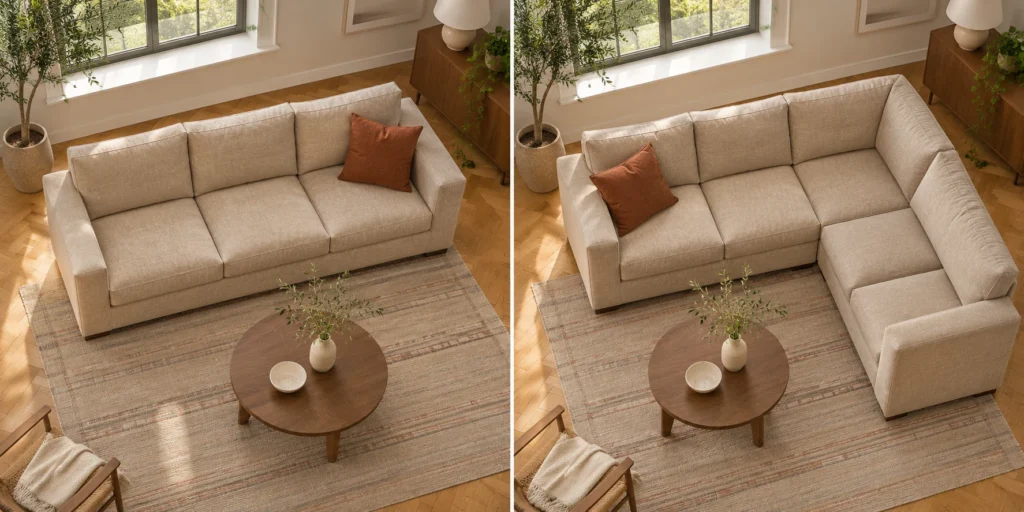
A sofa uses one straight main frame for shared seating. A sectional joins two or more seating parts into one larger shape. Common sectional forms include chaise, L-shaped, U-shaped, and modular plans. That shape changes how each piece uses your floor. A sofa leaves more open edges around the seat. A sectional often fills a corner or marks a whole seating zone.
The key choice isn’t style alone. It is freedom against linked seating. A sofa gives you more ways to add chairs later. A sectional gives you more connected space for sitting and stretching. Livingetc also notes that room size and daily life shape this choice. Its sofa and sectional guide explains the same core trade-off.
You may think a sectional is just a larger sofa. That view misses the shape’s effect on room flow.
A straight sofa has one main depth across its width. A chaise sectional adds a deeper leg into the room.
How does the shape change your room?
A straight sofa can sit against a wall or float. You can also pair it with loose chairs.
A sectional forms a stronger edge around your seating zone. That works well in open rooms with fewer walls.
Before picking either shape, decide where your main focal point sits. This living room focal point guide can help set that anchor.
Once the shape is clear, room size becomes the next test.
Is a Sectional or Sofa Better for a Small Living Room?
A sofa is often easier to fit in a small living room. Its straight shape keeps more floor open near doors and paths. Yet a compact sectional can work well in the right corner. One linked piece can replace several small seats. The real test is usable floor space, not room labels. A sectional that fits on paper can still block daily movement.
Mark the full furniture shape before placing an order. Include the chaise depth, not only the main width. Then check doors, windows, tables, and your main walking route. A small sectional works when those parts stay clear. A sofa works when you need more open space or loose seating. Good living room layout ideas can help you test both plans first.
You may think every small room needs the smallest sofa. One well-sized sectional can sometimes use a dead corner better.
But here’s the thing. The chaise must not cut through the path people use each day.
⚠️ SMALL-ROOM CHECK
Tape the full sofa or sectional outline on your floor. Walk every normal route before you buy.
The room should still feel easy after the tape goes down. Next, check how much seating you need.
Does a Sofa or Sectional Offer More Seating and Comfort?
A sectional usually gives you more linked seating in one unit. Corner seats and chaises add places to sit or stretch. That setup suits family rooms, movie nights, and long lounge sessions. A standard sofa offers fewer linked seats but gives you more choice. You can add armchairs, stools, or an ottoman when guests arrive.
Comfort depends on how you sit each day. Deep seats and a chaise suit relaxed lounging. Firmer, straight seating works well for chats, reading, and easy standing. Neither shape alone sets comfort. Seat depth, cushion feel, back height, and fabric all matter. Architectural Digest also treats size and seat depth as key sectional checks. Its sectional sofa guide groups models by length and fit.
You may think more seats always make a better room. Extra seats add little value when nobody uses them.
Count your normal users first. Plan for daily life before rare large events.
Seating needs can narrow the choice fast. Your future room changes can narrow it further.
Are Sectionals Harder to Move or Rearrange Than Sofas?
A fixed sectional gives you less room to change the layout. Its corner direction often sets where the whole piece must sit. A straight sofa can shift between more walls and room plans. You can also move chairs without moving the sofa. That freedom helps renters and homes that change often.
Yet moving through a doorway tells a different story. Many sectionals split into smaller parts for transport. One long sofa can become harder to turn through a tight hall. Modular sectionals give you even more choice because each unit separates. The best choice depends on both room change and entry access. Measure every door, hall turn, stair, and lift. Then compare those numbers with each furniture part.
Stanford researchers built a furniture layout system around flow, talk, balance, and focal points. Their furniture layout research shows why movement matters in room plans.
You may think modular always means easy. Large modules can still be heavy and deep.
For better room flow, see how to arrange living room furniture before fixing one layout.
Once movement works, money becomes easier to judge.
Which Costs More: a Sofa or a Sectional?
A sectional often costs more than a sofa from the same range. It uses more frame parts, cushions, fabric, and floor space. Yet price alone gives an incomplete view. A sofa can need two chairs or a loveseat for equal seating. Those added pieces raise the total cost.
Compare the full room plan instead of one price tag. Count how many seats your home uses most days. Then compare cost, floor space, and future use. A large sectional wastes money when half its seats stay empty. A sofa also loses value when you must buy extra seats right away. Build your budget around the whole seating plan. Include shipping, setup, covers, and any matching pieces.
You may think the cheaper item always gives better value. Value comes from useful seats and long-term fit.
A sofa also gives one useful money benefit. You can replace loose chairs without changing the main seat.
Sectionals can offer good value for busy family rooms. Their linked seats can replace several separate pieces.
Price should never come before fit. The next step checks both at once.
How Do You Choose the Right Size Sectional or Sofa?
Start with the room, not the furniture listing. Measure wall width, usable floor depth, doors, and fixed features. Mark windows, door swings, radiators, and main walking paths. Then tape the furniture footprint on the floor. A sectional needs its full chaise or corner shape marked. A sofa needs enough space for any chairs you plan to add.
Next, sit inside the taped zone and test daily movement. Walk from each door to your main seats. Open drawers and nearby doors. Check space around the coffee table. If the plan feels tight without furniture, it will feel tighter with cushions. Use your real habits as the final test. This living room furniture guide also starts with room and doorway measurements.
What size bands can help when shopping?
Architectural Digest uses three useful sectional length bands. It calls under 80 inches petite.
Its average band runs from 80 through 110 inches. Larger models exceed 110 inches.
Those bands are shopping guides, not room rules. Your floor plan still decides the right size.
🎯 Which Option Fits Your Life?
If your room is tight
You need clear paths and loose seating choices.
→ Start with a sofa
If you lounge together
Your family wants one large and relaxed seating zone.
→ Test a sectional
If you move often
Your next room can have a different shape.
→ Pick flexible pieces
Once the size works, you can judge the common myths that cause bad buys.
What Most People Get Wrong About Sofa vs Sectional
The first mistake is thinking every sectional needs a huge room. Compact and modular forms can work in smaller spaces. The second mistake is thinking sectionals always move worse. Separate sections can pass through doors more easily than one long sofa. The third mistake is choosing only by seat count.
Room flow matters as much as seating. A five-seat piece adds little comfort when its chaise blocks the main path. A sofa also isn’t always the small-space winner. One compact sectional can use a corner better than several loose seats. Test the whole layout instead of following a fixed rule. Your door route, floor shape, and daily use should decide the final plan.
You may think matching your room style should come first. Scale and movement cause bigger daily problems than arm shape.
- Wrong belief: Sectionals only work in large homes.
- Wrong belief: Sofas always move through doors more easily.
- Wrong belief: More seats always create a better living room.
The right answer now comes down to one simple test.
What Should You Choose: Sofa or Sectional?
Choose the piece that keeps your room useful every day. Pick a sofa for freedom and open paths. Pick a sectional for linked seats and deep lounging. Right now, tape your preferred furniture footprint onto the floor.
Frequently Asked Questions
Is a sectional better than a sofa?
A sectional is better when you need linked seats and lounge space. A sofa suits rooms needing open paths and easy room changes. Neither type wins for every home. Measure the room first, then match the furniture shape to your normal use.
Should I get a sofa or sectional for a small living room?
Start with a sofa when your small room has tight paths. A compact sectional can still work in a clear corner. Tape the full footprint onto the floor first. Keep doors, tables, and daily walking routes clear before you place an order.
Do sectionals make a room look smaller?
A large sectional can make a room feel smaller. Its long shape adds more visual weight across the floor. Proper scale changes that effect. Low backs, open legs, light fabric, and clear paths help a sectional feel less heavy.
Are sectionals good for large families or entertaining?
Sectionals work well when several people sit together often. Their corners and chaise areas add linked seating without loose chairs. They also create one clear gathering zone. Check that guests can enter, sit, and leave without crossing blocked paths.
Will a sectional fit through a narrow doorway?
Many sectionals separate into smaller pieces for the move inside. That can help with narrow doors and tight hall turns. Still, each section needs enough clearance. Measure door width, door height, hall turns, stairs, and each furniture piece before ordering.
Is a sofa and loveseat better than a sectional?
A sofa and loveseat give you more room to change the plan. You can move each piece and open new paths. A sectional keeps seating joined in one strong zone. Pick separate pieces when room changes and face-to-face chats matter most.
Which option is more budget-friendly?
A standard sofa often starts with a lower total price. A sectional uses more material and usually adds more seating. Compare the full seating plan before choosing. A sofa plus several chairs can cost more than one sectional serving the same household.