

⚡ Quick Answer
Choose an accent chair by deciding its job first, then measure the available floor space. Match its scale to nearby seating, test comfort, and choose one clear point of contrast. The best chair looks intentional, feels comfortable, and leaves enough room for easy movement.
Choose your accent chair in this order
- 1Decide whether it serves reading, conversation, or visual interest.
- 2Measure the chair footprint and every nearby walking path.
- 3Coordinate scale, comfort, color, material, and placement.
Avoid these accent chair mistakes
- ✓Buying for looks before checking dimensions.
- ✓Matching the sofa so closely that contrast disappears.
You notice an empty corner, then imagine the perfect chair there. Online, every option looks smaller and simpler than it feels at home.
James Fox recommends starting with function, scale, and comfort before color. Those choices prevent most accent-chair regrets and make styling far easier.
📌 Key Takeaways
- →Function comes first. Reading chairs need more support than occasional statement chairs.
- →Scale controls harmony. Chair size should relate to the sofa and available floor area.
- →Contrast needs control. Change one major element while repeating another room detail.
- →Placement creates purpose. Angle the chair toward people, light, or a focal point.
What Is an Accent Chair, and What Should It Do?
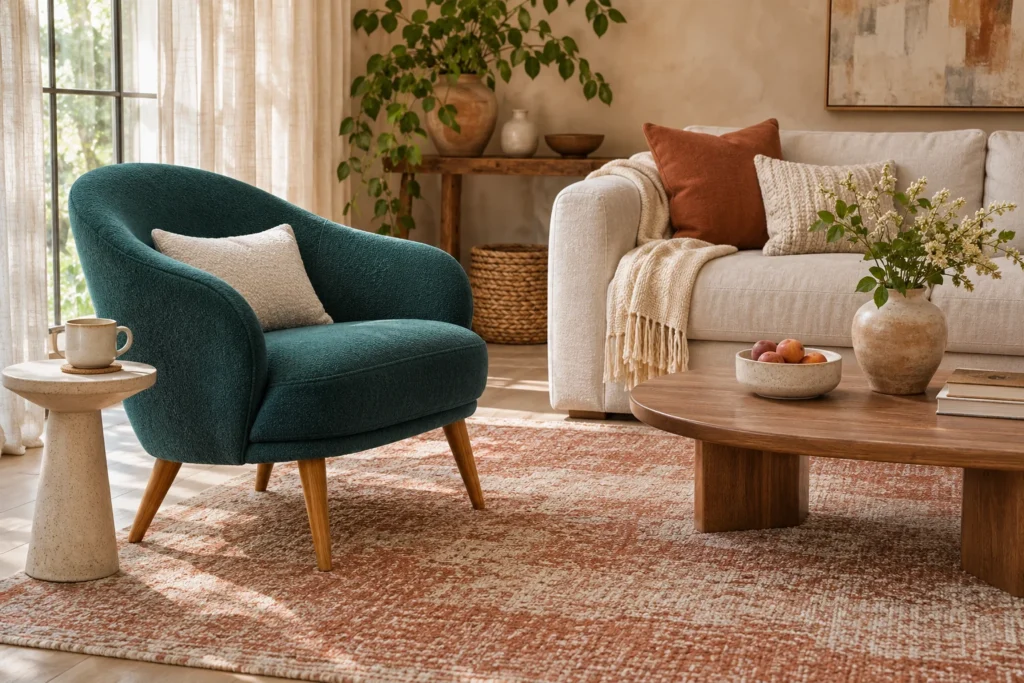
An accent chair is a standalone seat with both functional and decorative value. It supports a room without replacing the sofa as the main seating anchor. Most chairs serve one primary job: daily sitting, occasional conversation, or visual contrast. That job should guide every choice that follows. A reading chair needs dependable back support and a comfortable seat. A guest chair needs easy access and a social orientation. A statement chair can prioritize shape, color, or texture more strongly. Still, every accent chair should remain usable and proportionate. The chair also needs a visual relationship with nearby furniture. It can repeat one finish while changing color. It can echo a sofa shape while changing fabric. This balance creates contrast without making the chair feel random. Decide the job before opening product filters. That single choice quickly narrows size, material, style, and placement.
You may be thinking every attractive chair can serve every purpose. A sculptural chair can look excellent yet feel tiring after twenty minutes.
So what does that mean? Define the chair’s job using one short sentence. That sentence becomes your buying filter.
How Do You Choose the Right Accent Chair Size?
Choose size by measuring the floor area, nearby furniture, and movement space together. Start with the chair’s full width and depth, not only its seat dimensions. Then compare its scale with your sofa and the wall behind it. A compact chair works best when the room already feels visually busy. A wider lounge chair needs more open floor around its footprint. Seat height also affects how the grouping looks and feels. Keep seating heights reasonably close when chairs share one conversation area. Next, test the floor plan with painter’s tape before ordering. Tape shows the chair’s footprint more honestly than a product photo. Keep main walking routes open and protect door swings. If the room needs broader planning, use this living room furniture guide first. Scale comes first because color cannot fix a chair that overwhelms its space.
Here’s why that matters. Oversized chairs make small rooms feel tighter, even with pale upholstery.
A tiny chair can fail too. It can look disconnected beside a deep sofa or large sectional.
How Should an Accent Chair Fit Your Body?
A comfortable accent chair should support your body without forcing awkward leg or back positions. Sit fully against the backrest and check where the seat edge reaches. Your feet should feel supported instead of hanging without control. The front seat edge should not press firmly behind your knees. Seat depth matters because deep chairs suit lounging better than upright conversation. Back support matters more when the chair serves reading or daily sitting. Armrests should let your shoulders stay relaxed instead of lifting them upward. Cushion firmness also changes comfort after several minutes. Cornell’s ergonomics guidance recommends enough seat width and proper knee clearance for comfortable sitting. It also emphasizes stable foot support and useful back support. Those principles apply even when the chair is decorative. Review the Cornell ergonomic chair guidance for deeper fit checks. :contentReference[oaicite:0]{index=0}
✅ Comfort Test
Sit for at least five minutes before deciding. Check knees, lower back, shoulders, and foot support.
You may be thinking softer cushioning always feels better. Deep softness can reduce support during longer sitting sessions.
Test the chair using its real purpose. A reading chair deserves a longer comfort check.
Should an Accent Chair Match Your Sofa?
An accent chair should coordinate with your sofa without copying it exactly. The easiest method repeats one element and changes another important element. Repeat a wood tone, metal finish, undertone, or curved shape. Then change the fabric, color, pattern, or silhouette. This relationship makes the chair feel intentional without creating a matched furniture set. Start with the sofa because it carries more visual weight. A neutral sofa can handle stronger chair color or texture. A patterned sofa usually pairs better with a quieter chair. Dark sofas often gain depth from lighter chairs. Light sofas can handle darker or richer accent tones. Use your rug, art, and curtains to confirm the chair color already belongs. For a fuller palette method, see this living room color scheme guide. The goal is connection with enough contrast to justify the word accent.
So what does this mean for you? Choose one shared detail before choosing the contrast.
For example, repeat walnut legs while changing beige upholstery to deep green. That feels connected, not copied.
Where Should You Place an Accent Chair?
Place an accent chair where it improves conversation, balance, or a useful activity. In living rooms, angle it toward the sofa instead of isolating it against a wall. Near a window, pair it with good light for reading. Across from a sofa, use one or two chairs to complete conversation seating. Beside a fireplace, keep the chair connected to the room’s main focal point. Always check walking routes before styling side tables or lamps. The chair should not block doors, drawers, vents, or common traffic paths. Start with the main seating anchor, then position the chair around it. This living room furniture layout guide explains that sequence in more depth. If your room lacks direction, first learn how to create a living room focal point. Placement works best when the chair clearly faces a purpose.
You may be thinking an empty corner always needs a chair. Sometimes empty space improves movement and makes furniture feel calmer.
Here’s the test. Sit there and identify what you can see, reach, and use.
Which Accent Chair Style and Fabric Should You Choose?
Choose style and fabric after function, size, comfort, and placement are clear. Style should support the room’s character while giving the chair one memorable feature. A wingback adds height and a traditional outline. A barrel chair creates a rounded, enclosed shape. A slipper chair saves visual space through armless construction. Swivel chairs help rooms with several viewing directions. Fabric choice should reflect use, pets, children, sunlight, and cleaning habits. Daily-use chairs need stronger upholstery and practical care instructions. Decorative chairs can support more delicate textures with less risk. Look for removable cushions and clear care labels when maintenance matters. Those details make routine care easier. The Association for Contract Textiles warns against judging durability from abrasion numbers alone. Cleaning, maintenance, application, and wear patterns also affect fabric life. Review the ACT upholstery abrasion guidance before comparing performance claims. :contentReference[oaicite:1]{index=1}
For U.S. upholstered chairs, also check the permanent compliance label. CPSC rules cover flammability requirements for qualifying upholstered furniture.
See the CPSC upholstered furniture guidance for current federal requirements. Safety belongs beside style, not behind it.
What Most People Get Wrong About Accent Chairs
Most accent-chair mistakes come from treating the chair as isolated decoration. The first mistake is buying by color before measuring scale. A beautiful chair still fails when its footprint blocks movement. The second mistake is matching the sofa too closely. An accent chair needs a visible difference to add design value. The third mistake is pushing the chair against a wall automatically. That placement can weaken conversation and make the chair feel detached. Another common error is ignoring visual weight. Dark color, thick upholstery, wide arms, and high backs all make chairs feel heavier. A room can contain correctly sized furniture and still feel unbalanced. Use this guide to create a balanced living room when one side feels visually crowded. The best correction is simple: judge the chair as part of the full seating group.
⚠️ Common Trap
Do not buy a chair because one product photo looks perfect. Measure the actual room first.
You may be thinking a bold chair should become the room’s focal point. It can, but only when the room needs another focal feature.
If the room already has one strong anchor, support it. Do not start a visual competition.
How Do You Make the Final Accent Chair Choice?
Make the final choice by scoring each chair against the same five practical questions. First, does it fit the available footprint without blocking movement? Second, does it feel comfortable for its intended use? Third, does its scale relate naturally to the sofa and nearby tables? Fourth, does it coordinate while adding one clear point of contrast? Fifth, can its upholstery handle your household and cleaning routine? A chair that fails one core requirement should leave the shortlist. Do not let color rescue a chair with poor fit. Do not let price rescue a chair you will avoid sitting in. When two options both work, choose the simpler one to place and maintain. That usually gives you more flexibility later. Your room will change through rugs, paint, art, and accessories. A well-scaled, comfortable chair can adapt to those changes far better than a trend-only purchase.
💡 Final Decision Rule
Fit and comfort must pass first. Style should decide only between chairs that already pass.
You may be thinking the perfect chair needs every feature. It only needs the right features for your room.
That distinction keeps the final decision clear. It also reduces expensive returns.
What Should You Remember Before Buying an Accent Chair?
The right accent chair starts with purpose, not color. Measure the space, test comfort, then coordinate one shared design detail. A good chair should improve both seating and room balance. Right now, tape its planned footprint on your floor for two minutes.
Frequently Asked Questions
What size accent chair do I need?
Choose a chair that fits the available footprint and matches nearby furniture scale. Measure full width and depth before buying. Then tape that footprint on the floor. Keep normal walking routes open. Compare seat height with nearby seating so the conversation area feels visually connected.
Should an accent chair match the sofa?
No, an accent chair should coordinate instead of copying the sofa. Repeat one detail, such as wood tone or undertone. Then change another detail, such as fabric or shape. This creates a clear relationship while preserving the contrast that makes the chair feel intentional.
Where should I place an accent chair in a living room?
Place it where it supports conversation, reading, or visual balance. Angle it toward the sofa for social seating. Use a window corner for reading when lighting works. Avoid blocking doors and main walkways. The chair should connect clearly to the room’s main activity.
Should an accent chair be lighter or darker than the sofa?
Either can work when the values create enough contrast. A lighter chair can lift a dark sofa grouping. A darker chair can ground a pale sofa. Check the rug, art, and curtains too. The chair color should feel repeated somewhere else in the room.
What makes a good reading accent chair?
A good reading chair supports your back, feet, and preferred sitting position. Choose enough seat depth without strong pressure behind your knees. Add useful arm support when preferred. Place a light and small table nearby. Test the chair longer than a quick showroom sit.
Are swivel accent chairs worth it?
Swivel chairs work well in rooms with several useful viewing directions. They can turn between conversation, television, and windows without moving the chair. Check the rotating footprint before buying. The chair still needs enough clearance around its base to move safely and comfortably.
Can two accent chairs replace a sofa?
Yes, two accent chairs can replace a sofa in some small seating areas. They offer flexible placement and easier movement than one large piece. However, they provide less lounging space. Keep both chairs visually related through scale, color, material, or matching silhouettes.