

⚡ Quick Answer
Choose an accent chair by checking function, size, comfort, material, and style. Measure the room before shopping. Pick comfort based on daily use. Then choose color and texture that connect with your sofa without copying it.
Your 5-step accent chair check
- 1Decide how you will use the chair.
- 2Measure its planned floor space and doorway.
- 3Check seat height, depth, and back support.
- 4Choose upholstery that suits your household.
- 5Coordinate color, shape, and texture last.
Accent chair mistakes to avoid
- ✓Buying from photos without checking dimensions.
- ✓Matching your sofa too closely.
- ✓Choosing looks before comfort.
You spot a beautiful chair online, and its shape looks perfect. Then you wonder whether it will overwhelm your room.
That problem usually starts when style comes before function and scale. I’m James Fox, and I use a simpler order for this choice.
First decide what the chair must do each day. Then check space, comfort, fabric, color, and placement.
📌 Key Takeaways
- →Function comes first. A reading chair needs different support than occasional seating.
- →Measure before buying. Check the chair, floor area, doors, and walking route.
- →Coordinate, don’t copy. Your chair should connect with the sofa without duplicating it.
- →Fabric follows use. Daily seating needs easier care than a decorative chair.
How Do You Choose an Accent Chair?
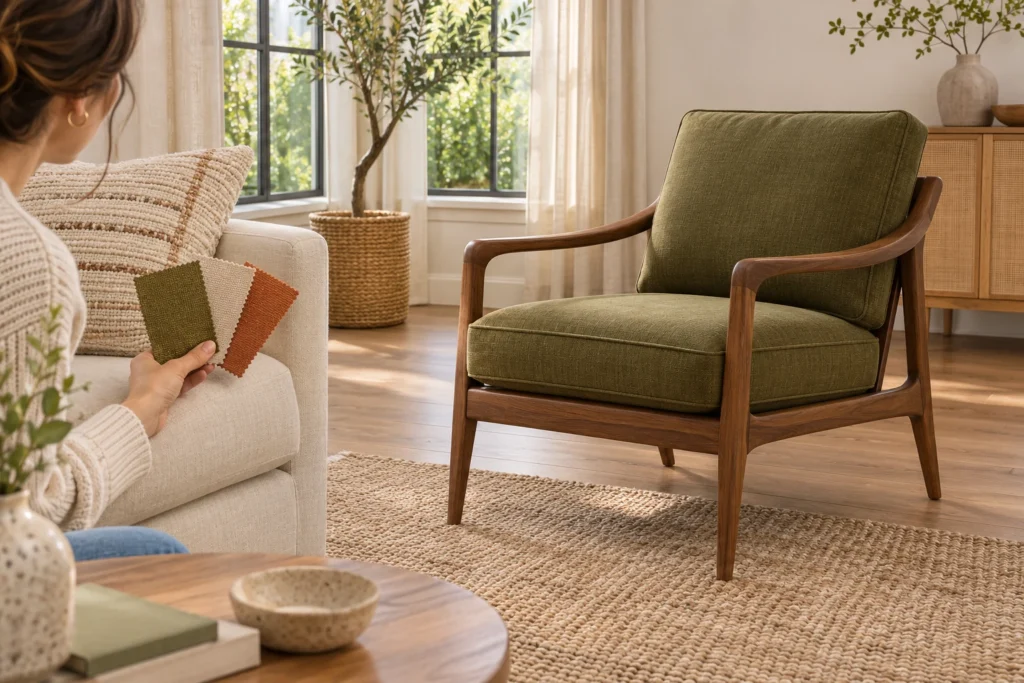
Start by giving the accent chair one clear job. Choose reading, conversation, extra seating, or visual impact as its main role. That choice guides every decision that follows.
A reading chair needs support and lasting comfort. Guest seating can use a firmer, more upright shape. A statement chair can give design more weight.
Next, compare the chair’s dimensions with your available floor area. Check how its height relates to nearby seating. Your chair should look connected, not stranded.
Then judge fabric against real daily use. Homes with children or pets need easier care. Quiet rooms give you more fabric freedom.
Finish with color, shape, and texture. Your goal is coordination instead of an exact match. That order prevents most costly mistakes.
For the bigger room plan, use this living room furniture guide before choosing individual pieces.
You may think color should come first. Color becomes much easier after function and size narrow your choices.
Once you know the chair’s job, you can measure its space correctly.
What Size Should an Accent Chair Be for a Living Room?
The right accent chair should fit its assigned space without blocking movement. Measure the full chair width, depth, and height before ordering. Never judge size from a product photo.
Also check seat dimensions when comfort matters. Architectural Digest notes common accent chair widths span about 24 to 36 inches. Wider seats usually need more open floor space.
Compare the chair with your sofa’s overall visual weight. A tiny chair can disappear beside a large sectional. An oversized lounge chair can dominate compact seating.
Measure doors and tight turns before delivery. Better Homes & Gardens also advises checking dimensions against the planned space. Its guide considers material, fill, dimensions, and weight capacity when comparing chairs.
Use painter’s tape to mark the chair footprint. That simple check shows crowding before you spend money.
The Architectural Digest reading-chair guide also shows how seat dimensions change comfort needs.
| Measurement | Why Check It? |
|---|---|
| Overall width | Shows how much wall or floor space it takes. |
| Overall depth | Shows how far the chair enters the room. |
| Seat height | Affects comfort and sofa balance. |
| Seat depth | Changes how upright or relaxed you sit. |
| Delivery path | Prevents doorway and stair problems. |
Once the size works, the next question is how the chair should relate.
Should an Accent Chair Match the Sofa or Contrast With It?
An accent chair does not need to match your sofa exactly. Strong rooms usually repeat one feature while changing another. This creates connection without making the seating look like a set.
For example, repeat a warm wood tone but change upholstery color. You can also repeat one color while changing texture. Both choices create a clear link.
A neutral sofa gives you more freedom. Try pattern, richer color, curved lines, or visible wood. A bold sofa needs a calmer supporting chair.
Think about visual weight as well. Dark colors, thick arms, and solid bases look heavier. Open frames and exposed legs look lighter.
Use your existing palette before adding a new color. This living room color scheme guide helps you find that connection.
Then check overall visual weight with this guide to creating a balanced living room.
✅ Tip
Repeat one sofa detail in your chair. Change either color, texture, shape, or material.
You may think contrast means choosing an opposite color. Shape and texture can create softer contrast.
After color works, choose upholstery that can handle your real household.
Which Material Should You Choose for an Accent Chair?
Choose upholstery based on use, cleaning needs, touch, and room style. Daily chairs need stronger materials than decorative chairs. Fabric choice should support the chair’s job.
Leather offers a smooth, structured look and develops character with use. Woven fabric gives broad color and pattern choices. Velvet adds soft depth and stronger visual weight.
Bouclé gives a warm, textured surface. Its loops can need more care around claws. Synthetic blends often make daily care easier.
Better Homes & Gardens recommends considering usage frequency when choosing material. Its 2026 guide also highlights frame, fill, and care needs.
For deeper fabric checks, review the ACT textile performance guidelines. ACT covers abrasion, colorfastness, physical properties, and other fabric tests.
No fabric test predicts home life perfectly. Still, performance details help you compare similar options.
| Material | Works Well For | Check Before Buying |
|---|---|---|
| Woven fabric | Everyday seating | Cleaning code and wear |
| Leather | Structured, lasting style | Care and surface marks |
| Velvet | Soft texture and color | Pile care and cleaning |
| Bouclé | Warm visual texture | Loops, snags, and upkeep |
Once the material suits your lifestyle, placement decides whether the chair feels intentional.
Where Should an Accent Chair Be Placed in a Living Room?
Place your accent chair where it supports an existing activity. Good positions serve conversation, reading, balance, or a focal point. Avoid filling empty corners without a purpose.
Near a sofa, turn the chair toward the seating group. This makes conversation feel natural. Keep the main walking route clear behind or beside it.
A reading chair works near useful light and a small surface. A swivel chair works well between two room zones. It can face different activities without moving.
Use the chair to balance visual weight across the room. A bold chair can offset a heavy sofa. Two lighter chairs can frame a large focal feature.
For full spacing guidance, see how to arrange living room furniture. Then connect seating with your living room focal point.
- Place it beside the sofa for conversation.
- Use a corner near light for reading.
- Angle it toward the room’s main activity.
- Keep doors and walking routes clear.
- Use pairs only when the room supports them.
You may think every empty corner needs furniture. Sometimes open floor space creates better balance.
Placement problems often reveal the mistakes people make before buying.
What Most People Get Wrong About Accent Chairs
Most accent chair mistakes start with treating the chair as decoration only. A chair still needs to fit bodies, floor space, and daily life. Looks cannot solve a poor physical fit.
The first mistake is buying a chair only for color. The perfect shade still fails when the seat feels wrong. Size and comfort need earlier attention.
The second mistake is matching every seating piece. Exact matches can remove contrast and visual depth. Shared details create unity without duplication.
The third mistake is ignoring the chair’s planned use. A sculptural chair can suit brief guest seating. It may fail during long reading sessions.
You may also assume a smaller chair always helps a small room. Tiny furniture can make proportions feel weak. The chair still needs enough visual presence.
The best fix is simple. Define the job, tape the footprint, then compare materials and style.
⚠️ Warning
Do not order from one styled photo. Check dimensions, seat details, materials, delivery access, and returns.
Correct those mistakes, and your final choice becomes much easier.
What Should You Do Before Buying an Accent Chair?
Choose the chair’s function first, then confirm size, comfort, material, and visual fit. A good accent chair should support your room instead of merely filling space.
Keep one visual link with your sofa, but give the chair its own character. That balance makes the seating group feel planned.
One thing to do right now: mark your planned chair footprint with painter’s tape. You will know within two minutes whether the size feels right.
Frequently Asked Questions
How do I choose an accent chair that goes with my sofa?
Repeat one feature from your sofa, then change another. Match an undertone, wood finish, or shape. Change the chair’s texture, color, or frame. This creates a clear connection without making both pieces look identical.
What size should an accent chair be for a living room?
Choose a chair that fits its marked floor area and preserves movement. Compare its height and visual weight with nearby seating. Check width, depth, seat size, doorways, and delivery turns before ordering.
Should an accent chair match the sofa?
No exact match is required. Your chair should share one clear design link with the sofa. Use a related undertone, shape, material, or wood finish. Then add contrast through color, pattern, or texture.
Where should an accent chair be placed in a living room?
Place it where it supports conversation, reading, or visual balance. Turn it toward the main seating group when possible. Keep walking paths and doors clear. Avoid isolated corners unless the chair has a clear purpose there.
What’s the difference between an accent chair and an armchair?
An armchair simply describes a chair with arm supports. An accent chair describes its design role. It adds visual interest while providing seating. Many accent chairs have arms, but some use armless designs.
Which material should I choose for an accent chair?
Choose material from expected use and cleaning needs. Woven blends suit many active rooms. Leather gives a structured surface and lasting character. Velvet and bouclé add strong texture but need suitable care.
How many accent chairs should I have in a living room?
Use the number your layout can support without crowding movement. One chair often completes a smaller seating group. Two can create balance in larger rooms. Let function and available floor space decide the count.