

⚡ Quick Answer
Choose a side table by measuring your nearby seat and free floor space first. Match its top closely with the sofa arm. Then check width, depth, shape, storage, and surface needs. Your table should stay easy to reach without crowding seating or walking paths.
Your side table buying order
- 1Measure the sofa arm or mattress height.
- 2Measure the available width and depth.
- 3List what the tabletop must hold.
- 4Choose shape, storage, material, and style last.
Side table mistakes to avoid
- ✓Buying from photos without checking dimensions.
- ✓Choosing a tabletop that sits far below seating.
- ✓Ignoring lamps, chargers, drawers, and walking space.
You reach beside the sofa and your drink feels just beyond reach. A poor table turns that small move into an annoyance.
For this side table guide, James Fox uses one rule: measure first. Style becomes easier once size, reach, and use are clear.
A side table can serve a sofa, chair, bed, or reading nook. The best choice fits both your body and your room.
📌 Key Takeaways
- →Measure height first. Your sofa arm gives the best starting point.
- →Check the footprint. Width and depth must protect walking space.
- →Choose for use. Lamps and storage need more space than drinks.
- →Coordinate, don’t copy. Side tables need not match every nearby piece.
How Do You Choose the Right Side Table?
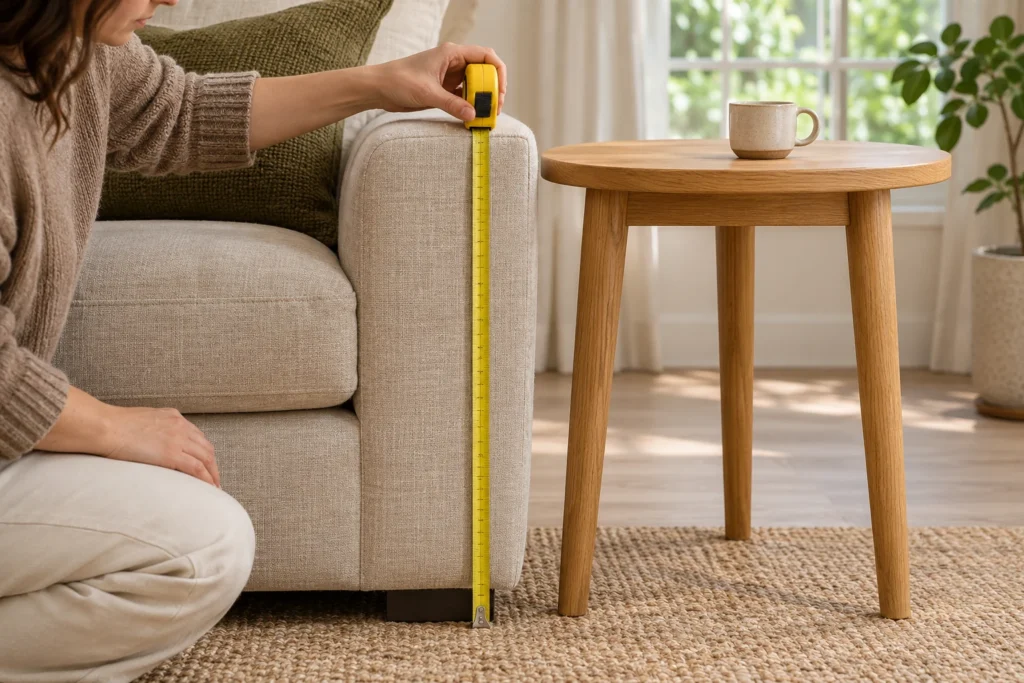
Start with function before color, finish, or trend. Decide what the table must hold each day. A drink needs little space. A lamp, book, and charger need far more.
Next, measure the furniture beside the planned table. Check arm height, available width, and front-to-back space. Then sit down and test your natural reach.
That order prevents a common buying mistake. A stylish table can still fail during daily use. The best side table feels close, stable, and easy to reach.
For a full room plan, use Super Dwelling’s living room furniture guide. It helps size larger pieces before adding smaller tables.
✅ Tip
Tape the planned tabletop footprint onto your floor before ordering.
You might think style should come first. Size decides whether that style works in your room.
What Height Should a Side Table Be?
Place the tabletop near the height of the sofa or chair arm. This position keeps drinks, phones, and books within an easy seated reach.
Wayfair lists common end-table heights from 18 to 28 inches. Its guide puts many tables near 24 inches. It also recommends staying close to sofa-arm height.
Your own sofa still matters more than the average. A low modern sofa needs a lower table. A high rolled arm can need a taller one.
Bedside use follows the same reach rule. Compare the tabletop with your finished mattress height. Super Dwelling’s nightstand guide explains that fit in more detail.
You might think one standard height works everywhere. Furniture arms and mattresses vary too much for that shortcut.
What Size Side Table Fits Your Space?
Width and depth should match both your needs and available floor space. Measure the full table footprint before comparing finishes or prices.
Wayfair places common end-table widths between 16 and 28 inches. It also warns against tables extending beyond nearby seating depth.
A larger top suits a lamp, books, and daily items. A compact top works beside one chair or inside a narrow gap.
Use this table as a practical starting point, then measure your own room.
The right size comes from nearby furniture, floor space, and daily use.
Check the whole seating plan before filling narrow gaps. Super Dwelling’s layout guide covers walking paths and furniture flow.
Which Side Table Shape Works Best?
Choose shape from traffic flow and the nearby seat. Round tables remove sharp corners and feel lighter in tight rooms.
Square tables offer more usable corners and often fit sofa ends well. Rectangular tables work when you need more surface without extra depth.
C-shaped tables can slide close to a sofa or chair. Nesting tables give extra surfaces only when guests need them. Recent side-table guides also favor flexible shapes for tight living areas.
Visual weight matters too. A thick block table feels heavier than a slim metal frame. Match that weight with the sofa or chair beside it.
You might think round tables only suit modern rooms. Material and finish change their style far more than shape alone.
What Material and Storage Should You Choose?
Choose material from wear, cleaning needs, weight, and room style. Wood feels warm and works across many home styles.
Metal gives a slimmer look and often suits small spaces. Glass keeps sightlines open but shows marks. Stone adds weight and needs careful surface care.
If wood sourcing matters, look for credible certification instead of vague claims. FSC lists certified indoor furniture among its supported home product groups.
Add storage only when you need it. Drawers hide chargers and remotes. Open shelves keep books close without adding a heavy front.
⚠️ Warning
Check stability carefully when a table feels tall, narrow, heavy, or top-loaded.
CPSC advises securing furniture that presents a tip-over risk. Its safety guidance focuses strongly on tall and climbable furniture.
Should Side Tables Match Your Coffee Table?
No. Side tables can coordinate without matching the coffee table exactly. Repeat one shared detail to make the room feel planned.
That shared detail can be wood tone, metal finish, shape, or color. Then allow another feature to change. This approach creates contrast without visual chaos.
A walnut side table can pair with a black coffee table. Repeated black legs can connect both pieces. A stone table can also work beside wood.
Current design guides give similar advice. They favor shared visual links instead of full matching sets.
For a wider styling plan, see Super Dwelling’s living room decorating guide. It covers color, furniture scale, texture, and lighting order.
You might think matching sets create the safest look. A small planned contrast often makes the room feel more natural.
What Most People Get Wrong About Side Tables
The first mistake is treating height as a fixed standard. Sofa and chair arms vary. Your own furniture should control the final height.
The second mistake is judging size from product photos. Photos can hide scale and room depth. Check listed dimensions against taped floor measurements.
The third mistake is buying for looks before use. A tiny sculpted table can look great. It still fails if your lamp cannot fit.
- Wrong: Every sofa needs two matching side tables.
- Wrong: Side tables must match the coffee table.
- Wrong: Bigger tables always provide better function.
Use function, reach, and space as filters. Then choose the style you enjoy.
Once those checks pass, your last choice becomes much easier.
How Do You Make the Final Side Table Choice?
Choose the table that fits your reach and available floor space. Then confirm its surface holds your daily items.
After that, compare shape, material, storage, and style. Good proportions will matter every day.
Your one action right now is simple. Measure your sofa arm height before shopping.
Frequently Asked Questions
What height should a side table be next to a sofa?
Place the tabletop close to your sofa-arm height. Wayfair suggests staying around two inches from the arm. Measure your sofa before buying because arm heights differ. The goal is simple: you should reach the tabletop without lifting or dropping your shoulder far.
Can a side table be taller than the sofa arm?
A slightly taller table can work for some sofas and lamps. Large height gaps make seated use less natural. Compare the table with your own armrest and test your reach. For drinks and phones, level or slightly lower usually feels easier.
What is the difference between a side table and an end table?
The terms often overlap in furniture stores. An end table usually sits beside a sofa or chair end. Side table is a broader term for small tables used beside furniture. Dimensions and function matter more than the label on the listing.
Do side tables need to match the coffee table?
No. Repeat one detail instead of matching every feature. Shared wood tones, leg finishes, colors, or shapes can link the pieces. Then vary another feature for depth. This method keeps the room connected without making it look like a packaged furniture set.
What shape side table is best for a small living room?
Round, nesting, and C-shaped tables work well in many tight rooms. Round tops remove sharp corners from busy paths. Nesting tables add surface only when needed. C-shaped tables bring the top closer while using a compact base beside seating.
Do I need storage in a side table?
Choose storage when small items collect beside your seat. A drawer hides chargers, glasses, and remotes. A lower shelf keeps books within reach. Skip storage when you want a light look and already have enough storage elsewhere in the room.
Can you use a side table as a nightstand?
Yes, when the size works beside your bed. Keep the top near your finished mattress height. Make sure it holds your lamp and bedside items. Also check drawer access and walking space. The product label matters less than fit and function.