

⚡ Quick Answer
A console table is a slim table that adds surface space without crowding a room. Choose one by measuring the wall, walkway, and nearby furniture first. Then match its height, depth, length, storage, and finish to the spot. Good sizing matters more than trend or color.
Console table facts that matter most
- Shape: Most console tables use a long, shallow top.
- Placement: Entryways, halls, walls, and sofa backs suit them well.
- Storage: Drawers and shelves help control small daily items.
- Fit: Walkway space matters more than maximum table size.
Before you buy a console table
- ✓Measure the full floor space first.
- ✓Check nearby doors and traffic paths.
- ✓Choose function before choosing finish.
You step into the hall, and one empty wall feels unfinished. A bulky cabinet could block the path.
A console table solves that gap with less floor space. It can hold lamps, keys, art, or baskets.
James Fox follows a simple rule here: measure first, then choose style. That order prevents most size mistakes.
The right table should support the room without taking it over. Start with its job and exact location.
📌 Key Takeaways
- →Measure first: Wall size and walking space should guide every choice.
- →Match the use: Entry tables need different features than sofa tables.
- →Protect traffic: A slim table should never turn a walkway into a squeeze.
- →Style with purpose: Fewer, larger objects often look calmer than many small items.
What Is a Console Table and What Is It Used For?
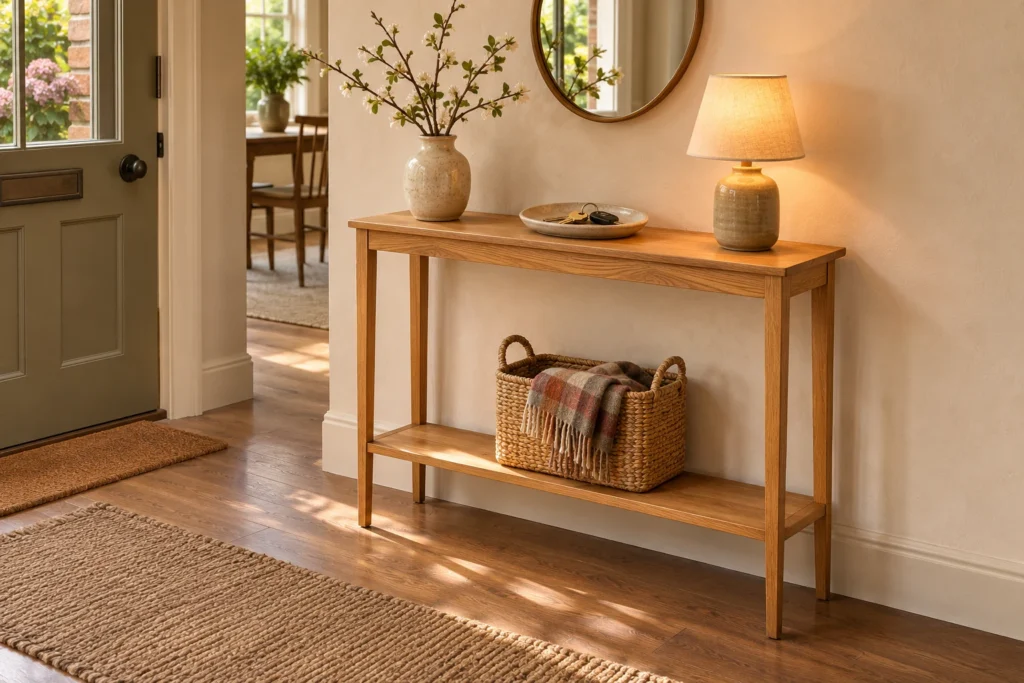
A console table is a narrow table for walls and tight spaces. Modern versions often use two or four legs.
Many early console tables worked more like fixed room features. Some needed wall support rather than four free-standing legs.
The Metropolitan Museum of Art documents French examples fixed against walls for stability. These pieces also formed part of the room’s decor.
Today’s console tables serve more daily needs. They can hold keys, lamps, books, mail, or framed photos.
They also work behind sofas and along unused living room walls. Some models add drawers, shelves, or open storage.
You might think every narrow table counts as a console table. Placement and proportions make the main difference.
A console should add useful surface space without taking much room. That balance explains why it works in small spaces.
So if your room needs function without bulk, start here. Next, the measurements decide whether that idea works.
What Size Console Table Should You Choose?
Choose console table size from the space, not from a product photo. Measure height, width, depth, and walking space.
Many standard tables sit around 28 to 32 inches high. Common depths run around 12 to 18 inches.
These numbers give you a starting point, not a fixed rule. Your room should make the final call.
A hallway usually needs the shallow end of that depth range. An open wall can handle more depth.
Behind a sofa, compare the tabletop with the sofa back. Keep the table level or a little lower.
You might think a larger table always gives more value. Extra size hurts when it steals walking space.
So measure the empty space after placing the table. That remaining path matters every day.
Use these ranges as starting points before checking your exact room.
Always compare these ranges with the maker’s exact product measurements.
✓ Two-minute console table measurement check
- ✓Measure the usable wall from edge to edge.
- ✓Mark the planned depth with tape.
- ✓Walk past the taped area before ordering.
For broader room sizing, use our living room furniture guide.
Once the size works, placement becomes much easier to judge.
Where Should You Place a Console Table?
Place a console table where you need a slim surface or visual anchor. Entryways and hallways remain natural choices.
A console also works behind a sofa in an open living room. It can finish an exposed sofa back.
Against a blank wall, the table can support art or a mirror. It also gives small objects one clear home.
Dining rooms can use consoles for serving pieces or light storage. Bedrooms can use compact versions as small vanities.
The key question stays simple: does the table improve that spot? Avoid adding one only to fill space.
Check doors, drawers, vents, outlets, and common walking paths. Each feature can limit the table’s safe footprint.
Super Dwelling’s layout guide suggests 30 to 36 inches for main walking paths. Keep that goal when space allows.
You might think pushing furniture against every wall saves room. A planned layout often gives better flow.
Match the table’s job to its location before choosing storage or style.
Choose the location first, since it controls almost every later decision.
For full traffic planning, see our room arrangement guide.
Now you can choose storage, material, and style around that exact job.
How Do You Choose the Right Console Table for Your Room?
Choose the table by function first, then size, storage, and finish. This order keeps style from hiding poor fit.
Entryways benefit from drawers for keys, mail, and small daily items. Open shelves suit baskets, shoes, and display pieces.
Behind a sofa, a clean open base often feels lighter. A busy storage unit can make that area feel heavy.
Material changes both mood and care needs. Wood feels warm, while glass keeps more floor visible.
Metal frames can look light because their legs stay slim. Solid cabinets create stronger visual weight.
You might think every wood tone must match. A shared color or finish can connect different furniture well.
For mixed rooms, repeat one tone or material elsewhere. That creates a clear visual link.
So if your sofa feels heavy, avoid an equally bulky console. Balance often matters more than exact style.
✅ Tip
Take a room photo before shopping. Compare each table against existing shapes and finishes.
With the right table chosen, styling should support its purpose instead of hiding it.
How Do You Style a Console Table Without Making It Look Cluttered?
Style a console table with one main anchor and a few support pieces. Start with art, a mirror, or one tall lamp.
Then add smaller objects at different heights. Books, bowls, plants, and framed photos can work well.
Leave open space between groups. Empty tabletop space gives each object more visual weight.
You might think every corner needs an item. Filling every gap makes the table harder to read.
Try one large piece first. Add only objects that support that main feature.
Hide daily clutter inside drawers, trays, or baskets. This keeps practical items from taking over.
So if styling feels wrong, remove one-third of the objects. The remaining pieces often look stronger.
💡 Key Insight
A console looks finished when one feature leads and every smaller piece supports it.
A console can also help build a strong room anchor. See our focal point guide for that approach.
Good styling helps, but several common myths still lead buyers toward poor choices.
What Most People Get Wrong About Console Tables
Most console table mistakes come from choosing looks before measuring the room. A beautiful table still fails when it blocks movement.
Another mistake is treating every console as a storage cabinet. Deep storage can defeat the table’s main space-saving benefit.
People also assume the table must match every nearby piece. Rooms often look better with planned contrast.
The first myth says bigger tables look more expensive. Good proportions create a stronger result than sheer size.
The second myth says every empty wall needs furniture. Some walls need open space to keep balance.
The third myth says styling needs many small objects. Too many objects can turn display space into clutter.
You might think these rules limit your options. They narrow choices toward tables that fit daily life.
Start with space, function, and visual balance. Then let color and finish make the final choice.
Once these myths disappear, the final buying decision becomes much simpler.
How Do You Make the Final Console Table Choice?
Choose the console that fits your measured space and serves one clear job. Let size and function beat trends.
Then check storage, finish, and styling needs. A good console should make the room easier to use.
Skip any table that steals needed walking space. Good furniture should support the room, not fight it.
Do one thing right now: measure your planned console depth and mark it with tape.
Frequently Asked Questions
Can a Console Table Go Behind a Sofa?
Yes, a console table works well behind many sofas. Keep its top near sofa-back height. Avoid a table that rises far above the upholstery. Check the space behind it before buying. Leave enough room for any nearby walking path.
How Tall Should a Console Table Be?
Many console tables fall around 28 to 32 inches high. Your room can require something different. Behind a sofa, compare the table directly with sofa-back height. Against a wall, choose a height that works with nearby art and lamps.
How Deep Should a Console Table Be?
Many models measure around 12 to 18 inches deep. Narrow halls usually need a shallower table. Start by marking the depth on your floor. Then walk through the space normally. Choose less depth when the taped area feels tight.
What Is the Difference Between a Console Table and Sofa Table?
The terms often describe similar narrow tables. “Sofa table” usually describes placement behind a sofa. “Console table” describes the wider furniture type. A console can sit in halls or entryways too. The product’s size and design matter more than its label.
Can a Console Table Be Used as a Desk?
A console can work for short laptop tasks when depth allows. Check knee space before using a chair. Deep work needs more surface room than most consoles provide. Choose a normal desk for long work sessions or large screens.
What Should You Put Above a Console Table?
A mirror or large artwork gives the table a clear visual anchor. You can also use a small gallery group. Match the wall piece with the console’s scale. Avoid tiny art over a wide table. Keep enough blank wall around the display.
Does a Console Table Need to Be Against a Wall?
No, modern console tables can sit away from walls when their design allows. Behind-sofa placement is a common example. Check the maker’s safety directions first. Some furniture needs wall anchoring. Always follow the product’s own setup and safety instructions.