

⚡ Quick Answer
The right coffee table size starts with your sofa, not the room. Aim for a table about two-thirds of your sofa’s length. Keep its top level with the seat, or 1–2 inches lower. Leave 14–18 inches between the sofa and table for comfortable reach and movement.
Coffee table measurements that matter most
- Length: Target about two-thirds of the sofa length.
- Height: Match the sofa seat or stay 1–2 inches lower.
- Sofa gap: Keep about 14–18 inches of open space.
- Walkway: Protect the main traffic path before increasing table size.
Before ordering your coffee table
- ✓Measure the sofa and seat height first.
- ✓Tape the table footprint onto your floor.
- ✓Walk around the outline before buying.
You lower yourself onto the sofa and reach toward your coffee cup. The table should feel close, balanced, and easy to use.
A wrong-sized table changes that comfort fast. James Fox recommends starting with measurements before style or materials.
Your sofa sets the strongest size reference. Room shape and walking space then refine the final choice.
📌 Key Takeaways
- →Two-thirds length creates a useful starting proportion for most sofas.
- →Seat-level height keeps drinks and remotes within comfortable reach.
- →Clearance comes first when a larger table blocks normal movement.
- →Shape changes fit because round tables remove corners from tight paths.
What Size Coffee Table Should You Get?
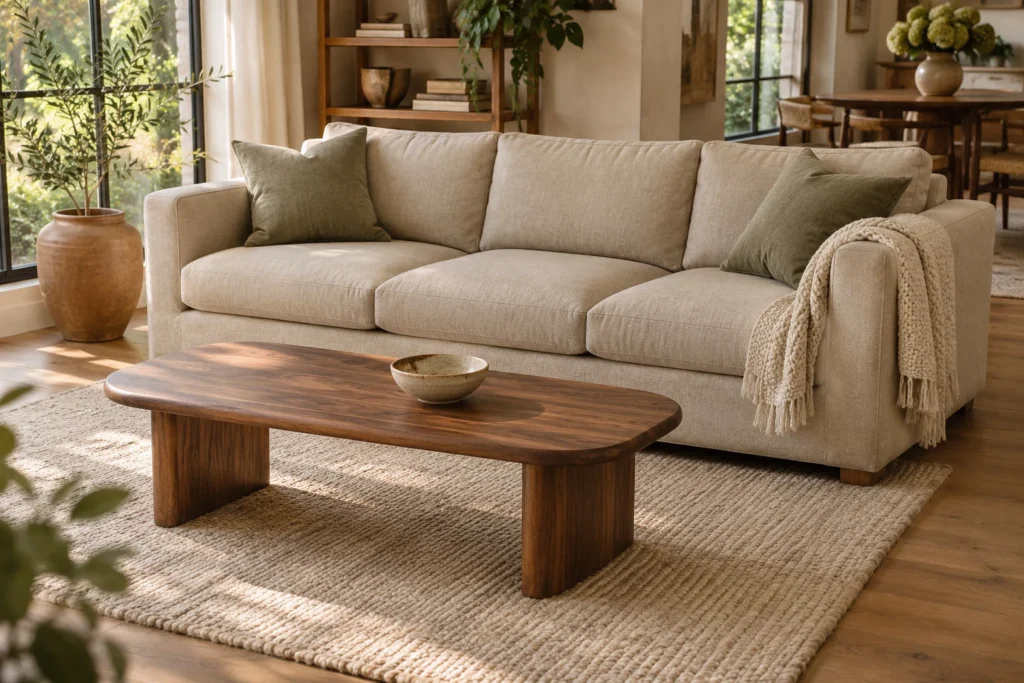
A coffee table should usually measure about two-thirds of your sofa’s length. This ratio keeps the table connected to the seating without overpowering it. A 72-inch sofa points toward a table near 48 inches long. An 84-inch sofa points toward about 56 inches. A 96-inch sofa points toward about 64 inches.
This rule works as a starting point, not a rigid limit. Available floor space still controls the final footprint. Wayfair’s coffee table size guide also recommends roughly two-thirds of sofa length.
This chart converts common sofa lengths into useful table targets.
Choose the smaller end when your room has tight walking paths.
You might be thinking that bigger always looks more expensive. It does not. Scale matters more than surface area.
See the broader living room design basics when several furniture sizes feel mismatched.
Next, height decides whether the table feels comfortable from your sofa.
How Tall Should a Coffee Table Be?
Match coffee table height to the sofa’s seat, not the sofa back. Most standard tables stand around 16–18 inches tall. Your table top should sit level with the seat cushion. It can also sit about 1–2 inches lower. That range keeps the surface easy to reach while seated.
A tall sofa can support a taller table. Low lounge seating needs a lower table instead. Pottery Barn’s coffee table guide gives the same seat-height approach.
💡 Key Insight
Measure the compressed seat cushion while nobody sits on it. Match the table to that height.
Can a Coffee Table Be Higher Than the Sofa?
A slightly taller table can work for eating or laptop use. Traditional coffee tables feel better near seat height.
You might be thinking two inches cannot change much. The difference becomes clear when reaching forward repeatedly.
Once height feels right, check whether your knees and walking route have enough room.
How Far Should a Coffee Table Be From the Sofa?
Leave about 14–18 inches between the sofa and coffee table for most layouts. This gap gives your knees room and keeps the surface within reach. A tighter room can approach 12 inches when movement remains comfortable. Larger gaps reduce easy access from the sofa.
Protect larger walkways on the table’s opposite side. Wayfair recommends 12–18 inches beside the sofa and about 30 inches elsewhere. Your room’s main route matters more than perfect visual symmetry.
The same spacing principle appears in Super Dwelling’s guide to arranging living room furniture.
How Do You Calculate the Maximum Table Depth?
Measure from the sofa front to the opposite furniture. Then reserve space on both sides.
For example, imagine 72 inches between sofa and TV stand. Reserve 18 inches beside the sofa. Reserve another 30 inches for the walkway.
That leaves 24 inches for table depth. A deeper table would start stealing circulation space.
⚠️ Warning
Never force a larger table into your main walking path. Shrink the table first.
Next, a simple measuring process combines length, height, depth, and clearance.
How Do You Measure for a Coffee Table?
Measure your sofa before measuring the open floor. Start with total sofa length and seat height. Then measure the clear space in front of the sofa. These numbers set your table’s length, height, and maximum depth. Finally, test the footprint on the floor before ordering anything.
This method removes guesswork from product photos. Camera angles often make furniture scale hard to judge. A taped floor outline shows the true footprint at home. It also reveals door, chair, and walkway conflicts before delivery.
🔢 Step-by-Step: Measure Your Coffee Table Space
-
1
Measure your sofa length
Multiply that measurement by about 0.66 for your target table length.
-
2
Measure the seat height
Look for a table level with the seat or slightly lower.
-
3
Measure the available depth
Reserve sofa clearance and the main walking path before choosing depth.
-
✓
Tape the footprint
Walk around it and confirm every normal route still works.
You might be thinking room dimensions should come first. Your sofa creates the more useful starting reference.
Next, table shape can solve problems that measurements alone cannot fix.
What Coffee Table Shape Works Best for Your Layout?
Choose table shape from your seating pattern and available walking space. Rectangular tables suit long sofas because their length follows the seating line. Round tables remove corners and work well in compact seating groups. Square tables fit balanced layouts with seating on several sides. Oval tables offer length without sharp corners.
Shape does not replace correct sizing. It changes how the footprint interacts with people and furniture. Architectural Digest also notes the two-thirds sizing rule and surrounding breathing room.
This table helps match shapes with common layouts.
Use shape to improve movement after establishing the correct overall footprint.
Explore more living room layout ideas when several seats surround the table.
Sectionals create another sizing question because their total length can mislead you.
What Size Coffee Table Works With a Sectional?
Size a sectional coffee table from the seating area facing the table. Do not use the sectional’s complete outer footprint automatically. A chaise can make the total sofa length much larger. That measurement often produces an oversized coffee table. Focus instead on the usable opening inside the sectional.
Round and square tables often fit L-shaped seating well. Rectangular tables work when one seating run clearly dominates. Keep a similar 14–18 inch gap around reachable seating edges. The goal stays the same: comfortable reach without blocking entry into the sectional.
Should the Table Center on the Sectional or the Room?
Center the table within the active seating group. The room’s exact center can sit somewhere else.
You might be thinking symmetry requires perfect room centering. Functional seating creates a stronger visual anchor.
Super Dwelling’s living room furniture guide also stresses matching furniture scale to usable space.
Small rooms make that scale decision even more important.
What Size Coffee Table Works in a Small Living Room?
Choose the smallest table that still serves your normal seating needs. Start with sofa proportions, then shrink the footprint when circulation becomes tight. A compact round or oval table can free corner space. Nesting tables also provide extra surface only when needed.
Do not shrink the gap until movement becomes awkward. Table size should give way before basic circulation does. Furniture with visible floor beneath it can also feel lighter. The physical footprint still matters more than visual tricks.
✅ Tip
Tape two table sizes on the floor. Choose the smaller outline when both feel useful.
A small room also benefits from a clear main walkway. See how to make a living room look bigger without crowding its center.
You might be thinking a tiny table always makes the room larger. An undersized table can look disconnected instead.
The final step is avoiding sizing myths that cause those mismatches.
What Most People Get Wrong About Coffee Table Size
Most coffee table mistakes come from choosing by appearance before measuring. Product photos hide room scale and viewing distance. Buyers also focus on standard dimensions instead of their own sofa. A table can have common dimensions and still fit poorly.
The second mistake is treating one rule as absolute. The two-thirds rule helps with length, but clearance still controls the footprint. Height also depends on your actual seat. Good sizing comes from combining all three measurements.
📋 Common Coffee Table Sizing Myths
- “Standard size always works”: Sofa size and room clearance matter more.
- “Bigger looks better”: Oversized tables can block walking paths and overwhelm seating.
- “Room center is best”: Center the table on the seating group instead.
The safest choice combines sofa scale, comfortable height, and clear movement. That combination matters more than any single “standard” measurement.
Now you can make one final check before placing an order.
Conclusion: What Coffee Table Size Should You Choose?
Start near two-thirds of your sofa length. Match the table height closely to your seat.
Keep about 14–18 inches between the table and sofa. Reduce table size whenever it blocks your normal walking path.
Your room will feel better when these measurements work together. One thing to do right now: measure your sofa length and seat height.
Frequently Asked Questions
What Is the Standard Coffee Table Size?
Many rectangular coffee tables fall near 48 inches long and 24 inches deep. Heights often sit around 16–18 inches. However, your sofa provides a better sizing guide. Start with about two-thirds of its length. Then match the table height closely to your sofa seat.
How Tall Should a Coffee Table Be Compared With a Sofa?
A coffee table should usually sit level with your sofa seat. It can also sit 1–2 inches lower. This relationship keeps the surface easy to reach while seated. Measure your actual cushion height before shopping because sofa seat heights vary across styles and designs.
Can a Coffee Table Be Higher Than the Couch?
A coffee table can sit slightly above the sofa seat for special uses. Lift-top tables are one example. Traditional tables usually feel more natural at seat height or slightly lower. Test the height while seated before buying. Comfortable reach matters more than following a fixed number.
How Far Should a Coffee Table Be From the Couch?
Leave about 14–18 inches between your couch and coffee table. That space supports legroom while keeping drinks within easy reach. A tight room can use about 12 inches when movement still feels comfortable. Keep wider clearance on the table’s main walking side.
What Size Coffee Table Goes With an 84-Inch Sofa?
An 84-inch sofa pairs well with a coffee table near 56 inches long. That figure follows the two-thirds rule. A table between 48 and 56 inches can also work. Choose the shorter option when your room needs more open floor space or easier traffic flow.
What Size Coffee Table Is Best for a Sectional?
Measure the open seating area inside the sectional before choosing a table. Avoid sizing from the complete outer sofa length when a chaise extends it. Round and square tables often suit compact L-shaped layouts. Keep about 14–18 inches between the table and reachable seating edges.
Is a Round or Rectangular Coffee Table Better for a Small Room?
Round tables often help tight rooms because they remove sharp corners from walking paths. Rectangular tables work better beside long sofas when enough width remains. Choose based on your taped floor outline. The best shape leaves clear movement while serving each main seat comfortably.