

⚡ Quick Answer
Choose a coffee table by measuring your sofa and open floor space first. Aim for about two-thirds of your sofa’s length. Keep the top near sofa-seat height. Leave about 12–18 inches between the table and sofa. Then choose a shape and material that suit your daily use.
Steps to choose the right coffee table
- 1Measure your sofa length and seat height.
- 2Check the open floor space around your seating.
- 3Choose a shape that keeps walking paths clear.
- 4Match the material and storage to daily use.
Coffee table mistakes to avoid
- ✓Don’t choose size from showroom looks alone.
- ✓Don’t block the room’s main walking path.
You set down a mug and stretch from the sofa. The table should feel easy to reach.
James Fox recommends starting with measurements before style. That order prevents most costly sizing mistakes.
A good coffee table balances your sofa, walking space, and daily needs. Get those right before comparing finishes.
📌 Key Takeaways
- →Length matters: About two-thirds of sofa length creates balanced scale.
- →Height matters: Keep the tabletop near your sofa’s seat height.
- →Clearance matters: Leave about 12–18 inches beside the sofa.
- →Lifestyle matters: Material and storage should match how you use the room.
What Size Coffee Table Should You Get?
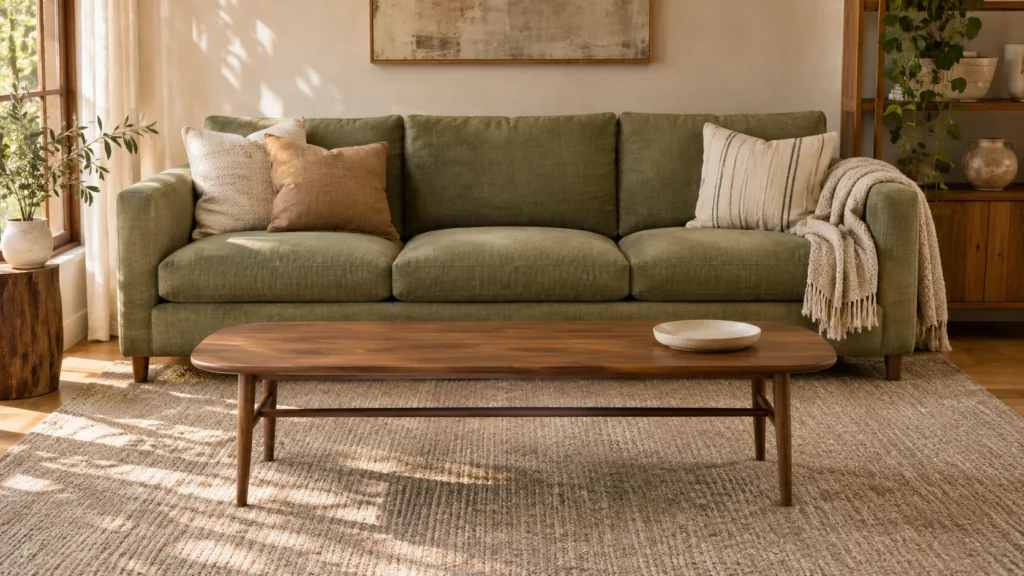
Your coffee table should usually measure about two-thirds of your sofa’s length. This ratio keeps the table useful without making the seating area feel crowded. Start by measuring the full sofa from arm to arm. Then multiply that number by about 0.66. A 72-inch sofa gives you a target near 48 inches. Your room can still change that target. A narrow walkway often needs a shorter or slimmer table. A large sectional can support a wider surface or nested tables. The goal isn’t a perfect formula. The goal is balanced scale with enough space to move. The Spruce and Wayfair both use similar sizing guidance.
You might be thinking smaller always makes a room feel larger. An undersized table can make a large sofa look heavier.
For broader furniture scale, compare your plan with Super Dwelling’s living-room furniture guidance.
Use this chart as a quick starting point before shopping.
Always check the floor space before using the upper end.
Once length works, height becomes the next key check.
How Tall Should a Coffee Table Be?
Choose a coffee table close to your sofa’s seat height. Most guides place common coffee tables around 16–18 inches high. Your sofa matters more than that standard range. Measure from the floor to the top of the seat cushion. Then look for a table at that height or slightly lower. A low table suits a low-profile sofa. A taller sofa needs more table height for easy reach. This relationship also keeps sightlines calm across the room. Architectural Digest notes that standard heights often sit between 16 and 18 inches. It also advises adjusting the table for lower or taller sofas.
You might be thinking a taller table gives you more useful height. It can feel awkward beside low seating.
✅ Tip
Measure the cushion where you sit. Soft cushions compress during normal use.
Next, check the gap between your sofa and table.
How Far Should a Coffee Table Be From the Sofa?
Leave about 12–18 inches between the sofa and coffee table. That space keeps drinks within reach while protecting legroom. Many rooms feel comfortable near the middle of that range. Start around 16 inches and test the path. Deep sofas can need more room for legs. Small rooms can use the lower end with care. You also need wider space along main walking routes. Wayfair recommends 12–18 inches beside the sofa. It suggests around 30 inches near larger furniture for traffic flow.
Here’s why that matters. A good table should support movement instead of becoming an obstacle.
Super Dwelling’s layout guide explains how walking paths shape the whole seating plan.
You might be thinking the table should simply sit centered. Function matters more than the room’s exact center.
With spacing fixed, you can choose the best shape.
Which Coffee Table Shape Works Best?
Match the table shape to your sofa and traffic pattern. Rectangular tables work well with long, straight sofas. Round tables soften rooms filled with sharp lines. They also remove pointed corners from busy routes. Oval tables offer similar benefits with more surface length. Square tables suit balanced seating groups with seats on several sides. Sectionals need extra care because their open center can vary. A round table often fits curved or compact arrangements. Architectural Digest also links rectangular tables with longer sofas. It notes round tables can serve seats from several directions.
You might be thinking shape only changes the look. It also changes reach and walking space.
🎯 Which Shape Fits Your Room?
LONG SOFA
→ Choose rectangle or oval
TIGHT WALKWAYS
→ Choose round or oval
BALANCED SEATING
→ Choose square or round
For more help with overall scale, see Super Dwelling’s design basics.
Shape solves movement. Material decides how the table handles daily life.
Which Coffee Table Material Fits Your Lifestyle?
Choose material based on cleaning, wear, weight, and your room’s style. Wood gives warmth and works with many design styles. Glass keeps sightlines open and can suit small rooms. Stone adds visual weight and a strong focal point. Metal works well for thin frames and modern rooms. Each choice brings different care needs. Wood can show water rings and scratches. Glass needs frequent wiping. Stone can weigh far more than wood. Architectural Digest recommends judging material alongside room style and upkeep. Better Homes & Gardens also stresses durability and daily use.
You might be thinking the hardest surface always lasts longest. Maintenance still decides how good it looks.
Match finishes with the room instead of copying one furniture set. Super Dwelling’s decorating guide covers that wider process.
After material, decide whether the table also needs to solve storage.
Do You Need Storage or a Lift-Top Coffee Table?
Choose storage when clutter regularly collects around your seating area. Drawers can hide remotes, chargers, and small game pieces. Lower shelves keep books and baskets easy to reach. A lift-top table adds a raised work or meal surface. That feature helps in small homes with limited furniture. Still, extra parts add weight and moving hardware. Check how far the top extends before buying. Make sure it won’t hit your knees or sofa. Storage should solve a real daily problem. It shouldn’t turn a slim room into a bulky furniture zone.
You might be thinking more storage is always better. Extra storage can add unwanted size and visual weight.
So if clutter isn’t a problem, choose a simpler table. The next step is avoiding common buying mistakes.
What Most People Get Wrong About Choosing a Coffee Table
Most coffee table mistakes start with style before scale. A beautiful table still fails when it blocks movement. Another mistake is using one standard height for every sofa. Sofa seats vary, so you should measure yours first. Shoppers also forget the table’s daily job. A delicate surface can become annoying in a busy family room. Size, clearance, height, and use should come before finish. That order protects both comfort and visual balance. House Beautiful also advises measuring the living room and sofa before choosing size.
You might be thinking showroom photos prove the table fits. Large retail spaces can make furniture look smaller.
⚠️ Warning
Never order from photos alone. Check dimensions and mark the footprint first.
That simple floor test leads to the final buying check.
How Do You Check a Coffee Table Before You Buy?
Mark the coffee table’s full footprint on your floor before ordering. Painter’s tape works well and takes only minutes. Sit on the sofa after marking the outline. Check whether you can reach the table with ease. Walk around every side used as a pathway. Confirm that doors, drawers, and recliners still open. Then compare the planned height with your sofa seat. This test turns product dimensions into a real room layout. It also shows whether your chosen shape feels too heavy. Architectural Digest designers also recommend taping furniture footprints before buying.
You might be thinking careful measurements remove every risk. The taped outline adds a useful real-world check.
- Check length: Keep the table in scale with your sofa.
- Check height: Match the sofa seat closely.
- Check clearance: Protect reach and walking space.
- Check shape: Keep busy paths free from awkward corners.
- Check function: Buy storage only when you need it.
Once those five checks pass, your final choice becomes much easier.
How Do You Make the Final Choice?
Choose fit before finish. The right table supports your sofa and keeps walking paths open. Style becomes easier once those needs are fixed. Right now, measure your sofa length and seat height.
Frequently Asked Questions
What size coffee table should I get?
Aim for a table near two-thirds of your sofa’s length. Then confirm the table still leaves enough walking space. A 72-inch sofa often pairs well with a table near 48 inches. Room shape and traffic can justify a smaller choice.
How tall should a coffee table be?
Keep the tabletop close to your sofa’s seat height. Many coffee tables sit around 16–18 inches high. Measure your own sofa instead of trusting that range alone. Low sofas work best with lower tables, while taller seating needs more height.
How far should a coffee table be from the sofa?
Leave about 12–18 inches between the table and sofa. This range gives your legs room while keeping the surface reachable. Start near 16 inches and test it while seated. Keep more space where people regularly walk through.
What shape coffee table is best for a small room?
Round and oval tables often work well in tight rooms. Their curved edges can make busy walking paths easier to use. A narrow rectangle also works beside a long sofa. Measure the open floor space before choosing any shape.
What coffee table shape works with a sectional?
Match the table to the sectional’s open center. Round tables suit compact or curved seating zones. Square tables work well inside balanced L-shaped layouts. Long sectionals often pair with oval or rectangular tables when the walkway stays clear.
Should a coffee table be higher or lower than the sofa?
A coffee table usually works best level with the seat or slightly lower. That height keeps items easy to reach. A much taller table can feel like a barrier. Measure the sofa cushion before comparing product heights.
Should a coffee table sit on the rug?
A coffee table can sit fully on the rug. The seating group should determine rug placement first. Keep the table centered within that furniture group, not the whole room. A larger rug usually creates a more connected seating area.