

Quick Answer
To clean a sofa, check its care label, remove loose debris, vacuum the upholstery, and treat spills by blotting rather than rubbing. Use only a cleaner permitted for that fabric, test a hidden spot first, and allow the sofa to dry completely. Water is not safe for every sofa: an S-coded fabric needs a suitable solvent method, while an X-coded fabric should only be vacuumed or lightly brushed.
A clean sofa is not necessarily one that has been soaked, scrubbed, or steam-cleaned. The safest method starts with identifying the upholstery. A few minutes spent checking the label can prevent water rings, dye transfer, shrinking covers, and flattened fabric.
What Does Your Sofa’s Cleaning Code Mean?
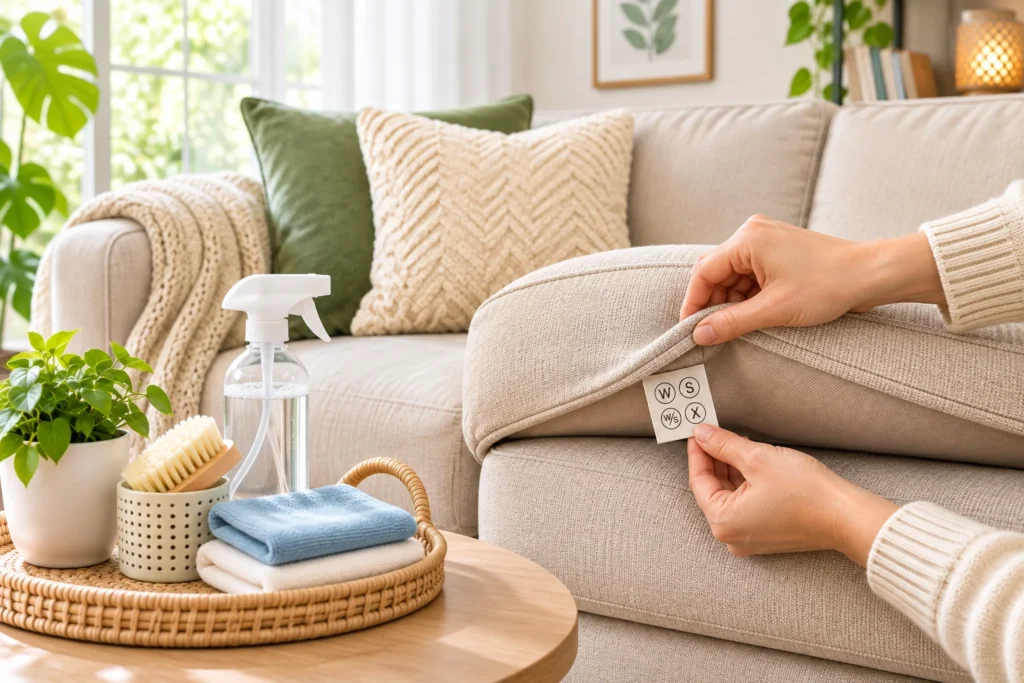
Look beneath the seat cushions, under the frame, or on the manufacturer’s product page for a fabric-care code. These letters tell you which cleaning methods are permitted; the sofa’s color and apparent sturdiness do not.
| Code | What it allows | What to avoid |
|---|---|---|
| W | Approved water-based upholstery cleaner | Solvents and saturation |
| S | Approved water-free upholstery solvent | Water and DIY wet cleaning |
| W/S or S/W | Either approved method | Harsh products or excessive moisture |
| X | Vacuuming or gentle dry brushing | All liquid cleaners |
Furniture makers such as Ashley explain these upholstery codes in their care instructions. If the code is missing, unreadable, or conflicts with the product manual, avoid liquid cleaning until the manufacturer or an upholstery professional confirms an appropriate method.
What Do You Need Before Cleaning a Sofa?
Gather a vacuum with an upholstery attachment and crevice tool, two or three clean white microfiber cloths, a soft brush if the fabric permits one, and dry towels. Keep a small bowl handy only if the label allows water-based cleaning.
For W or W/S fabric, choose an upholstery cleaner specifically compatible with the manufacturer instructions. For S fabric, do not substitute diluted dish soap or vinegar: use a permitted water-free upholstery product, ideally with professional guidance. Leather needs a separate, manufacturer-approved approach.
How to Clean a Sofa in 8 Safe Steps
1. Check the Label and Identify the Material
Find the code before opening a bottle or switching on an extractor. Confirm whether the surface is woven fabric, microfiber, velvet, genuine leather, or faux leather. If your sofa has several materials, check each one separately. The same precautions matter when maintaining the upholstery described in our sofa buying guide.
2. Remove Throws, Cushions, and Loose Debris
Take off blankets, decorative pillows, and any detachable cushions. Lift out crumbs with your hands or a dry brush before they get pushed into seams. Check tags on removable covers: a zipper does not automatically mean the cover is machine-washable. Wash only those covers whose instructions expressly permit it.
3. Vacuum Every Surface and Crevice
Use a clean upholstery nozzle at a gentle suction setting, particularly on textured or delicate fabric. Move over the backs, arms, seats, cushion sides, and exposed base. Switch to the crevice tool for joints where crumbs and pet hair hide. Avoid a rotating beater brush that could pull threads or damage delicate pile.
4. Test the Permitted Cleaner Out of Sight
Apply a tiny amount of the approved product to an inconspicuous area such as the underside or back edge. Follow its contact and removal directions, then wait until the test spot is fully dry. Look for bleeding color, a changed texture, stiff residue, or a water ring. Any visible change means stop rather than trying a stronger mixture.
5. Blot Fresh Spills Before Treating Stains
Press a clean white cloth into a liquid spill to absorb it. Work from the outer edge toward the middle, changing to a dry section of cloth as needed. Lift solid debris with a spoon first. Do not scrub: forceful rubbing can push residue deeper and distort the weave. For old stains, first identify what caused them instead of repeatedly wetting the spot.
6. Clean Fabric Only With an Approved Method
On a W or W/S sofa, lightly apply the permitted water-based upholstery solution according to its label. Blot with a barely damp cloth only when rinsing is allowed, then absorb moisture with a dry towel. Work carefully across a whole small panel when the manufacturer recommends seam-to-seam cleaning to reduce uneven rings. For S-coded fabric, follow the approved solvent directions or hire a specialist; for X-coded fabric, stop after dry cleaning.
7. Treat Leather as a Different Surface
For finished leather, first remove dust with a soft attachment or dry cloth. If the maker permits it, wipe lightly with an almost-dry cloth and its recommended leather product, then dry the surface gently. Do not use fabric shampoo, vinegar mixtures, steam, or ordinary furniture polish. Unfinished leather, suede, and nubuck may need specialist cleaning rather than household liquids.
8. Dry Fully and Reassemble the Sofa
Press out any remaining surface moisture with clean towels, ventilate the room, and use a fan if appropriate. Avoid sitting on damp cushions or putting washed covers back over wet filling. Do not speed drying with a hot hair dryer. When every surface is dry, replace cushions and gently restore their shape; rotate them if the manufacturer allows.
Warning
A W or W/S label is not automatic permission to steam-clean or use a water-extraction machine. Some furniture manufacturers specifically prohibit those methods. Check both the sofa manual and the machine instructions before using either.
How Should You Handle Common Sofa Stains?
Stain type matters, but upholstery compatibility matters more. Start by removing excess material and checking the care label; then choose a product explicitly intended for both the stain and the fabric.
- Coffee, juice, or tea: Blot immediately. On water-safe upholstery, use a compatible stain cleaner sparingly and remove residue as directed.
- Grease or oily food: Lift solids without spreading them. Avoid rubbing oily residue or improvising with concentrated degreasers.
- Pet accidents: Absorb liquid promptly. Use an upholstery-safe pet-stain product only if the care instructions permit it. A smell returning after drying can mean contamination reached the cushion filling.
- Ink or dye transfer: Do not assume rubbing alcohol is safe. Ask the furniture maker or a professional before treating delicate or color-sensitive fabrics.
When a spot dries darker than the surrounding material, the cause might be cleaning residue, redistributed dirt, or a moisture ring. Repeatedly washing that small area can enlarge the mark. Stop, allow complete drying, and reassess before taking another pass.
Does the Cleaning Method Change by Sofa Fabric?
Yes. Fiber composition, weave, dye, and surface finish can change how upholstery responds, even when two sofas look similar. The cleaning code and manufacturer’s instructions always take priority over generic material advice.
- Microfiber: Often looks durable, but individual fabrics can carry W, S, or other codes. Never assume all microfiber accepts water or alcohol.
- Velvet and chenille: Pile can flatten or show direction marks. Use gentle vacuuming and avoid hard brushes, heat, and unauthorized extraction.
- Linen and cotton blends: Some fabrics can shrink or form rings when wet. Check whether the exact cover is washable, rather than judging by fiber name alone.
- Leather and faux leather: Both need surface-specific instructions. Products meant for genuine finished leather may not suit coated faux leather.
A sectional can combine differently finished modules and detachable covers. Check the instructions for each piece rather than assuming they match. Our sectional sofa guide explains why upholstery construction and care requirements differ between designs.
When Is Professional Sofa Cleaning the Safer Choice?
Professional help is sensible when the label is missing, the upholstery is delicate or valuable, the sofa is heavily soiled, or a stain persists after one cautious attempt. It is especially useful for large spill areas, deep pet odors, unknown dyes, and cushions that have absorbed liquid.
Ask the cleaner which method suits the exact upholstery code, whether they will test for dye transfer, and what drying conditions they expect. The National Carpet Cleaners Association’s upholstery guidance also cautions against excess moisture and incorrect cleaners. A professional cannot guarantee that every old stain will disappear without affecting fabric.
How Can You Keep a Sofa Cleaner Between Deep Cleans?
A simple habit reduces how often you need aggressive stain treatment. Vacuum upholstery and crevices regularly, particularly in homes with pets or frequent snacks. Blot spills as soon as they happen, and keep food and beverages away from delicate fabrics when practical.
Gently rotate or fluff cushions if approved, and prevent prolonged direct sunlight from fading sensitive materials. If your living room also has an upholstered ottoman, follow its separate care label; our ottoman care and maintenance guide covers similar everyday precautions. Avoid spraying fragrance simply to disguise a persistent odor, since that does not remove its source.
Useful Tools for Sofa Cleaning
Most sofas only require a suitable vacuum attachment and clean cloths. These two optional tools address different problems; neither replaces checking the upholstery label.
FOR APPROVED WET SPOT CLEANING
BISSELL Little Green 1400B
A portable spray-and-suction cleaner for appropriate upholstery and carpet spots. Use it only when the sofa and machine instructions both permit water extraction; it is not suitable for every fabric.
FOR PET HAIR BETWEEN CLEANINGS
Original ChomChom Roller
A reusable, no-liquid hair remover designed for upholstered furniture. It can help gather surface fur between vacuuming sessions; test gently on a hidden area of delicate or snag-prone fabric.
As an Amazon Associate, we earn from qualifying purchases. Product ratings are omitted because they vary by seller and date.
Frequently Asked Questions
Can I clean a sofa with dish soap and water?
Only when the upholstery maker permits that particular method. W or W/S does not automatically approve any homemade formula, and excessive soap can leave a residue. A compatible upholstery cleaner is usually the more predictable choice.
Can I use baking soda on my couch?
Some fabrics tolerate a light, dry deodorizing treatment, but powder can collect in seams and delicate fibers. Check the manufacturer’s guidance, test first, and vacuum thoroughly. Baking soda will not fix contamination inside wet cushion foam.
How long should a sofa dry after cleaning?
There is no universal drying time. It depends on how much moisture was applied, the cushion filling, room humidity, and airflow. Use the sofa again only when the upholstery and any affected padding are fully dry.
Can removable sofa cushion covers go in the washing machine?
Only if their own care tags or product instructions specifically allow machine washing. Removable does not mean washable; some covers can shrink, lose shape, or develop color differences from the rest of the sofa.
Why does my sofa look patchy after spot cleaning?
A patch can result from uneven moisture, detergent residue, redistributed dirt, or a change in the fabric’s pile. Let the area dry first. If the mark remains, avoid repeatedly soaking it and seek material-specific advice.
Can I clean a sofa without a vacuum cleaner?
You can remove loose crumbs and hair with a soft brush or suitable lint-removal tool, following the fabric’s care directions. However, this is less effective for dirt trapped deep in seams; occasional gentle vacuuming is still useful.
Final Takeaway
The best way to clean a sofa is to use the gentlest method its upholstery allows. Start with the care code, remove dry dirt, treat spills early, and keep moisture controlled. If the fabric is unknown or a stain has reached the cushion filling, professional advice is usually safer than experimenting with stronger cleaners.