

Quick Answer
To clean a coffee table, remove its accessories, dust with a soft cloth, and wipe away marks using a cleaner suitable for its material and finish. Use minimal moisture on wood or veneer, a glass-safe cleaner on ordinary glass, and a pH-neutral cleaner on natural stone. Finish with a clean, dry cloth, paying attention to seams and edges.
A coffee table collects fingerprints, drink rings, crumbs, dust, and the occasional sticky spill. Cleaning it is usually simple, but the wrong product can do more damage than the mess itself.
The key is to identify what the tabletop is made of and how it is finished. A glossy wood veneer, an unsealed timber top, and a marble slab should not be treated alike. This guide gives you a straightforward cleaning routine, then explains how to deal with common materials and stubborn marks.
What Do You Need to Clean a Coffee Table?
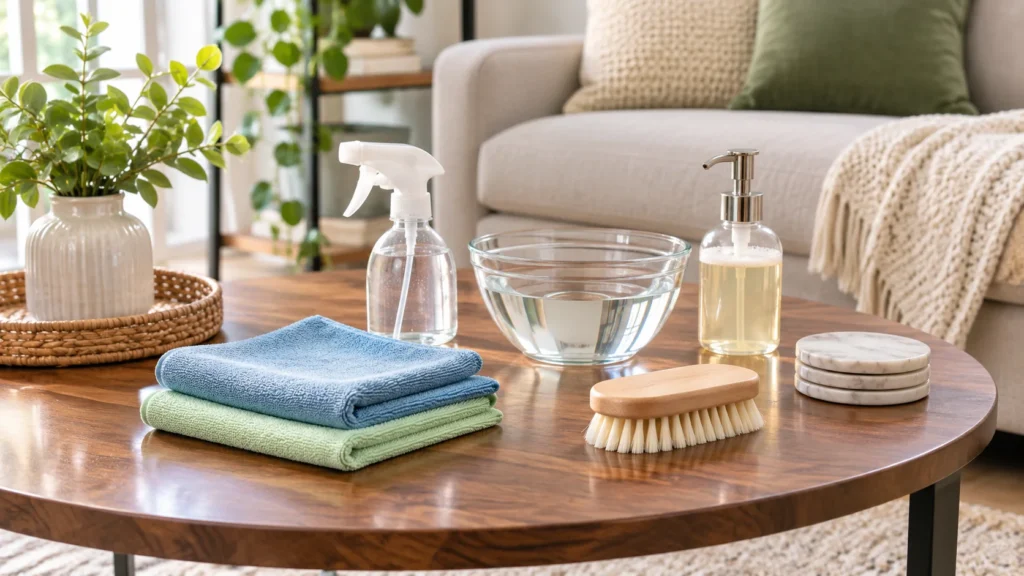
Start with a small collection of gentle supplies. Most routine cleaning does not require a strong chemical cleaner or special equipment.
- Two or three clean, soft, lint-free cloths: one for dust, one for light cleaning, and one for drying.
- A small bowl of clean water, if the finish permits damp wiping.
- A little mild dishwashing liquid for compatible, finished surfaces with greasy residue.
- A cleaner specifically labeled for natural stone or glass, when appropriate.
- A soft brush or vacuum with a suitable soft-brush attachment for crumbs in corners.
- Coasters or felt pads to help prevent new rings and scratches.
Check the care label first. If the table is vintage, painted, waxed, oiled, or made from an unfamiliar composite, look for manufacturer or finisher instructions before applying water or detergent. Try any unfamiliar method on a hidden area.
How to Clean a Coffee Table in 7 Easy Steps
These steps work as a general routine for most household coffee tables, provided you adjust the damp-cleaning stage to the surface.
- Clear the tabletop. Lift off books, trays, candles, plants, remotes, and coasters. Check beneath them for hidden spills and trapped grit. Place delicate objects on a padded surface.
- Identify the material and finish. Look for solid wood, wood veneer, laminate, glass, marble, or metal. If the finish is unknown or damaged, use dry dusting until you can confirm safe care instructions.
- Remove loose dust and crumbs. Gently sweep with a dry, clean, soft cloth. Clean around joints, raised edges, and decorative grooves without grinding grit into the surface.
- Spot-test a suitable cleaner. For a compatible sealed finish, start with a barely damp cloth. Add a tiny amount of mild detergent only if needed. For glass or stone, use the material-appropriate method below.
- Wipe without soaking. Work in small sections with light pressure. Apply cleaner to the cloth rather than spraying across wood edges, hardware, or a mixed-material frame. Never allow liquid to pool.
- Remove residue and dry. Where the product instructions call for it, wipe with a second lightly damp cloth. Immediately dry with a fresh cloth, especially along veneer edges, joins, and around hardware.
- Clean the base and return accessories. Dust legs, shelves, and drawer fronts according to their material. When completely dry, replace objects gently, adding coasters or protective pads where useful.
Practical Tip
Clean the tabletop before its lower shelf or base. That way, falling crumbs or dust do not land on an area you have already finished.
How Should You Clean Different Coffee Table Materials?
The safest cleaner depends on both the underlying material and the protective finish. Use this quick comparison as a starting point, not as a replacement for the maker’s instructions.
| Table material | Routine method | Avoid |
|---|---|---|
| Sealed wood | Soft dry cloth; barely damp wipe if approved; dry | Standing water and harsh solvents |
| Wood veneer | Gentle dusting; minimal moisture; dry edges | Wet seams and abrasive scrubbing |
| Ordinary clear glass | Glass-safe cleaner on cloth; buff dry | Scrapers and abrasive pads |
| Marble or natural stone | pH-neutral stone cleaner; dry | Vinegar, lemon, and abrasive powder |
| Laminate | Soft, slightly damp wipe; dry seams | Soaking edges and harsh abrasives |
| Painted or coated metal | Soft cloth and finish-compatible cleaner; dry | Scratchy pads and prolonged moisture |
The table is only a guide. An oiled wooden top needs different care from a polyurethane-coated one, and frosted or coated glass may have cleaning restrictions that ordinary clear glass does not.
Solid Wood and Wood Veneer
For everyday dust, use a soft, dry cloth. When cleaning sealed wood, a lightly dampened cloth is often enough; dry the surface promptly. Avoid soaking the cloth or spraying liquid into seams.
Veneer is especially vulnerable at edges if water gets beneath its protective coating. The Timber Veneer Association of Australia recommends soft dusting, prompt spill cleanup, and care based on the finish. Some coatings also require specific cloth types, so check your table’s instructions.
For unfinished, waxed, or oil-finished wood, do not assume a general wood polish or detergent is safe. Use the care method specified for that particular treatment.
Glass Coffee Tables
Wipe away loose grit first. On ordinary, uncoated clear glass, apply a small amount of suitable glass cleaner to a lint-free cloth, clean the surface, and buff dry with a fresh cloth. Clean the underside if accessible and supported safely.
Do not direct spray toward a wooden frame, adhesive joint, or decorative metal trim. Frosted, tinted, etched, or coated glass may need a different product; verify the manufacturer’s instructions. The American Cleaning Institute’s hard-surface guide likewise recommends using a clean cloth and keeping glass cleaner away from surrounding frames.
Marble, Travertine, and Other Natural Stone
Dust off grit, then use a stone-safe pH-neutral cleaner or the mild cleaning method approved for your stone. Remove residue according to the product instructions and dry thoroughly.
Do not use vinegar or lemon on marble, limestone, or travertine. Acids can etch these calcium-rich stones. The Natural Stone Institute also recommends blotting spills promptly and using coasters under beverages.
Do not assume that a sealant makes a surface stain-proof. Sealing may improve resistance to some stains, but it does not stop acid etching.
Laminate and Metal Frames
Most intact laminate surfaces can be cleaned with a soft, slightly damp cloth and a mild, compatible cleaner. Pay special attention to joints and exposed edges, where water may reach the material underneath.
For a coated metal frame, dust first and use a cleaner approved for its finish. Dry around screws and welded connections. Painted, plated, and bare metal surfaces may react differently, so avoid aggressive scrubbing or unapproved metal polish.
How Do You Remove Coffee Table Stains and Sticky Marks?
Before treating a mark, decide whether it is surface residue, a stain inside the material, or damage to the finish. Cleaning can remove dirt; it cannot necessarily reverse a scratch, etched stone, or damaged coating.
Sticky Drink Rings or Food Residue
Lift away crumbs, then gently wipe with a slightly damp cloth if the finish allows it. On a compatible sealed surface, a very small amount of mild detergent can help with sticky residue. Remove leftover soap and dry immediately. Do not leave a wet cloth sitting on the spot.
White Rings on a Wood Finish
A cloudy white ring is not always a removable surface stain; moisture or heat may have affected the coating. Stop adding water or household mixtures. Check the finish manufacturer’s guidance or ask a furniture-restoration specialist before trying heat, oils, or abrasive remedies.
Cloudy Marks on Marble
A dull patch on marble after contact with citrus, vinegar, or another acidic drink may be etching, not grime. More cleaning will not restore the polished surface. A stone restoration professional can assess whether refinishing is needed.
Sticker Adhesive, Ink, or Candle Wax
Begin by gently lifting loose material without a blade. Avoid automatically reaching for rubbing alcohol, acetone, scraping tools, or heat: these can damage paint, lacquer, veneer, stone sealers, and plastic coatings. Use only a removal method explicitly approved for your table’s finish.
Avoid This Mistake
Do not use vinegar as a universal coffee-table cleaner. It may work on some uncoated glass surfaces, but it can damage marble and may be unsuitable for nearby finishes. Never mix cleaning chemicals, especially bleach and ammonia.
How Often Should You Clean Your Coffee Table?
Clean according to use rather than following a rigid calendar. A frequently used table holding snacks and drinks will need more attention than one used mainly for decoration.
- After spills: Blot liquids immediately and follow the material-specific cleaning instructions.
- As needed: Remove fingerprints, crumbs, and dust with a clean, soft cloth.
- During regular room cleaning: Lift accessories, wipe the entire top, and check shelves, corners, and legs.
- Occasionally: Inspect coasters, felt pads, seams, finish wear, and loose hardware.
Keeping the surface uncluttered also makes cleaning easier. If you want a simpler arrangement after wiping it down, see our coffee table decor ideas. For material and construction considerations, the coffee table guide explains how different designs fit daily living.
Once the table is clean, coordinate it with the rest of your furniture using the living room styling guide, without crowding the usable surface.
Which Cleaning Tools Are Worth Keeping Nearby?
You do not need all three products below. Choose the one that fits your tabletop and follow the table manufacturer’s care directions first. These are examples for different tasks, not independent performance rankings.
🧽 EVERYDAY DUSTING
E-Cloth General Purpose Cloth
A reusable cloth for routine dry dusting or approved damp cleaning. Wring it thoroughly before use.
🪨 NATURAL STONE
Granite Gold Daily Cleaner
A stone-care option marketed for granite, marble, and other natural stone. Check finish compatibility.
✨ GLASS FINISHING
E-Cloth Glass & Polishing Cloth
A dry finishing cloth for reducing streaks on compatible glass after cleaning.
As an Amazon Associate, we earn from qualifying purchases. Search results may include multiple sizes or variants; check the exact listing before ordering. No star ratings are shown because comparable independent ratings were not verified.
Frequently Asked Questions
Can I use dish soap to clean a coffee table?
Sometimes. A small amount of mild dish soap can help remove residue from compatible sealed wood, laminate, or stone, but only when the manufacturer permits it. Use little moisture, remove soap residue, and dry the surface.
Can I use a disinfecting wipe on a wooden coffee table?
Not by default. Disinfecting wipes may contain ingredients or require wet contact times that are incompatible with certain wood finishes. Use them only if the table manufacturer confirms compatibility.
How do I clean a coffee table with a glass top and wooden legs?
Clean each material separately. Apply glass cleaner to a cloth rather than spraying the tabletop, keep drips away from wood joints, and finish by drying both surfaces.
Should I polish my wooden coffee table after every cleaning?
No. Routine dusting and gentle wiping usually do not require polish. Apply a polish, oil, or wax only when it is recommended for your table’s particular finish.
Why does my glass coffee table look streaky after cleaning?
Common causes include too much cleaner, a dirty cloth, or leftover product residue. Use a clean lint-free cloth, apply less cleaner, and buff the glass dry. Check special coatings before changing products.
What if the coffee table has peeling veneer or a damaged finish?
Stop damp cleaning the affected area. Water or solvents can worsen lifted edges and compromised coatings. Dust gently and seek finish-specific repair guidance before using cleaning products.
Conclusion
Cleaning a coffee table is less about using a powerful product and more about choosing a safe method for the surface. Start by clearing the table and removing loose dust. Clean marks gently with a material-compatible product, then dry the tabletop, edges, and base.
If you are unsure whether the surface is sealed, coated, or natural stone, check its care instructions before applying a liquid cleaner. A few simple habits—prompt spill cleanup, coasters, and gentle dusting—help keep your coffee table clean without creating unnecessary wear.